Why Is My Air Fryer Smoking: Quick Fixes
Your air fryer may smoke because grease, food crumbs, or cooking oil is overheating near the heating element.
Wondering why is my air fryer smoking can feel alarming, especially when you are cooking dinner and the kitchen suddenly fills with haze. In most cases, the cause is simple and fixable, but smoke can also signal a serious electrical or mechanical problem. This guide explains how to find the cause, stop the smoke safely, and prevent it from returning.

Why is my air fryer smoking?
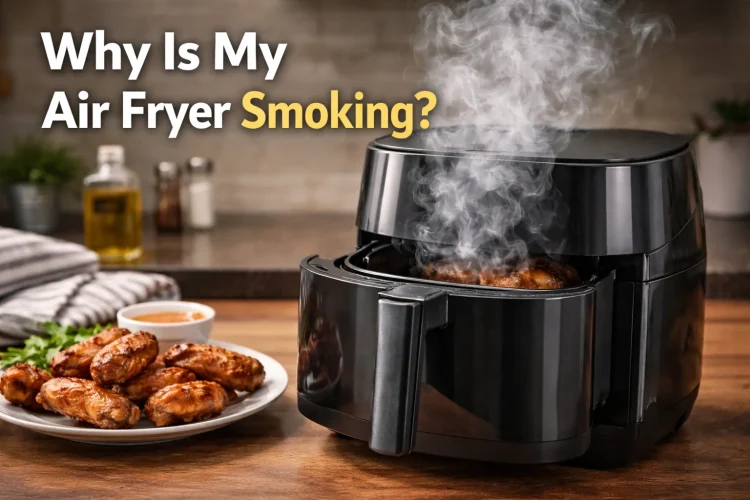
The most common reason an air fryer smokes is that hot grease or oil has collected in the basket, drawer, or bottom pan. When the unit heats up, the grease can reach its smoke point and create visible smoke.
Food scraps can cause the same issue. A small piece of bacon, cheese, breading, or batter may fall through the basket and touch a hot surface. The food then burns and sends smoke through the vents.
Other possible causes include:
- Excess oil on the food
- A dirty heating element
- Grease left from a previous meal
- A new air fryer with leftover factory residue
- Food placed too close to the heating coil
- An overfilled basket that blocks air movement
- A damaged power cord or internal part
When asking why is my air fryer smoking, first consider what you are cooking. Fatty foods such as bacon, sausage, chicken wings, burgers, and pork can release a great deal of grease. That grease collects below the basket and may smoke during longer cooking cycles.
Air fryers use hot, fast-moving air. They do not truly “fry” food in a deep pool of oil. However, the cooking temperature can still become high enough to burn oil and food residue.
Smoke or steam?
Not every cloud from an air fryer is smoke. Steam is usually white, light, and short-lived. It often appears when cooking frozen food or food with a high water content.
Smoke tends to look gray, blue, or yellow. It also smells sharp, burnt, or chemical-like. If the smell resembles melting plastic or burning wires, stop using the appliance at once.
Is a smoking air fryer dangerous?
A small amount of smoke from grease is often not an emergency, but it should not be ignored. Smoke means something is getting hot enough to break down or burn. Continued smoke can damage the appliance, ruin food, or create a fire risk.
Turn off and unplug the air fryer if:
- Smoke continues after you remove greasy food
- You see flames or sparks
- The smoke smells like plastic, rubber, or electrical wiring
- The power cord, plug, or outlet feels hot
- The air fryer makes popping, buzzing, or crackling sounds
- The display flickers or shuts off
- The housing shows melted or darkened areas
Never pour water into an air fryer that is hot, plugged in, or burning. Water can spread hot grease and may cause an electrical shock.
If there is a fire, keep the drawer closed if it is safe to do so. Turn off and unplug the appliance only when you can do this without touching flames. Use a suitable fire extinguisher or call emergency services if the fire does not stop quickly.
When people ask why is my air fryer smoking, safety should come before saving the meal. A few extra minutes of cooking are not worth risking a kitchen fire.
Common reasons your air fryer is smoking
Grease from fatty foods
Fatty foods are a leading cause of air fryer smoke. Bacon, chicken thighs, wings, sausages, and burgers release fat as they cook. That fat can drip into the lower pan and become hot enough to smoke.
This problem is more likely when the cooking temperature is high. It can also happen when the basket is packed with food, since grease has less room to spread and cool.
To reduce smoke, remove excess fat from the lower pan between batches. You can also cook very fatty foods at a slightly lower temperature and check them more often.
Too much cooking oil
Air frying needs little oil. A light coating is usually enough to help food brown and crisp. Too much oil can drip below the basket and burn.
Avoid pouring oil directly into the cooking chamber unless the manufacturer specifically allows it. Instead, lightly coat the food before placing it in the basket.
Oil sprays can also create problems. Some aerosol sprays contain ingredients that may damage nonstick coatings over time. A refillable oil mister or a small amount of oil brushed onto food is often a better choice.
A dirty heating element
The heating element sits above the food in many air fryer designs. Grease, crumbs, and batter can rise toward it during cooking. Once stuck to the element, these bits may burn each time you turn the appliance on.
A dirty heating element is a common answer to why is my air fryer smoking after cleaning the basket. The basket may look spotless while the upper coil still has residue.
Always unplug the air fryer and let it cool fully before cleaning near the heating element. Follow the manual, and do not soak the main appliance or pour water into it.
Food is touching the heating coil
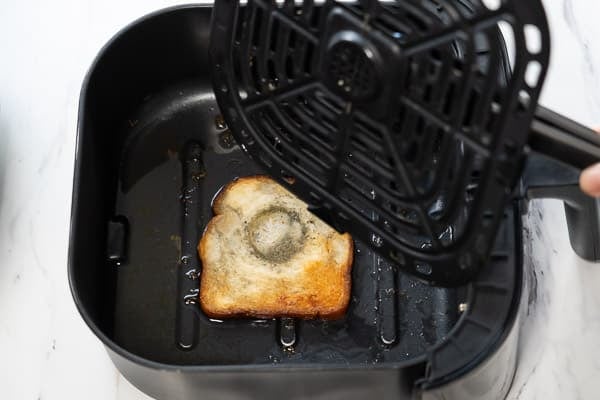
Light foods can move when the fan runs. A slice of bread, parchment paper, or a thin piece of cheese may lift toward the heating element. If it touches the coil, it can scorch or catch fire.
Do not use loose parchment paper or paper liners while preheating. Add them only when food is on top to hold them down. Use liners made for air fryers and keep them within the basket.
The basket is overfilled
An overfilled basket blocks airflow and can push food closer to the top heating element. It also causes uneven cooking, which may leave some food raw while other pieces burn.
Food should sit in a loose layer whenever possible. A little space lets hot air move around each piece and helps grease drain away.
If you need to cook a large amount, use several batches. This takes longer, but it lowers the chance of smoke and produces better browning.
Factory residue in a new air fryer
A new appliance may release a mild smell or a small amount of smoke during its first use. This can happen because of protective oils, packaging dust, or manufacturing residue.
Before cooking, remove all packaging, labels, cardboard, and plastic. Wash the removable parts with warm, soapy water, then dry them fully.
Run the empty air fryer according to the manufacturer’s instructions in a well-ventilated room. If a strong chemical smell or heavy smoke continues after the first cycle, stop using it and contact the manufacturer.
Water and moisture in the drawer
A little water may collect when cooking frozen or moist food. This is usually harmless, but trapped moisture mixed with grease can create smoke or splatter.
Dry the drawer and basket before use. Avoid adding water unless the manual recommends it. Some models allow a small amount of water in the lower pan to reduce smoke from fatty foods, but this is not safe for every design.
A faulty electrical part
A burning plastic smell is different from the smell of cooking grease. It may point to a damaged cord, loose connection, failed motor, or overheating circuit.
Do not open the air fryer to inspect it yourself. Internal parts can remain hot or hold an electrical charge. Stop using the appliance and seek help from the manufacturer or a qualified repair professional.

How to stop your air fryer from smoking
If there are no flames, sparks, or electrical smells, you can inspect the appliance after it cools. Use this simple process to find the cause.
-
Press the power button and unplug the air fryer.
-
Move it away from cabinets, curtains, paper towels, and other items that can burn.
-
Wait until the basket, drawer, and cooking chamber are completely cool.
-
Remove the basket and inspect the lower pan for grease, crumbs, burnt batter, and loose food.
-
Check the top heating element for stuck food or grease.
-
Wash the removable parts with warm water and mild dish soap, if the manual allows it.
-
Wipe the inside with a damp cloth, but keep water away from the motor, fan, controls, and electrical parts.
-
Dry every part before putting the air fryer back together.
-
Check the power cord, plug, and outlet for heat, dark marks, melting, or damage.
-
Run a short test cycle with no food while standing nearby.
If the empty test cycle produces smoke, a chemical odor, sparks, or unusual sounds, unplug the appliance and do not use it again until it has been checked.
If the smoke stops when the air fryer is empty, cook a small amount of food at a moderate temperature. This helps you identify whether a particular food or excess oil is causing the problem.

How to clean a smoking air fryer safely
Cleaning often solves the mystery of why is my air fryer smoking. Grease can hide beneath the basket, inside small corners, and around the upper heating area.
Clean the basket and drawer
Let the appliance cool completely. Remove the basket and drawer, then wash them with warm water and mild dish soap.
Use a soft sponge or cloth. Avoid steel wool, harsh scouring pads, and abrasive cleaners because they can damage the nonstick surface. A damaged coating may cause food to stick and burn more easily.
If grease is stubborn, soak the removable parts if the manual permits it. Never place a part in a dishwasher unless the manufacturer says it is dishwasher-safe.
Clean the heating element
Unplug the unit before inspecting the heating element. Turn the air fryer upside down only if the manual allows it and only when the drawer is removed.
Use a dry, soft brush to loosen crumbs. For light grease, use a slightly damp cloth after the appliance has cooled. The heating coil must be completely dry before use.
Do not scrape the coil with a knife. Do not spray cleaner into the cooking chamber. These actions can damage the element or leave chemicals behind.
Clean the inside housing
Wipe the inside walls with a damp cloth. Pay attention to grease near the top, back, and sides. Do not flood the chamber with water.
Also clean the air vents on the outside. Blocked vents can trap heat and reduce airflow. Keep the vents clear during cooking.
Many appliance manuals recommend cleaning after every few uses, while heavy grease producers may need cleaning after each batch. Your cooking habits matter more than a fixed schedule.
How to prevent an air fryer from smoking
Prevention is easier than removing baked-on grease. A few habits can greatly reduce smoke.
- Trim thick layers of fat from meat before cooking.
- Pat wet food dry with a paper towel.
- Use only a thin coat of oil.
- Do not pour oil into the drawer unless the manual permits it.
- Empty grease from the lower pan between batches.
- Leave space between food pieces.
- Keep loose paper, foil, and light foods away from the heating element.
- Clean the air fryer often.
- Use the temperature and time recommended for the recipe.
- Check the manual before using parchment, foil, or water.
- Place the air fryer on a level, heat-safe surface.
- Leave open space around the ventilation areas.
- Avoid cooking under cabinets when possible.
Cooking bacon is a good example. You can reduce smoke by using a moderate temperature, checking the grease during cooking, and carefully emptying the drawer between batches. Some models allow a small amount of water in the lower pan, but you should confirm this in the manual first.
Do not assume that all air fryer accessories are safe for all models. Silicone molds, liners, foil, and racks can change airflow. If an accessory blocks vents or pushes food closer to the coil, it may increase smoke.
What different smoke colors and smells mean
The color and smell of the smoke can provide clues, although they cannot replace a proper inspection.
White smoke
White smoke may be steam from wet or frozen food. It can also come from hot grease. If it disappears quickly and there is no burnt smell, it may not signal a serious issue.
Still, check the drawer after cooking. Steam can hide grease splatter and food residue.
Gray smoke
Gray smoke often points to burning food, crumbs, or oil. Stop the cycle, let the unit cool, and clean the basket and lower pan.
If gray smoke returns with an empty air fryer, stop using the appliance.
Blue smoke
Blue smoke may come from overheated oil or heavy grease. It can also indicate that residue is burning on the heating element.
Clean the unit and use less oil. If the smoke continues, contact the manufacturer.
Black smoke
Black smoke suggests that food, grease, plastic, paper, or another material is burning. Turn the appliance off immediately and unplug it if safe.
Do not continue cooking to see whether the smoke stops. Look for melted packaging, scorched liners, or food touching the heating element.
Chemical or plastic smell
A mild new-appliance smell may fade after the first use. A strong plastic, rubber, or electrical odor is not normal, especially in an older air fryer.
Unplug the appliance and stop using it. A damaged internal part can create heat without obvious flames.
Can you use an air fryer after it smokes?
You may be able to use it again if the smoke came from food residue or excess grease, and the appliance works normally after a thorough cleaning. Test it empty for a short time in a well-ventilated area while watching and listening for problems.
Do not use it again if you notice:
- Repeated smoke from an empty cooking chamber
- Sparks or flames
- A melted plug or cord
- A burning electrical smell
- A fan that does not run correctly
- A cracked housing
- Strange buzzing or popping
- A display or control panel that behaves unusually
When deciding why is my air fryer smoking and whether it is safe to continue, the source matters. Burnt food is usually a cleaning issue. Electrical smoke is a safety issue.
If the appliance is under warranty, contact the manufacturer before attempting a repair. Keep the model number, purchase date, and a clear description of the smoke ready. Do not bypass safety switches or use homemade replacement parts.

Air fryer foods most likely to cause smoke
Some foods naturally release more fat or create more crumbs than others.
Bacon and sausage
These foods can release a large amount of grease. Cook them in smaller batches and check the lower pan during longer cooking times.
Chicken wings and thighs
Chicken skin contains fat that melts during cooking. Pat the skin dry, avoid adding much oil, and remove grease between batches.
Burgers
Ground beef can release grease quickly. Use a lower temperature if needed, and never leave a large pool of fat sitting beneath the basket.
Cheese and battered foods
Cheese can melt through the basket and burn on the pan or heating element. Loose batter can drip and create smoke before it becomes firm.
Use a suitable tray or mold when the manual allows it. Keep the amount small and monitor the food closely.
Frozen foods
Frozen foods can produce steam at first. Breaded items may also release crumbs or oil. Do not mistake normal steam for harmless smoke if the smell is burnt or the color becomes gray.
Mistakes to avoid when your air fryer smokes
One common mistake is opening the drawer again and again while the unit is still very hot. This can expose hot grease to more oxygen and make splatter worse. Turn the appliance off first and let it cool.
Another mistake is adding water without checking the manual. Water can reduce smoke in some models, but it may damage others or create a dangerous reaction with hot grease.
People also sometimes scrub the nonstick basket with metal tools. That can scratch the surface, cause sticking, and create more burnt residue later.
During hands-on kitchen testing, one lesson comes up often: the lower pan is easy to forget. The food basket may look clean, but a thin layer of old grease below it can smoke during the next high-heat cycle. Cleaning both parts, not just the basket, prevents many repeat problems.
When to replace or repair your air fryer
A clean air fryer should not repeatedly smoke when empty. If it does, the cause may be a failed heating element, fan, thermostat, or electrical connection.
Repair may be practical for a premium model if the manufacturer offers service. For a small or inexpensive appliance, replacement may be safer and more cost-effective than an uncertain repair.
Replace the appliance if it has:
- A melted body or plug
- A damaged power cord
- Repeated electrical smoke
- Visible sparks
- A fan that stops during cooking
- Severe rust near electrical parts
- A cracked cooking chamber
- A history of overheating or tripping the circuit
Do not continue using an appliance just because it still turns on. Electrical faults can worsen without warning.
Frequently Asked Questions
Why is my air fryer smoking when cooking bacon?
Bacon releases a lot of fat, and the grease can smoke in the hot lower pan. Cook a smaller batch, use a moderate temperature, and carefully remove excess grease between batches if your model allows it.
Why is my air fryer smoking after cleaning?
The heating element or cooking chamber may still have grease or crumbs. It may also be damp, so unplug the unit, let it dry fully, and inspect the upper coil before using it again.
Is it normal for a new air fryer to smoke?
A slight smell or small amount of smoke during the first use can come from manufacturing residue. Remove all packaging and follow the manual’s first-use instructions, but stop if smoke is heavy or smells like burning plastic.
Can I put water in my air fryer to stop smoke?
Some air fryer manuals allow a small amount of water in the lower pan when cooking fatty foods. Do not add water unless your specific manufacturer approves it, and never pour water onto hot grease or an electrical appliance.
Why is my air fryer smoking with no food inside?
Smoke with no food may mean grease is stuck to the heating element or that an electrical part is overheating. Clean the unit after it cools, then stop using it if an empty test cycle still creates smoke.
Can parchment paper cause an air fryer to smoke?
Yes. Loose parchment can lift into the heating element and scorch. Use a properly sized liner only when food holds it down, and follow the instructions for your air fryer model.
Should I throw away an air fryer that smoked?
Not always. Smoke from burnt food or grease may be solved with careful cleaning, but smoke from wiring, plastic, sparks, or an empty appliance indicates a safety problem. In that case, contact the manufacturer or replace the unit.
Conclusion
The answer to why is my air fryer smoking is often a buildup of grease, crumbs, excess oil, or food near the heating element. A dirty lower pan, overfilled basket, loose liner, or fatty food can also create smoke.
Turn the appliance off when smoke appears, let it cool, clean it carefully, and check the cord and heating area. If the smoke smells electrical, continues when the air fryer is empty, or comes with sparks or flames, stop using the appliance and seek professional guidance.
With regular cleaning, modest oil, good airflow, and safe cooking habits, you can enjoy crisp food without the unwanted smoke. Check your model’s manual today, try the cleaning steps above, and share your experience or questions in the comments.