
Why Does My Air Fryer Keep Tripping The Electric: Fixes
Your air fryer may trip the electric because of an overloaded circuit, damaged wiring, moisture, or a faulty appliance.
If you are wondering, “why does my air fryer keep tripping the electric,” you are dealing with more than a small kitchen annoyance. A tripped breaker or GFCI outlet is a safety warning. The good news is that many causes are easy to identify, such as using too many high-power appliances on one circuit. This guide explains the likely causes, safe checks, common mistakes, and the right time to call an electrician.
Why Does My Air Fryer Keep Tripping the Electric?
An air fryer uses a powerful heating element. Most models draw about 1,200 to 2,000 watts while heating. That demand can overload a shared kitchen circuit, especially when a microwave, toaster, coffee maker, or electric kettle runs at the same time.
The circuit breaker trips when electrical current rises above a safe level. Think of the breaker as a guard at a narrow bridge. If too much traffic tries to cross at once, the guard stops the flow before wires overheat.
The problem may also come from the air fryer itself. A damaged power cord, shorted heating element, loose plug, or internal moisture can create a fault that trips the breaker or GFCI outlet.

Common Reasons an Air Fryer Trips a Breaker
The circuit is overloaded
A typical 15 amp, 120 volt circuit can handle about 1,800 watts in theory. However, the safe continuous load is usually limited to 80 percent, or about 1,440 watts, under common electrical safety guidance.
An air fryer can use most of that capacity alone. If you add a 1,000 watt toaster or a 1,500 watt microwave, the circuit may trip quickly.
This is one of the most common answers to why does my air fryer keep tripping the electric. The appliance may be working normally, but the circuit has too much demand.
Several kitchen appliances share one circuit
Kitchen outlets often look separate but may connect to the same breaker. For example, your air fryer outlet may share power with:
• A refrigerator
• A microwave
• A toaster oven
• A coffee maker
• A dishwasher
• A garbage disposal
• A blender or mixer
The refrigerator may start its compressor just as the air fryer begins heating. That short power spike can be enough to trip a weak or heavily loaded breaker.
The outlet has a GFCI problem
A GFCI outlet protects people from electric shock. It compares the current flowing out with the current returning. If even a small amount leaks through another path, the GFCI shuts off power.
A GFCI may trip because of:
• Moisture near the outlet or plug
• A damaged air fryer cord
• A faulty appliance component
• A loose connection
• A worn GFCI outlet
• Another appliance connected downstream
If the reset button will not stay in, do not keep forcing it. That behavior suggests an active fault or a failed outlet.
The air fryer has a damaged cord or plug
Inspect the full cord before using the appliance. Look for cuts, melted areas, exposed wire, bent prongs, burn marks, or a loose connection where the cord enters the air fryer.
A plug that feels unusually hot is also a warning sign. A warm plug can point to a loose outlet, poor contact, or excessive current. Stop using the air fryer until the cause is checked.
The heating element is failing
The heating element gets very hot and works under heavy electrical demand. With age, it can crack, short, or allow current to reach an unintended part of the appliance.
A failing heating element may trip the breaker:
• As soon as the air fryer starts
• After several minutes of heating
• Only at higher temperatures
• When the basket or tray moves
• After the unit becomes hot
If the breaker trips every time the air fryer heats, the appliance may need repair or replacement.
Moisture has entered the appliance
Air fryers should be cleaned, but water must not enter the body of the unit. Do not immerse the main housing, heating chamber, controls, or cord in water.
Moisture can remain after washing the basket or tray. Grease and food residue can also create smoke, odors, or electrical problems when they reach hot internal parts.
Let removable parts dry fully. Keep the main unit dry, and never use it if water may have reached the controls or heating element.
The extension cord is unsuitable
Many air fryer manufacturers advise plugging the appliance directly into a wall outlet. A thin, long, or damaged extension cord can create resistance and heat.
Power strips are also a poor choice for high-wattage heating appliances. The strip may overheat or trip before the air fryer reaches its normal temperature.
This is another important reason why does my air fryer keep tripping the electric. The appliance may be safe, but the cord or power strip may not be designed for its load.

How to Tell Whether the Breaker or Air Fryer Is at Fault
You can perform a few simple checks, but do not open the air fryer or electrical panel. Internal repairs should be handled by a qualified technician or electrician.
First, unplug the air fryer. Reset the breaker or GFCI once. If it trips again with the air fryer unplugged, the issue may be in the circuit, outlet, wiring, or another appliance.
If power stays on, check the air fryer for visible damage. Then plug it directly into a known working wall outlet that is on a different circuit, if possible. Do not use an extension cord for this test.
Watch what happens:
• It trips several outlets: The air fryer is likely faulty.
• It trips only one outlet: The outlet or circuit may be the problem.
• It works alone but trips with other appliances: The circuit is overloaded.
• It trips after heating begins: The heating element may have a fault.
• It trips immediately: A short, damaged cord, or serious internal fault is possible.
Do not repeat the test many times. A single controlled check can provide useful information, but repeated resets can increase risk.

What to Do When Your Air Fryer Trips the Electric
Follow these steps in order:
- Turn off the air fryer and unplug it.
- Check whether the breaker or GFCI has tripped.
- Look for water, grease, scorch marks, or cord damage.
- Reset the breaker or GFCI one time.
- Make sure other high-power appliances are off.
- Plug the air fryer directly into a wall outlet.
- Run it only if the cord, plug, and outlet look safe.
- Stop immediately if it trips again, smells hot, sparks, or makes unusual sounds.
Never hold down a breaker or tape a switch in the “on” position. The breaker is doing its job by stopping unsafe current.
If you smell burning plastic, see smoke, hear buzzing, or notice heat around the outlet, switch off power if it is safe to do so. Leave the area and contact a licensed electrician if the problem continues.

How to Prevent an Air Fryer From Tripping the Electric
Prevention starts with managing the circuit. Avoid using an air fryer at the same time as a toaster oven, electric kettle, microwave, or hot plate when they share one breaker.
Check the air fryer’s rating label. You can estimate its current with this simple formula:
Current in amps = watts ÷ volts
For example, a 1,500 watt air fryer on a 120 volt supply uses about 12.5 amps. That leaves little room on a 15 amp circuit for another heating appliance.
Use these habits:
• Plug the air fryer directly into a wall outlet.
• Keep the air fryer away from sinks and wet counters.
• Dry the basket and tray before placing them in the unit.
• Keep the cord away from hot surfaces.
• Clean grease and food buildup as the manual recommends.
• Do not use a damaged outlet, plug, or cord.
• Avoid sharing the circuit with other heating devices.
• Replace an air fryer that repeatedly trips multiple safe circuits.
A dedicated circuit may help in some kitchens, but it should be installed by a licensed electrician. Do not replace a 15 amp breaker with a larger one just to stop nuisance trips. The wire may not support the higher rating, which can create a serious fire hazard.
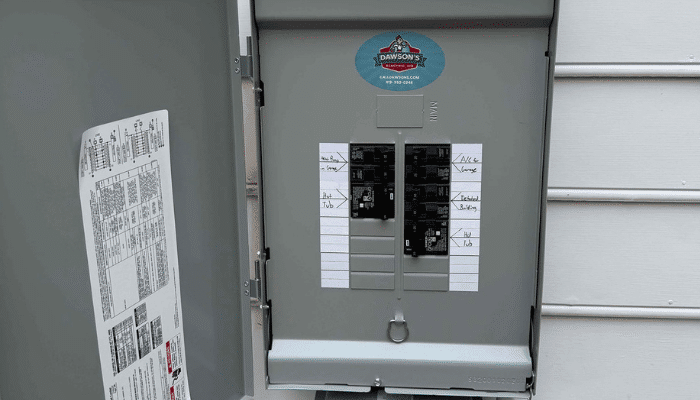
Breaker Trips Versus GFCI Trips
A standard circuit breaker mainly protects wiring from excessive current. It may trip when too many appliances run together or when a short circuit occurs.
A GFCI protects people from current leakage. It may trip even when the total wattage seems low. This can happen if moisture, damaged insulation, or a faulty appliance allows current to escape.
The reset button can help you identify the device:
• A breaker usually flips within the electrical panel.
• A GFCI has test and reset buttons on the outlet.
• Some GFCI protection is built into a breaker in the panel.
• A single GFCI outlet may protect other outlets farther along the wall.
If a GFCI trips only with your air fryer, stop using the appliance until it is tested. If it trips with several appliances, the outlet or circuit may need professional inspection.

Mistakes to Avoid When Troubleshooting
One common mistake is resetting the breaker again and again. A breaker that trips repeatedly is giving you useful information. Ignoring it does not solve the cause.
Another mistake is moving the air fryer to a power strip. This may hide the warning for a short time, but it can overload the strip and create heat at the contacts.
People also sometimes test a suspicious appliance in a bathroom or outdoor outlet. That can expose the appliance to a GFCI circuit and moisture, increasing the danger.
From practical troubleshooting, the safest approach is simple: unplug the appliance, inspect it, reduce the circuit load, and perform no more than one careful test. If the problem returns, stop there. An inexpensive air fryer is not worth risking a fire or electric shock.

When to Call an Electrician or Replace the Air Fryer
Call an electrician when the breaker trips with the air fryer unplugged, the outlet feels hot, the outlet is loose, or you see scorch marks. Professional help is also wise if several outlets lose power or the GFCI will not reset.
Replace or professionally service the air fryer when it trips different circuits, has a damaged cord, produces smoke, smells like burning plastic, or makes a buzzing sound.
A qualified electrician can check:
• Circuit load and breaker size
• Outlet wiring and terminal connections
• GFCI operation
• Voltage at the outlet
• Signs of overheating
• Grounding and electrical faults
Appliance repair may be practical for an expensive model. For a low-cost unit, replacement is often safer and more economical than internal repair. Do not bypass safety switches or attempt to repair live electrical parts.

Frequently Asked Questions About Why Does My Air Fryer Keep Tripping the Electric
Can an air fryer trip a breaker by itself?
Yes. An air fryer can trip a breaker if it has a short, damaged cord, faulty heating element, or another internal defect. It can also overload a circuit even when the appliance is working normally.
Is it safe to keep resetting the breaker?
No. Reset the breaker only once after unplugging the air fryer and checking for obvious problems. If it trips again, leave the appliance unplugged and arrange a professional inspection.
Can I use an extension cord with an air fryer?
It is best to plug an air fryer directly into a wall outlet. If the manufacturer allows an extension cord, it must be heavy duty, short, grounded, and rated above the air fryer’s wattage, but a direct connection remains safer.
Why does my air fryer keep tripping the electric only when it starts heating?
The heating element draws high power and may trigger an overloaded circuit. If the air fryer trips the circuit every time the element turns on, the element or another internal part may be defective.
Can a dirty air fryer cause electrical tripping?
Food and grease buildup can create smoke and heat, but normal dirt does not usually trip a breaker by itself. Grease or moisture that reaches internal electrical parts may contribute to a fault, so clean only according to the manufacturer’s instructions.
Should I use a different outlet?
You may try one different, dry wall outlet for a single controlled test. If the air fryer trips that outlet too, stop using it because the appliance is likely unsafe.
Conclusion
When you ask, “why does my air fryer keep tripping the electric,” the cause is usually an overloaded circuit, a GFCI fault, a damaged cord, moisture, or an internal appliance problem. Start by unplugging the air fryer, checking the outlet and cord, and turning off other high-power appliances.
Never bypass a breaker, use a damaged power cord, or rely on a power strip to solve the issue. If the air fryer trips more than one safe circuit or shows signs of heat or damage, replace it or have it checked by a qualified professional. Share your experience or explore more appliance safety guides to keep your kitchen safe.