Clean Air Fryer With Water And Turn On: Safe Cleaning Guide
Clean your air fryer with water only when the manual allows it, and never run an empty appliance with water inside.
Many people search “clean air fryer with water and turn on” after seeing grease stuck to the basket or heating coil. The safest answer depends on your model, but most air fryers need gentle hand cleaning rather than a water-filled cooking cycle. This guide explains what works, what can damage the appliance, and how to remove baked-on food without risking burns, electrical damage, or poor cooking results.
Can You Clean an Air Fryer With Water and Turn It On?
In most cases, you should not pour water into the air fryer basket and turn the appliance on. Air fryers are small convection ovens, not self-cleaning steam machines. Their heating element and fan sit above the food area, and water can create steam that reaches parts not designed for moisture.
A small amount of water may be safe in some removable baskets or trays. However, this does not mean the whole air fryer is safe to fill with water. Always check the care instructions for your exact brand and model before trying this method.
The safest rule is simple:
- Unplug the air fryer before cleaning.
- Let it cool fully.
- Wash removable parts by hand or in the dishwasher only if the manual approves it.
- Keep water away from the main housing, heating element, fan, display, and power cord.
- Do not turn on the appliance with water inside unless the manufacturer clearly gives that instruction.
A common mistake is to treat an air fryer like a rice cooker or electric kettle. It is not built to boil water. The fan can spread hot moisture, and steam may damage electrical parts or loosen grease that later burns on the heating coil.
Why People Try the Water and Heat Method
The idea behind “clean air fryer with water and turn on” is easy to understand. Warm water and steam can soften dried food, oil, and sauce. Some people place water in the basket, heat the unit for a few minutes, and then wipe the loosened residue away.
This method may appear to work because heat softens grease. Yet it has important limits. Steam does not remove all oil, and it cannot sanitize every surface inside the appliance. It may also push moisture toward the fan or heating element.
Some manufacturers allow a limited steam-cleaning step. For example, a manual may tell you to add a small amount of water to a removable cooking tray and heat it briefly. That instruction is model-specific, not a general rule for all air fryers.
The risk is higher when:
- The water level reaches the heating element.
- The air fryer is operated while empty or nearly empty.
- The appliance has exposed electrical parts.
- The basket has a nonstick coating that can be damaged by harsh treatment.
- The unit is still plugged in while water is used near it.
- The user sprays water into the main housing.
Water and electricity are a poor pair. Even if the appliance seems fine after cleaning, repeated moisture exposure can shorten its life or create a later electrical fault.

The Safest Way to Clean an Air Fryer
A normal hand-cleaning routine is safer and usually more effective than trying to clean an air fryer with water and turn on. You need warm water, mild dish soap, a soft sponge, a microfiber cloth, and a soft brush or old toothbrush.
Follow these steps:
-
Unplug the air fryer and move it away from the sink.
-
Wait until the appliance is completely cool. Hot water on a hot nonstick basket can cause thermal shock and may damage the coating.
-
Remove the basket, crisper plate, drip tray, and any other removable parts.
-
Empty crumbs and loose food into the trash. Do not push grease into the sink, where it can harden inside the drain.
-
Soak the removable parts in warm, soapy water for 10 to 20 minutes.
-
Wipe them with a soft sponge. Use a soft brush for holes, corners, and the underside of the crisper plate.
-
Clean the inside of the main unit with a damp cloth. The cloth should be moist, not dripping wet.
-
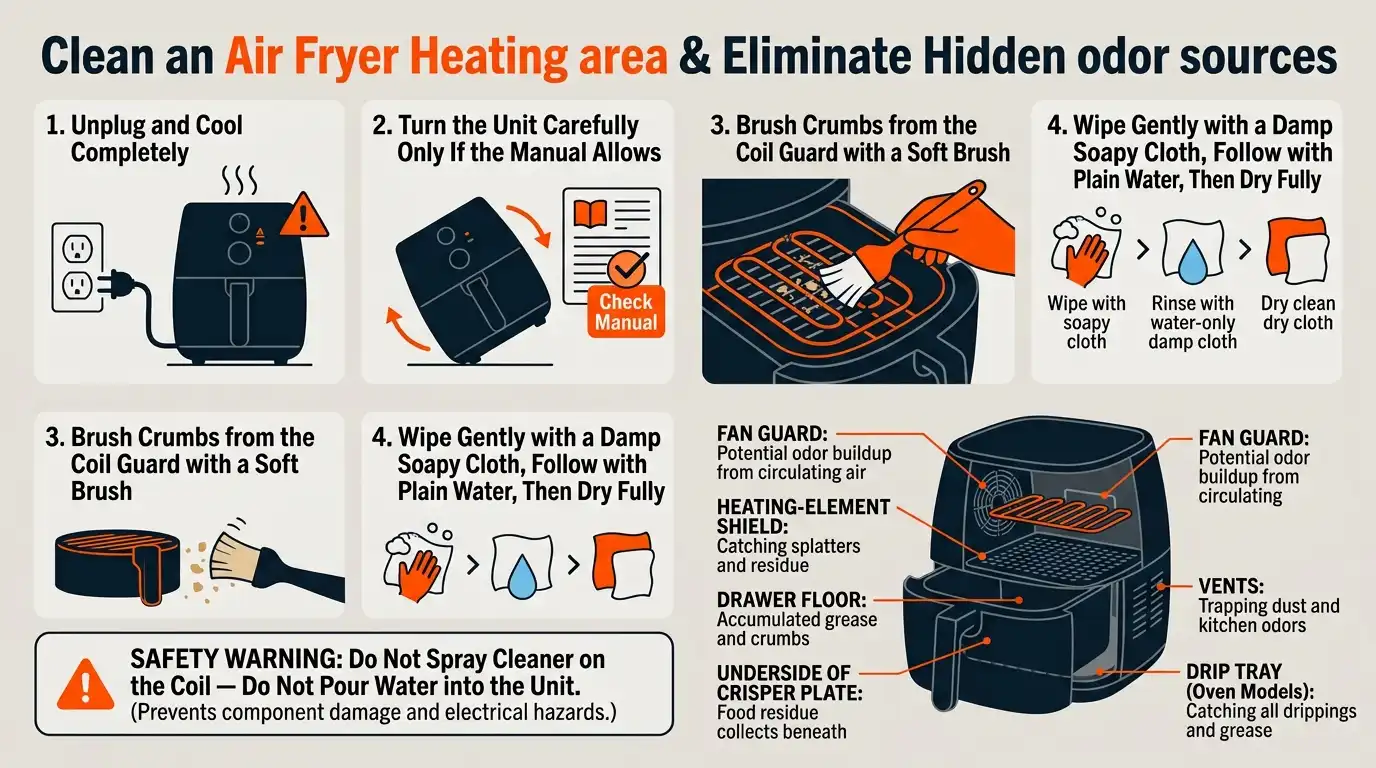
Turn the air fryer upside down only if the manual permits it. This can help you reach the heating area without spraying liquid upward.
-
Wipe the heating element gently when it is cool. A dry or slightly damp soft brush can remove crumbs and light grease.
-
Dry every part fully before putting the appliance back together.
-
Run the empty air fryer for two or three minutes only after all surfaces are dry. This can help remove leftover moisture, but it is not a substitute for cleaning.
Avoid steel wool, abrasive powders, oven cleaner, bleach, and sharp tools. These products can scratch surfaces, damage nonstick finishes, or leave chemical residue where food cooks.
How to Clean the Air Fryer Heating Element
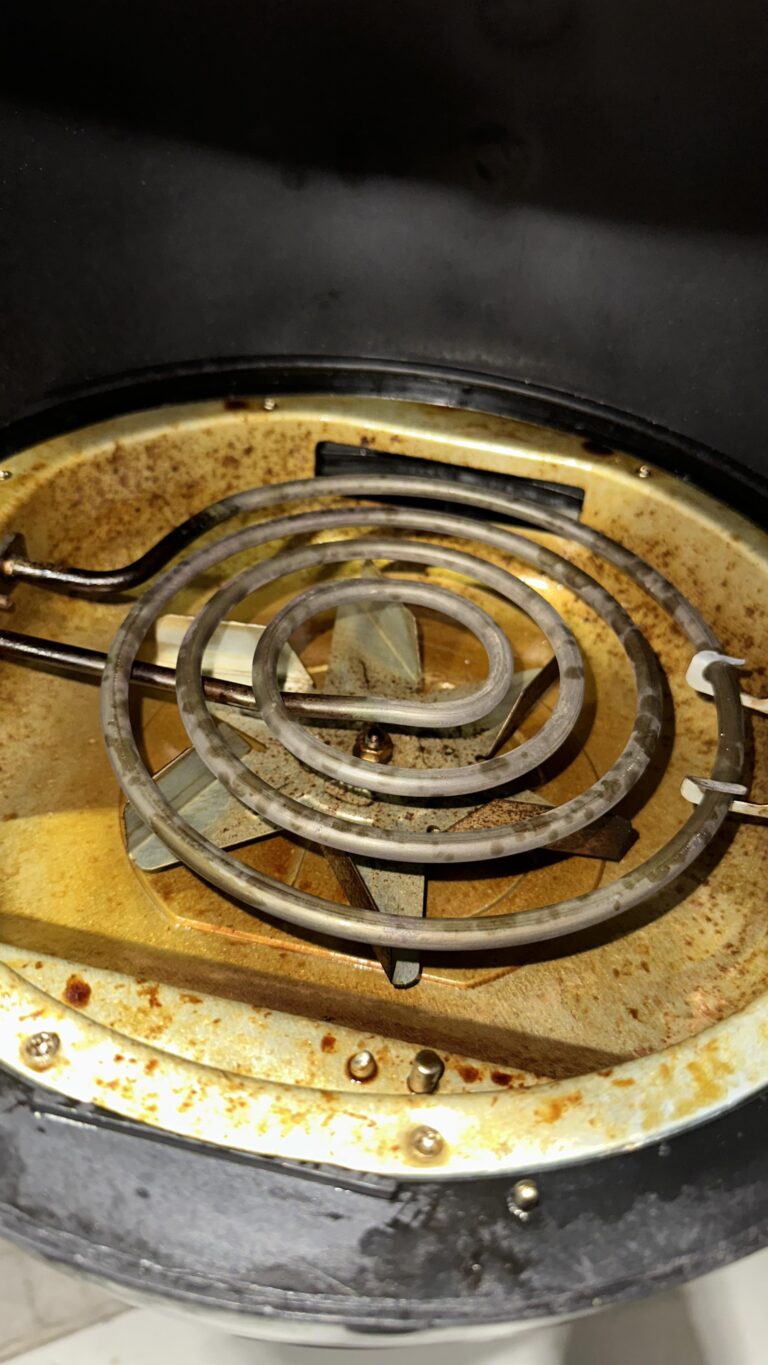
The heating element often causes a smoky smell. Grease and crumbs can stick to it, especially when you cook bacon, burgers, chicken wings, or marinated foods.
First, unplug the air fryer and allow it to cool. Remove the basket and inspect the element with a flashlight. If you see loose crumbs, use a dry, soft brush to sweep them away.
For light grease, use a barely damp cloth or soft toothbrush. Do not spray cleaner directly onto the element. Do not pour water into the top of the appliance. Moisture can travel into the fan motor or electrical controls.
If grease is thick and sticky, stop and read the manual. Some heating elements can be wiped gently, while others need professional service. Scraping hard can bend the element or damage its protective surface.
A smoky air fryer may also need cleaning around the upper interior wall. Grease can collect there and drip back onto the heating coil during cooking. Clean only the areas you can reach safely without forcing parts apart.
How to Remove Baked-On Grease and Food
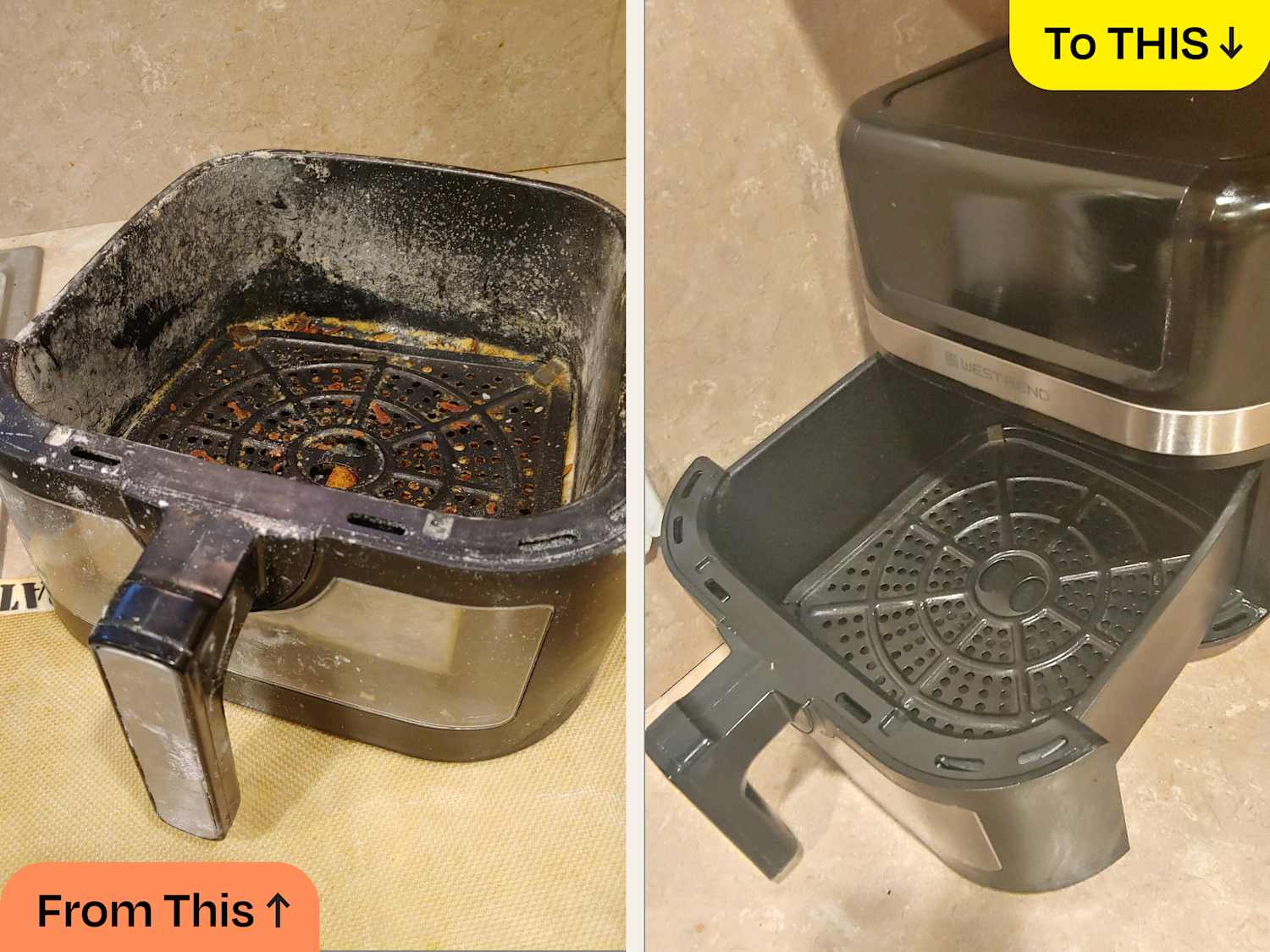
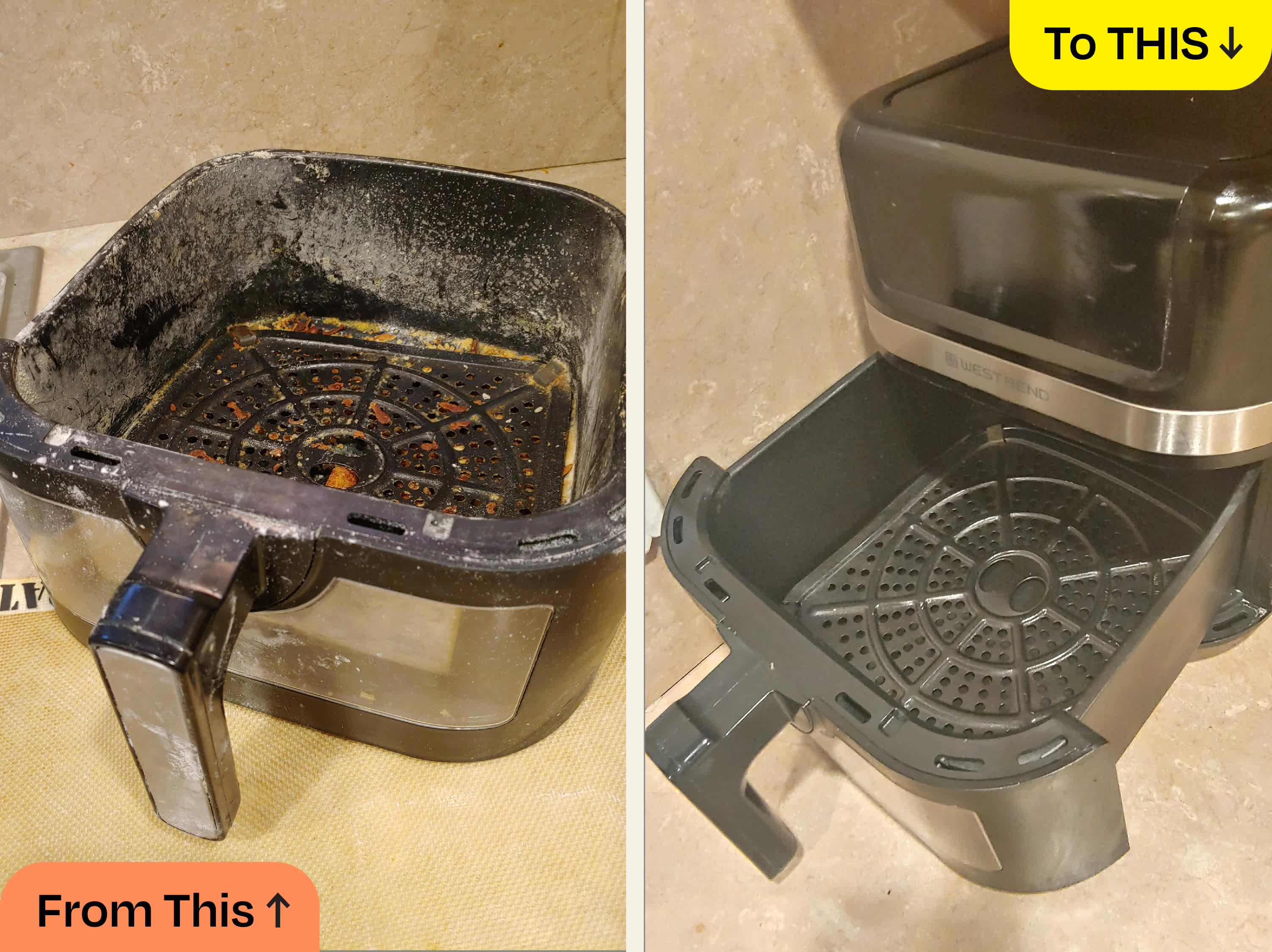
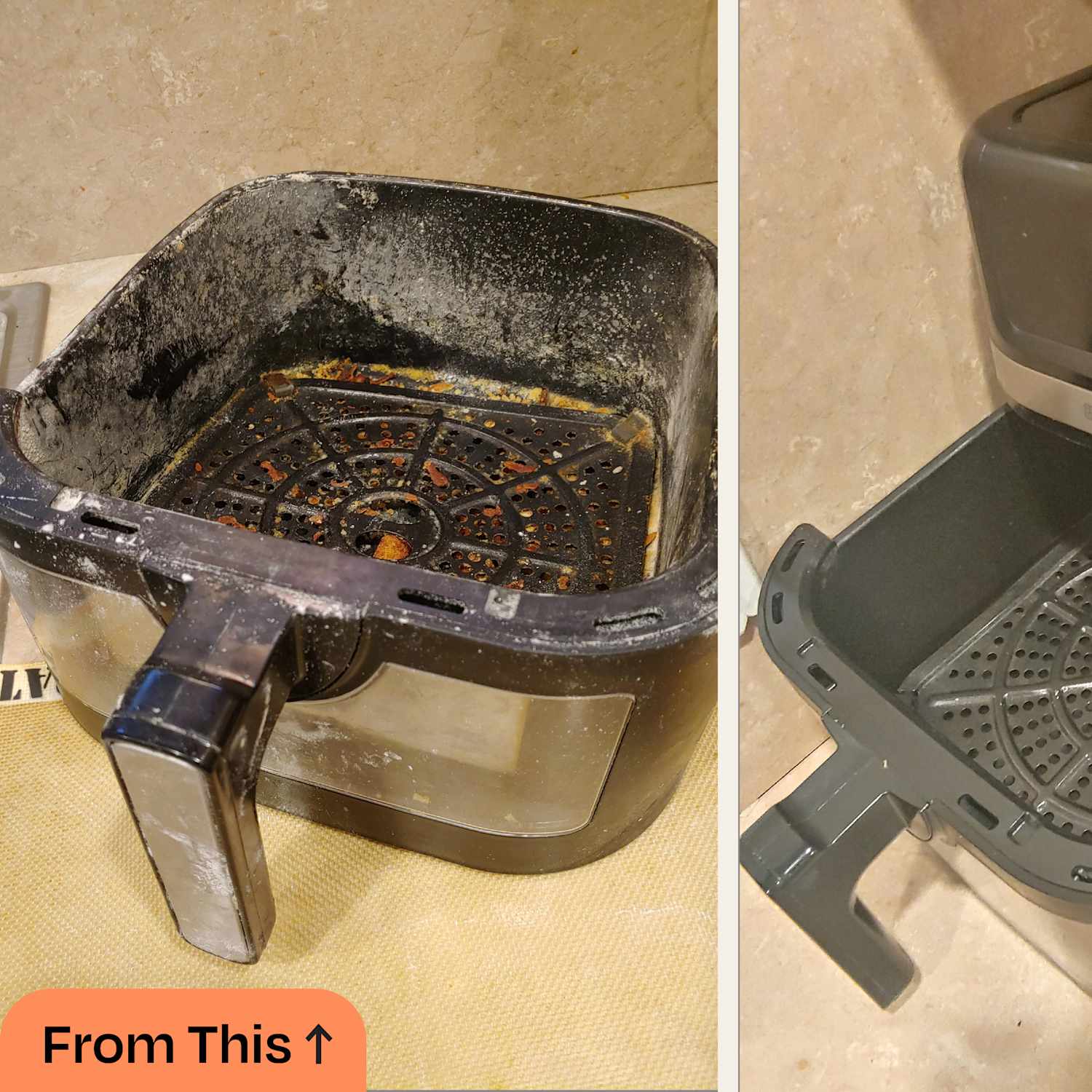
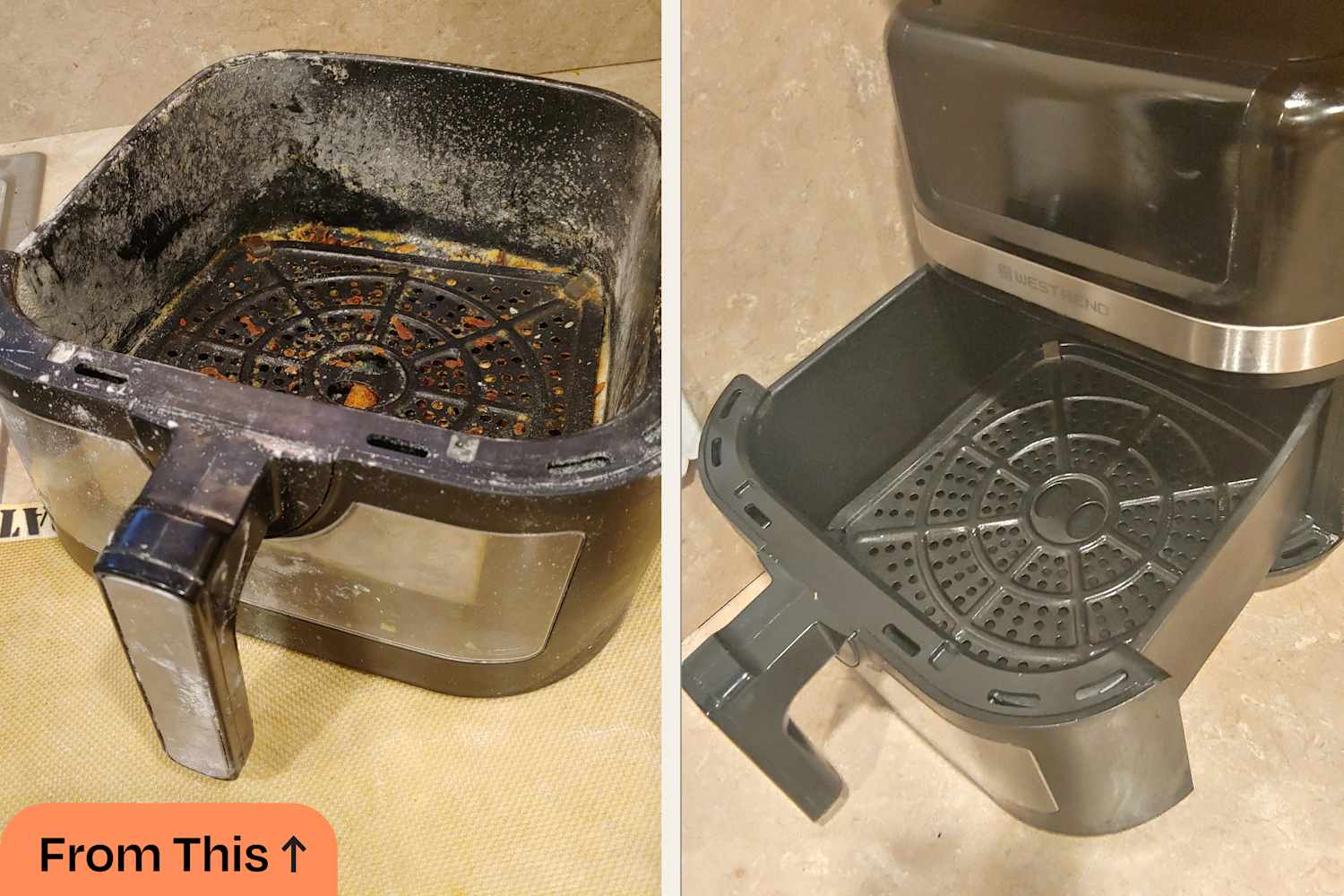
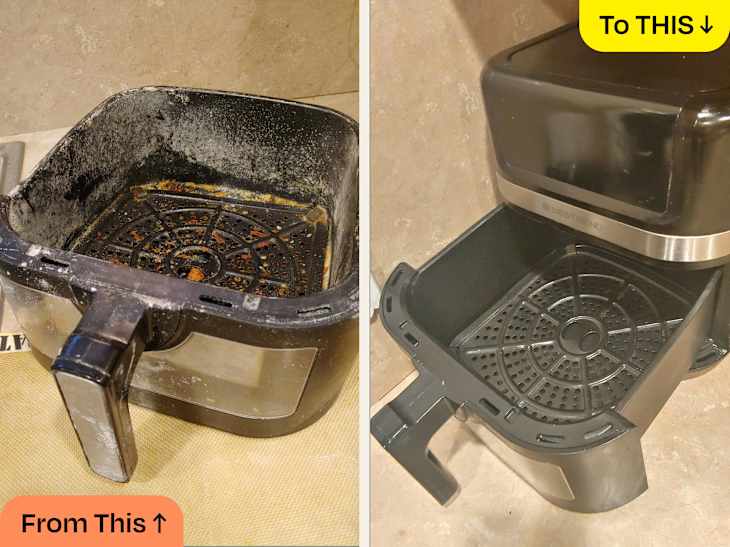
Baked-on residue needs time, not force. Soaking the removable basket in warm water with mild dish soap is usually the best first step.
For stubborn spots, make a soft paste with baking soda and a little water. Apply it to the removable part, wait 10 minutes, and wipe gently. Test a small area first, because some coatings can react poorly to abrasive materials.
You can also use a soft nylon brush for:
- Burned cheese near the basket holes
- Dried sauce along the tray edge
- Food stuck beneath the crisper plate
- Grease around the basket handle
- Crumbs trapped in narrow corners
Do not use a knife or metal fork to lift stuck food. A sharp tool can scratch the coating, and the damaged area may peel during later cooking.
If the basket still smells oily after washing, repeat the soak. You can add a small amount of white vinegar to the soaking water if the product manual does not forbid it. Never mix vinegar with bleach or other cleaning chemicals.
Can Air Fryer Parts Go in the Dishwasher?
Some air fryer baskets and trays are dishwasher-safe. Others are not. The answer depends on the coating, handle design, rack position, and instructions from the manufacturer.
Even when a part is labeled dishwasher-safe, repeated high heat and strong detergent may dull the finish or shorten the life of a nonstick coating. Hand washing is often gentler and takes only a few minutes.
Before using a dishwasher, check:
- The user manual
- The care label on the basket
- Whether the handle contains electrical parts
- Whether the crisper plate has a delicate coating
- Whether the basket fits without touching the heating element
Never place the main air fryer body in a dishwasher. Never submerge it in a sink. The housing contains the motor, controls, wiring, and heating system.
If the coating is peeling, badly scratched, or flaking, replace the basket or contact the manufacturer. Do not continue cooking with a damaged food-contact surface.
:max_bytes(150000):strip_icc()/faw-air-fryers-test-cosori-turboblaze-6qt-rkilgore-1633-7228f85635474e75b60f8b015bab7ce8.jpeg)
What Happens if You Put Water in an Air Fryer and Turn It On?
The result depends on where the water goes and how the appliance is designed. Water in a removable, approved tray may create steam and loosen some residue. Water in the main housing can cause electrical damage.
Possible problems include:
- Steam reaching the fan or control panel
- Water splashing onto the heating element
- Electrical shorts or sensor failure
- A strong burning or plastic smell
- Rust on metal parts
- Damage to the nonstick coating
- Excess moisture trapped inside the appliance
- A circuit breaker trip
Water can also make grease splatter. When hot oil meets water, it may pop and spread. This can cause burns and make the interior dirtier.
If you accidentally poured water into the main unit, unplug it immediately. Do not turn it back on to “dry it out.” Wipe the outside, place the appliance in a dry, ventilated area, and follow the manufacturer’s service guidance. If water reached the controls or electrical section, professional inspection is the safest choice.
A Practical Cleaning Schedule
Regular cleaning prevents heavy buildup and reduces smoke. You do not need a special cleaning cycle if you clean the right parts at the right time.
After every use:
- Remove crumbs and loose food.
- Wash the basket and tray.
- Wipe grease from the interior.
- Check the heating element for food particles.
- Leave parts open to air-dry.
Once a week, or more often with daily use:
- Inspect the upper interior.
- Brush around the heating element.
- Clean the basket holes and underside.
- Wipe the outside and control panel.
- Check for peeling coating, loose screws, or damage.
Every few months:
- Review the care instructions.
- Inspect the power cord and plug.
- Check for unusual noise, smoke, or overheating.
- Replace worn accessories.
- Contact the manufacturer if the appliance has an ongoing odor or electrical issue.
Frequent small cleanings work like brushing your teeth. They prevent a large, difficult problem later.

Mistakes to Avoid When Cleaning an Air Fryer
Many air fryer problems come from cleaning shortcuts. The most common mistake is using too much water and assuming heat will solve everything.
Avoid these habits:
- Do not place the entire air fryer under a faucet.
- Do not spray degreaser inside the main housing.
- Do not run a water-filled basket without clear manual approval.
- Do not turn on the unit while the heating element is wet.
- Do not use metal tools on nonstick parts.
- Do not use oven cleaner unless the manufacturer specifically approves it.
- Do not reassemble the air fryer while parts are damp.
- Do not ignore a burning smell, sparks, smoke, or repeated power loss.
One lesson from hands-on appliance care is that less water is usually better. A damp cloth can clean the housing well. A controlled soak can clean the removable basket. The appliance itself should stay dry.
If you want to clean an air fryer with water and turn on, pause first and read the manual. That one step can prevent an expensive mistake.
Safety Checks After Cleaning
After cleaning, inspect the air fryer before cooking again. Look for moisture around the basket opening, display, buttons, and power cord.
Make sure:
- The basket slides in correctly.
- The crisper plate sits flat.
- No cloth fibers or crumbs remain near the heating element.
- The plug and cord are dry.
- The ventilation openings are clear.
- The unit has no cracks or loose parts.
Run the appliance briefly without food only when it is fully dry and the manual allows empty operation. Stay nearby and watch for smoke, sparks, unusual sounds, or a chemical smell.
Stop using the air fryer if it trips the circuit breaker, produces sparks, smells like burning plastic, or becomes unusually hot on the outside. Unplug it and seek advice from the manufacturer or a qualified technician.
Cleaning improves performance, but it cannot repair damaged wiring or a failing heating element.
Frequently Asked Questions About Clean Air Fryer With Water and Turn On
Can I put water in my air fryer to clean it?
You may add water only to a removable part if the manufacturer’s instructions specifically allow it. Do not pour water into the main housing or run a water-filled air fryer without clear model-specific guidance.
How much water can I put in an air fryer?
There is no universal safe amount. Some models may allow a small amount in a removable tray, while others prohibit water during operation, so follow the manual rather than using a general measurement.
Can I steam clean an air fryer?
Some air fryers support a limited steam-cleaning process, but many do not. Steam can reach electrical parts, so use this method only when the manufacturer describes it clearly.
Can I wash an air fryer basket with soap and water?
Yes, removable baskets and trays can usually be washed with warm water and mild dish soap. Avoid abrasive pads, harsh chemicals, and soaking any part that the manual says is not water-safe.
Why does my air fryer smoke after cleaning?
Smoke may come from leftover grease, crumbs, or moisture near the heating element. Unplug the appliance, let it cool, inspect the interior, and clean it again; persistent smoke may signal a mechanical or electrical problem.
Can I turn on an air fryer while the basket is wet?
It is best to dry the basket and crisper plate before use. Moisture may create steam, splatter grease, or affect the cooking result, and wet parts can be unsafe if water reaches the heating area.
What should I do if water gets inside the air fryer?
Unplug the appliance and do not turn it on to dry it. Let it dry in a well-ventilated place and contact the manufacturer or a qualified technician if water reached the controls, motor, or electrical components.
Conclusion
The safest way to clean an air fryer is to wash the removable parts with warm, soapy water and wipe the main unit with a damp cloth. Avoid the common “clean air fryer with water and turn on” method unless your model’s manual clearly approves it. Never immerse the appliance, spray its housing, or operate it while the heating element is wet.
Clean small amounts of grease after each use, inspect the heating area often, and replace damaged baskets or parts. Your air fryer will cook more evenly, produce less smoke, and last longer. Check your model’s care guide today, follow the safe steps above, and share your best cleaning tips with other air fryer owners.