Why Is An Air Fryer Better Than A Convection Oven: Guide
Introduction
For many U.S. households, an air fryer is better than a convection oven when the goal is to cook small portions fast, with a crisp outside and little oil. Its small chamber heats quickly, and its fan moves hot air close to the food. This can shorten cooking time and reduce energy use for one or two servings.
An air fryer is not a new type of heat. It is a small convection oven, often with a strong fan and a perforated basket. A full-size convection oven still wins for large meals, baking, and cooking several dishes at once.
The better choice depends on what you cook, how much you cook, and how often you use your main oven.
Air Fryer vs. Convection Oven: The Short Answer
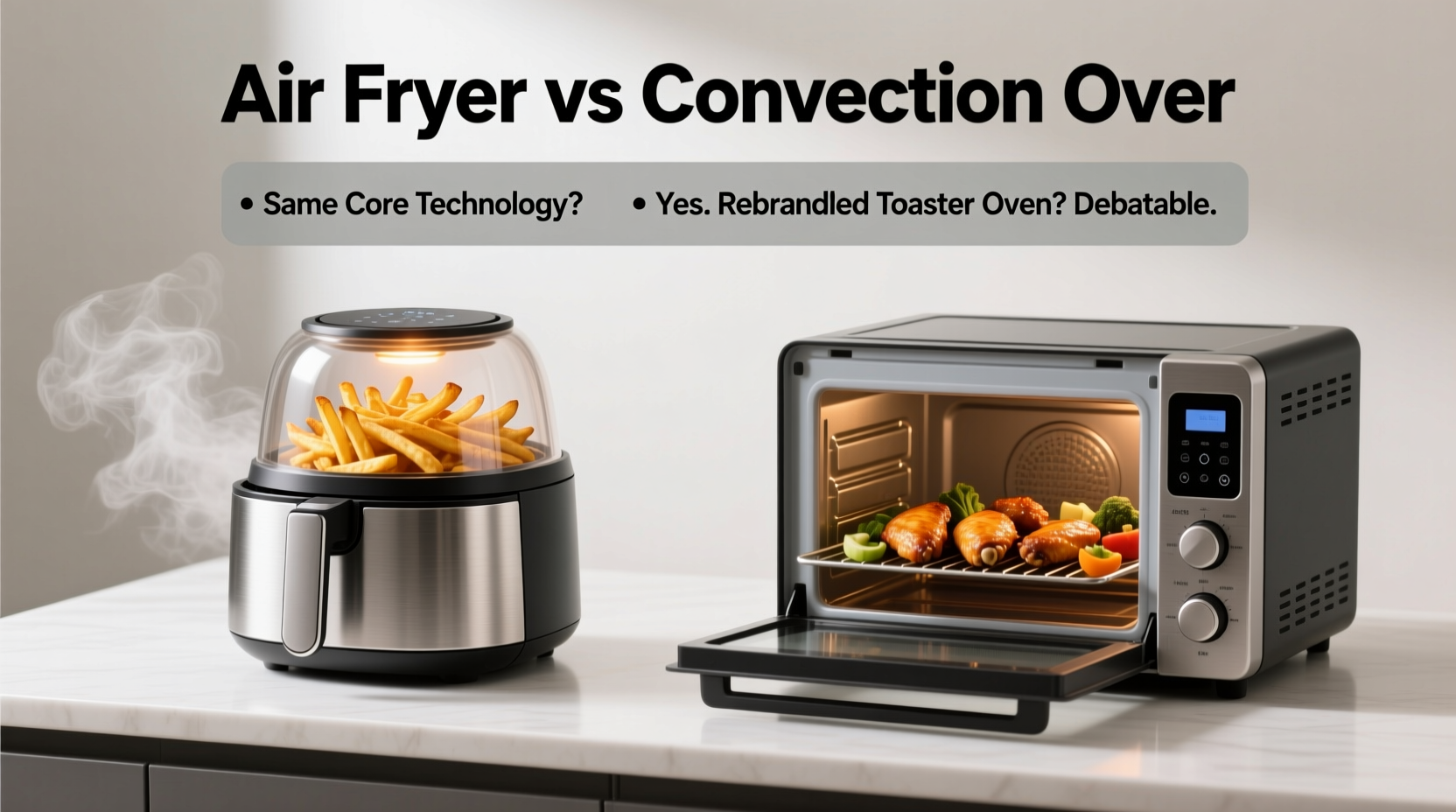
An air fryer often performs better for small, fast meals because it has:
- A smaller cooking space
- Faster preheating
- Strong air movement around the food
- A basket that exposes more food surface
- Less energy use for small portions
- Simple controls and easy cleanup
A convection oven is often better when you need:
- More cooking capacity
- Several racks
- A large baking pan
- A whole chicken, roast, or casserole
- Better control for baking
- One appliance for many cooking tasks
The key difference is size and airflow. Both appliances use hot air. The air fryer usually places that air closer to the food and cycles it through a smaller space.
What Is the Difference Between an Air Fryer and a Convection Oven?
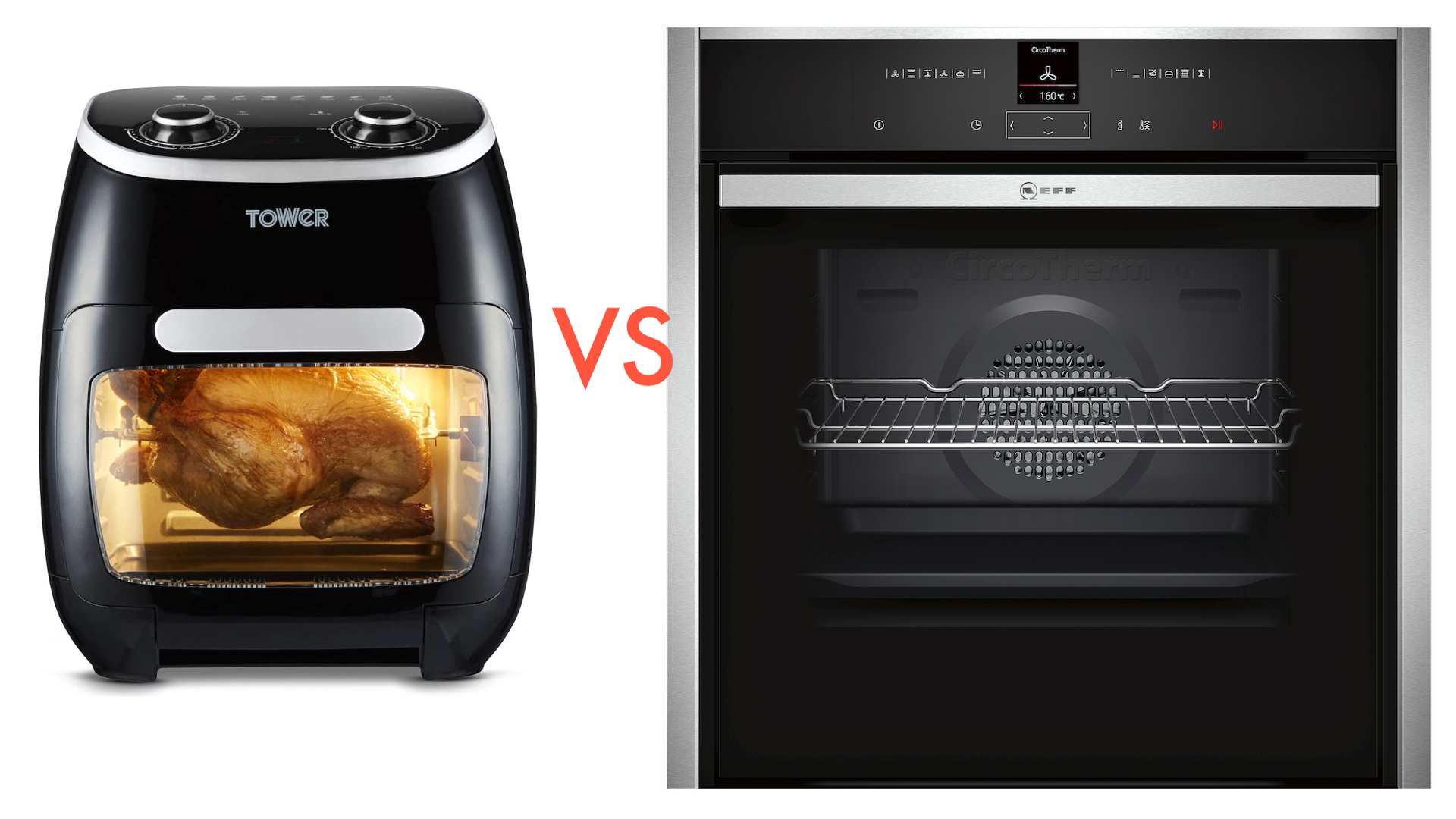
An air fryer is a compact convection cooking appliance. A convection oven is a larger oven with a fan that moves hot air around the food.
The heating parts are similar. Both may use an electric heating element and a fan. Neither appliance truly fries food in the same way as a deep fryer, which cooks food in hot oil.
How an air fryer works
Most air fryers have:
- A heating element near the top
- A fan that pushes hot air downward
- A basket or tray with holes
- A small chamber that holds heat
The holes let hot air reach more sides of the food. This helps moisture leave the surface. The result can be a dry, browned, crisp crust.
How a convection oven works
A convection oven has a larger cavity. Its fan moves hot air around racks, pans, and food. The air may not move as close to every surface as it does in a small air fryer basket.
Convection ovens can brown food well. Yet the larger chamber takes more time and energy to heat, especially when cooking a small portion.
The practical difference
Think of an air fryer as a small, focused wind tunnel. A convection oven is a larger room with moving air. The small space can create faster cooking for small foods, but the large space offers more room and flexibility.

Why an Air Fryer Can Cook Faster
An air fryer can cook faster because it heats less air and keeps the food close to the heat source.
A large oven must warm its cavity, racks, walls, and air. An air fryer has less space to heat. Many models reach cooking temperature in a few minutes, while a full-size oven may need longer to preheat.
Cooking speed also depends on the food. Frozen fries, chicken wings, fish fillets, vegetables, and reheated pizza often benefit from the air fryer's compact design.
The fan matters, too. Moving air transfers heat to the food more effectively than still air. It also helps remove surface moisture. That supports browning and crisping.
Does an air fryer always cook faster?
No. Cooking time varies by:
- Food size and thickness
- Starting temperature
- Amount of food
- Basket design
- Temperature setting
- Whether the food is frozen or thawed
- How often the basket is opened
A crowded basket can slow cooking. Food needs space for air to move around it. A small batch may finish quickly, while a full basket may need shaking, turning, or extra time.
Always check the food itself, not only the timer. For meat, use a food thermometer. The U.S. Department of Agriculture recommends cooking poultry to an internal temperature of 165°F and ground meats to 160°F. See the USDA safe minimum internal temperature chart.

Why Air Fryers Often Use Less Energy
An air fryer can use less electricity than a full-size oven for small meals because it heats a smaller space and often cooks for less time.
This does not mean every air fryer is always more efficient. Energy use depends on the appliance's wattage and cooking time.
A simple energy calculation
You can estimate electricity use with this formula:
Energy used in kilowatt-hours = watts ÷ 1,000 × hours used
For example:
- A 1,500-watt air fryer running for 20 minutes uses about 0.50 kilowatt-hours.
- A 3,000-watt oven running for 30 minutes uses about 1.50 kilowatt-hours.
These are hypothetical examples. Actual use changes when the heating element cycles on and off. Preheating also affects the result.
The air fryer has the clearest advantage when cooking one or two servings. If you need to cook a full meal for a large family, several air fryer batches may take longer than one oven cycle. In that case, the convection oven may use less energy per serving.
When energy savings matter most
An air fryer may make sense when you often cook:
- A small tray of vegetables
- Two chicken breasts
- A few fish portions
- Frozen snacks
- One or two baked potatoes
- Leftover pizza or fried food
For a large casserole or several pans of food, use the convection oven.

Why Air Fryers Make Food Crispier
Air fryers can make food crisp because their baskets allow hot air to reach more of the food's surface.
Crispness depends on surface moisture. As the surface dries, browning can occur. A light coating of oil may improve browning, but deep frying is not required.
The basket also keeps food above the bottom of the appliance. In many models, hot air moves below and around the food. A solid baking dish can block some airflow.
Foods that often work well in an air fryer
Air fryers are useful for foods with a dry or breaded surface, such as:
- French fries
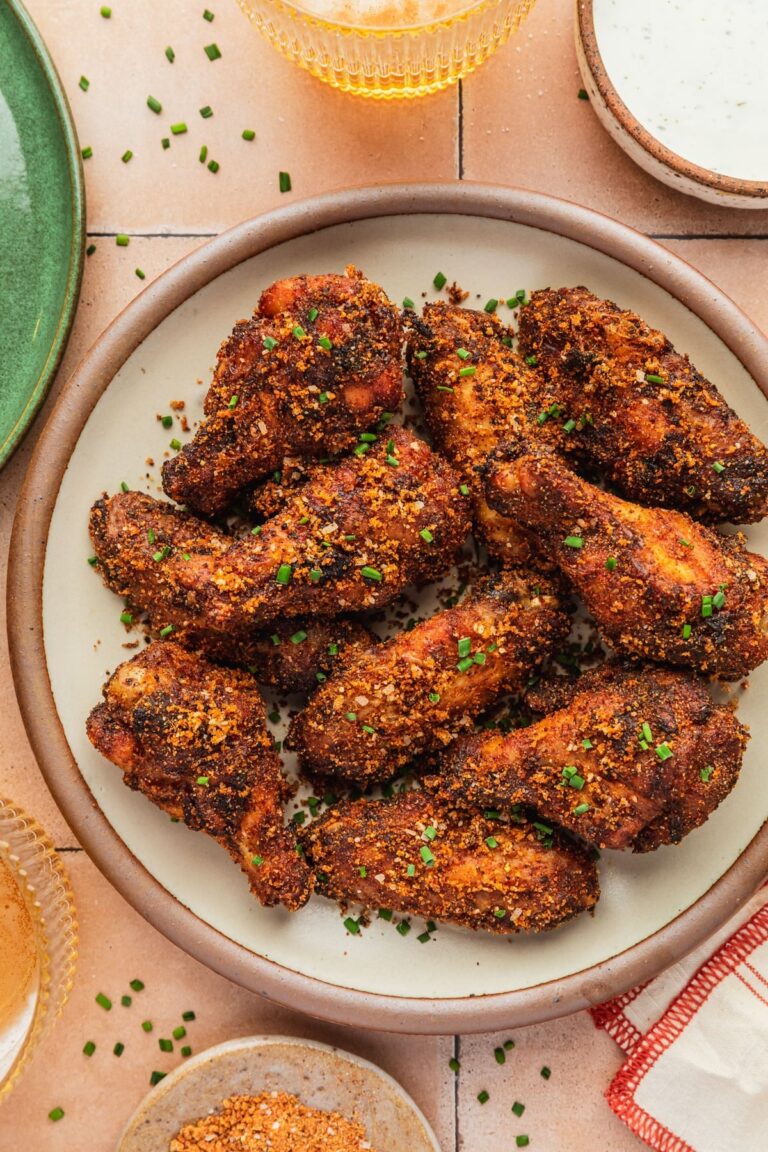
- Chicken wings
- Breaded fish
- Mozzarella sticks
- Tater tots
- Brussels sprouts
- Cauliflower
- Toasted nuts
- Reheated pizza
Shake the basket or turn the food when the recipe calls for it. This helps even out browning.
Foods that may not crisp well
An air fryer may struggle with:
- Wet batter
- Very light foods
- Large amounts of cheese
- Loose leafy greens
- Very moist casseroles
- Food packed tightly together
Wet batter can blow off before it sets. Light food may move around in the strong airflow. A convection oven may be better for cakes, custards, bread, and other foods that need a stable pan.
Why an Air Fryer Is Easier for Small Meals
An air fryer is often easier for daily cooking because it needs less setup.
You can place food in the basket, set the time and temperature, and check it during cooking. Many models have removable baskets or trays that fit in a dishwasher. Always check the user manual before using a dishwasher, since materials and parts vary.
An air fryer can also keep the main oven free. This helps when you are cooking several dishes for a holiday meal or preparing food while the oven is in use.
Cleanup is usually simpler because food stays in a small basket. Still, grease and food residue can build up near the heating element. Clean the basket, tray, and interior as the manufacturer directs.
Air fryer convenience limits
Convenience drops when:
- The basket is too small
- You need several batches
- The appliance must be stored after each use
- The basket has hard-to-clean grooves
- The fan is loud
- Counter space is limited
A full-size convection oven may be more convenient if it is already installed and you cook large meals often.

Air Fryer vs. Convection Oven Comparison
The table below compares the main choice factors for typical U.S. home cooking. Exact results vary by model, recipe, and batch size.
| Factor | Air fryer | Convection oven |
|---|---|---|
| Small portions | Usually better | Often more appliance than needed |
| Large meals | Limited by basket size | Usually better |
| Preheating | Often faster | Often slower |
| Crisping | Strong for many foods | Good, but varies by pan and rack |
| Baking | Good for small items | Usually more flexible |
| Energy for one serving | Often lower | Often higher |
| Several dishes at once | Limited | Usually better |
| Counter space | Requires extra space | Uses built-in space |
| Cleanup | Often easy | Pan and oven cleanup may take longer |
| Cooking noise | Fan noise is common | Fan noise varies by model |
| Batch cooking | May require multiple rounds | Often easier |
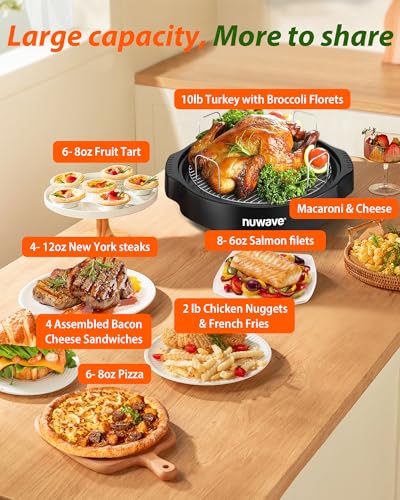
The main trade-off is capacity. An air fryer saves time for small jobs, while a convection oven saves time when the meal is large.
How to Choose Between an Air Fryer and a Convection Oven
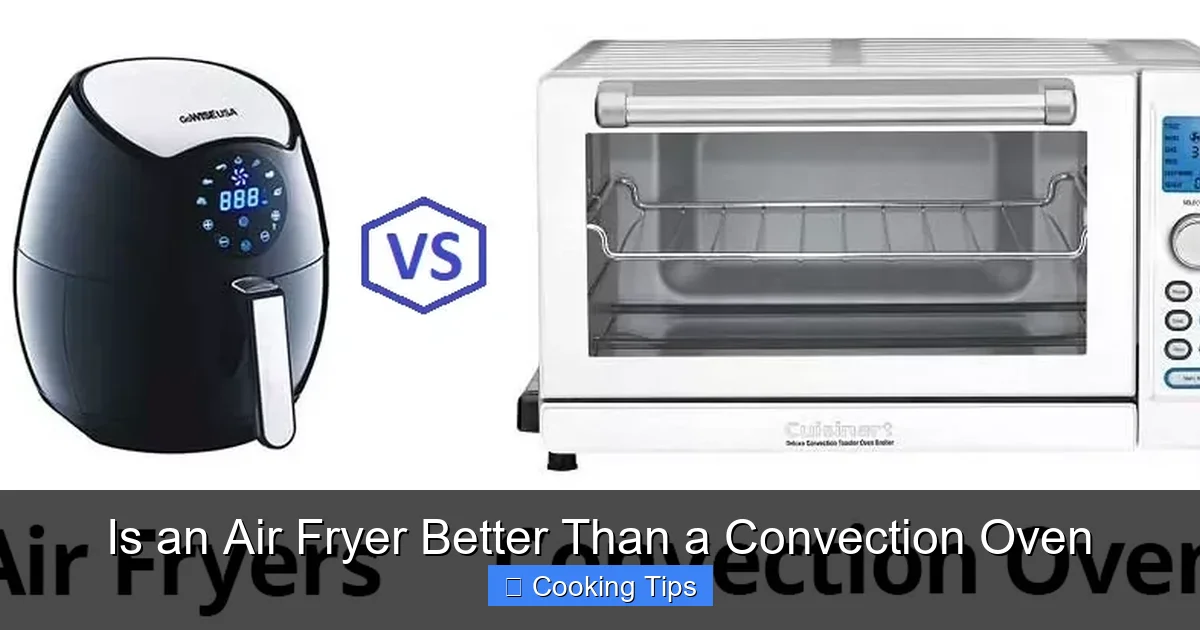
Choose an air fryer if most of these statements fit your kitchen:
- You cook for one to three people.
- You like crisp food.
- You often reheat leftovers.
- You cook frozen foods.
- You want short preheat times.
- You have counter space.
- You do not mind cooking in batches.
- You want to avoid heating the entire oven for a small meal.
Choose a convection oven if most of these statements fit:
- You cook for four or more people.
- You bake often.
- You use large pans.
- You prepare roasts, casseroles, or whole poultry.
- You need two or more racks.
- You already own a good convection oven.
- You want one appliance to handle most cooking tasks.
A useful decision rule
Ask one question:
Will the food fit in a single air fryer batch with space around it?
If yes, the air fryer may be the faster and simpler choice. If no, compare the time for several batches with the time needed for one convection oven cycle.
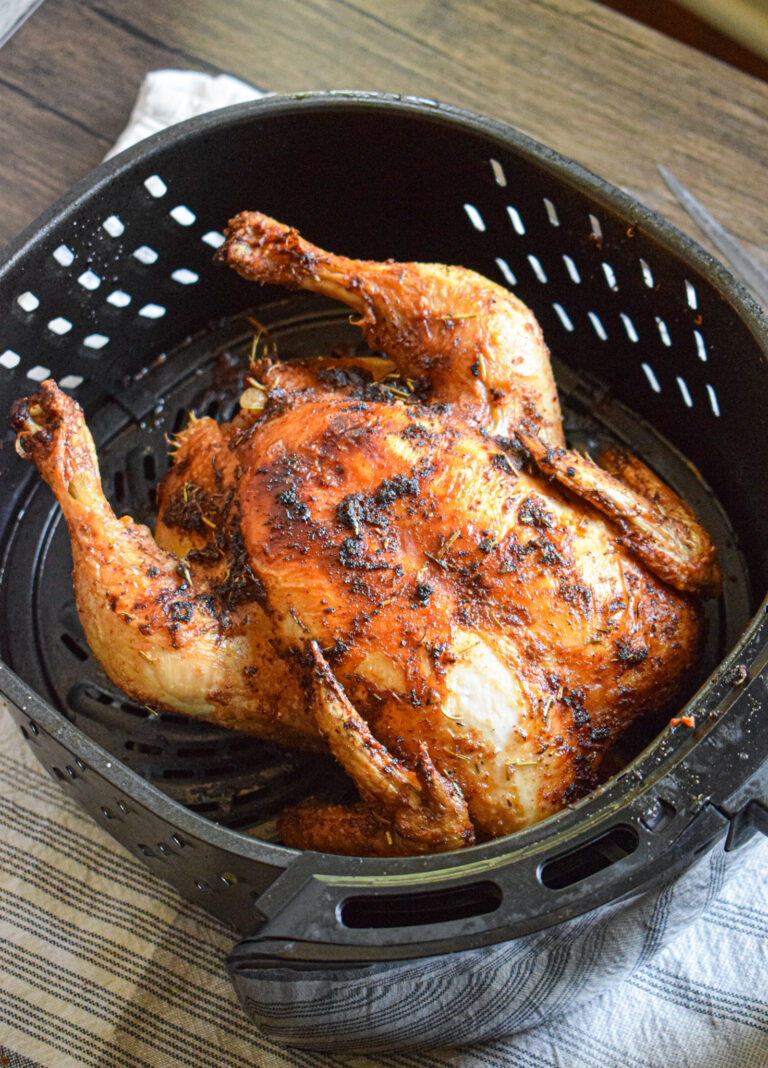
For example, an air fryer may be ideal for two chicken breasts. A convection oven may be better for a large pan of chicken, vegetables, and potatoes.
How to Convert Convection Oven Recipes for an Air Fryer
Air fryers often cook faster than a full-size convection oven. A common starting point is to reduce the recipe temperature by about 25°F and begin checking the food early.
This is a starting method, not a universal rule. Air fryer designs differ widely. Basket shape, fan strength, heating element position, and food depth all affect the result.
Use this process:
- Start with the recipe's convection setting if one is provided.
- Reduce the temperature slightly if the food browns too fast.
- Check the food before the listed cooking time ends.
- Turn or shake the food when needed.
- Confirm doneness with appearance, texture, or a thermometer.
- Record the result for the next batch.
Do not fill the basket to the top unless the manual or recipe supports it. Overfilling blocks airflow and can leave the center soft or undercooked.
For packaged foods, follow the package directions first. Then adjust based on the air fryer's manual and your results.

Common Air Fryer Mistakes
The most common mistake is overcrowding. Food needs open space for hot air to move. A full basket can produce uneven color and a soft surface.
Other mistakes include:
- Using too much oil
- Adding oil directly to a nonstick basket without checking the manual
- Covering the basket with foil and blocking airflow
- Forgetting to shake small foods
- Using a loose liner that can touch the heating element
- Cooking wet batter without a suitable pan
- Ignoring the appliance's maximum fill line
- Placing the appliance too close to a wall or cabinet
- Leaving the air fryer unattended
- Skipping cleaning after greasy cooking
Read the manual for clearance, cookware, temperature limits, and cleaning rules. The U.S. Consumer Product Safety Commission has published recall and fire-safety information for kitchen appliances. Check CPSC recalls if you are concerned about a specific model.
Never use an air fryer on a wet surface. Keep the cord away from hot surfaces. Do not cover ventilation openings. If you see smoke, turn off the appliance and unplug it when safe to do so.

Is an Air Fryer Healthier Than a Convection Oven?
An air fryer is not automatically healthier than a convection oven. The cooking method matters less than the food, oil, portion size, and recipe.
An air fryer can reduce the amount of added oil used for foods that are often deep-fried. That may lower the calories from oil. It does not turn processed food into a health food.
A convection oven can also cook vegetables, fish, chicken, and other foods with little oil. Both appliances can support a balanced diet.
For high-temperature cooking, avoid heavily charring food. The National Cancer Institute explains that some cooking methods can form compounds of concern when meat is cooked at high temperatures. You can read its guidance on chemicals in meat cooked at high temperatures.
The best choice is the appliance that helps you prepare suitable portions with a cooking method you can use safely and consistently.

Key Takeaways
- An air fryer is a small convection oven with focused airflow.
- It is often better for small portions, crisp foods, and quick reheating.
- A convection oven is usually better for large meals, baking, and several dishes.
- Air fryers may use less energy for small batches.
- Overcrowding reduces crispness and can cause uneven cooking.
- Neither appliance is automatically healthier; ingredients and portions matter.
- Use a food thermometer for meat and poultry.
- Choose based on batch size, cooking style, counter space, and cleanup needs.
Frequently Asked Questions
Is an air fryer just a convection oven?
Yes, an air fryer is a compact form of convection oven. Its small chamber, basket, and strong airflow create conditions that often cook small foods quickly and make them crisp.
Can an air fryer replace a convection oven?
It can replace some convection oven tasks, but not all of them. An air fryer may handle small roasted foods, frozen foods, and reheating. A convection oven remains more useful for large pans, baking, roasts, and family-size meals.
Does an air fryer use less electricity than an oven?
It often uses less electricity for a small serving because it heats a smaller space and may cook faster. Several air fryer batches can use as much or more energy than one oven cycle.
Is air-fried food healthier than baked food?
Not by default. Air frying may reduce added oil for some recipes, but the ingredients and portion size matter more than the appliance alone.
Can I use aluminum foil in an air fryer?
Many air fryers allow limited foil use, but the manual controls. Foil must not block airflow, cover the entire basket, or touch the heating element. Do not use loose foil that could lift into the fan or heater.
Conclusion
An air fryer is better than a convection oven when you need a fast, crisp result for a small amount of food. Its compact chamber and strong airflow make it efficient for fries, wings, vegetables, frozen foods, and leftovers.
A convection oven is the better tool for large portions, baking, roasts, casseroles, and multi-rack cooking. The choice is not about which appliance is always superior. It is about matching the appliance to the meal.
For most U.S. kitchens, the best approach is simple: use the air fryer for quick small batches and the convection oven when capacity and flexibility matter more.