Why Are My Air Fryer Potatoes Not Crispy: Easy Fixes
Air fryer potatoes stay soft when too much water remains on the surface, the basket is too full, or the heat cannot reach every piece. In most U.S. kitchens, the fix is simple: cut the potatoes evenly, rinse or soak them if needed, dry them very well, use a small amount of oil, and cook them in a single layer at the temperature listed in your air fryer manual.
Crisp potatoes need three things:
- Dry surfaces
- Enough hot air around each piece
- Enough heat and time to brown the outside
If one of these is missing, the potatoes may steam instead of fry.

The Most Common Reasons Air Fryer Potatoes Stay Soft
Air fryer potatoes usually fail because of moisture, crowding, or poor heat flow. These problems often occur together, so changing only the cooking time may not solve them.
1. The potatoes were not dried well
Raw potatoes contain a great deal of water. When they heat, that water turns into steam. If the surface is wet, the potato can steam before it has a chance to brown.
After rinsing or soaking potatoes, dry them with clean kitchen towels or paper towels. Press gently but firmly. Damp potatoes will usually turn out soft, pale, or unevenly browned.
2. The basket is overcrowded
An air fryer needs room for hot air to move around the food. A crowded basket blocks that air and causes the potatoes to release moisture into a small space.
The result is closer to steaming than frying. This is especially common with:
- French fries
- Potato wedges
- Diced breakfast potatoes
- Frozen fries piled above the basket’s usual fill line
Cook in batches when needed. A smaller batch often becomes crisp faster than a large batch cooked all at once.
3. The potato pieces are too large or uneven
Large chunks take longer to cook through. Small pieces may brown before the large pieces are tender. Uneven cuts also make it hard to choose the right cooking time.
Cut potatoes into pieces of similar size. For fries, aim for a consistent thickness. For cubes, pieces around ¾ inch are a useful starting point, but the best size depends on the recipe and air fryer.
4. The air fryer was not preheated
Some air fryers heat quickly, while others need more time to reach the selected temperature. Starting with a cold basket can extend the cooking time and reduce browning.
Preheat when your model’s instructions recommend it. If the manual does not require preheating, adding a few minutes may still help when cooking fresh potatoes.
5. There was too little or too much oil
A light coating of oil helps the surface brown and crisp. Oil also improves contact between the hot air and the potato surface.
Too little oil may leave the potatoes dry and pale. Too much oil can make them greasy and may cause the coating or seasoning to slide off.
Toss the potatoes with a thin, even coating. Do not pour a large amount of oil into the basket.
6. The temperature or cooking time was too low
Potatoes need enough heat to drive off moisture and brown the surface. If the temperature is too low, they may become tender but not crisp.
Many fresh potato recipes work well somewhere around 375°F to 400°F, but air fryers vary. Follow the temperature guidance for your model and recipe. A lower temperature can help cook thick pieces evenly, while a higher temperature can improve browning near the end.
7. The basket or tray is dirty
Old oil, crumbs, and food residue can affect air circulation. A dirty basket may also cause sticking, uneven browning, or smoky odors.
Clean the basket and tray after they cool. Check that the air openings are not blocked by grease or debris.

How to Make Crispy Air Fryer Potatoes
The most reliable method is to control the potato’s moisture before cooking and protect airflow during cooking.
What you need
- Potatoes
- A knife or cutter
- Cold water
- Clean towels or paper towels
- A small amount of cooking oil
- Salt and other seasonings
- An air fryer
Choose potatoes that are firm and free from soft spots. Russet potatoes often produce a dry, fluffy center with a crisp outside. Yukon Gold potatoes have a naturally creamy center and can also brown well. Red potatoes tend to hold their shape but may have a softer exterior.
Step-by-step method
1. Cut the potatoes evenly
Cut fries, wedges, or cubes into similar sizes. Remove very thin pieces if they are likely to burn before the rest are cooked.
2. Rinse or soak the potatoes
Rinsing removes some surface starch. For fries, soaking the cut potatoes in cold water for about 20 to 30 minutes can help remove more starch from the outside.
Soaking is not always required. It is most useful when fries are sticky, gummy, or difficult to separate.
3. Dry the potatoes completely
Drain the potatoes, then dry them in batches. This is one of the most important steps.
If the towel becomes wet, use a dry towel. The potatoes should feel dry rather than slick with water before you add oil.
4. Add a light oil coating
Toss the potatoes with a small amount of oil. Use enough to coat the surfaces lightly, not enough to pool in the bowl.
Canola, vegetable, avocado, and other cooking oils may work, provided they are suitable for the cooking temperature. Check the oil label and your air fryer instructions.
5. Preheat if recommended
Preheat the air fryer according to its manual. If your model does not require preheating, a short preheat can still improve the first batch.
Do not place loose parchment paper in an empty preheating basket. It can lift into the heating element. Use parchment only as directed by the manufacturer and keep it weighed down by food.
6. Arrange the potatoes in a single layer
Leave space between pieces when possible. Some overlap is normal, but a deep pile will reduce browning.
For a large amount of potatoes, use several batches. This takes longer but usually produces a much better texture.
7. Shake or turn the potatoes
Shake the basket or turn the potatoes partway through cooking. This exposes more surfaces to the hot air and helps prevent one side from staying pale.
Thin fries may need more frequent movement. Large wedges may need only one turn.
8. Add delicate seasonings at the right time
Salt can be added before cooking, but wet sauces and sugary coatings can soften the crust or burn. Add sauces after the potatoes are crisp.
Fresh herbs, grated cheese, and fine spices may also be added near the end if they tend to burn.
9. Let the potatoes rest briefly
Transfer the cooked potatoes to a plate or rack instead of leaving them in the hot basket. A short rest lets excess steam escape.
Do not cover them tightly. Trapped steam can soften the crust.

A Simple Troubleshooting Chart
Use the symptom to identify the most likely cause before changing the recipe.
| Symptom | Likely cause | Best correction |
|---|---|---|
| Pale and soft | Low heat, wet surface, or short cooking time | Dry better and cook longer at the recipe temperature |
| Crisp outside but raw inside | Pieces are too thick or heat is too high | Cut smaller or lower the temperature and extend the time |
| Cooked but not browned | Too little oil or too much moisture | Dry thoroughly and use a light oil coating |
| Crisp in spots only | Uneven cuts or poor air circulation | Cut evenly and shake or turn the basket |
| Soggy after serving | Steam is trapped | Serve at once and avoid covering |
| Burned edges with a hard center | Pieces are too large or temperature is too high | Cut evenly and cook at a slightly lower temperature |
| Greasy potatoes | Too much oil or excessive crowding | Use less oil and cook in batches |
| Potatoes stick to the basket | Wet starch, insufficient coating, or a damaged surface | Dry the potatoes, use a light oil coating, and check the basket |
The best correction is usually to change one variable at a time. If you change the cut, temperature, oil, and cooking time together, you may not know which change helped.

Should You Soak Potatoes Before Air Frying?
Soaking can help fries crisp, but it is not essential for every type of potato. Cold water removes some surface starch, which may reduce sticking and gummy surfaces.
Soaking is most useful for:
- Fresh-cut fries
- Potatoes that feel very sticky after cutting
- Fries that repeatedly turn soft instead of crisp
You may skip soaking when making:
- Small potato cubes
- Thin slices
- Potato wedges with a dry surface
- Frozen fries, which are usually prepared before packaging
The key condition is drying. A soaked potato that is not dried well may turn out softer than one that was only rinsed.

Does Cornstarch Make Air Fryer Potatoes Crispier?
A small amount of cornstarch can create a drier, crisp coating on some potato recipes. It works best for wedges or cubes that have been dried first.
Use it carefully. Too much cornstarch can leave a powdery coating or make the potatoes taste chalky. Toss the dry potatoes with a light dusting, then add oil so the coating adheres.
Cornstarch is not a substitute for good airflow. If the basket is crowded or the potatoes are wet, the coating may still become soft.
For fries, drying and spacing usually matter more than adding cornstarch.

Fresh Potatoes and Frozen Fries Need Different Treatment
Fresh potatoes and frozen fries should not be handled in exactly the same way.
Fresh potatoes
Fresh potatoes release water during cooking. They often benefit from:
- Rinsing or soaking
- Thorough drying
- A light oil coating
- Preheating
- Shaking or turning
- Cooking in batches
Frozen fries
Frozen fries often already contain oil and have been partially cooked. They usually do not need soaking or rinsing.
For frozen fries:
- Cook them directly from frozen unless the package says otherwise.
- Avoid thawing them first.
- Spread them in a loose layer.
- Shake the basket during cooking.
- Add time in short increments if they are not crisp.
Package directions are a useful starting point because frozen fries vary in thickness, coating, and preparation.
Why Do My Air Fryer Potatoes Get Crispy Then Turn Soft?
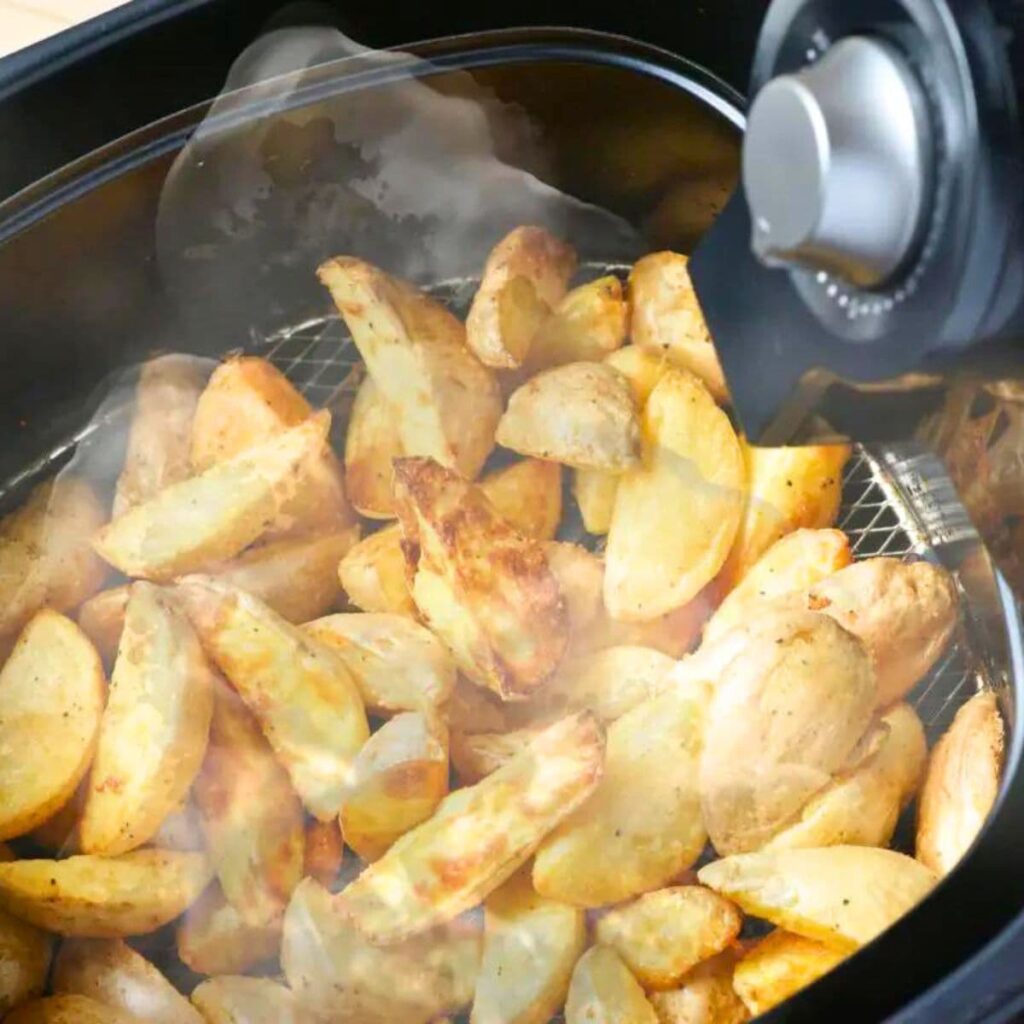
Potatoes can soften after cooking because their crisp surface absorbs steam. This often happens when the potatoes are left in the basket, covered with foil, or piled into a bowl while hot.
Serve them soon after cooking. If you need to hold them briefly, place them in a loose single layer on a rack or plate. Avoid sealing them in a container until they have cooled enough to prevent heavy condensation.
Reheating may restore some crispness. Use the air fryer for a few minutes at a moderate-to-high temperature, checking often so the potatoes do not burn.

How Air Fryer Type and Basket Design Affect Crispness
Air fryers do not all cook in the same way. A small basket model, oven-style air fryer, and toaster-oven air fryer may have different airflow patterns and heating elements.
Your results may change with:
- Basket size
- Food depth
- Heating element location
- Fan strength
- Tray position
- Whether the unit uses a rotating basket
- The accuracy of the displayed temperature
Do not assume that a time from one model will work perfectly in another. Use the recipe time as a guide, then check texture and doneness.
A larger air fryer does not always cook a crowded batch better. If the potatoes cover too much of the tray, air may still fail to reach the lower surfaces.

Common Mistakes That Prevent Crisp Potatoes
Avoid these mistakes when troubleshooting:
- Putting wet potatoes straight into the basket: Surface water delays browning.
- Filling the basket to the top: The center may steam while the outside browns.
- Using thick, uneven pieces: Some pieces burn while others remain firm.
- Adding sauce before cooking: Moist sauces can soften the surface.
- Using too much oil: Excess oil does not create more crispness.
- Opening the basket too often: Frequent checks release heat and extend cooking.
- Leaving cooked potatoes in the basket: Residual heat and steam can soften them.
- Assuming the preset is exact: Presets may use different times and temperatures from the recipe you are following.
- Ignoring the manual: Some air fryers require specific tray positions, preheating steps, or basket limits.

Are Soft Air Fryer Potatoes Safe to Eat?
Soft potatoes are usually a texture problem, not a safety problem, if the potatoes were fresh, handled properly, and cooked through.
Do not eat potatoes that are green over large areas, badly sprouted, moldy, leaking, or rotten. Discard food that has an unusual odor or has been left at room temperature for an unsafe length of time.
For thick potatoes, check the center with a fork. It should be tender. If the outside is browning too fast while the center remains firm, lower the temperature and continue cooking until tender.
Use heat-resistant tools when shaking the basket, and place the hot basket on a surface that can tolerate heat. Follow the appliance manual for maximum fill levels and cleaning instructions.

The Best Quick Fix for Your Next Batch
For most soft air fryer potatoes, use this order:
- Cut the potatoes into equal pieces.
- Rinse or soak fresh fries if they are sticky.
- Dry them very well.
- Add a light coating of oil.
- Preheat if the manual recommends it.
- Cook in a loose single layer.
- Shake or turn the potatoes during cooking.
- Add a few more minutes only after checking the center.
- Serve without covering.
If the potatoes are still soft, reduce the batch size before making major changes. Overcrowding is one of the most common and easiest problems to correct.
FAQs
Why are my air fryer potatoes not crispy without oil?
Oil helps transfer heat across the surface and supports browning. Potatoes can crisp with little or no oil, but they may be drier, paler, or less evenly browned. Use a very light coating if you want a crisp surface without greasy potatoes.
Can I put raw potatoes directly in the air fryer?
Yes. Raw potatoes can be air fried, but they should be cut evenly and dried before cooking. Thick pieces may need a lower temperature and longer cooking time so the center becomes tender before the outside burns.
Should I use aluminum foil under air fryer potatoes?
Foil can block airflow if it covers the basket or tray. If your air fryer manual allows foil, use only enough to support the food and do not block vents. Parchment made for air fryers may be a better choice for some recipes, but it must be secured by food.
Why are my air fryer potatoes crispy on one side only?
The potatoes may be touching the basket too closely, sitting on a crowded tray, or not being turned. Shake the basket or turn larger pieces during cooking. Also check that the air openings are clean.
How do I make air fryer potatoes crispy again?
Reheat them in a single layer for a few minutes at a moderate-to-high temperature. Check often. Do not microwave them if crispness is the goal, because microwave heat can make the surface soft.
Conclusion
Air fryer potatoes are usually not crispy because they are wet, crowded, too thick, underheated, or left to steam after cooking. Dry the potatoes, use a light oil coating, leave space for airflow, and turn them during cooking.
Start with the simplest fix: cook a smaller, drier batch. If that improves the texture, your air fryer is likely working normally and the problem was moisture or airflow rather than the appliance itself.