Turbo Broiler Vs Air Fryer: Which Is Better?
A turbo broiler suits large meals, while an air fryer offers faster cooking and easier everyday control.
Choosing between a turbo broiler vs air fryer can feel confusing because both use hot, moving air to brown food. They can roast, bake, grill, and crisp with less oil than deep frying. This guide compares their design, cooking results, energy use, cleaning, safety, and best uses so you can pick the right appliance with confidence.
What Is a Turbo Broiler?
A turbo broiler is a countertop convection oven. It usually has a large glass bowl, a heating element in the lid, and a fan that moves hot air around the food. Many models also include a metal rack, so you can cook food above the bottom of the bowl.
The clear bowl lets you watch the food as it cooks. This is useful when roasting chicken, browning meat, or checking vegetables without opening a door. The wide cooking space also makes the appliance feel more like a small oven than a basket cooker.
A turbo broiler may also be called a halogen oven, convection oven, or tabletop convection cooker. Names vary by brand and region, but the basic idea remains the same: hot air surrounds the food and cooks it from many sides.
Common turbo broiler features include:
• A glass cooking bowl
• A heating and fan unit in the lid
• Adjustable temperature controls
• A cooking timer
• Low and high metal racks
• Expansion rings for extra capacity on some models
The main strength of a turbo broiler is space. It can often cook a whole chicken, several pork chops, or a large batch of vegetables at once. However, the bowl can be heavy, hot, and harder to store than a compact air fryer basket.
What Is an Air Fryer?
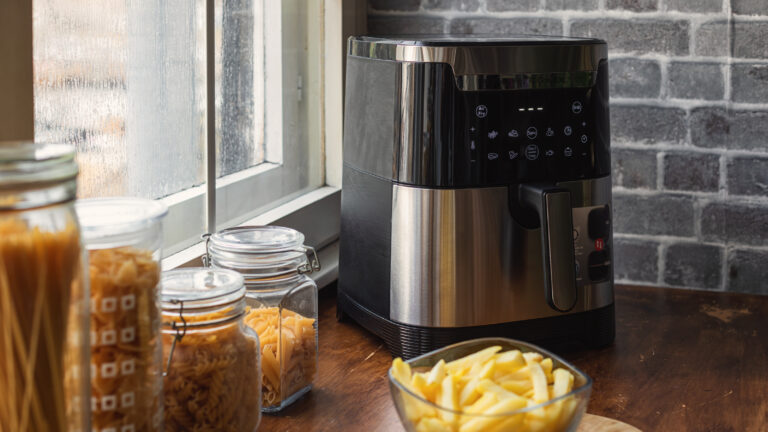
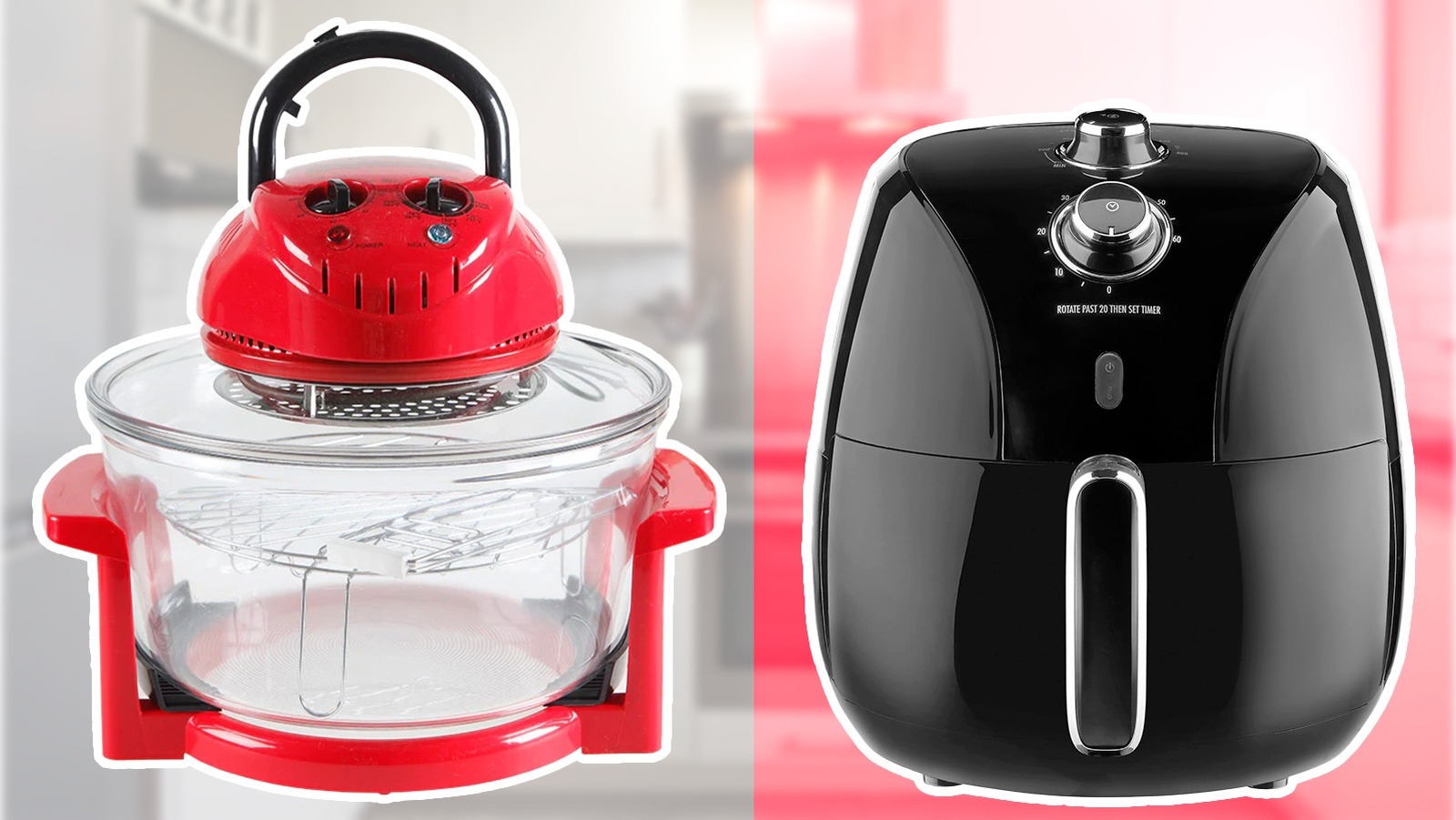
An air fryer is a small convection cooker designed to circulate very hot air around food in a basket or tray. The rapid airflow helps create a dry, crisp surface that resembles fried food, even when you use little oil.
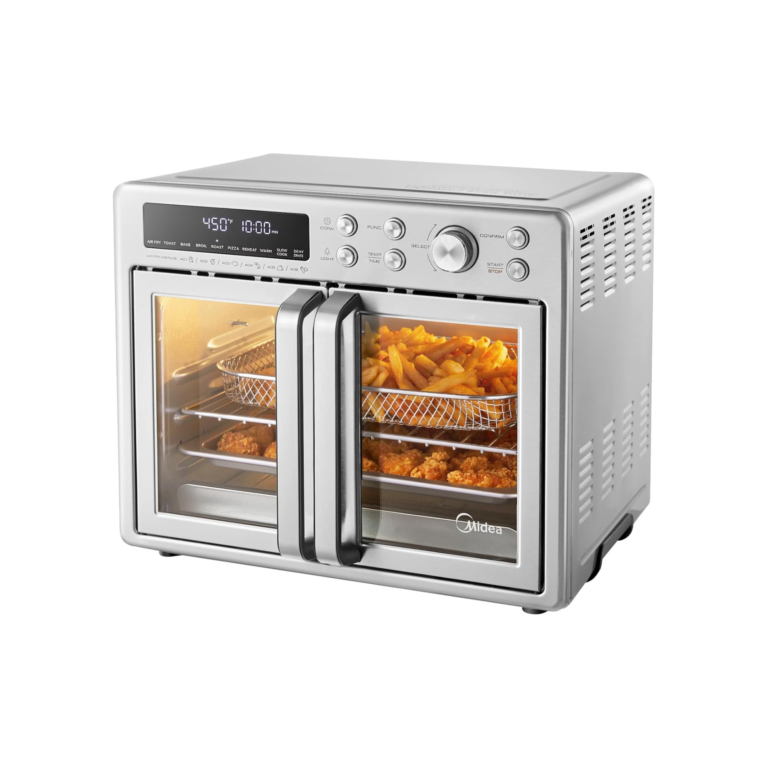
Most air fryers have a pullout basket. Some larger models use shelves, a rotating drum, or an oven-style door. Digital controls may include preset programs for fries, chicken, fish, vegetables, and baked foods.
The air fryer became popular because it cooks small portions quickly. Its compact chamber heats fast, and its perforated basket lets air reach the food surface. This design works especially well for foods such as:
• French fries
• Chicken wings
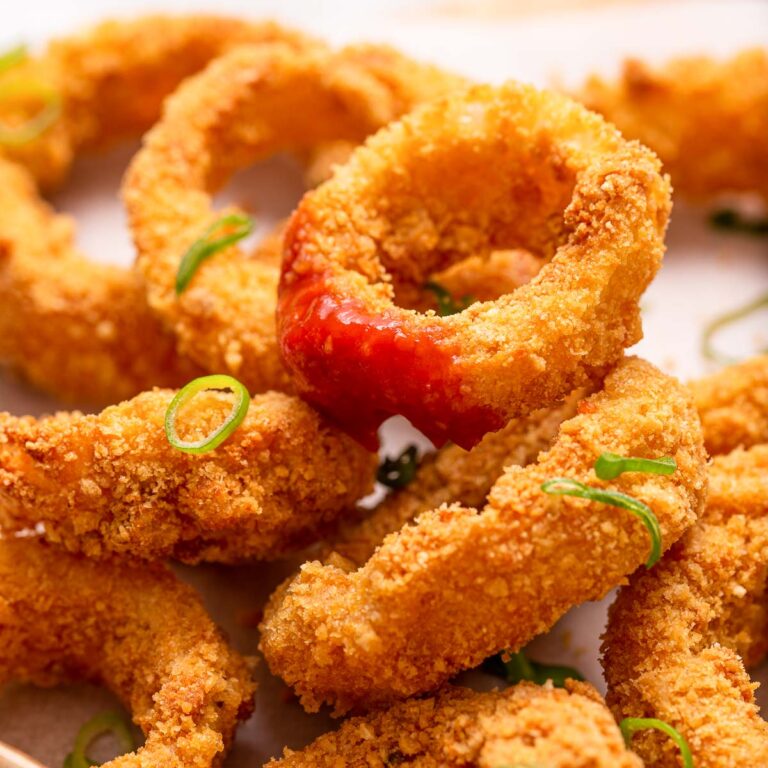
• Fish sticks
• Mozzarella sticks
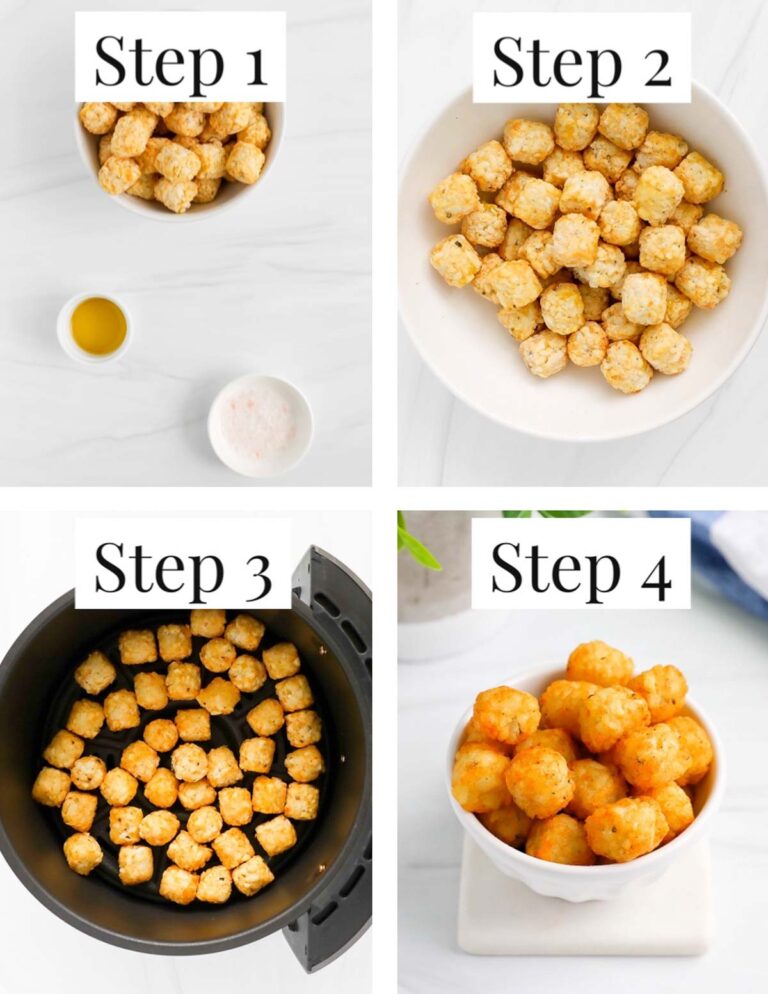
• Tater tots
• Frozen vegetables
• Reheated pizza
An air fryer is not a true fryer. It does not submerge food in oil. It is closer to a small, powerful convection oven with a cooking basket.
:max_bytes(150000):strip_icc()/sea-air-fryers-3-test-instant-pot-6qt-vortex-plus-6-1-wdickey-442-a72211baf5ba4f0ea34183f04021e32d.jpeg)
Turbo Broiler vs Air Fryer: How They Work
The turbo broiler vs air fryer comparison starts with the same basic cooking method: convection. A heating element warms the air, and a fan moves that air around the food.
The difference is how each appliance directs heat and handles food. A turbo broiler often has more open space around the food. An air fryer usually places food in a smaller basket close to a strong airflow path.
This affects cooking speed and texture:
• Turbo broilers provide broad, gentle circulation in a larger chamber.
• Air fryers create fast airflow in a smaller space.
• Turbo broilers can cook larger items.
• Air fryers often crisp small foods more quickly.
• Both appliances can roast, bake, broil, and reheat.
Cooking results depend on more than the appliance. Food thickness, moisture, crowding, temperature, and oil all matter. A crowded air fryer basket may produce soft fries, while a well-spaced turbo broiler rack can brown them better.
In practical testing, the best results come from leaving space between pieces. Hot air needs a clear path. Think of it like people moving through a doorway: too many bodies at once slow everything down.

Key Differences Between a Turbo Broiler and Air Fryer
The turbo broiler vs air fryer decision becomes easier when you compare the features that matter most in daily use.
| Feature | Turbo Broiler | Air Fryer |
|---|---|---|
| Cooking space | Usually larger | Usually smaller |
| Best for | Whole meats and family meals | Small portions and crisp foods |
| Heating speed | Moderate to fast | Usually very fast |
| Cooking chamber | Glass bowl or open rack | Basket or tray |
| Visibility | Excellent through glass | Limited unless the basket opens |
| Counter space | Can be bulky | Often more compact |
| Cleaning | Bowl and lid may be awkward | Basket is often easier to wash |
| Batch cooking | Strong advantage | May require several batches |
| Crisping | Good with proper spacing | Often excellent for small foods |
| Storage | More difficult for some kitchens | Usually easier |
Capacity
A turbo broiler often has enough room for a whole chicken or several servings of vegetables. Some models can hold multiple racks, but you may need to rotate food for even browning.
An air fryer often works best for one or two people. Large dual-basket and oven-style models can serve families, but their real capacity depends on basket shape and food thickness.
Speed
Air fryers usually win for small meals. Their small chambers heat quickly, and many recipes finish in less time than they would in a full-size oven.
A turbo broiler may take a little longer to heat a larger space. Still, it can save time when cooking a large amount because you may avoid multiple batches.
Cooking control
Air fryers often provide precise digital controls and automatic programs. Turbo broilers tend to use simple dials, though advanced models may include digital displays and preset functions.
Simple controls are not always a disadvantage. A manual timer and temperature dial can be easy to understand and less costly to replace.

Cooking Performance and Food Quality
Both appliances can produce tasty food, but the texture may differ. The turbo broiler vs air fryer outcome depends on the food you prepare.
Crispiness
Air fryers often create a crisp outer layer on fries, wings, and breaded foods. The close basket and strong airflow remove surface moisture quickly.
A turbo broiler can also crisp food, especially when you place it on a raised rack. However, food at the bottom may brown less if air cannot circulate underneath it.
For better crisping in either appliance:
• Pat food dry before cooking.
• Use a small amount of oil when suitable.
• Avoid stacking pieces.
• Turn or shake food during cooking.
• Use a rack or perforated tray.
Roasting meat
Turbo broilers are useful for larger cuts of meat. A whole chicken, roast beef, or pork loin can fit more comfortably than in a small air fryer basket.
Air fryers perform well with smaller cuts. Chicken thighs, wings, pork chops, and salmon portions cook quickly and develop a browned surface.
Use a food thermometer rather than color alone. The U.S. Department of Agriculture recommends cooking poultry to 165°F, ground meats to 160°F, and whole cuts of beef, pork, lamb, and veal to 145°F with a rest period.
Baking
A turbo broiler can handle small cakes, bread, biscuits, and casseroles if the pan fits. The larger chamber gives you more flexibility.
Air fryers can bake muffins, cookies, and small cakes, but the basket shape may limit the size of the pan. The fan can also brown the top before the center finishes, so lower temperatures may work better.
Reheating food
Air fryers are excellent for reheating pizza, roasted potatoes, fried chicken, and other foods that become soggy in a microwave. The dry airflow restores some crispness.
Turbo broilers are helpful for larger leftovers or several portions. They may take longer but can reheat food evenly without crowding.

Which Appliance Uses Less Energy?
The turbo broiler vs air fryer energy question has no single answer. Power use depends on wattage, cooking time, food quantity, and how often you open the appliance.
Many air fryers use around 1,200 to 1,800 watts. Turbo broilers often use a similar range, but their larger cooking chamber may need more time to heat. A small air fryer may use less energy for one serving.
A turbo broiler can be more efficient for a large meal because it cooks more food in one batch. Using an air fryer for four separate batches may take more total time and energy than using a larger countertop cooker once.
You can estimate electricity cost with this simple formula:
-
Convert watts to kilowatts by dividing the wattage by 1,000.
-
Multiply kilowatts by cooking hours.
-
Multiply the result by your local electricity rate.
For example, a 1,500-watt appliance running for 30 minutes uses about 0.75 kilowatt-hours. Your actual cost depends on the rate from your utility company.

Health Considerations
Neither appliance automatically makes every meal healthy. The turbo broiler vs air fryer health benefit comes mainly from using less oil than deep frying.
Air frying can lower the amount of added fat in foods such as potatoes, chicken, and breaded snacks. However, a frozen food can still contain high levels of sodium, refined starch, or saturated fat.
A turbo broiler also supports low-oil cooking. You can roast vegetables, cook fish, and prepare lean meats without placing them in a deep pan of oil.
Keep these points in mind:
• Less oil does not always mean fewer calories overall.
• Portion size still matters.
• Fresh foods are often easier to control than packaged snacks.
• Very dark or burned food should be avoided.
• Do not rely on appliance marketing claims about “healthy frying.”
Some starchy foods can form acrylamide when cooked at high temperatures. The FDA advises avoiding excessive browning and aiming for a golden-yellow finish, especially with potatoes and breaded foods.
Cleaning and Maintenance
Cleaning is an important part of the turbo broiler vs air fryer choice. An appliance that is hard to clean may get used less often.
Air fryer baskets usually have a nonstick coating. Many are dishwasher-safe, but you should check the manual before using a dishwasher. Abrasive pads and metal tools can damage the surface.
Turbo broiler bowls are often made of heat-resistant glass. The bowl may be removable, but its size and weight can make hand washing uncomfortable. The lid and fan unit must be handled with care.
Follow these cleaning habits:
• Unplug the appliance and let it cool fully.
• Remove grease after each use.
• Use warm water and mild dish soap.
• Avoid soaking electrical parts.
• Do not scrape nonstick surfaces with metal tools.
• Check the heating element for grease buildup.
• Keep vents clear.
One common mistake is cleaning only the basket or bowl. Grease can collect near the heating element and create smoke during the next use. A quick inspection after cooking prevents many problems.
Safety Tips for Both Appliances
Both appliances use high heat. Treat them like small ovens, not harmless countertop gadgets.
Place the appliance on a stable, heat-resistant surface. Keep it away from curtains, cabinets, paper towels, and other items that can burn. Leave the air vents open so heat can escape.
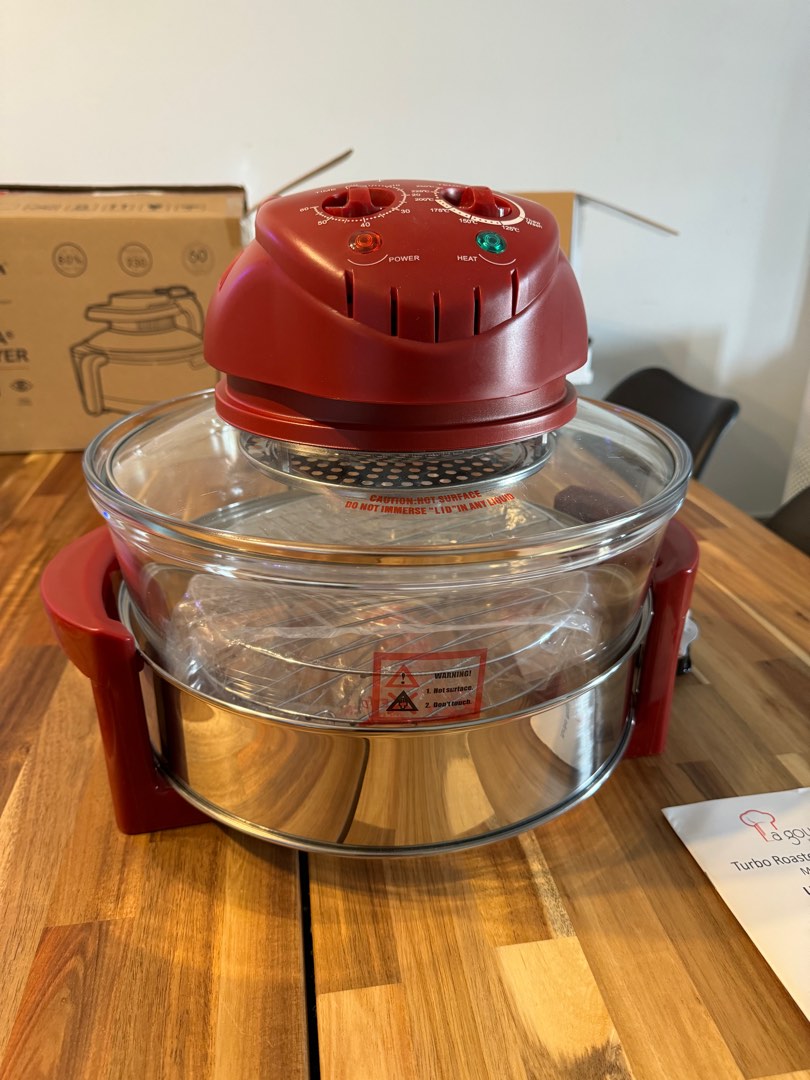
For turbo broilers, take extra care with the hot glass bowl. Use the handles or approved mitts, and place the bowl on a heat-safe surface. Do not pour cold water into hot glass because rapid temperature changes may cause cracking.
For air fryers, do not overfill the basket. Blocking airflow can lead to uneven cooking and may increase cooking time. Never use parchment paper without food on top because loose paper can move toward the heating element.
Always follow the manufacturer’s instructions. Safety features and temperature limits differ between models.
Turbo Broiler vs Air Fryer: Which Is Better for You?
The better appliance depends on your kitchen, household, and cooking habits. There is no universal winner in the turbo broiler vs air fryer debate.
Choose a turbo broiler if you:
• Cook for several people.
• Roast whole chickens or large cuts.
• Want to see food while it cooks.
• Need more open cooking space.
• Prefer racks and flexible positioning.
• Want a countertop oven for many types of meals.
Choose an air fryer if you:
• Cook small portions.
• Want fast weeknight meals.
• Make fries, wings, and frozen snacks often.
• Have limited counter space.
• Prefer a removable basket.
• Want simple digital controls.
A small apartment kitchen may benefit from an air fryer. A family kitchen that already has limited oven space may get more value from a turbo broiler.
Some households use both. The air fryer handles quick snacks and single portions, while the turbo broiler manages roasts and larger meals.
Common Mistakes to Avoid
Many disappointing results come from technique rather than appliance quality. These mistakes are easy to fix.
• Overcrowding the basket or rack: Leave room for hot air to move.
• Skipping food preparation: Dry wet food before cooking to improve browning.
• Using too much oil: Excess oil can smoke and make food greasy.
• Trusting preset buttons blindly: Presets are starting points, not guarantees.
• Ignoring food thickness: Thick pieces need more time than thin pieces.
• Failing to turn food: Rotate or shake when the recipe calls for it.
• Cooking by color alone: Use an instant-read thermometer for meat.
• Forgetting carryover cooking: Food may continue cooking briefly after removal.
In my experience, the most useful lesson is to treat the first attempt as a test batch. Note the time, temperature, amount of food, and result. Then adjust one factor at a time instead of changing everything at once.
How to Choose the Right Model
If you decide between a turbo broiler vs air fryer, compare more than the advertised capacity. Look at the shape of the cooking area, because a tall bowl may not hold as much usable food as a wide basket.
Check the following features:
• Actual cooking surface area
• Temperature range
• Timer length
• Ease of cleaning
• Replacement basket or bowl availability
• Warranty coverage
• Noise level
• Cord length
• Counter and storage dimensions
• Safety certifications
Avoid choosing only by the largest number on the box. A large air fryer may have a big exterior but a small usable basket. A turbo broiler may have a large bowl but require more storage room.
Independent product testing and customer reviews can reveal problems such as weak hinges, difficult controls, poor seals, or inaccurate temperature readings. Read reviews that discuss long-term use, not just first impressions.
Frequently Asked Questions About Turbo Broiler vs Air Fryer
Is a turbo broiler the same as an air fryer?
No. Both use circulating hot air, but a turbo broiler usually has a larger glass bowl and rack system. An air fryer normally uses a compact basket or tray with stronger airflow in a smaller chamber.
Which is healthier, a turbo broiler or an air fryer?
Neither appliance is automatically healthier. Both can reduce the need for added oil, but the health value depends on the ingredients, portion size, sodium, and cooking method.
Does a turbo broiler make food as crispy as an air fryer?
A turbo broiler can make food crisp, especially when food is placed on a raised rack with enough space. An air fryer often produces faster and more consistent crisping for small portions.
Can a turbo broiler replace an air fryer?
A turbo broiler can perform many air fryer tasks, including roasting, reheating, and crisping. It may not match the speed or compact basket design of an air fryer for small servings.
Can an air fryer replace a turbo broiler?
A large air fryer can replace some turbo broiler functions, but a small model may not fit whole chickens or large roasts. Capacity is the main limitation.
Do you need to preheat either appliance?
Preheating can improve browning and make cooking times more predictable. Follow the manual and recipe, because some air fryer models heat so quickly that preheating is optional.
Can you cook frozen food in both appliances?
Yes. Both can cook many frozen foods, such as fries, fish fillets, and chicken pieces. Avoid crowding, and check the package instructions along with the appliance manual.
Conclusion
The turbo broiler vs air fryer choice comes down to capacity, speed, texture, and kitchen space. A turbo broiler is a strong option for large meals, whole meats, and flexible rack cooking. An air fryer is usually better for fast portions, crisp snacks, and simple cleanup.
Start with the foods you cook most often. Measure your counter and storage space, compare usable capacity, and choose the appliance that fits your real routine rather than the most impressive box claims. Try a few simple recipes, record what works, and share your favorite results or questions in the comments.