What To Cook In An Air Fryer Healthy: Easy Ideas
For many American kitchens, an air fryer is a fast way to cook vegetables, lean proteins, potatoes, and small meals with less oil than deep frying. The healthiest choices are foods that add fiber, protein, vitamins, and minerals without relying on heavy breading, excess salt, or large amounts of oil.
Good options include salmon, chicken breast, turkey meatballs, tofu, broccoli, Brussels sprouts, green beans, sweet potatoes, chickpeas, and apples. Use the air fryer as a cooking tool—not as a guarantee that every food becomes healthy. A breaded frozen snack can still be high in sodium, refined starch, and saturated fat.
What Makes Air-Fryer Food Healthy?
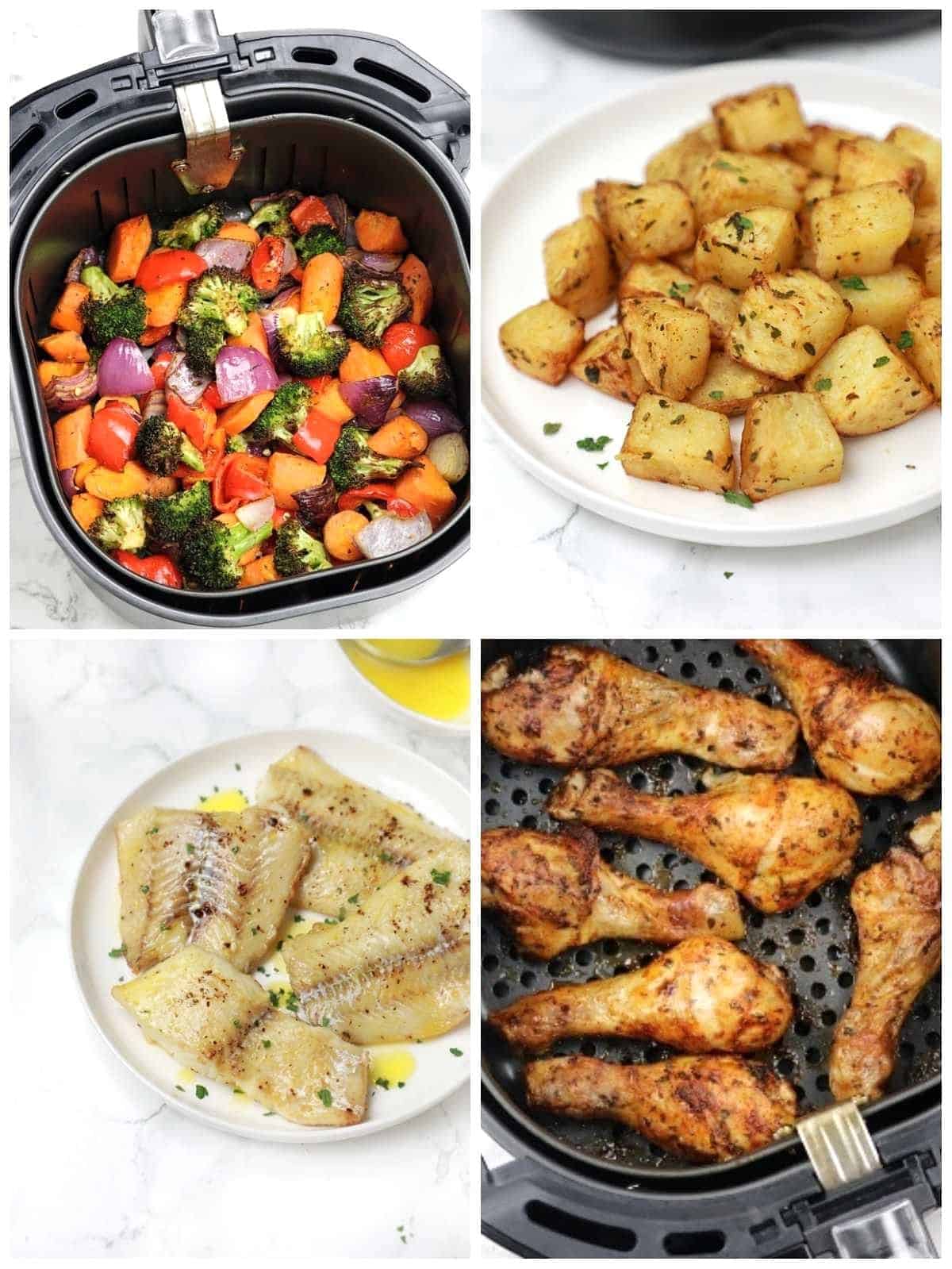
Air-fryer cooking can be a healthy choice because it uses hot, moving air instead of submerging food in oil. This can reduce the amount of added fat used during cooking, especially when compared with deep frying.
However, the health value depends on the food itself. An air-fried vegetable with a small amount of olive or avocado oil is very different from an air-fried candy bar or heavily breaded snack.
The best formula is simple:
- Choose a whole or minimally processed food.
- Add a lean protein or plant protein.
- Use vegetables or fruit for fiber and nutrients.
- Measure oil instead of pouring freely.
- Limit salty sauces, processed meats, and thick breading.
- Cook food fully and check its internal temperature.
The 2020–2025 Dietary Guidelines for Americans encourage vegetables, fruits, whole grains, beans, nuts, seafood, poultry, and low-fat dairy. Air-fryer meals can support that pattern when they are built around those foods.
How much oil should you use?
Many foods need only a light coating. One to two teaspoons of oil may be enough for a basket of vegetables, depending on the amount and the air fryer.
Oil helps food brown and can prevent drying. It does not make a meal unhealthy by itself. The issue is usually excess oil, especially when it adds many calories without improving fullness or nutrition.
Does air frying remove calories?
No. Air frying does not remove the calories naturally found in potatoes, chicken, cheese, or other foods. It may lower calories compared with deep frying because the food absorbs less oil.
A plain air-fried potato still contains the calories from the potato. A breaded chicken tender still contains the calories from the coating and meat. Portion size and ingredients remain important.
The Healthiest Foods to Cook in an Air Fryer
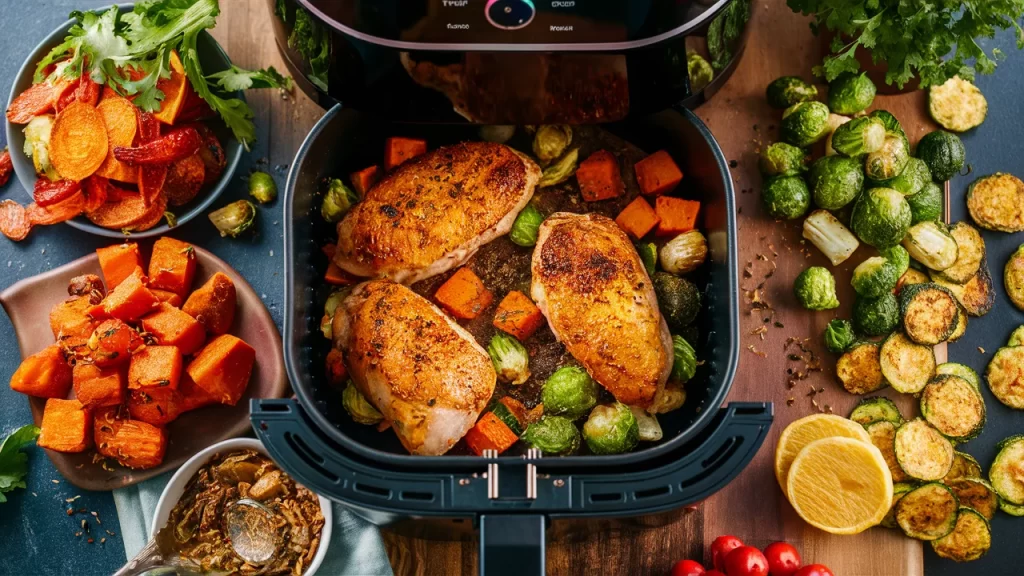
The healthiest air-fryer foods usually fall into five groups: vegetables, lean proteins, seafood, plant proteins, and fruit-based snacks.
1. Vegetables
Air frying can bring out a roasted flavor while keeping preparation simple. Try:
- Broccoli florets
- Cauliflower
- Brussels sprouts
- Green beans
- Asparagus
- Bell peppers
- Zucchini
- Carrots
- Mushrooms
- Butternut squash
- Corn on the cob
Toss vegetables with a small amount of oil, black pepper, garlic powder, paprika, or dried herbs. Add salt after cooking if needed. This can help you use less salt while still getting strong flavor.
Cut vegetables into similar sizes so they cook at about the same rate. Dense vegetables, such as carrots and squash, may need more time than zucchini or mushrooms.
2. Lean chicken and turkey
skinless chicken breast, chicken tenderloins, and turkey meatballs work well in an air fryer. Use a simple seasoning mix instead of a thick layer of breading.
Good combinations include:
- Chicken breast with paprika, garlic, and lemon
- Chicken tenders with whole-wheat breadcrumbs
- Turkey meatballs with oats and herbs
- Turkey burgers with onion powder and black pepper
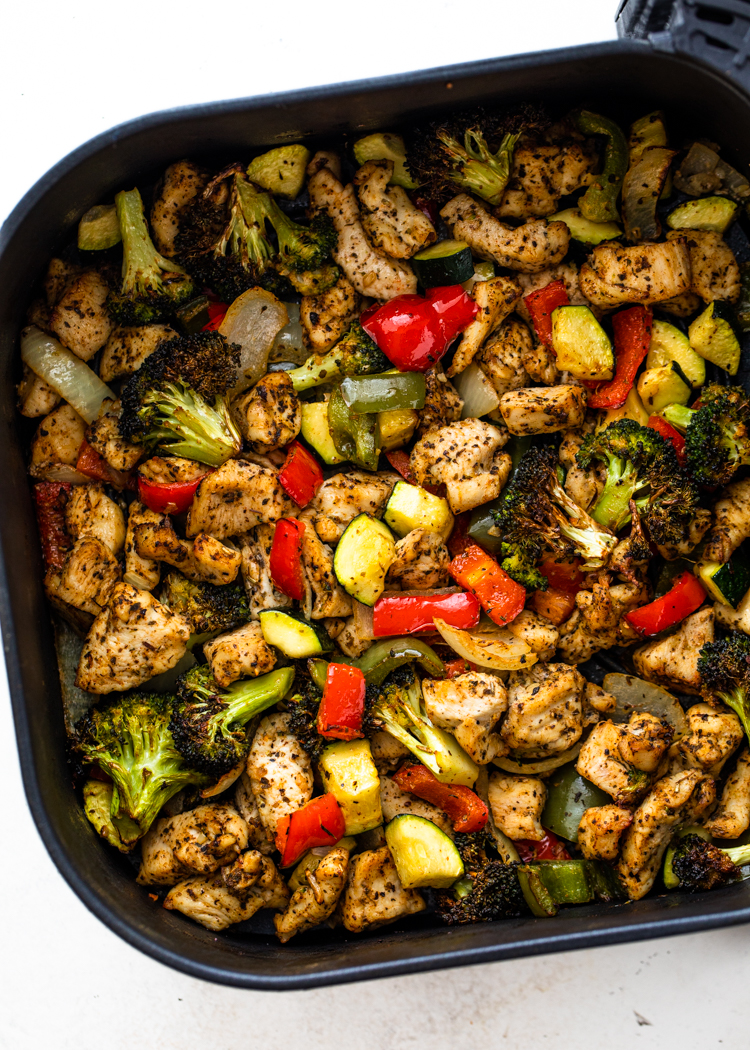
- Chicken fajita strips with peppers and onions
The USDA recommends cooking poultry to an internal temperature of 165°F. Check the thickest part with a food thermometer rather than relying only on color.
3. Fish and seafood
Fish cooks quickly and can be a strong source of protein. Fatty fish, such as salmon, also provides omega-3 fats.
Healthy air-fryer choices include:
- Salmon fillets
- Cod
- Tilapia
- Shrimp
- Scallops
- Trout
Use lemon, dill, parsley, paprika, or a small amount of Dijon mustard for flavor. The USDA lists 145°F as the safe minimum internal temperature for fish.
Choose fresh or frozen seafood with little added sauce when possible. Some prepared seafood products contain more sodium than expected.
4. Beans, chickpeas, and tofu
Plant proteins can become crisp and flavorful in an air fryer. Try:
- Crispy chickpeas
- Seasoned tofu cubes
- Tempeh strips
- Black bean patties
- Lentil-based vegetable bites
Drain and dry canned chickpeas before cooking. For tofu, press out excess water, cut it into cubes, and coat it lightly with oil and seasonings.
These foods can add protein and fiber to salads, grain bowls, tacos, and wraps.
5. Fruit
Air frying can soften and caramelize fruit without added sugar. Try:
- Apple slices with cinnamon
- Pear wedges
- Peaches
- Pineapple
- Bananas
Serve warm fruit with plain Greek yogurt, oatmeal, or chopped nuts. This creates a more balanced snack than fruit cooked with a large amount of sugar or syrup.
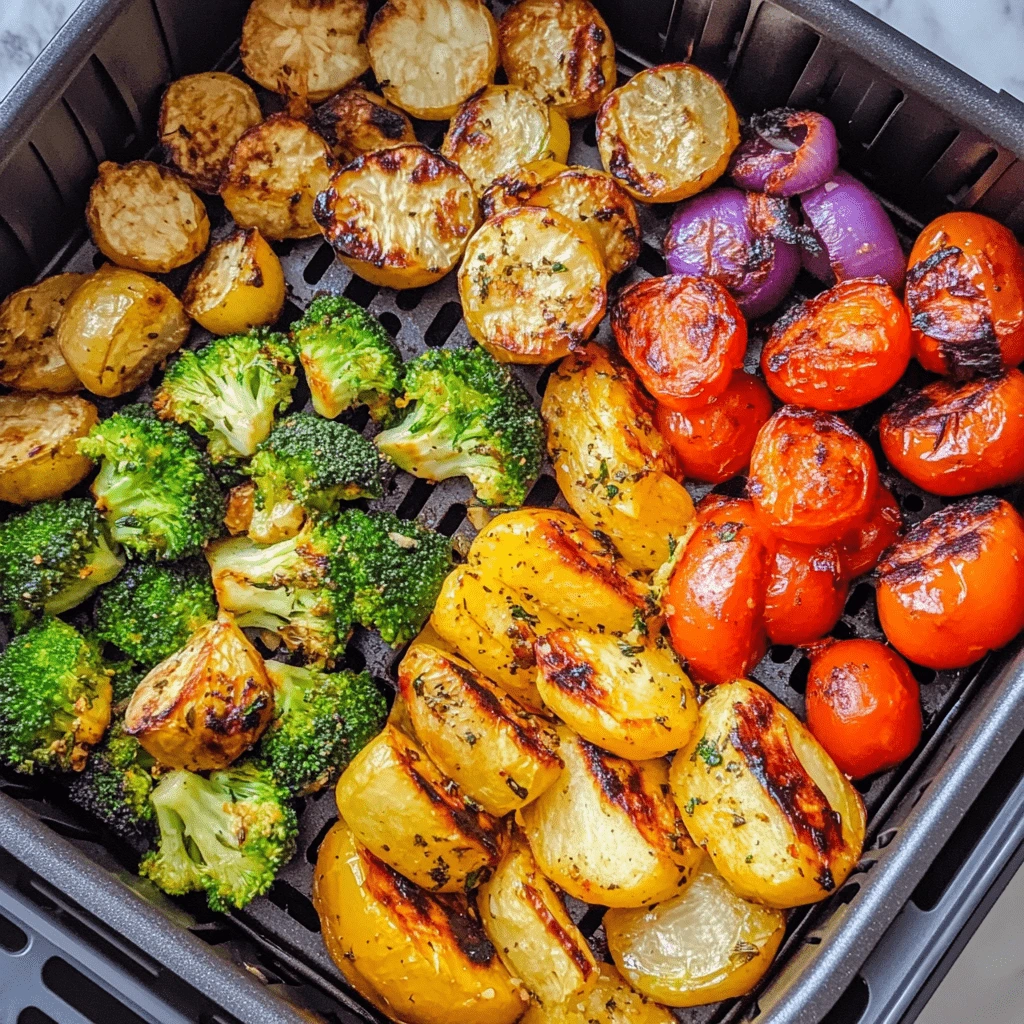
15 Healthy Air-Fryer Meal Ideas
These ideas are easy to adapt to ingredients commonly found in U.S. grocery stores. Cooking times vary by air-fryer model, food size, and starting temperature, so use the times as starting points.
| Meal idea | Main ingredients | Helpful serving idea |
|---|---|---|
| Salmon and broccoli | Salmon, broccoli, lemon, herbs | Add brown rice or quinoa |
| Chicken fajita bowl | Chicken strips, peppers, onions | Serve with beans and salsa |
| Turkey meatballs | Lean ground turkey, oats, herbs | Add marinara and whole-wheat pasta |
| Tofu grain bowl | Tofu, cabbage, carrots, brown rice | Use a low-sodium sauce |
| Air-fried cod | Cod, paprika, lemon | Add roasted potatoes and green beans |
| Chickpea salad topper | Chickpeas, cumin, garlic | Sprinkle over greens |
| Stuffed peppers | Bell peppers, beans, vegetables | Add a small amount of cheese |
| Sweet potato wedges | Sweet potatoes, oil, paprika | Serve with black bean chili |
| Brussels sprouts | Brussels sprouts, pepper, balsamic vinegar | Pair with chicken or lentils |
| Turkey burger | Lean turkey, whole-grain bun | Add lettuce, tomato, and avocado |
| Shrimp tacos | Shrimp, corn tortillas, cabbage | Use lime instead of heavy sauce |
| Crispy green beans | Green beans, garlic, breadcrumbs | Serve with grilled fish |
| Apple dessert | Apple slices, cinnamon | Add plain yogurt |
| Air-fried corn | Corn, lime, chili powder | Serve with beans and salad |
| Vegetable egg bites | Eggs, spinach, peppers | Serve with whole-grain toast |
A balanced air-fryer plate
For a complete meal, fill about half the plate with vegetables or fruit. Use the remaining space for protein and a high-fiber carbohydrate, such as beans, brown rice, quinoa, oats, or a baked potato.
This approach works better than making the entire meal from one air-fried food. For example, air-fried chicken tenders become a more balanced dinner when served with broccoli and a baked sweet potato.
A simple seasoning mix
For about one pound of vegetables, chicken, tofu, or fish, try:
- 1 teaspoon paprika
- ½ teaspoon garlic powder
- ½ teaspoon onion powder
- ¼ teaspoon black pepper
- Optional dried oregano or chili powder
Use little or no added salt if the food already contains sodium. Taste the finished food before adding more.
How to Air-Fry Food in a Healthy Way
Healthy air-fryer cooking depends on preparation as much as temperature. Follow this process for most foods.
Step 1: Prepare food in even pieces
Cut food into similar sizes. Small pieces cook faster, while thick pieces need more time. Uneven pieces may leave some food dry while other pieces remain undercooked.
Pat wet foods dry when you want crisp results. This is especially useful for tofu, chickpeas, potatoes, and fish.
Step 2: Use a measured amount of oil
Start with one teaspoon of oil per pound of food. Add more only if the food looks dry or does not brown well.
A spray can help coat food lightly, but check the product label. Some aerosol sprays may damage certain nonstick coatings. Follow the air-fryer manufacturer’s care instructions.
Step 3: Preheat only when useful
Some air fryers do not need preheating. Others cook more evenly when preheated. Follow the manual for your model.
Preheating can help with foods that need quick browning, such as fish, tofu, or breaded vegetables. It may not be necessary for reheating leftovers or cooking soft vegetables.
Step 4: Avoid crowding the basket
Food needs space for hot air to move around it. A crowded basket can produce soft, unevenly cooked food.
Place food in one layer when possible. Cook in batches if needed. This takes more time, but it often improves texture and reduces the temptation to overcook the outside.
Step 5: Shake or turn food
Shake small foods, such as vegetables, potatoes, and chickpeas, halfway through cooking. Turn larger pieces, such as chicken breasts or fish fillets.
Do not shake foods that may break apart unless the air-fryer basket and food are cool enough to handle safely.
Step 6: Check doneness
Use a food thermometer for meat, poultry, and seafood. The USDA lists these minimum internal temperatures:
- Poultry: 165°F
- Ground beef, pork, lamb, and veal: 160°F
- Whole cuts of beef, pork, lamb, and veal: 145°F, followed by a three-minute rest
- Fish: 145°F
For leftovers, the USDA recommends reheating to 165°F.
Healthy Air-Fryer Cooking Times and Temperatures
Air-fryer settings differ. A small basket may cook faster than a large oven-style model. Frozen food may also need more time than fresh food.
Use the table below as a starting guide, then check the manufacturer’s instructions and the food’s internal temperature when needed.
| Food | Starting temperature | Approximate time | What to check |
|---|---|---|---|
| Broccoli florets | 375°F | 8–12 minutes | Tender with browned edges |
| Brussels sprouts | 375°F | 12–18 minutes | Soft center and crisp leaves |
| Sweet potato wedges | 380°F | 15–22 minutes | Fork-tender center |
| Chicken breast | 375°F | 16–24 minutes | 165°F inside |
| Chicken tenders | 375°F | 10–16 minutes | 165°F inside |
| Salmon fillet | air fryerhealthy 390°F | 7–12 minutes | 145°F or desired doneness |
| Tofu cubes | . 375°F | 12–18 minutes | Firm and lightly crisp |
| Chickpeas | 390°F | 12–18 minutes | Dry and crisp |
| Shrimp | 375°F | 6–10 minutes | Opaque and fully cooked |
| Apple slices | 350°F | 8–12 minutes | Soft and lightly browned |
The exact time depends on thickness, moisture, starting temperature, and basket design. Treat cooking charts as estimates, not guarantees.

Foods to Limit or Prepare With Care
An air fryer can make some less-healthy foods crisp, but crispness does not change their basic nutrition.
Limit foods that are high in:
- Sodium
- Added sugar
- Saturated fat
- Refined starch
- Processed meat
- Heavy breading
- Large portions
Examples include bacon, sausage, frozen mozzarella sticks, packaged fries, sweet pastries, and heavily breaded chicken. These foods can fit into an overall eating pattern, but they are not automatically healthy because they are air fried.
Watch high-heat browning
Foods made from potatoes and grains can form acrylamide during high-temperature cooking. The U.S. Food and Drug Administration advises avoiding excessive browning and using a golden-yellow color for foods such as potatoes and toast.
This does not mean you need to avoid air-fried potatoes. Cut them evenly, soak and dry them if desired, and remove them when they are golden rather than very dark.
Do not use unsafe materials
Only use parchment paper, silicone liners, or foil if the air-fryer manufacturer allows them. Do not let loose paper touch the heating element. Never operate the appliance with an empty liner that could lift into the heater.
Do not put water or liquid directly into the appliance unless the manual says it is designed for that use. Clean grease from the basket and heating area to reduce smoke and fire risk.

Common Air-Fryer Mistakes
Mistake 1: Treating the air fryer as a deep fryer
A small amount of oil can improve texture. Adding a large amount does not make food crisp in the same way as deep frying and can create smoke or excess calories.
Mistake 2: Overfilling the basket
Overfilling traps steam. The food may cook, but it may not brown well. Use a second batch when the basket is crowded.
Mistake 3: Using too much sauce too early
Sugary sauces can burn before the food finishes cooking. Add barbecue sauce, honey-based glaze, or teriyaki near the end of cooking.
Mistake 4: Skipping the thermometer
Chicken can look browned before it reaches a safe internal temperature. Check the thickest part with a clean food thermometer.
Mistake 5: Assuming frozen means unhealthy—or healthy
Frozen vegetables without added sauce can be nutritious and convenient. Frozen snacks may contain high levels of sodium, fat, and refined starch. Read the Nutrition Facts label.
Mistake 6: Reheating everything at the same temperature
Pizza, vegetables, chicken, and pastries have different moisture levels. Start with a moderate temperature and check often so food does not dry out.

Key Takeaways
- The healthiest air-fryer foods include vegetables, seafood, lean poultry, tofu, beans, chickpeas, and fruit.
- Air frying may use less oil than deep frying, but it does not remove calories from food.
- Build meals with vegetables, protein, and a high-fiber carbohydrate.
- Use a food thermometer for meat, poultry, seafood, and leftovers.
- Avoid overfilling the basket and cook in batches when needed.
- Limit heavily breaded, processed, sugary, and high-sodium foods.
- Remove potatoes and other starchy foods when they are golden, not very dark.
Frequently Asked Questions
What is the healthiest thing to cook in an air fryer?
Vegetables are among the healthiest choices because they provide fiber and micronutrients with few calories. Broccoli, Brussels sprouts, green beans, peppers, and cauliflower work well. Add a lean protein, such as salmon, chicken, tofu, or beans, to make a complete meal.
Is air-fried food healthier than baked food?
Not always. Both methods can produce healthy meals. Air frying may cook food faster and use less oil in some recipes, while baking may work better for large portions. The ingredients, portion size, oil, breading, and sodium matter more than the appliance alone.
Can I cook frozen vegetables in an air fryer?
Yes. Frozen vegetables can go directly into many air fryers. Spread them out, use a small amount of oil if needed, and shake the basket during cooking. Frozen vegetables with cheese sauce or added seasoning may contain more sodium and calories, so check the label.
Can I put raw chicken in an air fryer?
Yes, if the air fryer is clean, large enough, and used according to the manufacturer’s instructions. Cook chicken until the thickest part reaches 165°F. Do not place cooked food on a plate that held raw chicken unless the plate has been washed.
Are air-fryer potatoes healthy?
Potatoes can be part of a healthy diet. Keep the skin when practical, use a small amount of oil, control the portion, and serve them with vegetables and protein. Avoid cooking them until very dark or burnt.
How do I keep air-fryer food from drying out?
Avoid very high heat for delicate foods, do not overcook lean meat, and use a small amount of oil when appropriate. Turn or shake food during cooking, and check it early because air fryers vary.
Conclusion
Healthy air-fryer cooking starts with the ingredient, not the appliance. Choose vegetables, lean proteins, seafood, beans, tofu, whole-food carbohydrates, and fruit. Use measured oil, modest portions, simple seasonings, and a food thermometer for foods that need a safe internal temperature.
For your next meal, choose one protein, two vegetables, and one high-fiber carbohydrate. Season lightly, cook in a single layer, and check the food before adding more time.