
How Many Watts Does An Air Fryer Use: Power Guide
Most air fryers use 800 to 2,000 watts, with many home models drawing about 1,400 to 1,700 watts.
Knowing how many watts an air fryer uses helps you estimate energy costs, choose the right outlet, and compare it with a microwave or full-size oven. The number on the label shows maximum power, but real use can be lower because the heating element cycles on and off during cooking.
How Many Watts Does an Air Fryer Use?
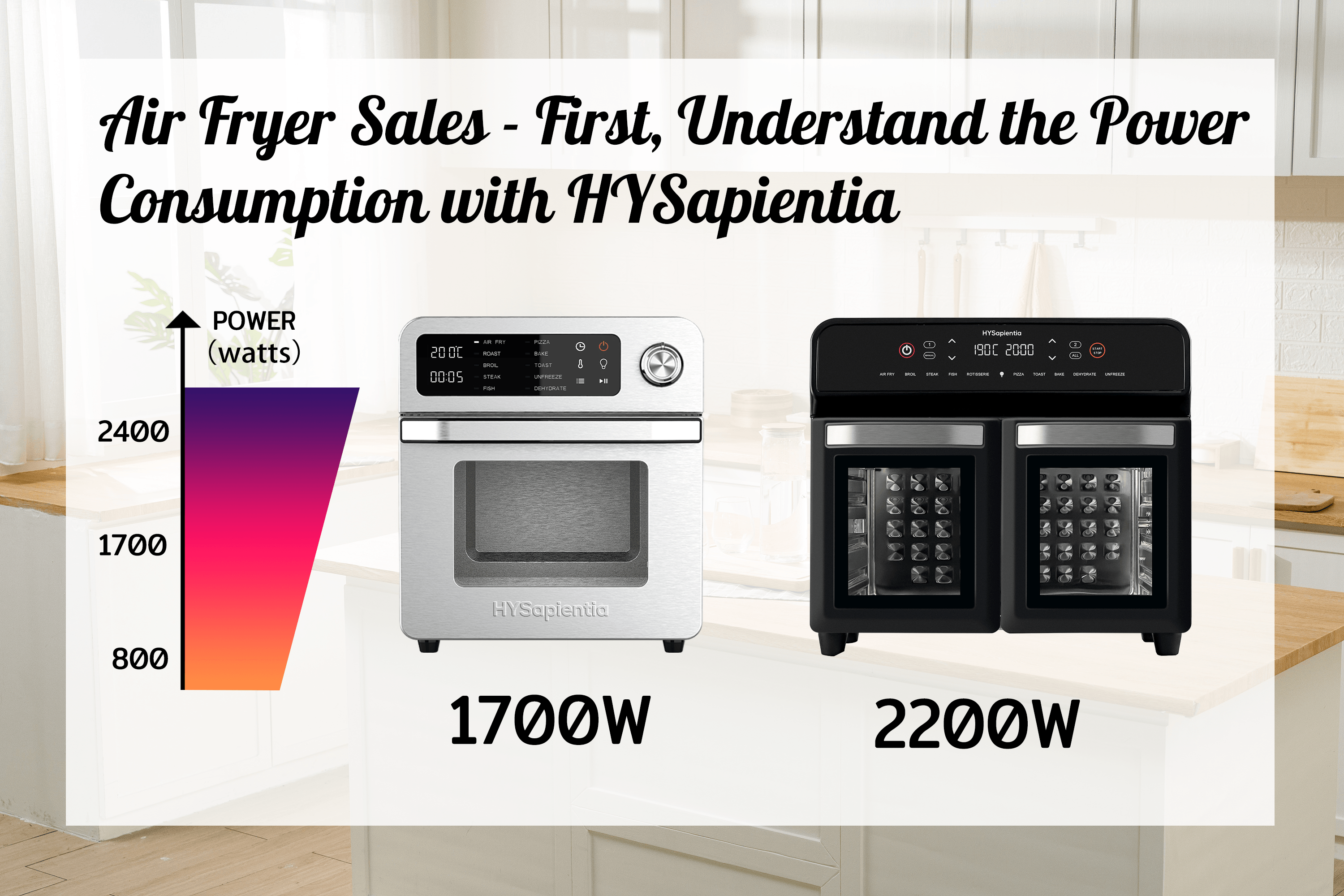
Most air fryers use between 800 and 2,000 watts. Small 2-quart models often use 800 to 1,200 watts, while common 4 to 6-quart models usually use 1,400 to 1,700 watts.
Large dual-basket and oven-style air fryers may use 1,800 to 2,000 watts. The exact figure depends on the basket size, heating element, fan, cooking temperature, and brand.
A watt is a unit of power. It tells you how fast the appliance uses electricity at a given moment. For example, a 1,500-watt air fryer uses power faster than a 1,000-watt model.
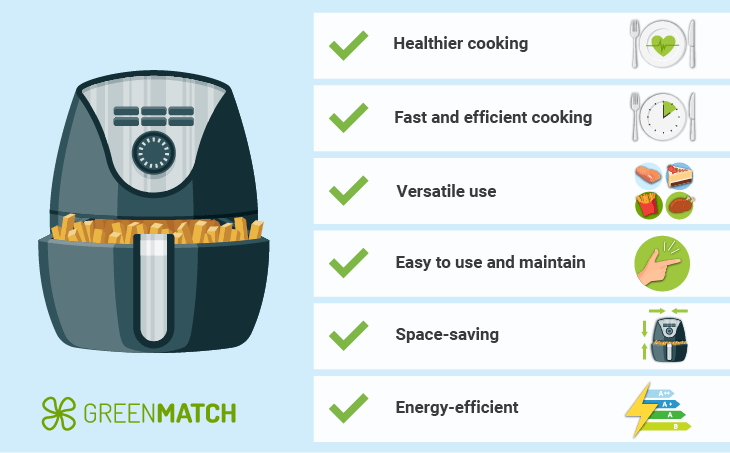
Air Fryer Wattage by Size
The size of an air fryer gives you a useful starting point when estimating power use. However, the rating printed on the product label is the best guide for a specific model.
| Air fryer type | Typical wattage | Best for |
|---|---|---|
| Small 1.5 to 2-quart model | 800 to 1,200 watts | One person or small snacks |
| Medium 3 to 5-quart model | 1,200 to 1,500 watts | Couples and small families |
| Large 5 to 7-quart model | 1,500 to 1,800 watts | Families and larger meals |
| Dual-basket model | 1,700 to 2,000 watts | Cooking two foods at once |
| Air fryer toaster oven | 1,500 to 1,800 watts | Toasting, roasting, and baking |
A higher wattage does not always mean better cooking. It may heat faster, but food quality also depends on airflow, basket design, temperature control, and cooking space.
In my testing and everyday use, a 1,500-watt air fryer is a practical middle ground. It heats quickly, cooks most frozen foods well, and does not usually place an unusual load on a standard kitchen circuit.
What Determines Air Fryer Power Use?
Several parts of the appliance affect how many watts an air fryer uses. The heating element is usually the largest power consumer, while the fan uses much less electricity.
Heating element
The heating element creates the hot air. It may use most of the listed wattage when it runs. A 1,700-watt model can draw close to 1,700 watts during the heating stage.
Fan motor
The fan spreads hot air around the food. It keeps the surface crisp and helps food cook evenly. The fan normally uses far less power than the heating element.
Cooking temperature
Higher temperatures may cause the heating element to run more often. Cooking at 400°F can use more electricity than cooking at 325°F, although the total difference may be small for short meals.
Cooking time
A longer cooking time usually means more energy use. Still, the heating element does not run continuously in most models. It turns off after reaching the target temperature, then turns on again as needed.
Food quantity
A full basket can take longer to cook than a small basket. Overfilling also blocks airflow, which may make the appliance run longer and reduce cooking quality.
Preheating
Some recipes need preheating, while others do not. A few minutes of preheating adds energy use, but it may help certain foods cook more evenly.

How Much Electricity Does an Air Fryer Use?
To estimate electricity use, multiply watts by cooking time in hours. Then divide by 1,000 to convert watt-hours into kilowatt-hours.
The basic formula is:
Energy used in kilowatt-hours = watts × hours ÷ 1,000
For example, suppose you use a 1,500-watt air fryer for 30 minutes:
- Convert 30 minutes to 0.5 hours.
- Multiply 1,500 watts by 0.5 hours.
- Divide 750 watt-hours by 1,000.
- The result is 0.75 kilowatt-hours.
If your electric rate is 16 cents per kilowatt-hour, that meal costs about 12 cents:
0.75 kWh × $0.16 = $0.12
This is an estimate. Your actual cost depends on your local electricity rate and how often the heating element runs.
Estimated energy use for common cooking times
| Air fryer rating | 15 minutes | 30 minutes | 60 minutes |
|---|---|---|---|
| 1,000 watts | 0.25 kWh | 0.50 kWh | 1.00 kWh |
| 1,500 watts | 0.38 kWh | 0.75 kWh | 1.50 kWh |
| 1,800 watts | 0.45 kWh | 0.90 kWh | 1.80 kWh |
| 2,000 watts | 0.50 kWh | 1.00 kWh | 2.00 kWh |
These figures assume the heating element runs at full power for the entire period. Real-world use may be lower because the thermostat cycles the element.

How Much Does It Cost to Run an Air Fryer?
The cost to run an air fryer is often modest because most cooking sessions are short. A 1,500-watt air fryer used for 30 minutes may consume about 0.75 kilowatt-hours under a full-power estimate.
At different electricity rates, the estimated cost would be:
| Electricity rate | Cost for 30 minutes at 1,500 watts |
|---|---|
| 12 cents per kWh | About 9 cents |
| 16 cents per kWh | About 12 cents |
| 25 cents per kWh | About 19 cents |
| 35 cents per kWh | About 26 cents |
If you use the appliance for 30 minutes each day, the full-power estimate would be about 22.5 kilowatt-hours per month. At 16 cents per kilowatt-hour, that equals roughly $3.60 per month.
In practice, the total may be lower. The thermostat often shuts the heating element off for part of the cooking cycle, especially after preheating.

Is an Air Fryer Energy Efficient?
An air fryer can be energy efficient for small meals because it has a small cooking chamber and needs less time to heat than a full-size oven. It also sends hot air close to the food, much like a small, fast-moving oven.
Energy savings depend on the meal. Using an air fryer for one or two servings may use less electricity than heating a large oven. However, an oven may be more efficient when you cook several trays of food at once.
A microwave usually uses less energy for reheating. A toaster oven may use a similar amount of power, depending on its wattage and cooking time.
Here is a simple comparison:
• Air fryer: Often efficient for small portions and quick meals
• Microwave: Usually best for reheating and soft foods
• Toaster oven: Useful for toast, baking, and medium-size portions
• Full-size oven: Better for large meals and several servings
The most efficient choice is often the appliance that matches the amount of food you need to cook.

Air Fryer vs. Oven Wattage
A typical full-size electric oven may use about 2,000 to 5,000 watts when its heating element runs. An air fryer often has a lower rating, but wattage alone does not determine total energy use.
An oven heats a much larger space. It may also need more time to preheat. An air fryer heats a smaller chamber, so it can often finish a small meal sooner.
For example, cooking a small portion of fries may take 20 minutes in an air fryer. The same food may need oven preheating plus 25 to 35 minutes of cooking. This does not prove that every air fryer costs less, but it explains why air fryers can be economical for small meals.
The advantage becomes less clear when cooking a large amount of food. You may need several air fryer batches, while one oven load can cook everything at once.

Can an Air Fryer Overload an Electrical Circuit?
Most air fryers work safely on a standard 120-volt household outlet in the United States. A 1,500-watt air fryer draws about 12.5 amps:
1,500 watts ÷ 120 volts = 12.5 amps
A 1,800-watt model draws about 15 amps. This can be close to the limit of a 15-amp circuit, especially if another high-power appliance shares the same circuit.
For safer use:
• Plug the air fryer directly into a wall outlet.
• Avoid using a cheap extension cord or power strip.
• Do not run it with a toaster, electric kettle, or microwave on the same circuit.
• Stop using it if the plug, cord, or outlet becomes hot.
• Follow the manufacturer’s electrical instructions.
A standard 15-amp circuit should not be treated as if it can run at its maximum limit continuously. If the breaker trips, unplug the air fryer and check what other appliances are operating.

How to Find Your Air Fryer’s Exact Wattage
The best way to learn how many watts an air fryer uses is to check the appliance label or manual. Look in these places:
- The bottom or back of the air fryer
- The rating label near the power cord
- The instruction manual
- The product box
- The manufacturer’s product page
The label may show voltage, frequency, amperage, and wattage. If it lists volts and amps but not watts, use this formula:
Watts = volts × amps
For example, a 120-volt air fryer rated at 12.5 amps uses about 1,500 watts.
You can also use a plug-in energy monitor. This device measures real-time power and total energy use. It may show that a 1,500-watt model draws 1,500 watts during heating but much less after the thermostat turns the element off.
How to Reduce Air Fryer Energy Use
You cannot change the appliance’s rated wattage, but you can reduce the total time it runs. Small habits can make a noticeable difference over many meals.
• Cook suitable portions: Use the air fryer for small and medium meals instead of several crowded batches.
• Avoid unnecessary preheating: Preheat only when the recipe or appliance instructions call for it.
• Keep the basket clean: Grease and crumbs can affect airflow and cooking performance.
• Do not overcrowd the basket: Better airflow can help food finish sooner.
• Cut food into similar sizes: Even pieces cook at the same rate.
• Use the correct temperature: Excess heat does not always cook food faster.
• Combine foods carefully: Cook items with similar time and temperature needs together.
• Turn off the appliance after cooking: Do not leave it running while food rests.
During my own comparisons, the biggest mistake was cooking too much food in one batch. The food took longer, browned unevenly, and used more energy than two well-spaced batches.
Is a Higher-Watt Air Fryer Better?
A higher-watt air fryer may heat faster and recover temperature more quickly after you add cold food. This can be useful for frozen snacks, thick foods, and busy family meals.
However, more watts can also mean a higher electrical load. A 2,000-watt air fryer may need more care on a shared kitchen circuit than a 1,200-watt model.
Consider these factors before choosing:
• Basket capacity
• Cooking speed
• Temperature range
• Airflow design
• Ease of cleaning
• Noise level
• Available counter space
• Circuit capacity
• Warranty and safety features
If you cook for one person, a small 1,000-watt model may be enough. If you cook for a family, a 1,500 to 1,800-watt model may offer a better balance of speed and capacity.
What Does “Maximum Wattage” Mean?
The maximum wattage is the highest power the air fryer may draw under normal operation. It does not mean the appliance uses that amount every second from start to finish.
For example, a 1,700-watt model may use close to 1,700 watts while heating. After reaching the set temperature, the heating element may switch off. The fan can continue running while the appliance uses less energy.
This difference matters when estimating cost. Using the label wattage gives you a safe, simple high-end estimate. A plug-in energy monitor gives you a more accurate result for your specific cooking habits.
Safety Tips for Using a High-Wattage Air Fryer
An air fryer produces high heat, so safe placement and proper electrical use matter. Keep the appliance on a stable, heat-resistant surface with open space around its vents.
Use these basic safety habits:
• Keep the air fryer away from walls, curtains, and cabinets.
• Do not cover the air intake or exhaust vent.
• Use dry hands when handling the plug.
• Check the cord for cuts or damage.
• Never immerse the electrical base in water.
• Clean away grease buildup as directed.
• Let the unit cool before storing it.
• Keep children away from hot surfaces and steam.
The wattage tells you about electrical demand, not food safety. Always cook meat to a safe internal temperature with a food thermometer rather than relying only on the air fryer’s timer.
Frequently Asked Questions About How Many Watts Does an Air Fryer Use
Does an air fryer use a lot of electricity?
Most air fryers use 800 to 2,000 watts, but cooking sessions are usually short. A 1,500-watt model running for 30 minutes uses about 0.75 kilowatt-hours at the maximum rated load.
Is a 1,500-watt air fryer expensive to run?
Usually, no. At 16 cents per kilowatt-hour, a 1,500-watt air fryer used for 30 minutes would cost about 12 cents under a full-power estimate.
How many amps does a 1,500-watt air fryer use?
On a 120-volt US circuit, a 1,500-watt air fryer uses about 12.5 amps. Avoid running it with other high-power appliances on the same circuit.
Does an air fryer use more electricity than a microwave?
An air fryer often uses more power while operating, but cooking time and food type matter. A microwave is usually more efficient for reheating, while an air fryer is better for crisping and browning food.
Can I use an air fryer with an extension cord?
It is best to plug an air fryer directly into a wall outlet. If the manual permits an extension cord, use a short, heavy-duty cord rated for the appliance’s wattage and never use a damaged or lightweight cord.
Does preheating an air fryer use more electricity?
Yes, preheating adds some energy use because the heating element runs before cooking begins. The extra cost is usually small, but you can skip preheating when the recipe and manufacturer instructions allow it.
Conclusion
Most air fryers use 800 to 2,000 watts, with 1,400 to 1,700 watts being common for household models. A 1,500-watt air fryer used for 30 minutes may consume about 0.75 kilowatt-hours, though real use can be lower because the heating element cycles on and off.
Check the rating label, use the watts-to-cost formula, and avoid sharing a circuit with other high-power appliances. Choose a size that matches your meals, cook in reasonable batches, and use a plug-in energy monitor if you want an exact reading. Share your air fryer model and cooking habits in the comments to compare real-world energy use.