Why Are My Air Fryer Pork Chops Tough: Easy Fixes
Air fryer pork chops usually turn out tough because they lose too much moisture before the center reaches a safe temperature. This happens most often with thin, lean chops, a cooking temperature that is too high, or a few extra minutes in the air fryer.
For pork chops cooked in a U.S. kitchen, the USDA recommends a minimum internal temperature of 145°F, followed by a 3-minute rest. Use an instant-read thermometer rather than judging doneness by color alone. Pork can look slightly pink and still be safe when it reaches the correct temperature.
The good news is that tough air fryer pork chops are usually easy to prevent. Choose thicker chops, season or brine them, avoid overcooking, and check the temperature early.
The main reasons air fryer pork chops turn out tough
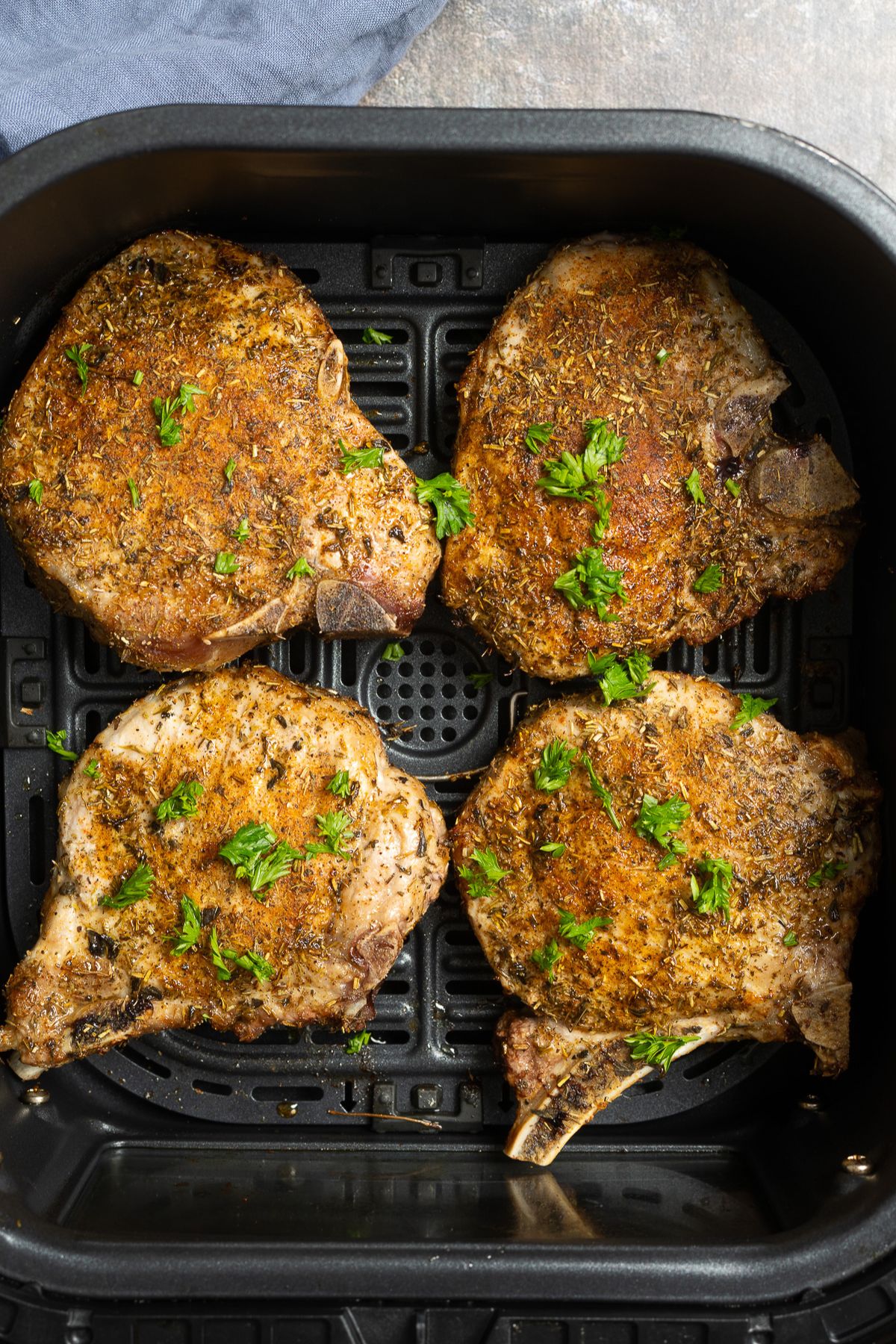
The most common cause is overcooking. An air fryer moves hot air around the meat quickly, so pork chops can go from juicy to dry in only a few extra minutes.
Other common causes include:
- Using very thin pork chops
- Choosing boneless, low-fat chops
- Cooking straight from frozen without adjusting the method
- Setting the air fryer too hot
- Failing to preheat when the recipe assumes a preheated basket
- Crowding the basket
- Skipping a marinade, brine, or light oil coating
- Cutting into the meat right away
- Relying on cooking time instead of internal temperature
1. The pork reached too high a temperature
Pork muscle contains water. As the meat gets hotter, its muscle fibers tighten and push out more moisture. If a pork chop stays in the air fryer well past 145°F, it can become dry, firm, and chewy.
The final temperature matters more than the clock. A 1-inch chop and a ½-inch chop may need very different cooking times, even at the same air fryer setting.
2. The chops were too thin
Thin pork chops have very little room between the outside and the center. The surface may brown quickly while the inside continues heating.
A thin chop can reach 145°F before it develops much browning. If you keep cooking it to make the outside darker, the inside may become tough.
For better results, use pork chops that are about ¾ to 1 inch thick when possible.
3. The cut was very lean
Boneless loin chops are convenient, but they often contain less fat and connective tissue than thicker bone-in chops. Less fat means less protection against moisture loss.
Cuts that may work better in an air fryer include:
- Bone-in loin chops
- Center-cut pork chops
- Rib chops
- Thick boneless pork chops
A bone does not guarantee tenderness, but thicker, slightly fattier chops usually offer a wider cooking window.
4. The air fryer was too hot
High heat can brown the outside before the inside cooks evenly. It can also dry the surface and make the meat feel hard.
Many pork chop recipes use temperatures from 375°F to 400°F. That range can work, but the best setting depends on thickness, bone-in or boneless structure, and the air fryer model.
If your chops brown too fast, try 360°F to 375°F and begin checking the center earlier.
5. The basket was crowded
air fryers need space for hot air to circulate. If pork chops overlap or touch closely, they may cook unevenly. Some areas can steam while exposed edges dry out.
Place the chops in one layer with space around each piece. Cook in batches if needed.
6. The meat was cut immediately
Resting lets the heat and juices settle. If you cut into a pork chop as soon as it leaves the basket, more liquid may run onto the plate.
Rest the chops for about 3 to 5 minutes before serving. This does not make an overcooked chop juicy again, but it can improve the texture of properly cooked pork.
How to tell why your pork chops were tough
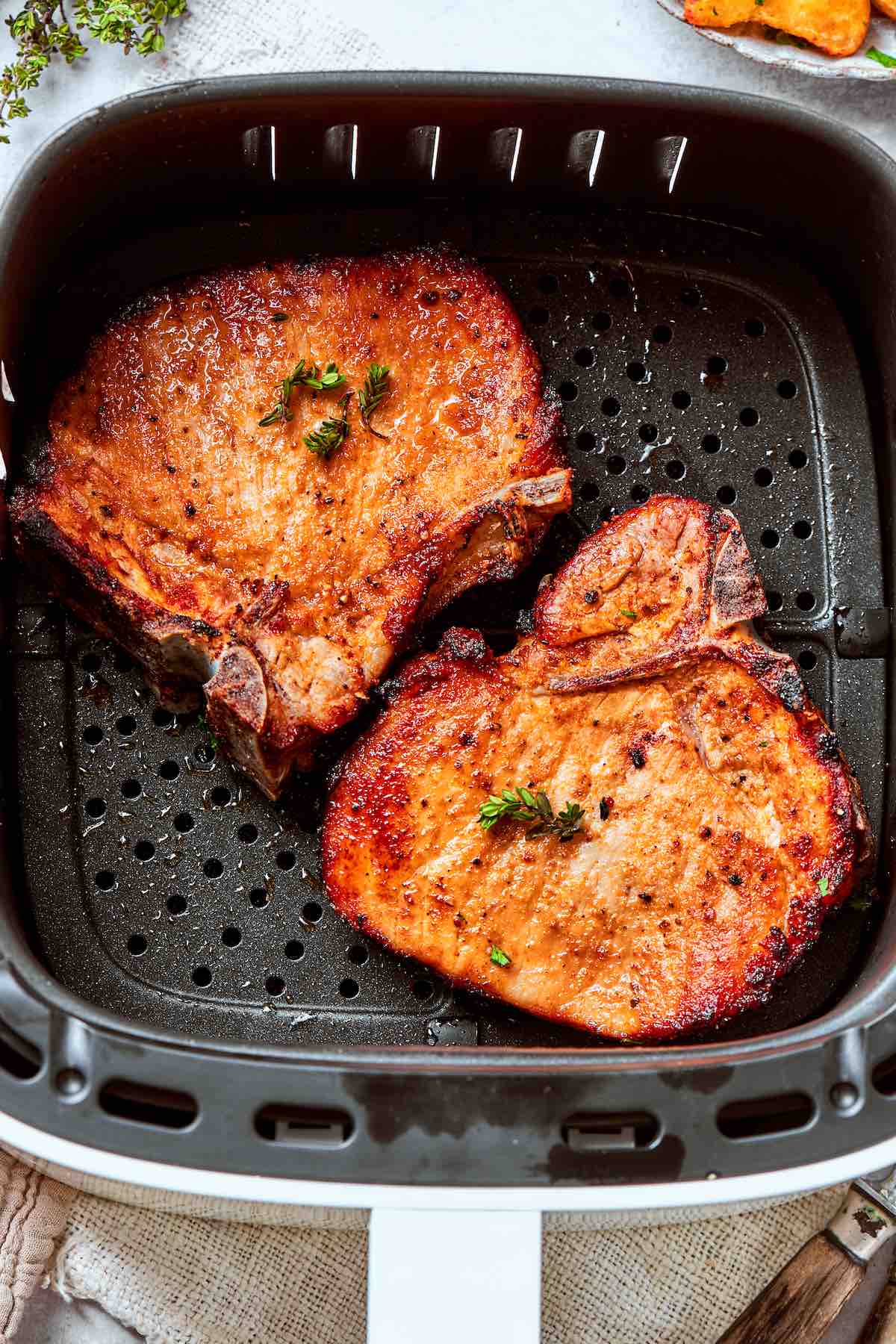
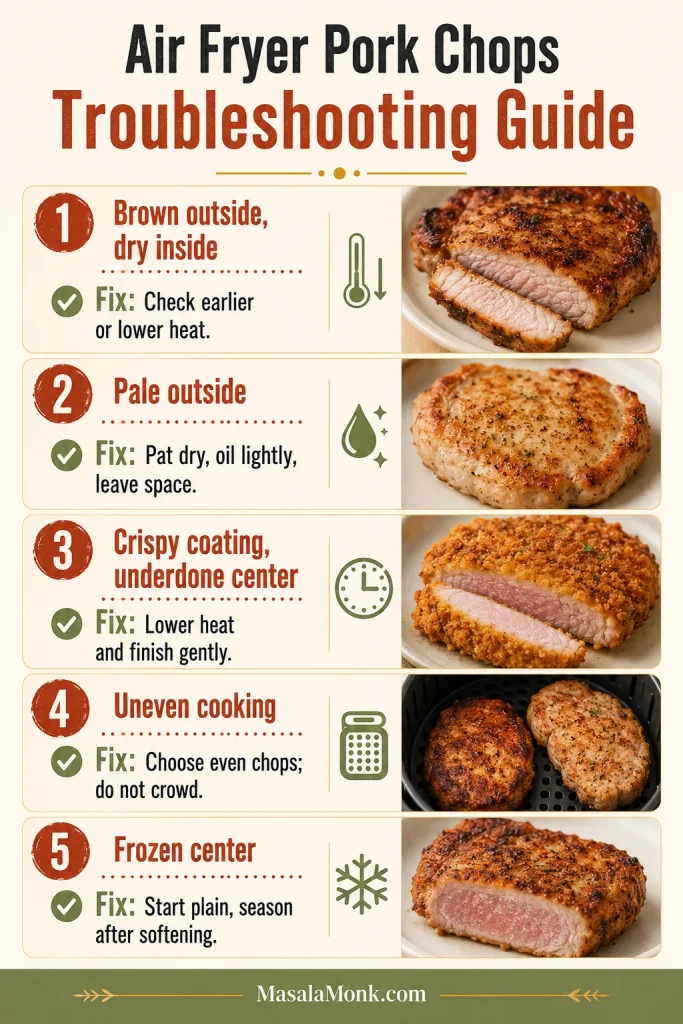
The texture can help identify the problem. Use the symptoms below as a troubleshooting guide.
| What you notice | Most likely cause | What to change next time |
|---|---|---|
| Dry and crumbly throughout | Overcooking | Check the temperature sooner |
| Firm outside but moist center | Heat too high or uneven cooking | Lower the temperature and leave space |
| Chewy and hard to bite | Very lean cut or overcooking | Use thicker chops or a fattier cut |
| Tough only near the edges | Thin chop or excessive browning | Reduce heat and shorten the cook |
| Pale outside but dry inside | Cooked too long at a low temperature | Use a moderate temperature and check early |
| Wet surface and uneven doneness | Crowded basket | Cook in one layer |
| Dry only after reheating | Reheated too aggressively | Warm gently with added moisture |
A thermometer gives a better answer than appearance. Insert it into the thickest part of the chop from the side. Avoid touching the bone, because the bone can produce a false reading.
If the center is below 145°F, return the pork to the air fryer and check it again after a short interval. If it is already far above 145°F, more cooking will not improve the texture.

How to make tender air fryer pork chops
The most reliable method combines a suitable cut, even thickness, moderate heat, and early temperature checks.
What you need
For about four pork chops, gather:
- 4 pork chops, ideally ¾ to 1 inch thick
- 1 to 2 tablespoons of neutral oil
- Salt and black pepper
- Garlic powder, paprika, or other dry seasonings
- An instant-read thermometer
- An air fryer
Do not use oil as a substitute for proper cooking control. Oil helps browning and seasoning stick, but it cannot prevent overcooking.
Step 1: Choose and prepare the chops
Select chops with an even thickness. If one end is much thinner than the other, that end may dry out before the thick section is ready.
Pat the pork dry with paper towels. Moisture on the surface can slow browning.
If the chops have a thick fat edge, make a few shallow cuts through the fat. Stop before cutting deeply into the meat. This helps reduce curling.
Step 2: Season or brine the pork
A short brine can help pork retain more moisture during cooking. For a simple wet brine, dissolve salt in cold water, then refrigerate the pork in the brine for about 30 minutes to 2 hours, depending on thickness. Pat the chops very dry before cooking.
You can also use a dry brine. Sprinkle the chops lightly with salt and refrigerate them uncovered for several hours or overnight. This takes more planning but avoids adding extra water.
Do not heavily salt pork that has already been injected or labeled with a solution. Check the package label first. Added solution can make the meat too salty.
Step 3: Preheat when your model or recipe calls for it
Preheating helps the outside begin cooking at once. It also makes the cooking time more consistent.
Preheat the air fryer to about 375°F unless your appliance manual gives different instructions.
Some air fryers heat very quickly, while others need more time. Treat recipe times as starting points, not guarantees.
Step 4: Add a thin coating of oil
Brush or rub the chops with a small amount of oil. Avoid pouring a large amount into the basket.
Oil improves browning and can reduce a dry surface. It does not replace a thermometer or protect pork from excessive heat.
Step 5: Cook in one layer
Place the pork chops in the basket with room around them. Turn them halfway through cooking if your air fryer browns unevenly.
For ¾- to 1-inch chops at about 375°F, begin checking the internal temperature after roughly 8 minutes. Total cooking time may be around 10 to 16 minutes, but thickness and appliance design can change that range.
Remove the chops when the thickest part reaches 145°F, then rest them for at least 3 minutes.
Step 6: Check more than one chop
If the chops vary in size, check the largest and thickest piece. If they cook in a crowded basket, check more than one piece before serving.
The smallest chop may already be dry while the largest one is still under the safe temperature. Separate cooking is often the simplest solution.
Air fryer pork chop cooking guide
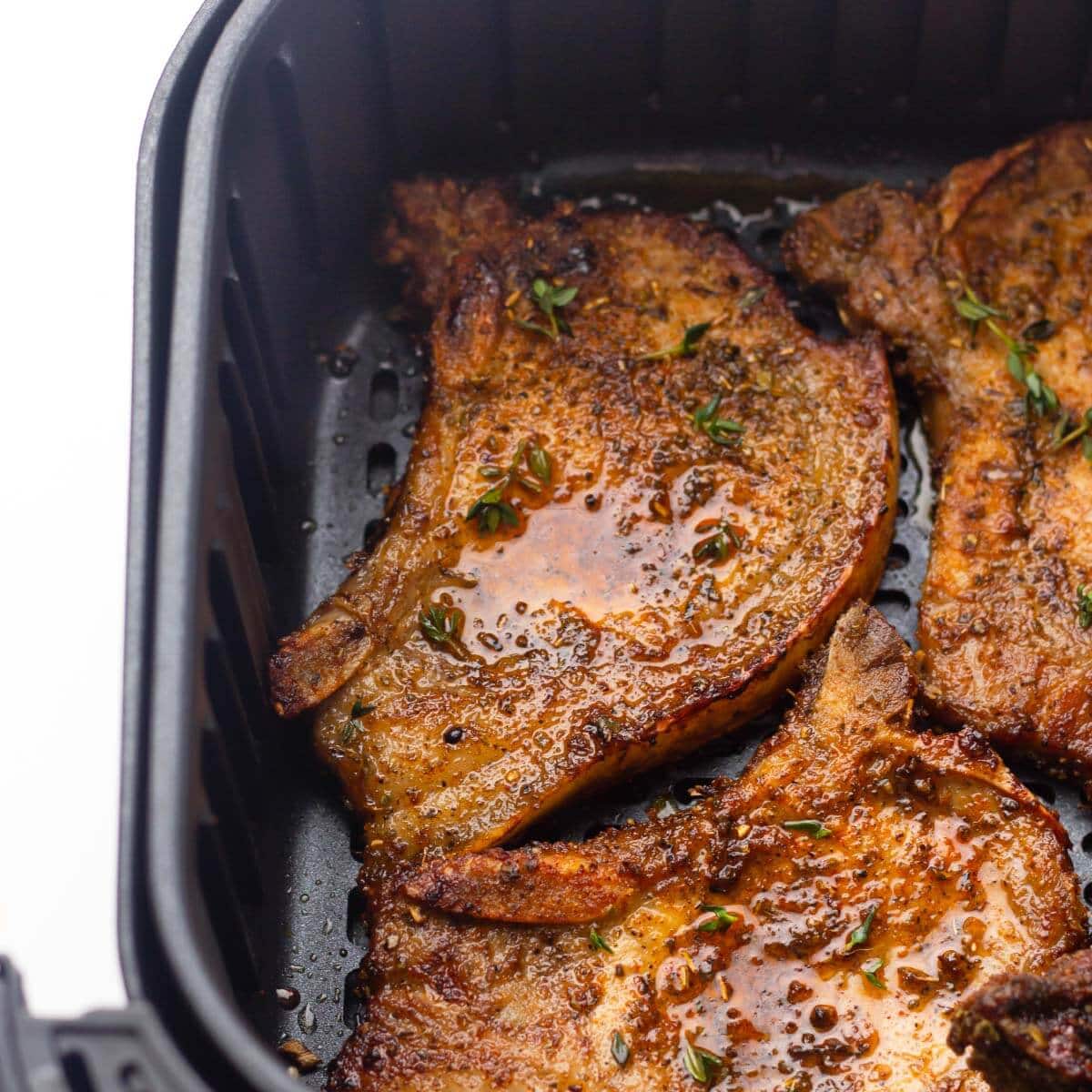
The table below gives a starting point for fresh, thawed pork chops cooked in a preheated air fryer. Use the thermometer as the deciding tool.
| Pork chop type | Suggested temperature | Begin checking | General time range |
|---|---|---|---|
| Thin boneless, about ½ inch | 375°F | 6 minutes | About 7–10 minutes |
| Boneless, about ¾ inch | 375°F | 8 minutes | About 9–13 minutes |
| Thick boneless, about 1 inch | 375°F | 9 minutes | About 11–16 minutes |
| Bone-in, about 1 inch | 375°F | 10 minutes | About 12–18 minutes |
These are practical starting ranges, not guaranteed times. Air fryer baskets, heating elements, airflow, and load size vary by model.
Frozen pork chops require a different approach. The outside may dry before the center thaws and cooks. For better texture, thaw pork in the refrigerator first. If you cook from frozen, follow your appliance or recipe instructions and verify the center with a thermometer.

Mistakes that make air fryer pork chops dry
Several small mistakes can turn a good cut into a tough meal.
Cooking by time alone
A recipe may say “cook for 12 minutes,” but that time assumes a certain thickness and appliance. Use the clock to know when to check, not when to stop.
Using the highest temperature
A hotter setting is not always faster in a useful way. It may create a browned crust while the center remains undercooked, forcing you to continue cooking and dry the meat.
Skipping the rest
Even a well-cooked chop can seem less juicy if it is sliced at once. Give it a few minutes before cutting.
Pressing down on the meat
Pressing pork chops with tongs or a spatula pushes out moisture. Turn them gently.
Adding a wet sauce too early
Sugary sauces can burn in the air fryer. They may also make browning uneven. Apply barbecue sauce or a glaze during the final 1 to 2 minutes, or serve it on the side.
Washing raw pork
The USDA advises against washing raw meat because splashing water can spread bacteria around the kitchen. Pat the pork dry instead, then clean hands and surfaces after handling it.
Can you make tough pork chops tender after cooking?
You cannot fully reverse overcooking, but you can make tough pork chops easier to eat.
Try one of these options:
- Slice the pork thinly across the grain.
- Add a sauce, gravy, or pan juices.
- Chop the meat for tacos, fried rice, soup, or sandwiches.
- Mix small pieces into beans or a moist casserole.
- Reheat gently with a little broth or sauce.
Avoid putting already-dry pork back into the air fryer for a long time. Extra heat usually makes it firmer.
For leftovers, refrigerate the pork promptly in a shallow container. Reheat until hot throughout, but use gentle heat and added moisture to limit further drying.

Food safety for air fryer pork chops
Raw pork should be handled carefully to prevent cross-contamination. Keep it refrigerated until preparation, wash your hands after handling it, and use separate plates for raw and cooked meat.
The USDA’s safe minimum for whole cuts of pork is 145°F, followed by a 3-minute rest. This guidance applies to fresh pork chops and similar whole-muscle cuts.
Ground pork has a different texture and safety requirement. Do not use the whole-cut pork chop temperature as a general rule for ground pork.
A thermometer is especially important when:
- The chops are different thicknesses.
- The pork is bone-in.
- The chops are frozen or partly frozen.
- The basket is crowded.
- The air fryer is new to you.
- You are cooking for children, older adults, pregnant people, or anyone with a weakened immune system.
For official handling and temperature guidance, consult the USDA Food Safety and Inspection Service.

Frequently asked questions
Why are my boneless pork chops tougher than bone-in chops?
Boneless chops are often leaner and thinner. They can reach 145°F quickly and then dry out if cooking continues. Use thicker boneless chops, check early, and consider a short brine.
Should I flip pork chops in an air fryer?
Flipping is not always required, but it can help when the heating element browns one side more strongly. Turn the chops halfway through if the top browns much faster than the bottom.
Should I use oil on pork chops in an air fryer?
A light oil coating can improve browning and help seasoning stick. Use only a small amount. Too much oil may drip into the basket and create smoke.
Why are my pork chops tough even though they reached 145°F?
They may have continued cooking well above 145°F, especially if they were thin. The cut may also have been very lean. Check the temperature early and remove the chops as soon as they reach the safe minimum.
Can I marinate pork chops instead of brining them?
Yes. A marinade can add flavor and may soften the surface, especially when it contains an acidic ingredient. Do not marinate indefinitely, because strong acids can make the outer texture soft or unpleasant.
Key takeaways
- Overcooking is the most common reason air fryer pork chops become tough.
- Use an instant-read thermometer and remove whole-cut pork at 145°F, followed by a 3-minute rest.
- Choose chops about ¾ to 1 inch thick for a wider cooking window.
- Cook at a moderate setting, such as 375°F, and check earlier than the recipe’s final time.
- Leave space between chops so hot air can circulate.
- Brining or dry-brining can help, but neither can rescue pork that has been severely overcooked.
- Slice leftovers thinly and serve them with moisture rather than reheating them for a long time.
Conclusion
Tough air fryer pork chops are usually the result of too much heat or too much time, not a problem with the air fryer itself. Start with thicker chops, season them well, cook them in a single layer, and check the center early.
The key target is simple: 145°F in the thickest part, followed by a short rest. Once you use temperature instead of a fixed cooking time, tender and juicy air fryer pork chops become much more consistent.