Why Does My Air Fryer Set Off My Smoke Alarm: Easy Fixes
Hot grease, food residue, crumbs, or poor airflow can make your air fryer produce smoke and trigger the alarm.
If you are wondering, “why does my air fryer set off my smoke alarm,” the answer is usually simple: the appliance gets hot enough to burn oil, grease, or food particles. Still, repeated alarms can point to poor placement, a dirty basket, an overloaded drawer, or a real electrical problem. This guide explains the common causes, safe fixes, warning signs, and best ways to cook without filling your kitchen with smoke.
Why does my air fryer set off my smoke alarm?
An air fryer cooks with very hot, fast-moving air. Most models reach about 350°F to 450°F. That heat can turn a small amount of oil, grease, or food residue into smoke.
Smoke alarms do not know whether smoke comes from burnt bacon or a house fire. They detect tiny particles in the air. If enough particles reach the sensor, the alarm sounds.
The most common reasons why does my air fryer set off my smoke alarm include:
• Grease splashes onto the heating element.
• Old crumbs burn inside the cooking chamber.
• Fatty foods release too much oil.
• The air fryer sits too close to the smoke alarm.
• The basket is too full, so air cannot move well.
• The unit is dirty or damaged.
• Steam, smoke, or cooking fumes drift toward the alarm.
A brief alarm during cooking does not always mean the air fryer is unsafe. However, thick smoke, sparks, burning plastic, or a hot electrical smell requires immediate action.
:max_bytes(150000):strip_icc()/faw-airhood2-tout-f1816e7ae3b5438486eabc2937336dac.jpg)
Common causes of air fryer smoke
Understanding the source of the smoke makes the problem much easier to solve. In many cases, the air fryer itself works well, but the cooking method creates more smoke than the kitchen can handle.
Greasy foods
Foods with high fat content can release oil as they cook. Bacon, sausage, burgers, chicken wings, pork belly, and frozen breaded foods may produce more smoke than vegetables or lean chicken.
That oil can drip into the bottom pan. If the pan becomes very hot, the grease may smoke. Some foods also spray small droplets upward toward the heating coil.
Too much oil
An air fryer usually needs little oil. A light spray or small coating is often enough. Pouring oil into the basket can cause splashes and smoke.
Never fill an air fryer with oil like a deep fryer. Most air fryers are not made for that use. Extra oil can also damage the heating element and create a fire risk.
Food residue and crumbs
Small crumbs may look harmless, but they can burn quickly. Cheese, breading, sugar, and dried marinade are common sources of smoke.
A dirty heating element is another reason why does my air fryer set off my smoke alarm. Residue near the top of the chamber can heat faster than food at the bottom.
Overcrowding
An overloaded basket blocks airflow. Food then cooks unevenly and may release more moisture and grease.
Overcrowding can also force oil and food particles into areas that are harder to clean. For crisp results, keep food in a loose layer whenever possible.
High cooking temperatures
Some recipes use more heat than needed. Cooking fatty food at 450°F may create smoke even when the air fryer is clean.
Try lowering the temperature by 25°F to 50°F. Add a few extra minutes if needed, and check the food often.
Poor air movement
An air fryer needs space around its vents. If it sits under a cabinet, inside a tight corner, or against a wall, heat and fumes may collect.
The hot air may then move toward the smoke alarm instead of spreading through the room. This can explain why does my air fryer set off my smoke alarm even when the food is not badly burned.
How to stop your air fryer from setting off the smoke alarm
You can often prevent the problem with a few small changes. Focus on cleaning, placement, food choice, and temperature.
1. Clean the air fryer after it cools
Unplug the unit and let it cool fully before cleaning. Remove the basket and pan, then wash them with warm water and mild dish soap.
Wipe the inside with a soft, damp cloth. Check the top area near the heating element for crumbs or grease. Do not pour water into the appliance or soak the main electrical unit.
2. Use less oil
Coat food lightly instead of pouring oil into the basket. An oil mister made for cooking can help spread a thin layer.
Avoid aerosol sprays unless the air fryer maker says they are safe. Some propellants may damage nonstick coatings.
3. Lower the temperature
If greasy food creates smoke, try 350°F or 375°F instead of 400°F or higher. Lower heat often reduces smoke while still giving food a crisp finish.
Keep a close eye on the first batch. Each air fryer cooks differently, even when two models show the same temperature.
4. Cook fatty foods in smaller batches
Do not pack the basket with bacon, wings, or sausage. A smaller batch gives grease more room to drip and allows hot air to move freely.
You can also pause the cooking process and carefully drain excess grease from the pan. Use oven mitts because the pan and grease may be very hot.
5. Add water for certain fatty foods
Some manufacturers suggest adding a small amount of water to the lower pan when cooking very fatty foods. The water can reduce grease smoke as it drips.
Check your user manual first. Do not add water if the manufacturer warns against it, and never add water to the main body of the appliance.
6. Move the air fryer
Place the air fryer on a stable, heat-safe surface. Keep it away from walls, cabinets, curtains, paper towels, and other items that can catch fire.
Do not place it directly under a smoke alarm. Moving it several feet away may help, but never move it to an unsafe spot just to silence the alarm.
7. Improve kitchen ventilation
Turn on the range hood before cooking. Open a window or use a fan to guide fumes away from the alarm.
Do not point a strong fan directly at the air fryer. It may spread hot grease or disturb the appliance’s airflow.
Where should you place an air fryer?
Good placement can reduce smoke and improve safety. Always follow the instructions in your air fryer manual because vent locations differ by model.
Choose a location with:
• A flat, stable, heat-resistant surface
• Several inches of open space around the appliance
• Clear space above the air fryer
• Good ventilation
• No nearby curtains, cabinets, towels, or paper items
Avoid placing the appliance on a stovetop, inside an oven, beneath a low cabinet, or beside a sink. The cord should not hang over the counter edge.
If your smoke alarm is close to the kitchen, do not remove its battery. Instead, improve ventilation and ask a qualified professional about proper alarm placement if false alarms continue.
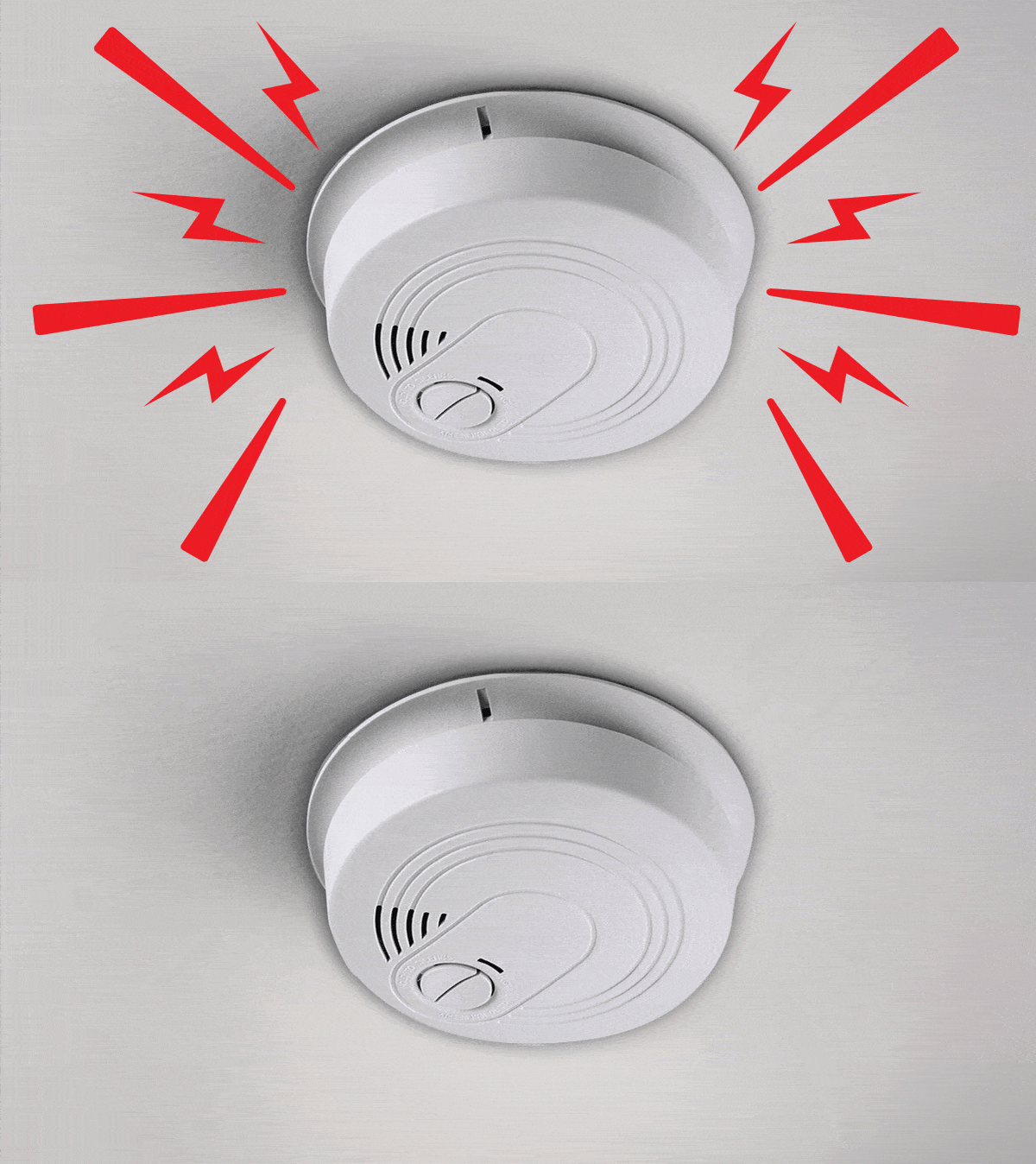
Smoke alarms are important life-safety devices. Fire safety guidance generally advises keeping them installed and working, even when cooking creates occasional nuisance alarms.

Is it smoke, steam, or a real fire?
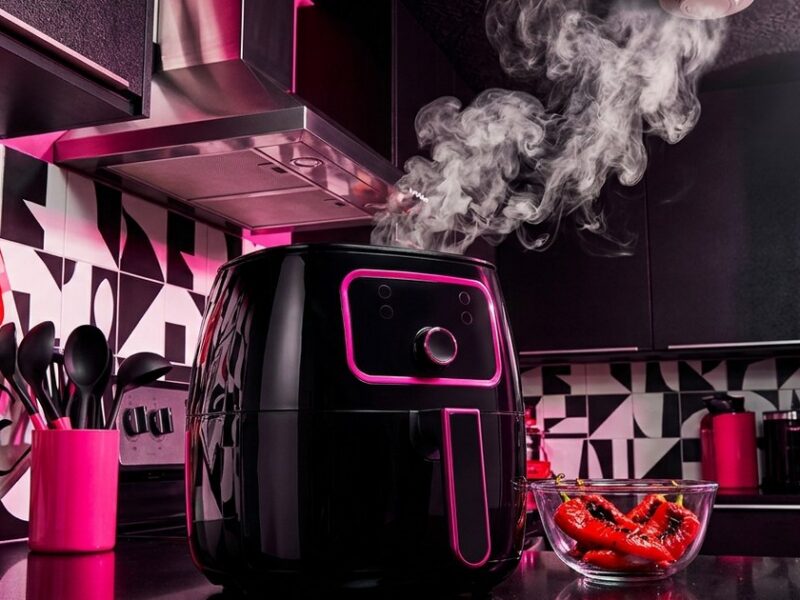
Not every visible cloud from an air fryer means something is burning. Steam can appear when frozen food or moist vegetables cook. Steam usually fades quickly and does not smell sharply burnt.
Smoke often has a gray or blue look and a burnt odor. It may sting your eyes or make your throat feel irritated.
Treat the situation as urgent if you notice:
• Flames inside or below the air fryer
• Sparks or electrical arcing
• A burning plastic or wire smell
• A melted plug or damaged cord
• Smoke coming from the control panel
• A tripped circuit breaker
• Smoke that continues after the appliance is turned off
If you see flames, unplug the appliance only if you can do so safely. Keep the drawer closed to limit oxygen, leave the area, and call 911 if the fire does not stop at once. Never throw water on a grease or electrical fire.
What to check when the alarm keeps sounding
If you still ask why does my air fryer set off my smoke alarm after cleaning and changing the cooking method, inspect the appliance and the alarm.
First, check whether the alarm sounds only during air fryer use. If it also sounds at other times, the alarm may be dusty, old, or faulty. Many smoke alarms need replacement after about 10 years, but check the date and instructions on your unit.
Next, inspect the air fryer for damage. Look for:
• A loose power cord
• Cracks in the basket or pan
• A warped drawer
• Exposed wires
• A loose heating element
• Melted plastic
• Unusual buzzing or clicking
Stop using the air fryer if you find damage. Contact the manufacturer or a qualified appliance technician. Do not open the housing unless you are trained to repair electrical appliances.
A useful test is to cook a low-fat food, such as sliced potatoes or vegetables, at a moderate temperature. If the alarm stays quiet, greasy food was likely the cause. If the alarm sounds again with little or no smoke, placement, ventilation, alarm sensitivity, or an appliance fault may be involved.

Foods most likely to cause air fryer smoke
Some foods naturally create more smoke than others. Knowing this can help you plan safer cooking times.
Foods that often produce smoke include:
• Bacon
• Sausage
• Hamburgers
• Chicken wings with skin
• Pork chops with visible fat
• Frozen foods with heavy breading
• Cheese-covered foods
• Foods coated with sugary sauces
• Marinated foods with oil
For these foods, use a lower temperature and cook in smaller portions. Remove loose breading and excess marinade before cooking. Clean the pan between batches if grease builds up.
Foods that usually create less smoke include vegetables, lean fish, potatoes, tofu, and skinless chicken. They can still burn if overcooked, so check them during the final minutes.
Mistakes I have seen people make
One common mistake is treating an air fryer like a small oven and ignoring the lower pan. Grease can collect there during several cooking cycles. The appliance may look clean from the outside while residue near the heating element keeps smoking.
Another mistake is spraying oil directly into a hot basket. The spray can travel upward and reach the heating coil. It is safer to coat the food before placing it in the basket.
I also see people silence the smoke alarm by removing the battery. That solves the noise but removes an important warning system. A better approach is to keep the alarm active, improve ventilation, and fix the source of the smoke.
A final mistake is assuming every air fryer smoke problem comes from food. A damaged cord, failing control board, or overheated motor can also create smoke. If the smell is electrical, stop using the appliance rather than trying another recipe.
How to clean an air fryer heating area safely
The heating element sits near the top of many air fryers. Grease and crumbs can collect around it, but this area needs gentle cleaning.
Follow these steps:
-
Unplug the air fryer and let it cool completely.
-
Turn the appliance upside down only if the manual allows it.
-
Wipe the heating area with a barely damp, nonabrasive cloth.
-
Use a soft brush to remove dry crumbs.
-
Let all surfaces dry before plugging the appliance back in.
-
Never use metal tools or harsh cleaners near the heating coil.
Do not force the heating element down. Do not spray cleaner into the vents. If heavy grease remains or the element looks damaged, contact the manufacturer.
Frequently Asked Questions About Why Does My Air Fryer Set Off My Smoke Alarm
Why does my air fryer set off my smoke alarm but there is no smoke?
The alarm may detect tiny particles that are hard to see, or cooking fumes may reach the sensor before visible smoke appears. Steam and grease aerosols can also trigger some alarms, especially when the air fryer is close to the detector.
Is it normal for an air fryer to smoke?
A small amount of smoke can happen when cooking fatty foods or when residue burns off. Thick smoke, an electrical smell, sparks, or repeated smoke from clean food is not normal and requires you to stop using the appliance.
How far should an air fryer be from a smoke alarm?
There is no single distance that fits every kitchen because airflow and alarm design vary. Keep the air fryer away from the alarm and follow the appliance manual, while keeping the smoke alarm installed and active.
Can I remove the smoke alarm battery while using an air fryer?
No. Removing the battery creates a serious safety risk because the alarm cannot warn you about a fire. Improve ventilation, move the appliance safely, or ask a professional to assess the alarm location instead.
Why does my air fryer set off my smoke alarm when cooking bacon?
Bacon releases hot fat that can drip into the pan and create smoke. Cook it in a smaller batch at a lower temperature, drain excess grease carefully, and clean the air fryer before the next use.
Should I stop using my air fryer if it smokes?
Stop using it if the smoke is heavy, smells electrical, comes from the body or cord, or continues with low-fat food. Let the unit cool, inspect it for damage, and contact the manufacturer if the cause is unclear.
[CodeImg not included per instruction]
Conclusion
The main reason why does my air fryer set off my smoke alarm is usually burning grease, crumbs, food residue, or poor airflow. Cleaning the appliance, using less oil, lowering the temperature, cooking smaller batches, and improving ventilation can often solve the issue.
Never ignore sparks, melted parts, electrical odors, or smoke from the appliance body. Keep your smoke alarm active, follow the user manual, and replace or repair the air fryer when safety is uncertain.
Try these steps with your next meal, and share your air fryer smoke problem or solution in the comments.