Why Does My Air Fryer Smell Like Chemicals: Causes & Fixes
A chemical smell from your air fryer usually comes from new plastic, factory residue, hot coatings, or trapped food oils.
If you are wondering why does my air fryer smell like chemicals, you are not alone. A mild odor is common during the first few uses, but a strong smell can also signal overheating, damaged parts, or poor cleaning. This guide explains the likely causes, safe fixes, warning signs, and simple ways to prevent the smell from returning.
Why does my air fryer smell like chemicals?
A new air fryer may smell because heat activates residue left from manufacturing, packaging, or shipping. Small amounts of oil, plastic dust, protective coating, or machine lubricant can remain on the basket, heating chamber, or internal parts.
The smell often fades after one to three heating cycles. However, it should not smell like burning wires, melting plastic, or harsh smoke. Those odors may point to an electrical or mechanical problem.
Common causes include:
• New appliance residue: Factory oils and protective materials can smell when heated for the first time.
• Plastic packaging: A small piece of film, tape, foam, or cardboard may remain inside the unit.
• Hot plastic parts: Some air fryers contain plastic near the cooking chamber. Poor-quality plastic may release a strong odor when heated.
• Dirty basket or tray: Old grease and food bits can create a sharp, chemical-like smell.
• Overheated oil: Oils with low smoke points can burn and smell harsh.
• Damaged wiring: A hot electrical smell may indicate a serious safety issue.

Is a chemical smell from a new air fryer normal?
A light “new appliance” smell can be normal. It may resemble warm plastic, paint, or light oil. This smell should become weaker each time you use the air fryer.
A strong odor that fills the room is not something to ignore. Stop using the appliance if the smell causes headache, throat irritation, coughing, dizziness, or nausea.
Air fryers heat food at high temperatures, often from 300°F to 400°F. Heat can make factory residue noticeable, much like the smell from a new oven during its first use.
Read the instruction manual before the first cycle. Some brands advise running the air fryer empty for a short time. Others may recommend washing removable parts first. Follow the manual because cleaning and burn-in instructions vary by model.
What a normal first-use smell is like
A normal first-use odor is usually:
• Mild and temporary
• Strongest during the first heating cycle
• Reduced after washing and ventilation
• Not linked to visible smoke or melting
What an abnormal smell is like
An abnormal odor may smell like:
• Burning wires
• Melting rubber
• Scorched plastic
• Strong solvent
• Burning paint
If the odor gets stronger instead of weaker, unplug the air fryer and contact the manufacturer.
Main reasons your air fryer smells like chemicals
Understanding the source helps you choose the right fix. The answer to why does my air fryer smell like chemicals may be simple, but several problems can create similar odors.
Factory oils and protective residue
Manufacturers use oils and other materials during production. These materials may remain on metal surfaces or inside small gaps. When the heating element warms up, the residue can produce a temporary smell.
Wash the basket, tray, and rack with warm water and mild dish soap. Do not soak the main electrical unit. Wipe the inside with a damp cloth, then let every part dry fully.
Leftover plastic or packaging
Check the entire appliance for hidden packaging. Look under the basket, around the drawer, and near the heating element. Also inspect the outside for clear film or adhesive labels.
Never operate an air fryer with plastic, foam, paper, or cardboard inside. Even a small piece can melt or burn.
Food grease and burnt crumbs
Grease can collect below the basket. Crumbs can also sit near the heating element. When these leftovers heat up, they may smell like chemicals even though the cause is burned food.
This is common after cooking bacon, sausages, chicken wings, or heavily seasoned food. Clean the air fryer after it cools, and remove grease before the next use.
Overheating or blocked airflow
Air fryers need space around the vents. If the appliance sits against a wall or under a cabinet, heat may build up. Blocked airflow can make plastic parts hotter than they should be.
Place the air fryer on a flat, heat-safe surface. Keep the vents clear and leave the amount of space recommended in the manual.
Nonstick coating damage
A scratched or peeling basket may release an unpleasant odor. A damaged coating also makes the surface harder to clean.
Do not use metal forks, knives, or steel wool on the basket. Replace the basket if the coating is peeling, flaking, or badly scratched.
How to remove the chemical smell safely
If you are asking why does my air fryer smell like chemicals, start with a careful cleaning and inspection. Never try to cover the smell with cooking spray, fragrance, or strong cleaners.
Step 1: Unplug and inspect the appliance
Let the air fryer cool fully. Unplug it before cleaning or checking parts.
Look for:
• Melted plastic
• Loose wires
• Brown or black marks
• Damaged cords
• Peeling basket coating
• Debris near the heating element
Do not touch the heating element while it is hot. If you see damage, stop using the appliance.
Step 2: Wash removable parts
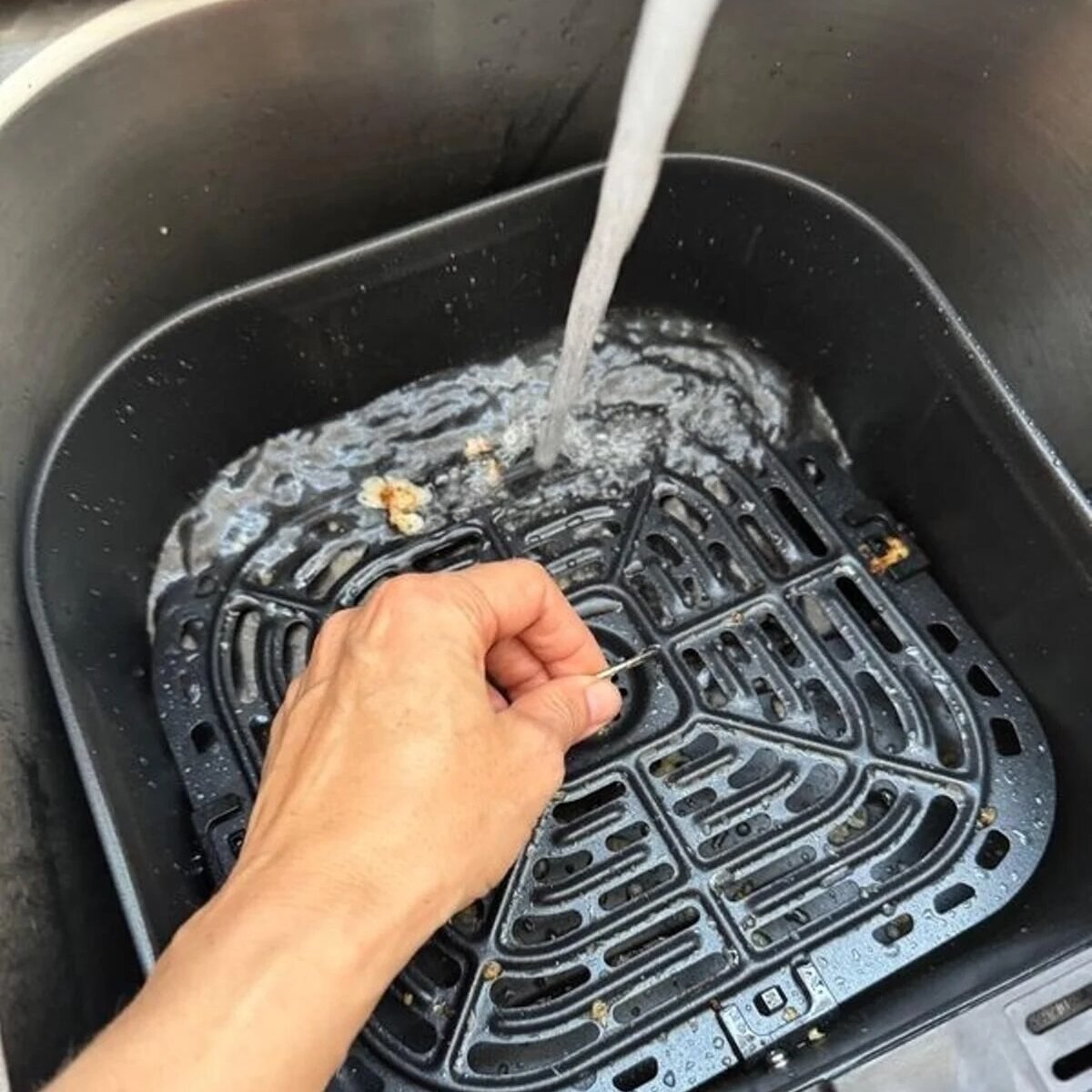
Wash the basket, crisper plate, and rack with warm water and mild dish soap. Use a soft sponge or cloth.
Avoid harsh chemicals, oven cleaner, bleach, and abrasive pads. These products may damage the coating and create more odor when heated.
Step 3: Wipe the cooking chamber
Use a damp microfiber cloth to wipe the inside. A soft brush can help remove crumbs around the heating area.
Keep water away from the control panel, fan, heating element, and electrical parts. Never submerge the main air fryer body.
Step 4: Run an empty heating cycle
Only do this if the manufacturer allows it. Place the air fryer in a well-ventilated area, away from cabinets and curtains.
Run it at the temperature and time listed in the manual. If no guidance is provided, use a short, low-temperature cycle instead of immediately choosing the highest heat.
Stay nearby and watch for smoke, sparks, or a worsening smell. Turn it off at once if any warning sign appears.
Step 5: Air it out
Open a window or use a kitchen exhaust fan. Good airflow helps remove temporary odors.
Do not use the appliance in a bedroom, enclosed pantry, or small room. The smell should improve after cleaning and a few safe cycles.
How to tell whether the smell is dangerous
The answer to why does my air fryer smell like chemicals is not always harmless. Some odors indicate a possible fire or electrical risk.
Stop using the air fryer and unplug it if you notice:
• Sparks or flashes
• Smoke from the control panel or cord
• A melting-plastic smell
• A burning-wire smell
• A hot or discolored plug
• A tripped circuit breaker
• A damaged power cord
• Visible melting or warping
Do not open the appliance to repair it yourself. Air fryers contain electrical parts that may remain dangerous even after unplugging. Contact the manufacturer, an authorized repair center, or a qualified electrician.
If the appliance catches fire, do not pour water on it. Turn off power if you can do so safely, leave the area, and contact emergency services. A small grease fire may require a suitable fire extinguisher, but personal safety comes first.
Food safety matters too. If food tastes like plastic or chemicals, discard it. Do not keep eating food that has absorbed a strong odor.
Why does my air fryer smell like chemicals after cleaning?
Cleaning can sometimes cause a temporary smell. Soap residue, disinfectant, or a cleaner trapped in seams may heat up during use.
Rinse removable parts very well after washing. Let them dry completely before placing them back in the air fryer.
Avoid using scented sprays or strong household cleaners inside the cooking chamber. Air fryer surfaces contact food, so only use products approved for food-contact surfaces.
If the chemical odor appears only after cleaning, repeat the cleaning process with warm water and mild dish soap. If the smell remains after several rinses, stop using the appliance and ask the manufacturer for advice.
A common cleaning mistake
One mistake I often see during air fryer testing is spraying cleaner directly into the cooking chamber. It seems quick, but liquid can enter the fan or heating area.
A safer method is to spray a small amount of cleaner onto a cloth, if the manual permits that product. For most routine cleaning, warm water and mild dish soap are enough.
Why does my air fryer smell like chemicals with food inside?
Sometimes the air fryer itself is fine. The odor may come from the food, cookware, or cooking oil.
Low-smoke-point oils can burn at normal air fryer temperatures. Extra-virgin olive oil, butter, and some unrefined oils may smoke sooner than refined oils. Always check the oil label and use only a small amount.
Strong seasonings can also smell sharp when heated. Garlic powder, onion powder, chili blends, and sugary sauces may burn on the basket or heating element.
Other possible sources include:
• Silicone liners not rated for high heat
• Parchment paper touching the heating element
• Plastic containers placed inside the basket
• Overfilled food that blocks airflow
• Old grease under the crisper plate
Use accessories made for air fryers and rated for the temperature you plan to use. Never place loose parchment paper inside a preheating air fryer because the fan may lift it toward the heating element.
How to prevent chemical smells in an air fryer
Prevention is easier than removing a stubborn odor. A few simple habits can protect the appliance and improve the taste of your food.
• Wash removable parts before first use.
• Remove every piece of packaging and protective film.
• Follow the first-use instructions in the manual.
• Keep the air fryer on a stable, heat-safe surface.
• Leave clear space around the vents.
• Clean crumbs and grease after each use.
• Use soft tools on nonstick surfaces.
• Avoid sprays that contain propellants or additives.
• Use heat-safe accessories only.
• Do not overfill the basket.
• Replace parts with damage or peeling coating.
• Store the air fryer in a dry, clean place.
I once made the mistake of cooking a greasy batch of wings without checking below the crisper plate. The next use produced a sharp burnt smell, and I first thought the appliance had failed. A deep clean solved the problem. That experience taught me to check the hidden areas, not just the basket.
When should you replace your air fryer?
A temporary new-air-fryer smell does not usually mean you need a new appliance. Replacement becomes more sensible when the odor continues after cleaning and proper use.
Consider replacing the unit if:
• The basket coating keeps peeling.
• The body is warped or melted.
• The cord or plug is damaged.
• The appliance sparks or overheats.
• The fan makes unusual sounds.
• The smell remains after several approved cleaning and heating cycles.
• The manufacturer confirms a defect.
Check whether your model has a recall before continuing to use it. Keep the receipt, model number, and purchase date. These details can help with a warranty claim.
Do not remove safety parts or attempt an electrical repair without proper training. A low-cost appliance is not worth risking a kitchen fire.
Frequently Asked Questions
Why does my air fryer smell like chemicals when it is brand new?
A new air fryer may have factory residue, protective oils, or packaging odors. Wash the removable parts and follow the manufacturer’s first-use instructions in a well-ventilated area.
How long should a new air fryer smell?
A mild odor often fades after one to three uses. If the smell stays strong, gets worse, or resembles burning plastic or wires, stop using the appliance and contact the manufacturer.
Can I use my air fryer if it smells like plastic?
Do not use it if the smell is strong, causes irritation, or comes with smoke, melting, sparks, or unusual heat. A mild new-appliance smell may be temporary, but it should steadily decrease.
How do I clean an air fryer that smells bad?
Unplug the cooled appliance, wash the removable parts with warm water and mild dish soap, and wipe the cooking chamber with a damp cloth. Keep water away from the electrical body and avoid harsh cleaners.
Can burnt food make an air fryer smell like chemicals?
Yes. Burnt grease, crumbs, sugary sauces, and strong seasonings can create a sharp odor that seems chemical. Clean below the crisper plate and near the heating element once the unit is cool.
Is it safe to cook food that smells like plastic?
It is best to discard food with a strong plastic or chemical taste or smell. Find and fix the odor source before cooking again.
Conclusion
A mild smell from a new air fryer often comes from factory residue, packaging, or protective oils. A dirty basket, burnt grease, blocked vents, unsuitable accessories, or overheated parts can also explain why does my air fryer smell like chemicals.
Clean the removable parts, inspect the unit, improve ventilation, and follow the manual. Stop using the appliance if you notice sparks, smoke, melting, damaged wiring, or a smell that does not fade. With careful cleaning and safe use, most harmless odors disappear quickly. Share your experience or explore more air fryer care guides to keep every meal safe and enjoyable.