
Why Is My Air Fryer Turning On But Not Heating: Fixes
Your air fryer may turn on but not heat because of a power, basket sensor, heating element, or control problem.
When you ask, “why is my air fryer turning on but not heating,” the display and fan can still work even when the heating circuit fails. This guide explains the common causes, safe checks, repair limits, and warning signs so you can find the problem without guessing.

Why is my air fryer turning on but not heating?
An air fryer needs several parts to work at the same time. The control panel must send power to the heating element. The basket sensor must confirm that the drawer is closed. The thermostat must read the temperature correctly, and a safety fuse must allow current to pass.
If one part fails, the air fryer may still light up. You may hear the fan, see the timer count down, and press every button as usual. Yet, no hot air comes out.
The most common reasons include:
• The air fryer is not set to a cooking mode.
• The basket or drawer is not fully inserted.
• The outlet or power cord has a problem.
• The heating element is dirty, damaged, or burned out.
• The temperature sensor is blocked or faulty.
• A thermal fuse has opened after overheating.
• The control board or relay has failed.
• The air fryer needs a reset after a power surge.
An air fryer is much like a small oven. The screen is the dashboard, but it does not prove that the engine is running. The heating element is the part that creates heat, and the control system must safely switch it on.

Quick checks before deeper troubleshooting
Before you take anything apart, try these simple checks. They solve many cases where an air fryer turns on but does not heat.
Check the cooking settings
Set the air fryer to a manual cooking mode. Choose a temperature of at least 350°F and a time of 5 to 10 minutes.
Some models show the display as soon as they receive power. They may not heat until you press Start. Other models use preset buttons that need an extra confirmation.
Look for signs such as:
• A heating icon
• A rising temperature indicator
• A running timer
• Warm air from the rear vent
If the timer runs but the air stays cold, the problem may be in the heating circuit.
Reseat the basket
Pull out the basket or drawer. Check for food crumbs, foil, or grease near the rails. Then slide it back in firmly until it sits flush.
Many air fryers have a small safety switch. This switch stops the heater when the basket is not in the correct position. A drawer can look closed while still missing the switch by a few millimeters.
Do not force the basket. If the handle is loose or the drawer is bent, the sensor may never engage.
Test the wall outlet
Plug another appliance into the same outlet. A phone charger is not a useful test because it uses very little power. Use a toaster, lamp, or coffee maker instead.
If the outlet is controlled by a wall switch, turn the switch on. Also check whether a GFCI outlet has tripped in the kitchen.
Avoid using a long extension cord for testing. Air fryers draw significant power, and a weak or damaged extension cord can cause voltage drops or heat buildup.
Reset the air fryer
Unplug the unit for 10 to 15 minutes. This can clear a temporary control error after a power interruption.
After the reset, plug it directly into a working wall outlet. Set a high temperature and run a short test with the basket empty.
A reset will not repair a burned heating element or blown fuse. It only helps with temporary electronic faults.
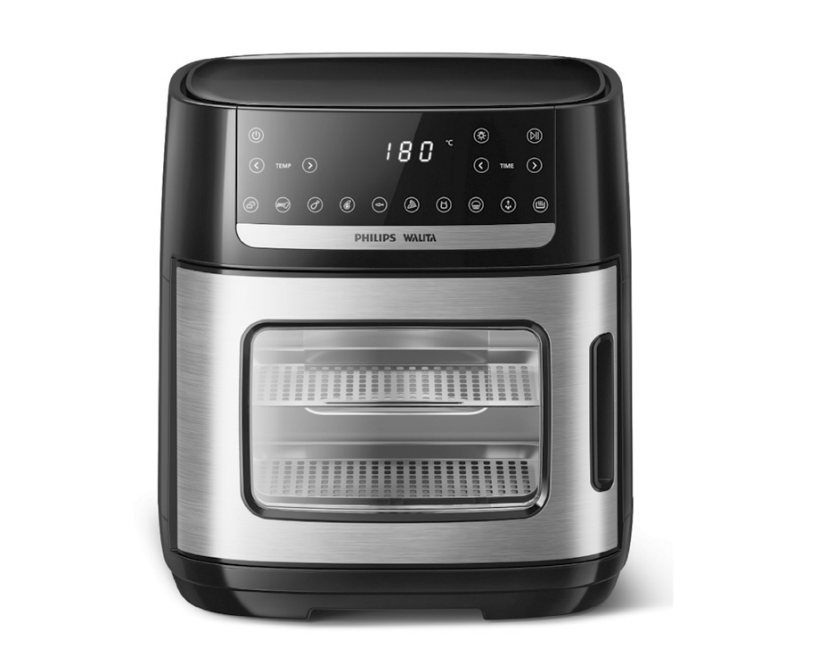
Common reasons an air fryer turns on but does not heat
The basket safety switch is not engaged
The basket switch is one of the first things to check when an air fryer turns on but is not heating. It tells the control board that the drawer is safely closed.
Grease and crumbs can collect around the switch area. A worn latch can also prevent enough pressure from reaching the switch.
Unplug the air fryer and clean the basket rails with a slightly damp cloth. Never pour water into the appliance. Allow all parts to dry before testing it again.
Do not tape, hold, or bypass the safety switch. That removes an important protection feature.
The heating element is dirty
A heating element covered with grease may heat poorly. In some cases, heavy buildup can create smoke, odors, or uneven cooking.
Unplug the air fryer and let it cool completely. Turn it upside down only if the manufacturer allows it. Wipe the element gently with a soft, dry brush or cloth.
Do not scrape the element with a knife. Do not spray oven cleaner inside the appliance. Strong cleaners can damage coatings and leave unsafe residue.
A clean element should usually glow slightly during operation, but not every model makes this easy to see. Do not stare into the appliance or touch the element while testing.
The heating element has failed
A broken element cannot create heat, even if the fan and control panel work normally. Look for a visible break, blister, dark burn mark, or loose connection, but only after unplugging the unit.
Some elements fail in an open circuit. This means electricity cannot pass through them. The air fryer may seem normal because the display and fan use separate electrical paths.
Heating elements are often model specific. If replacement is possible, use the exact part recommended by the manufacturer. A part with the wrong resistance or shape can create a fire risk.
The thermal fuse has opened
A thermal fuse protects the appliance from dangerous heat. If the internal temperature rises too far, the fuse can open and stop power to the heater.
This may happen because of:
• Blocked air vents
• Heavy grease buildup
• A failed thermostat
• A fan that stopped turning
• Cooking in an unusually hot location
A thermal fuse is not the same as a normal reset button. Once it opens, it normally needs replacement. Testing or replacing it requires opening the appliance, which is best left to a qualified technician.
Never bypass a thermal fuse. It is a safety device, not an inconvenience.
The temperature sensor is faulty
The temperature sensor monitors heat inside the cooking chamber. If it sends the wrong reading, the control board may refuse to power the element or shut it off too soon.
A sensor problem may cause:
• Cold food after a full cooking cycle
• Very slow heating
• A temperature error code
• Heating that starts and stops
• Food that cooks unevenly
Check the sensor area for thick grease or stuck food. Clean it gently when the appliance is unplugged and cool. If the problem continues, professional testing may be needed.
The fan is blocked or failing
The fan spreads hot air around the basket. If it cannot move air, some models reduce or stop heating to prevent overheating.
Listen for the fan during a cooking cycle. A low hum is normal. Grinding, clicking, or silence may point to a fan motor or obstruction problem.
Keep the rear and side vents clear. Do not place the air fryer against a wall or under a cabinet while it operates. Good airflow helps protect the motor and internal safety parts.
The control board or relay has failed
The control board controls the timer, fan, temperature, and heating element. A failed relay may allow the display and fan to work while blocking power to the element.
This is more likely when:
• The air fryer recently had a power surge
• Buttons behave strangely
• The unit shuts off at random
• Error codes appear
• The appliance smells like burned electronics
Control board repairs involve live voltage and small electronic parts. Do not open the unit unless you have the right training and test equipment.

How to troubleshoot an air fryer safely
Use this step by step process when an air fryer turns on but does not heat.
-
Unplug the air fryer and let it cool.
-
Inspect the plug and cord for cuts, melting, or dark marks.
-
Test the wall outlet with another high power appliance.
-
Clean the basket rails and check that the drawer closes fully.
-
Clear the air vents and remove grease from visible surfaces.
-
Reset the air fryer by leaving it unplugged for 10 to 15 minutes.
-
Set it to 350°F or higher for a short empty test.
-
Listen for the fan and check for warm air without touching internal parts.
-
Stop immediately if you smell burning plastic, see sparks, or hear loud buzzing.
-
Contact the manufacturer or a qualified repair professional if it still does not heat.
Do not test the heater with the appliance open unless you are trained to work around mains electricity. Unplugging an appliance does not always remove every electrical hazard from internal components.
I have seen people spend money on a heating element when the real issue was a drawer that did not press the safety switch. I have also seen the opposite: a clean basket and working outlet, but a failed thermal fuse. A careful test order prevents both wasted time and unsafe repairs.
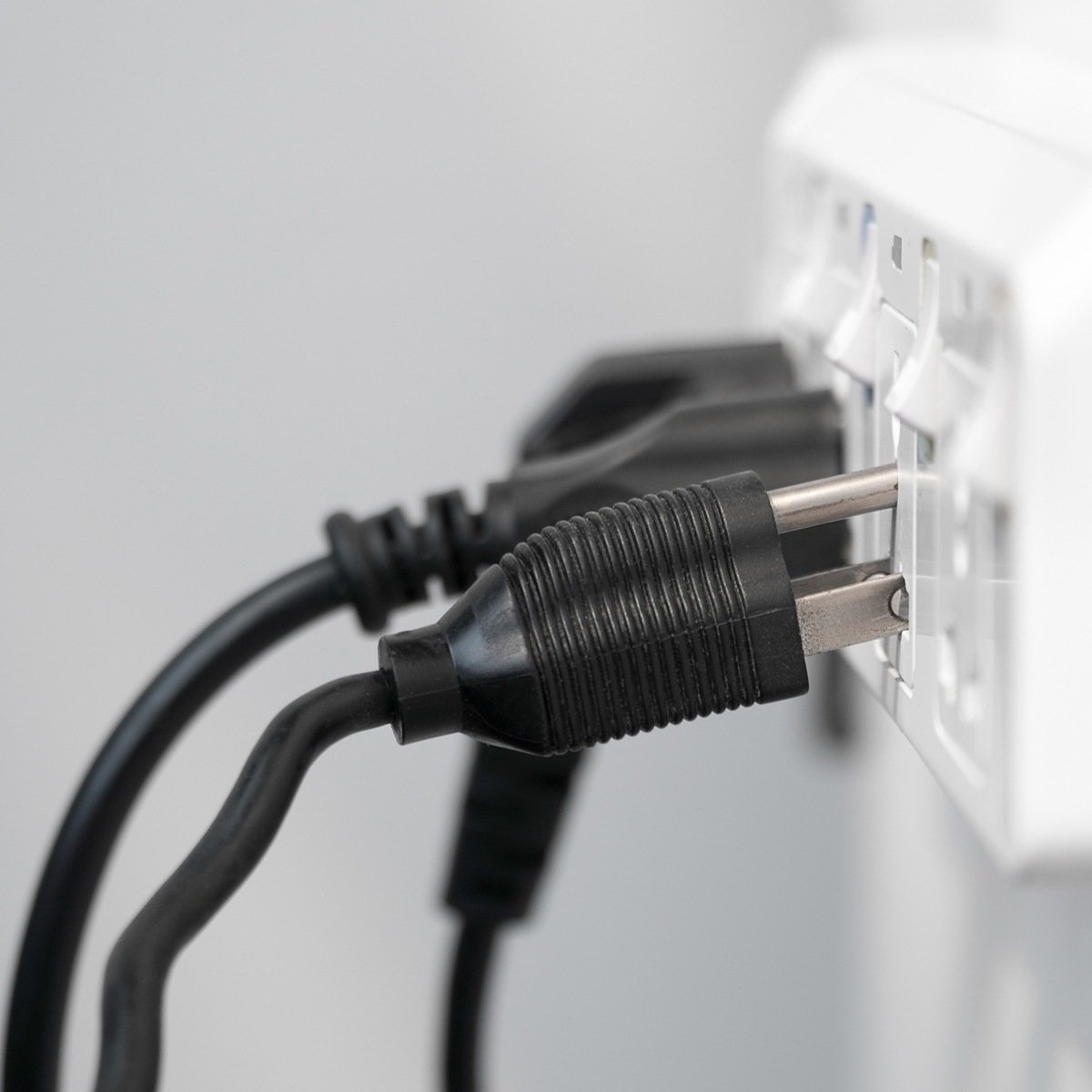
What not to do when an air fryer will not heat
A little caution matters here. Air fryers contain high voltage parts, hot surfaces, and safety controls that should not be defeated.
Avoid these mistakes:
• Do not bypass the basket sensor.
• Do not connect the unit to a damaged extension cord.
• Do not use water inside the housing.
• Do not scrape the heating coil with metal tools.
• Do not keep using it after a burning smell.
• Do not replace a fuse with foil or wire.
• Do not install a random heating element.
• Do not run the appliance with blocked vents.
• Do not open the housing while it is plugged in.
The safest repair is often a replacement when the appliance is inexpensive, out of warranty, or badly damaged. A professional repair may make more sense for a premium model with available parts.
Always follow the manual for your exact model. Design details vary between basket air fryers, oven style air fryers, toaster oven models, and smart air fryers.

When to repair or replace the air fryer
A minor issue, such as a dirty basket switch, is often worth fixing at home. A damaged cord, burned smell, repeated tripping, or internal electrical fault needs more care.
Consider repair when:
• The unit is still under warranty.
• The model is expensive.
• Replacement parts are easy to find.
• The housing and cord are in good condition.
• A qualified technician can diagnose the fault.
Consider replacement when:
• The cord or plug has melted.
• The appliance has smoke damage.
• The control board is unavailable.
• Repair costs approach the price of a new unit.
• The air fryer has repeated safety failures.
Stop using the appliance if it trips the circuit breaker more than once. A breaker trip can signal a short circuit or excessive current draw. Resetting it again and again is not a repair.
How to prevent heating problems
Good care can help an air fryer heat properly for longer. It also reduces grease buildup and stress on the fan.
Follow these habits:
• Clean the basket after each use.
• Wipe grease from the cooking chamber when cool.
• Keep all vents open.
• Avoid overfilling the basket.
• Do not cover the air intake or exhaust.
• Use the correct voltage for your location.
• Let the unit cool before storing it.
• Inspect the cord from time to time.
• Keep the appliance on a hard, level surface.
Overfilling can make food seem undercooked, even when the air fryer is working correctly. Hot air needs space to move around the food. For best results, cook in smaller batches and shake the basket when the recipe calls for it.
Some models also need preheating. If the food remains cold rather than simply undercooked, however, the issue may be a heater or control fault.

Signs that the air fryer is heating normally
It can be hard to see the heating element, so use safe signs instead. During a normal cycle, you should notice warm air from the exhaust after a short time.
Other signs include:
• The cooking chamber becomes warm.
• Frozen food begins to soften.
• The timer counts down during the selected program.
• The fan runs with a steady sound.
• The unit cycles heat on and off.
Heating elements do not always stay on continuously. The thermostat may switch them off after reaching the target temperature and turn them back on as the chamber cools.
If the air fryer turns on but does not heat, compare its behavior with these normal signs. A silent heater, cold exhaust, and cold food point to a different problem than food that simply needs more cooking time.
Frequently Asked Questions
Why is my air fryer turning on but not heating after cleaning?
Water or moisture near the controls can cause temporary trouble. Unplug the air fryer, let it dry fully, and check that the basket and rails are clean and correctly positioned before testing it again.
Can a bad outlet cause an air fryer to turn on but not heat?
Yes, a weak or faulty outlet can prevent the heater from receiving stable power. Test the outlet with another high power appliance and avoid using a damaged extension cord.
Why is my air fryer turning on but not heating with the basket inside?
The basket may not be pressing the safety switch far enough. Remove crumbs, check the rails, and insert the drawer firmly without forcing it.
Is it safe to replace an air fryer heating element myself?
It can be dangerous because the appliance contains mains voltage and heat safety parts. Unless you have electrical repair training and the correct part, use an authorized service center or replace the appliance.
Why is my air fryer turning on but not heating after a power outage?
A power surge may have caused a control error, blown fuse, or damaged relay. Unplug it for 10 to 15 minutes, then test it directly from a working wall outlet.
How long should an air fryer take to heat?
Many air fryers produce noticeable warm air within a few minutes, but the exact time depends on the model and temperature. Check the manual, and remember that some models use a preheat stage before the timer begins.
Conclusion
When an air fryer turns on but does not heat, start with the simple causes: settings, outlet power, basket placement, airflow, and cleaning. If those checks fail, the heating element, sensor, thermal fuse, fan, or control board may need professional attention.
Never bypass a safety switch or fuse, and stop using the appliance if it sparks, smells burnt, damages the cord, or trips the breaker. Follow the safe steps above, check your model’s manual, and make a repair or replacement choice based on cost and risk. If this guide helped, share your air fryer model and symptoms in the comments or explore more appliance troubleshooting tips.


2 Comments