
Why Is My Air Fryer Fan Making Noise: Causes And Fixes
Your air fryer fan may be noisy because of loose parts, food debris, a damaged fan blade, or normal airflow.
If you are wondering, “why is my air fryer fan making noise,” you are not alone. Most air fryers use a fast fan above the heating element, so some humming, rushing, or clicking is normal. The key is to notice whether the sound is soft and steady or new, harsh, and getting worse.
What sounds are normal in an air fryer?
An air fryer fan moves hot air around the cooking basket. This rapid airflow helps food cook evenly and gives fries, wings, and vegetables a crisp surface. Because the fan spins at high speed, the appliance will not be silent.
A normal air fryer fan sound may include:
• A steady hum while the unit heats
• A soft rushing sound as air moves through the vents
• A short click when the thermostat or heating control cycles
• A brief fan sound after cooking, as the unit cools
The sound should stay fairly even. It should not sound like metal scraping, a loose screw bouncing around, or a motor struggling to turn.
A useful test is to compare the sound with the air fryer’s normal start-up noise. If the sound is much louder than before, the change matters more than the exact type of noise. A new sound often points to debris, a loose part, or wear.
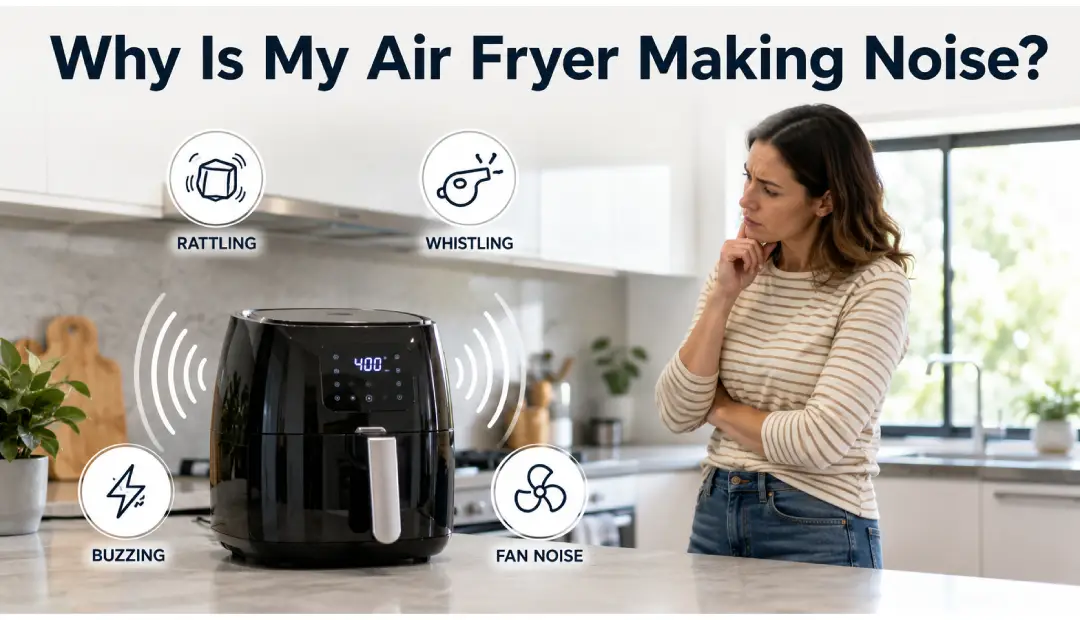
Why is my air fryer fan making noise?
There are several possible reasons, and many are easy to check. The most common cause is a small piece of food or grease near the fan. Even a tiny crumb can make a fast-moving fan vibrate.
Here are the main causes:
Food crumbs or grease near the fan
Small crumbs can rise through the basket and reach the upper cooking area. Grease may also collect around the fan cover. When the fan spins, this buildup can create a ticking, buzzing, or uneven sound.
This is more likely if you cook bacon, fatty meat, breaded food, or foods that shed crumbs. A dirty fan area can also reduce airflow and make the motor work harder.
A loose fan cover or internal screw
The fan sits behind a guard or cover in many air fryer models. If that cover becomes loose, it may vibrate as the fan runs. The sound can resemble a rattle or rapid buzzing.
Do not remove the cover unless the manufacturer clearly allows it. Some parts sit near live electrical connections, even when the appliance is switched off.
A bent or damaged fan blade
A fan blade can bend if the appliance is dropped or if something strikes it. A damaged blade may wobble as it spins. This often causes a rhythmic tapping, scraping, or strong vibration.
A bent blade can also reduce airflow. If the air fryer shakes, smells hot, or cooks unevenly, stop using it until it has been checked.
Worn motor bearings
The fan motor contains moving parts that can wear over time. A worn bearing may produce a grinding, squealing, or low growling sound. The noise may become louder as the air fryer heats up.
This problem is less likely in a new appliance. In an older unit used often, however, motor wear is a reasonable possibility.
The air fryer is vibrating on the counter
Sometimes the fan is working normally, but the whole appliance is making the noise. A hard counter, uneven surface, or nearby object can act like a drum and make a mild hum sound much louder.
Move the air fryer away from the wall and other appliances. Make sure all four feet sit flat. Never place it on a soft towel while operating, since that can block airflow and create a fire risk.
Normal thermal and electrical sounds
Metal parts expand as they heat. This can cause a few light pops or clicks. A relay or thermostat may also click when it turns the heater on or off.
These sounds are usually brief. They are not the same as a constant grind, scrape, or loud rattle.
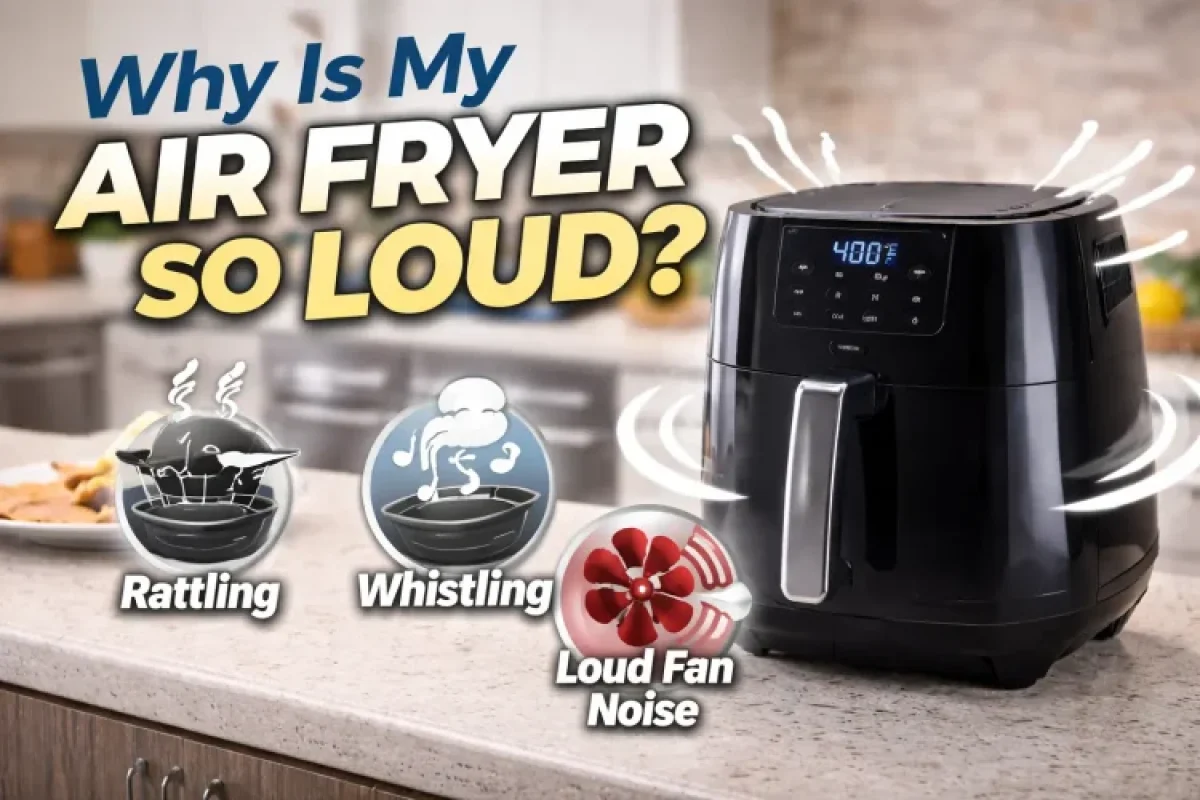
Is a loud air fryer fan dangerous?
A loud air fryer fan is not always dangerous, but it deserves attention if the sound is new or severe. A simple hum may be normal. A grinding motor, scraping blade, or burning smell may signal a fault.
Stop the appliance and unplug it if you notice:
• Smoke or sparks
• A burning plastic or electrical smell
• A fan that stops and starts
• Strong shaking or movement
• A damaged power cord or plug
• A loud scraping or grinding sound
• Excessive heat around the controls or plug
Let the air fryer cool fully before touching or cleaning it. Never put your fingers, tools, or a cloth near the fan while the unit is plugged in.
Consumer product safety guidance commonly recommends unplugging small appliances before cleaning and removing damaged products from service. That simple habit can prevent shocks, burns, and further damage.

How to troubleshoot a noisy air fryer fan
You can perform a few safe checks without opening the appliance. These steps help separate a simple cleaning issue from a motor or fan problem.
1. Turn it off and unplug it
Press the power button, unplug the cord, and let the air fryer cool. Do not inspect the fan while the appliance is hot or connected to power.
Cooling may take 30 minutes or more, depending on the model and cooking temperature. The outside may feel safe while internal parts remain hot.
2. Check the basket and pan
Remove the basket, crisper plate, and cooking pan. Look for loose crumbs, foil, grease, or food pieces that may have moved during cooking.
Also check that the basket sits correctly. A poorly seated basket can vibrate and make you think the fan is the problem.
3. Clean the safe-to-reach areas
Use a soft, damp cloth to clean the inside roof and visible surfaces. A soft brush can help remove dry crumbs. Follow the care instructions in your manual.
Do not pour water into the air fryer. Do not spray cleaner into the vents. Avoid metal tools, since they can damage protective surfaces and internal parts.
4. Check the outside vents
Look at the intake and exhaust vents. Dust or grease can restrict airflow and increase fan noise. Clean the outer vents with a dry or slightly damp cloth.
Keep the air fryer several inches away from walls and other objects. Good space around the vents helps the fan move air and keeps heat from building up.
5. Test it empty for a short time
After cleaning and drying, run the air fryer empty for one or two minutes at a moderate temperature. Stand nearby and listen.
If the noise disappears, food debris or a loose basket may have caused it. If the noise remains, note its type and contact the manufacturer or a qualified repair service.
6. Record the sound
A short phone recording can help customer support understand the problem. Include the model number, purchase date, and when the noise began.
Do not keep testing the appliance if it smells burnt, shakes hard, or makes a sharp scraping sound.

How to identify the type of air fryer fan noise
The sound itself can offer useful clues. Think of it as a message from the appliance.
Humming or rushing
A smooth hum or air-rushing sound is usually normal. It comes from the motor and the movement of hot air.
The sound may become louder at higher temperatures. It should still remain steady and free of harsh vibration.
Rattling or buzzing
A rattle may come from a loose fan cover, loose screw, basket, or crumb. Check the removable parts first and make sure the appliance sits firmly on the counter.
If the rattle continues without the basket inside, stop using the air fryer and seek service.
Clicking or tapping
A single click during heating may come from the thermostat or control system. Repeated tapping that matches the fan’s rotation may suggest debris or a damaged blade.
A regular tap often points to something that moves once per revolution. That is why the timing of the sound can be helpful.
Grinding or scraping
Grinding is not a sound to ignore. It can mean the motor bearing is worn or the fan blade is touching its guard.
Unplug the unit and do not use it until a qualified technician or the manufacturer advises you.
Squealing or whining
A high-pitched whine may come from motor wear. Some electronic components can also make a faint electrical tone, but a sudden, loud whine needs attention.
If the pitch changes with heat or cooking time, the motor may be struggling as it warms.

How to prevent air fryer fan noise
Good care can reduce noise and extend the life of the appliance. You do not need special equipment.
Use these habits:
• Clean crumbs and grease after the air fryer cools
• Avoid overfilling the basket
• Keep parchment paper and foil away from the fan area
• Use only accessories approved for your model
• Keep the air fryer level and away from the wall
• Do not move the appliance while it is running
• Avoid dropping or striking the unit
• Follow the cleaning instructions in the owner’s manual
Overfilling can cause food to move around and block airflow. It may also make the fan work harder while leaving the food undercooked.
One mistake I often see is placing loose parchment paper under food before the fan has been covered by the food. The paper can lift and move toward the heating area. Always follow the paper and foil guidance for your specific model.

Can you fix a noisy air fryer fan yourself?
Simple cleaning is usually safe. Tightening an outside screw may also be safe if the manual tells you to do so. Internal repairs are different.
Air fryers contain electrical parts, hot surfaces, and high-speed moving components. Opening the housing can create a shock risk and may cancel the warranty. It can also lead to incorrect reassembly.
Contact the manufacturer when:
• The appliance is still under warranty
• The fan makes a grinding or scraping noise
• The fan blade looks damaged
• The appliance overheats
• You smell burning
• The noise continues after cleaning
• The unit has been dropped or exposed to water
Do not use cooking oil as a quick fix for a noisy motor. Oil can reach electrical parts, collect dust, or create a fire hazard. Only use a replacement part or lubricant if the manufacturer specifically approves it.

When should you replace the air fryer?
A noisy fan does not always mean you need a new air fryer. A service center may be able to replace a fan or motor. The best choice depends on the appliance’s age, repair cost, warranty, and condition.
Replacement may make more sense when:
• The appliance has several faults
• The cord or plug is damaged
• The cooking chamber is badly corroded
• The repair costs nearly as much as a new unit
• Replacement parts are unavailable
• The air fryer has a history of overheating
Do not keep using an appliance simply because it still cooks food. A fan problem can affect heat control and airflow. Safety should come before convenience.
The U.S. Consumer Product Safety Commission has warned consumers to pay attention to overheating, smoke, fire, and electrical hazards in household appliances. A strange sound alone does not prove danger, but it is a good reason to inspect the unit carefully.

Common mistakes to avoid with a noisy air fryer
Knowing what not to do can protect both you and the appliance. Many fan problems become worse after a rushed cleaning attempt.
Avoid these mistakes:
• Do not shake the air fryer while it is plugged in
• Do not insert a knife or screwdriver into the vents
• Do not spray water or cleaner into the housing
• Do not run the appliance with a damaged cord
• Do not cover the air intake or exhaust vent
• Do not ignore smoke or a burning odor
• Do not open the case if you lack electrical repair skills
• Do not assume every noise is harmless because the food still cooks
A common mistake is testing a noisy air fryer again and again. If the fan blade is loose, repeated use can increase the damage. One short test after safe cleaning is enough.

Frequently Asked Questions About Why Is My Air Fryer Fan Making Noise
Why is my air fryer fan making noise when it is new?
A new air fryer may have a normal motor hum or strong airflow sound. If it makes a loud rattle, scrape, or grind from the first use, stop using it and contact the seller or manufacturer.
Why is my air fryer fan making noise after cleaning?
Moisture, a loose removable part, or crumbs moved near the fan may cause noise after cleaning. Unplug the unit, let it dry fully, and check that the basket and pan are seated correctly.
Why is my air fryer fan making noise but still working?
The fan may still move air even when a blade, bearing, or cover is beginning to fail. Continued use can worsen the fault, so stop using the air fryer if the sound is harsh, new, or paired with heat or odor.
Why is my air fryer fan making noise like a grinding sound?
A grinding sound may indicate worn motor bearings or contact between the fan blade and its guard. Unplug the appliance and arrange manufacturer service rather than trying to repair the motor yourself.
Why is my air fryer fan making noise only at high heat?
Higher heat can increase fan speed and make normal airflow louder. If the noise appears only when hot but sounds rough, uneven, or strained, the motor or blade may need inspection.
Can I use an air fryer with a noisy fan?
You may be able to use it if the sound is a soft, steady hum and there are no warning signs. Do not use it if there is scraping, smoke, burning odor, strong shaking, or electrical trouble.
How often should I clean around an air fryer fan?
Clean visible crumbs and grease after each use once the appliance is cool. Follow the manual for deeper cleaning, because fan access differs between models.
Conclusion
If you are asking, “why is my air fryer fan making noise,” start with the simple causes: crumbs, grease, a loose basket, blocked vents, or a vibrating counter. A steady hum is often normal, but grinding, scraping, burning smells, smoke, and strong shaking are warning signs.
Unplug the air fryer, let it cool, clean only the safe-to-reach areas, and test it briefly. If the noise remains, use the warranty or contact a qualified repair service instead of opening the housing. Share your air fryer model and describe the sound in the comments, or explore more appliance care guides for safe, trouble-free cooking.



One Comment