Why Does An Air Fryer Cook Faster: The Science Explained
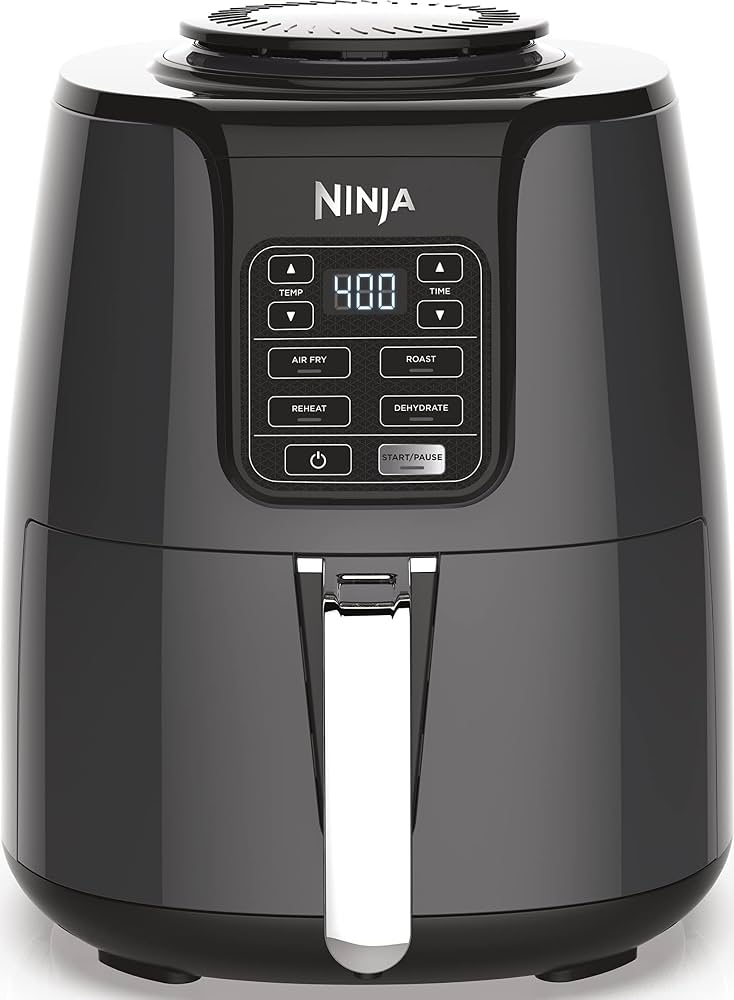
An air fryer cooks faster because it uses a small, powerful convection chamber to move hot air quickly around food. In a typical U.S. kitchen, the food sits close to the heating element, the fan pushes heat across its surface, and the small basket heats with little wasted space. This combination helps food brown and crisp sooner than it often does in a full-size oven.
Most air fryers also need little or no preheating. Their compact size means less air and metal must reach cooking temperature. However, cooking speed still depends on the food, the air fryer’s wattage, the basket load, and the temperature you choose.

Key takeaways
- Air fryers use rapid convection, not a different kind of heat.
- A small cooking chamber heats faster than a large oven.
- Strong airflow removes moisture from the food’s surface and supports browning.
- A single layer cooks faster than an overcrowded basket.
- An air fryer may be faster for small portions, but a full-size oven can be faster for large batches.
How an Air Fryer Transfers Heat
An air fryer cooks food through three main forms of heat transfer: convection, radiation, and conduction.
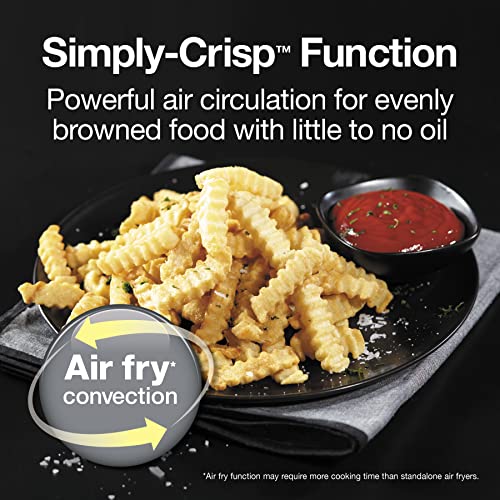
Convection is the main reason an air fryer cooks quickly. A fan moves hot air around the food. This flowing air replaces the cooler air next to the food’s surface with hotter air. The faster this air moves, the faster heat can reach the food.
Radiation comes from the heating element. The element sends infrared energy toward the food, much like the heating elements in a toaster oven.
Conduction happens when the hot basket or tray touches the food. This contact helps brown the parts of the food that rest against the cooking surface.
An air fryer combines all three methods in a small space. A standard oven also uses convection, but many home ovens rely mainly on natural airflow unless the convection setting is turned on.
The fan does not make the air hotter by itself. Instead, it helps use the available heat more efficiently.

Why the Small Cooking Chamber Matters
A small chamber gives an air fryer less air and metal to heat. That lets the appliance reach its target temperature sooner than many full-size ovens.
A large U.S. oven may hold several cubic feet of air. An air fryer basket holds much less. The air fryer also places the food close to the heating element and fan. This short distance helps heat reach the food with less loss.
The small space also helps maintain a steady cooking environment after the basket is loaded. When you open a large oven door, a large amount of hot air escapes. Opening an air fryer releases less hot air because the chamber is smaller.
This does not mean every air fryer heats faster than every oven. A high-powered countertop convection oven may heat just as quickly. The comparison depends on the models, settings, food amount, and starting temperature.

How Fast Airflow Makes Food Crisp
Fast airflow helps remove moisture from the outside of food. This matters because wet food tends to steam before it browns.
As food heats, water moves toward its surface and turns into vapor. Moving air carries that vapor away. Once the surface becomes dry enough, browning reactions can happen more easily.
The Maillard reaction creates many of the browned flavors and colors people expect from roasted or fried foods. It works best when the food surface is hot and relatively dry. An air fryer’s moving air supports this process while using little oil.
The word “fryer” can be misleading. An air fryer does not deep-fry food. It uses hot air and, in some recipes, a thin layer of oil. The crisp texture comes from heat, airflow, surface drying, and browning—not from food being surrounded by hot oil.

Why Air Fryers Often Need Less Preheating
Many air fryer recipes use little or no preheating because the cooking space is small. The fan begins circulating hot air soon after the heating element turns on.
Some foods still benefit from preheating. A hot basket can help frozen foods, breaded foods, and thin foods start browning at once. Preheating may also improve timing when a recipe gives a precise cook time.
Follow the instructions for your specific model. Some manufacturers recommend preheating, while others state that it is optional. A recipe written for one appliance may not transfer perfectly to another.
If you preheat, two to five minutes is often enough for a small air fryer, but the correct time varies by model. Do not leave paper liners or loose parchment in the basket during preheating unless the manufacturer specifically allows it. The fan can lift them into the heating element.

Air Fryer Versus Oven: Which Is Faster?
An air fryer is usually faster for small portions, while a full-size oven may be more practical for large amounts of food.
| Cooking situation | Usually faster choice | Main reason |
|---|---|---|
| One or two servings of fries | Air fryer | Small chamber and strong airflow |
| A few chicken wings | Air fryer | Food sits near the heat and air moves around it |
| A full sheet pan of vegetables | Oven may be better | More surface area and fewer batches |
| Several pizzas or casseroles | Full-size oven | Larger capacity |
| Reheating a sandwich or leftovers | Air fryer | Fast heating and surface crisping |
| Large holiday meal | Oven | Air fryer capacity is limited |
A useful way to compare appliances is to include the full process:
- Preheating time
- Cooking time
- Time needed to cook multiple batches
- Time needed to clean the appliance
For example, an air fryer may cook 2 pounds of fries quickly. But if its basket holds only 1 pound in a good single layer, two batches may take longer than one oven tray.
This is why “air fryers cook faster” is true in many cases but not all. The fastest appliance is the one that can cook the needed amount with good airflow and no unnecessary batches.

What Makes an Air Fryer Cook Even Faster?
You can improve cooking speed without raising the temperature beyond the recipe’s safe range.
Use a single layer
Place food in one layer when possible. Air must reach the sides and top of each piece. A deep pile blocks airflow and traps steam.
A small gap between pieces often gives better results than tightly packed food. You may need to shake the basket or turn the food halfway through cooking.
Dry wet food
Pat meat, vegetables, and thawed frozen food dry with a clean paper towel. Less surface water means less time spent steaming.
Do not rinse raw poultry or meat. The USDA advises against washing raw meat because splashing water can spread germs around the kitchen.
Cut food into similar sizes
Small, even pieces cook more evenly. Large pieces take longer for heat to reach the center.
If you cut one potato into thick wedges and another into thin slices, the thin slices may brown before the thick pieces are safe or tender.
Avoid overfilling
Overfilling is one of the most common reasons an air fryer seems slow. The food may cook, but it can turn soft instead of crisp. Overcrowding also causes uneven browning.
If the basket is full, shake or turn the food more often. For the best texture, cook in batches.
Use the right amount of oil
A light coating of oil can help browning and crisping. Too much oil can make food greasy, smoke, or drip into the bottom of the appliance.
Oil sprays with propellants may damage some nonstick coatings. Check the user manual before using them. A refillable oil mister or a small amount of oil applied directly to the food may be a better option.

Does Higher Wattage Mean Faster Cooking?
Higher wattage can support faster heating, but wattage alone does not prove that one air fryer will cook faster.
Wattage describes how much electrical power an appliance can draw. A 1,700-watt air fryer may have more heating capacity than a 1,200-watt model. But cooking speed also depends on:
- Basket size and shape
- Fan strength and airflow pattern
- Heating element location
- Insulation
- Food quantity
- Starting temperature
- Moisture content
- Thermostat control
A large air fryer may have higher wattage but take longer to cook a small portion because it has a larger chamber. A compact model may cook a small serving quickly but struggle with a full basket.
Use wattage as one specification, not as a complete speed rating. Independent testing under the same conditions would provide a better comparison than the number printed on the label.

Why Does Food Sometimes Cook Slowly in an Air Fryer?
Slow cooking usually results from a crowded basket, cold food, low heat, or a dirty appliance.
Check these points in order:
- Look at the basket load. Remove some food if pieces overlap or form a deep pile.
- Check the food size. Cut large pieces into smaller, even portions.
- Confirm the temperature. Make sure the control is set in Fahrenheit if the recipe uses U.S. measurements.
- Allow extra time for frozen food. Thick frozen pieces need more time than thawed or fresh food.
- Clean the basket and heating area. Grease and food buildup can affect airflow and create smoke.
- Check the fan and heating element. Unusual noise, no airflow, or no heat may indicate a fault.
- Use a food thermometer. Color and texture do not always show whether meat is safe.
Do not block the air intake or exhaust. Keep the air fryer on a stable, heat-resistant surface with the clearance required by the manual.
If the unit smells like burning plastic, shows damage, repeatedly trips a circuit, or has a damaged cord, unplug it and stop using it. Contact the manufacturer or a qualified appliance service provider. Do not open the appliance unless you are trained and the manufacturer permits service.

Does an Air Fryer Cook Meat Faster?
An air fryer can cook small pieces of meat quickly because hot air reaches much of the surface. Thin chicken cutlets, wings, fish fillets, and burgers often cook faster than thick pieces.
The center still needs enough time to reach a safe internal temperature. Faster surface browning does not prove that the center is done.
Use a food thermometer in the thickest part of the food. The USDA lists these minimum internal temperatures:
- Poultry: 165°F
- Ground meats: 160°F
- Whole cuts of beef, pork, veal, and lamb: 145°F, followed by a three-minute rest
- Fish: 145°F
These temperatures apply to U.S. food safety guidance. Follow the USDA’s current instructions and any recipe-specific advice for stuffed foods, leftovers, and special preparations.
Do not rely only on an air fryer’s preset. Presets are convenient, but food size, starting temperature, and basket load can change the result.

Does an Air Fryer Save Energy?
An air fryer may use less energy than a large oven for a small meal because it cooks for less time and heats a smaller space. That does not guarantee lower energy use in every situation.
A simple estimate uses this formula:
Energy used in kilowatt-hours = wattage ÷ 1,000 × cooking time in hours
For a hypothetical example:
- A 1,500-watt air fryer running for 20 minutes uses about 0.50 kilowatt-hours.
- A 3,000-watt oven running for 30 minutes uses about 1.50 kilowatt-hours.
This example does not include cycling. Heating elements turn on and off during cooking, so actual use can differ. It also does not account for preheating or multiple air fryer batches.
The practical rule is simple: use the air fryer for small amounts and the oven for large amounts. The right choice depends on the portion size and total cooking time.

Common Air Fryer Cooking Mistakes
Several habits can reduce speed and texture.
Filling the basket to the top
A full basket limits airflow. Food may need much more time and may remain pale or soft.
Adding wet batter
Liquid batter can drip through the basket, stick to the surface, or fail to set as it would in a deep fryer. Dry coatings and lightly oiled breading usually work better.
Using a loose liner
Parchment or foil can block airflow or lift into the heating element. Use only accessories approved for the model, and keep them held down by food during cooking.
Ignoring carryover cooking
Thick foods continue to cook briefly after removal. Check temperature near the end of the expected cooking time rather than waiting for heavy browning.
Forgetting to clean grease
Grease buildup can create smoke and odors. Let the appliance cool, then clean it according to the manual. Never submerge the electrical housing.
Treating every recipe time as exact
Air fryers vary. Start checking food a few minutes before the recipe’s stated finish time, especially when changing the portion size.

Frequently Asked Questions
Is an air fryer just a small convection oven?
An air fryer is a compact countertop convection appliance. It uses a heating element and fan, like a convection oven, but its smaller chamber and basket design can move hot air close to the food.
How much faster is an air fryer than an oven?
There is no single time difference for every food. Small portions may finish several minutes sooner because the air fryer heats quickly and often needs less preheating. Large meals may take longer if you must cook in batches.
Should I reduce the oven temperature for an air fryer?
Often, recipes designed for a conventional oven need a temperature reduction or shorter cooking time in an air fryer. A common starting point is about 25°F lower and roughly 20% less time, but this is only a cooking guideline—not a rule. Check the food early and verify meat with a thermometer.
Does an air fryer cook frozen food faster?
It often cooks small frozen foods efficiently because the strong airflow dries and browns the outside. Thick frozen foods still need enough time for the center to heat safely. Avoid stacking frozen pieces tightly.
Can I use an air fryer instead of a microwave?
An air fryer is better for crisping foods such as fries, pizza, and breaded items. A microwave is usually faster for heating liquids, soft foods, and large portions without browning.
Final Answer: Why Does an Air Fryer Cook Faster?
An air fryer cooks faster because it combines a small heated chamber, close contact with the heating element, strong circulating air, and little preheating. The airflow moves heat to the food and carries away surface moisture, which helps food brown and crisp.
For the best results, use a single layer, dry the food, avoid overfilling, and check internal temperature when cooking meat. Choose the air fryer for small portions and quick crisping. Choose a full-size oven when you need to cook a large amount at once.
The next practical step is to compare your portion size with your basket capacity. If the food fits in a loose single layer, an air fryer will often save time. If it requires several batches, the oven may be the faster choice overall.