What Are The Best Things To Cook In An Air Fryer: Easy
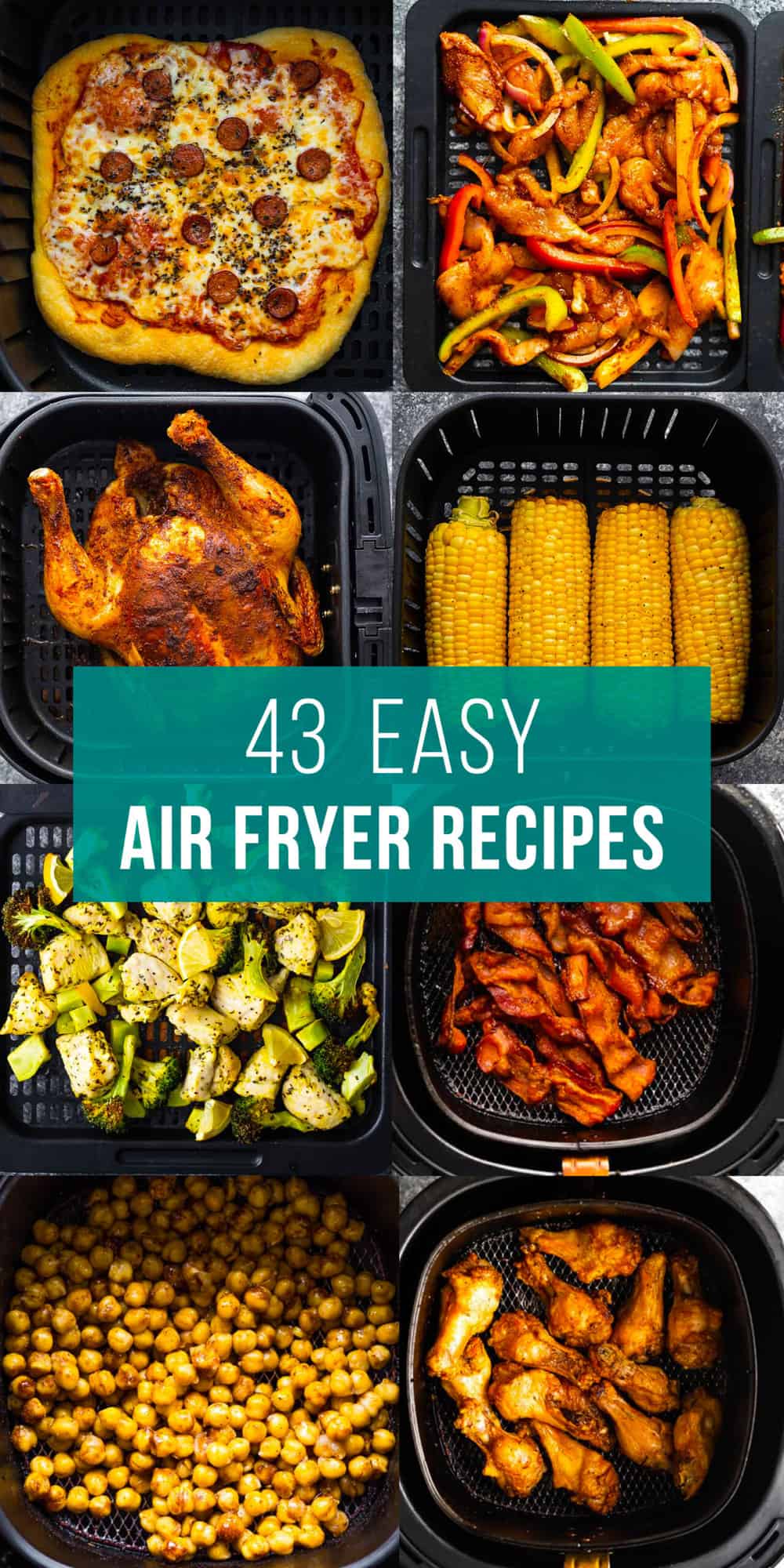
The best things to cook in an air fryer are foods that benefit from dry, fast heat. Top choices include chicken wings, French fries, roasted vegetables, fish, shrimp, burgers, bacon, grilled cheese, and frozen snacks. An air fryer can also reheat pizza and leftovers with a crisp surface instead of making them soft in a microwave.
For U.S. home cooks, the key is to use the air fryer like a small convection oven. Hot air moves around the food, dries the outer surface, and helps it brown. Results depend on the food, basket size, starting temperature, and model, so use cooking times as a guide rather than a guarantee.
What makes a food good for an air fryer?
Foods cook well in an air fryer when they have one or more of these traits:
- They have a fairly dry surface.
- They benefit from browning or crisping.
- They cook well in a single layer.
- They do not need much liquid.
- They are small or thin enough for hot air to reach the center.
- They need quick cooking rather than long simmering.
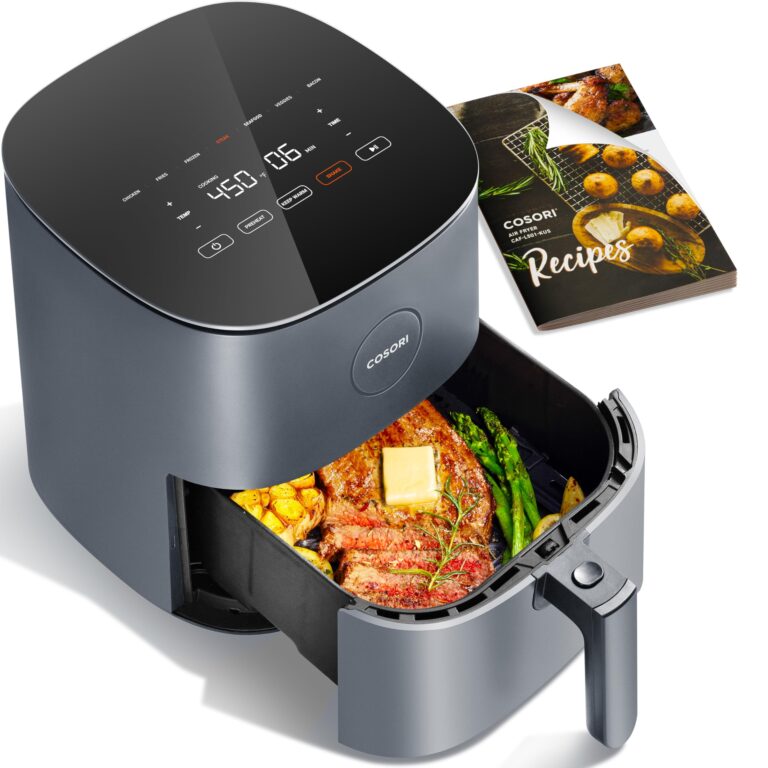
An air fryer is a countertop convection oven with a compact cooking chamber. A heating element warms the air, and a fan moves that air around the food. The small space helps food heat quickly, but it also makes overcrowding a common problem.
An air fryer does not truly “fry” food in the same way as a deep fryer. It uses little oil, often just a light coating or spray. This works best on foods with a dry coating, a naturally dry surface, or enough fat to brown on its own.
Foods that are less suited to an air fryer
Some foods are difficult or unsafe to cook well in this appliance:
- Wet batter can drip through the basket before it sets.
- Very light foods may blow toward the heating element.
- Large roasts may brown before the center cooks.
- Soups, sauces, and other liquid foods need a suitable oven-safe dish.
- Delicate greens can scorch or move around.
- Overly crowded foods may steam instead of crisp.
The best air fryer meals are usually small portions with room between the pieces.
The best things to cook in an air fryer
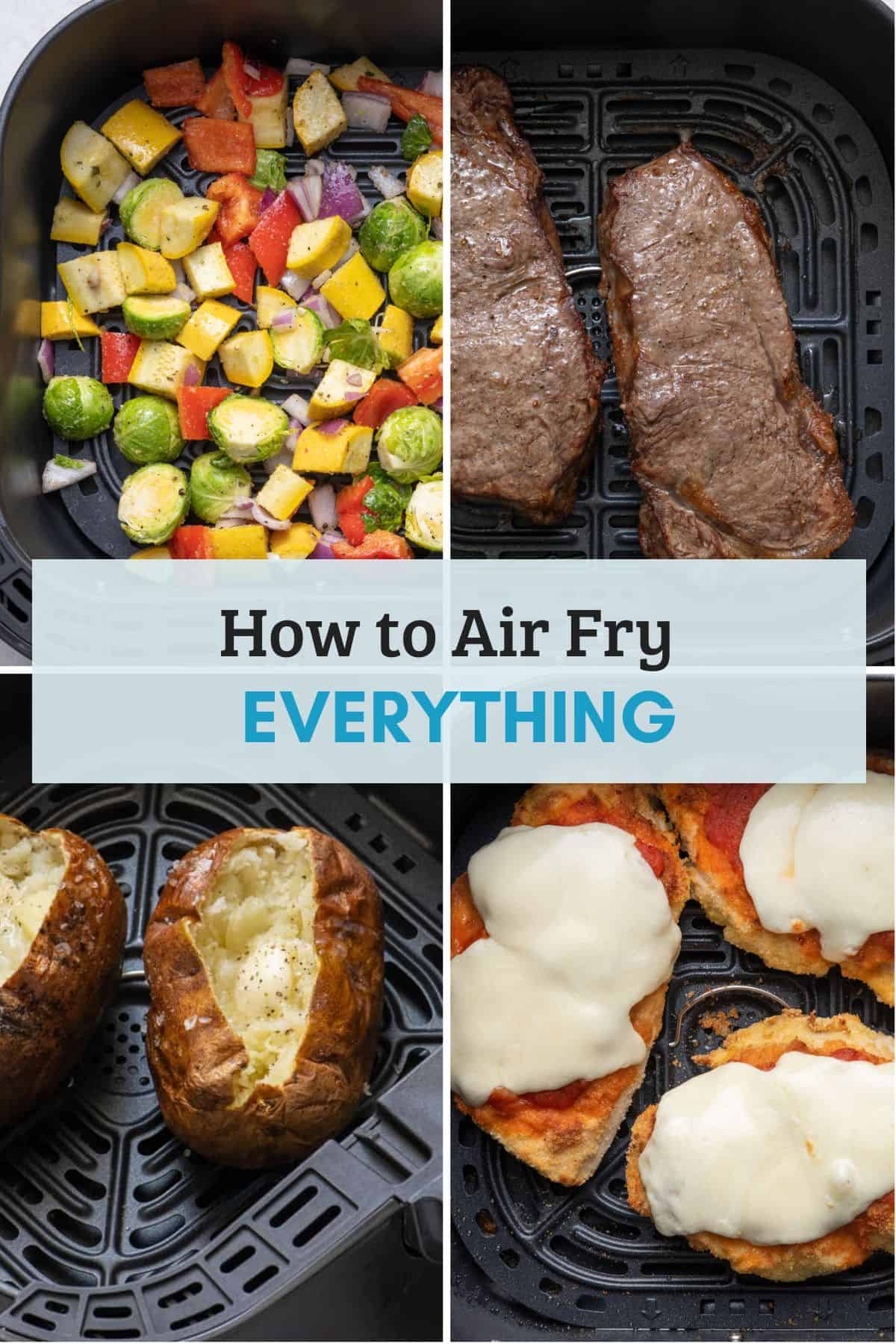
The foods below offer a useful mix of crisp texture, speed, and reliable results. The times are general starting points for a typical U.S. basket-style air fryer set between 350°F and 400°F. Always check the food’s internal temperature and your appliance manual.
| Food | Typical temperature | Approximate time | Main tip |
|---|---|---|---|
| Chicken wings | 380°F to 400°F | 20 to 30 minutes | Turn or shake during cooking |
| French fries | 375°F to 400°F | 15 to 25 minutes | Dry fresh potatoes well |
| Broccoli or Brussels sprouts | 375°F to 400°F | 8 to 16 minutes | Use a light oil coating |
| Salmon fillets | 375°F to 400°F | 8 to 14 minutes | Check the thickest part |
| Shrimp | 375°F to 400°F | 5 to 8 minutes | Avoid overcooking |
| Chicken tenders | 375°F to 400°F | 10 to 16 minutes | Use a thermometer |
| Burgers | 375°F to 400°F | 8 to 14 minutes | Time varies with thickness |
| Bacon | 350°F to 375°F | 7 to 12 minutes | Check often near the end |
| Frozen snacks | 375°F to 400°F | Varies | Start with package directions |
| Pizza leftovers | 350°F to 375°F | 3 to 6 minutes | Check early to avoid drying |
1. Chicken wings
Chicken wings are one of the best air fryer foods because the appliance can render fat and brown the skin without a deep pot of oil. Pat the wings dry first. Season them with salt, pepper, garlic powder, paprika, or a dry spice blend.
Arrange the wings in a loose layer. Cook until the skin is browned and the thickest part reaches at least 165°F, the safe minimum internal temperature for poultry listed by the USDA. For crisp skin, a longer cook at a moderate temperature may work better than a very short cook at high heat.
Add a wet sauce near the end or after cooking. This helps prevent the sauce from burning.
2. French fries and potato wedges
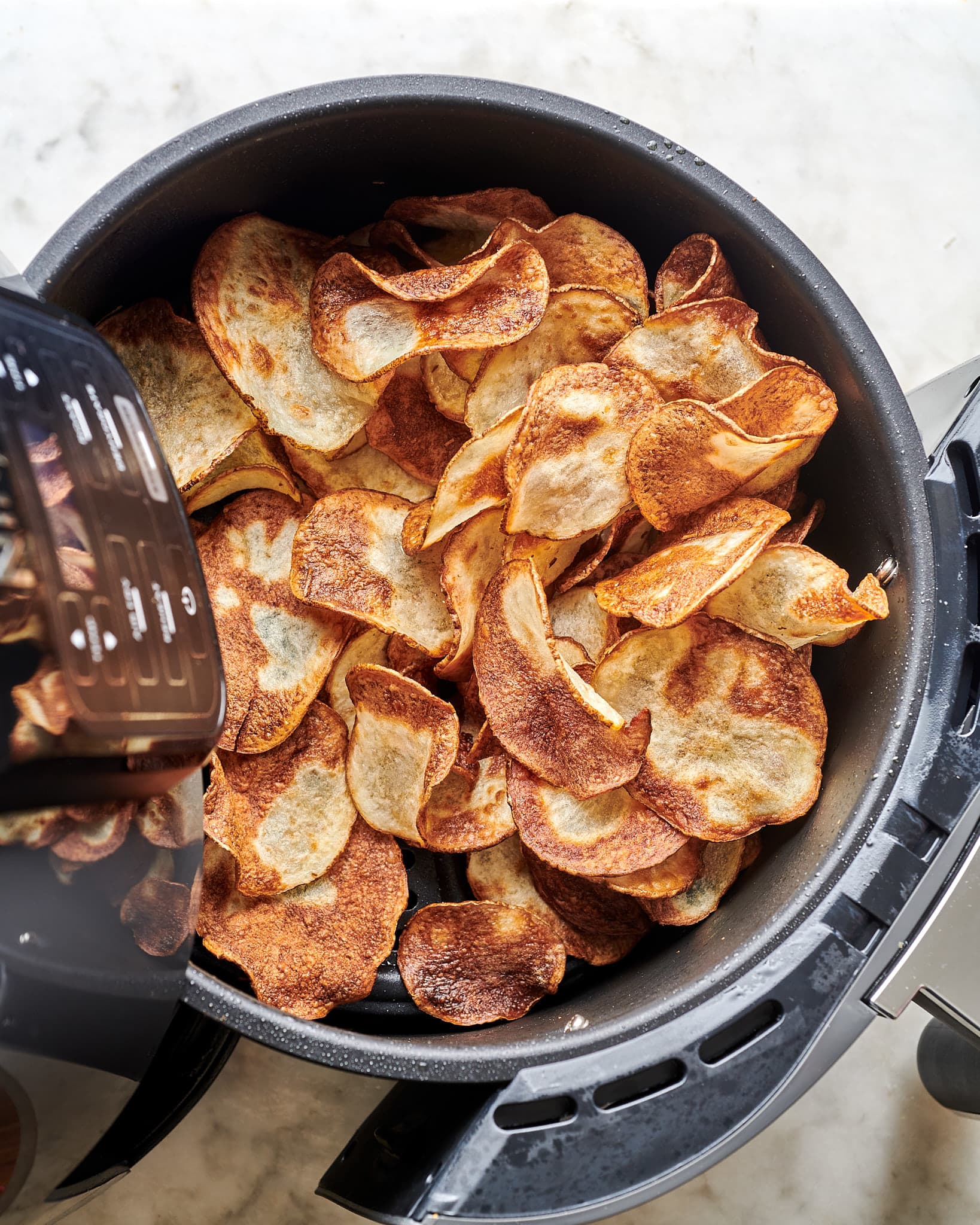
Air fryers are especially useful for frozen French fries, tater tots, and potato wedges. Frozen products often contain enough oil to brown well, but fresh potatoes need more preparation.
For fresh fries:
- Cut the potatoes into similar-size pieces.
- Rinse or soak them if desired to remove some surface starch.
- Dry them very well.
- Toss with a small amount of oil and seasoning.
- Cook in a single layer when possible.
- Shake the basket one or more times.
Do not fill the basket to the top. A crowded basket traps moisture and leads to pale, soft fries. You may need to cook in batches.
3. Roasted vegetables
An air fryer can roast vegetables faster than a full-size oven. Good choices include:
- Broccoli
- Cauliflower
- Brussels sprouts
- Green beans
- Asparagus
- Carrots
- Zucchini
- Bell peppers
- Sweet potato cubes
Cut pieces to a similar size so they finish at about the same time. Toss them with a small amount of oil, then season with salt and spices. Softer vegetables may need only a short cook, while dense vegetables such as carrots and potatoes need more time.
Check the vegetables often near the end. Small pieces can go from browned to burnt quickly.
4. Fish and salmon
Air frying works well for salmon fillets, cod, tilapia, and other firm fish. The circulating heat cooks fish quickly and can brown the top without drying the entire fillet.
Brush the fish with a small amount of oil or mayonnaise, or use a thin seasoning crust. Place the fillet skin-side down if it has skin. Fish should reach 145°F, according to USDA food-safety guidance.
Because fish thickness varies, check the center rather than relying only on the clock. A thin fillet may finish several minutes before a thick one.
5. Shrimp
Shrimp cook very quickly in an air fryer. Toss peeled shrimp with oil, lemon zest, garlic, paprika, or a Cajun-style seasoning. Arrange them in one layer.
Cook until the shrimp are opaque and firm. Avoid leaving them in the basket while you prepare other foods. Overcooked shrimp can become rubbery within a few minutes.
Frozen shrimp may need extra time. If the shrimp release a lot of water, cook them in smaller batches so they roast instead of steam.
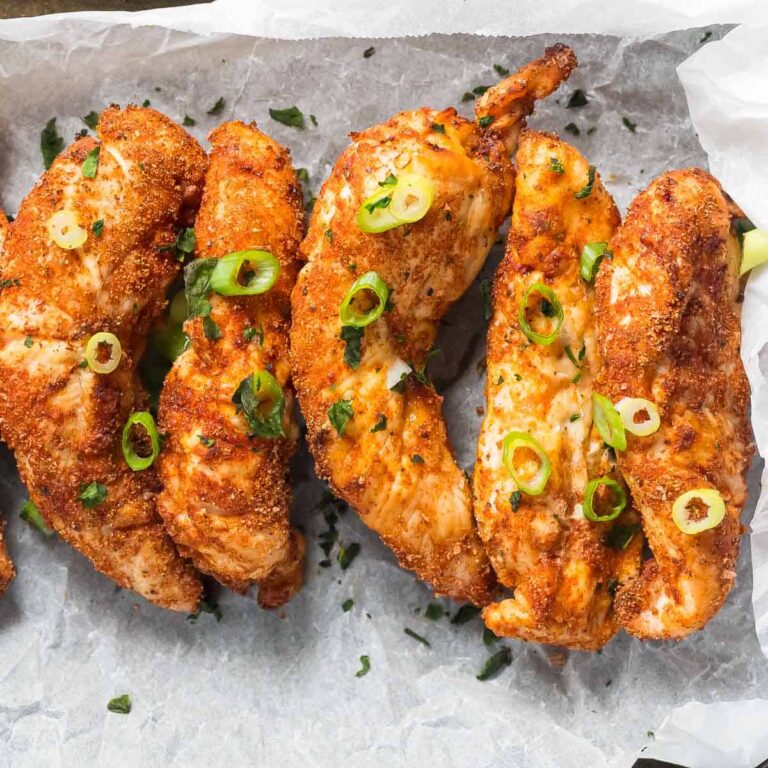
6. Chicken tenders and chicken breast
Breaded chicken tenders are a natural fit for air frying. The circulating heat helps the coating brown while using much less oil than deep frying.
Chicken breast can also work, but it is less forgiving than wings or tenders. Very thick pieces may dry on the outside before the center is done. Pound pieces to an even thickness or use smaller cutlets.
The center of all poultry should reach 165°F. Insert the thermometer into the thickest part without touching the basket or bone.
7. Burgers and meatballs
Air fryers can cook beef burgers, turkey burgers, and meatballs with little hands-on work. They are most reliable when the portions are similar in size.
For ground meat, the USDA recommends a minimum internal temperature of 160°F for beef, pork, lamb, and veal. Ground poultry should reach 165°F.
Leave space around each burger or meatball. If grease collects in the bottom drawer, let the appliance cool before cleaning it. Never pour hot grease into a sink.
8. Bacon and breakfast foods
Bacon cooks well in an air fryer because the heat surrounds the strips and the fat drains away from the food. Use a moderate temperature and check early, since bacon thickness varies.
Other useful breakfast foods include:
- Sausage links
- Hash brown patties
- Frozen breakfast sandwiches
- English muffins
- Toasted bagels
- Small frittatas in an oven-safe dish
Do not place loose parchment paper in the basket during preheating. It can lift into the heating element. Parchment should be held down by food and used only if the appliance maker allows it.
9. Frozen foods
Frozen foods are among the easiest air fryer choices because many are designed to brown in dry heat. Examples include:
- Mozzarella sticks
- Chicken nuggets
- Fish sticks
- Taquitos
- Egg rolls
- Tater tots
- Onion rings
- Frozen vegetables
- Breaded mushrooms
Start with the package directions, then adjust for your air fryer. Frozen food often needs no added oil. Shake or turn the pieces so they brown evenly.
Do not assume that a browned coating means the center is hot. For meat or poultry products, follow the package instructions and verify the center when needed.
10. Reheating leftovers
An air fryer is often better than a microwave for leftovers that should stay crisp. It works well for:
- Pizza
- Fried chicken
- French fries
- Roasted potatoes
- Spring rolls
- Quesadillas
- Garlic bread
- Baked pasta with a firm top
Use a lower temperature than you would for raw food. Check after a few minutes, because small portions heat quickly. Add a few drops of water to dry foods only when appropriate, and avoid adding water near exposed electrical parts.
How to get better air fryer results
Good technique matters as much as the recipe. Follow these steps for most foods.
1. Read the appliance manual
Air fryer designs differ. Some models have a basket, while others use racks or a rotating drum. The manual may give specific guidance about preheating, foil, parchment, dishwasher use, and maximum fill levels.
Use the manual as the final authority for appliance-specific questions.
2. Preheat when it helps
Preheating can help food begin browning sooner. It is most useful for foods that need a crisp exterior, such as chicken wings, fries, and breaded foods.
Preheating is not always necessary. It can waste time for foods with a long cooking period or for simple reheating. If you preheat, a few minutes is often enough, but follow your model’s directions.
3. Dry the food surface
Moisture is the enemy of crispness. Pat chicken, fish, potatoes, and vegetables dry before seasoning. Wet surfaces first need to evaporate water before they can brown.
This does not mean removing all moisture from the food. The goal is to reduce water on the outside.
4. Use a thin layer of oil
A small amount of oil can improve browning and help seasonings stick. Toss the food in oil before adding it to the basket.
Do not spray cooking oil directly into a hot air fryer unless the product is labeled for that use. Some aerosol sprays contain ingredients that can damage nonstick coatings. A refillable oil mister or a small bowl can give better control.
5. Leave room for airflow
Air must move around the food. Use a single layer when you want the crispest result. If you stack food, the pieces touching each other may stay soft.
For large batches, cook in rounds. A second batch is usually better than a crowded first batch.
6. Shake or turn the food
Shake small foods such as fries, vegetables, and frozen snacks. Turn larger pieces such as chicken thighs, fish, and burgers when the recipe calls for it.
Some air fryers cook more strongly near the heating element. Turning helps reduce uneven browning.
7. Check early
The cooking time printed for one model may not match another. Basket shape, wattage, food size, starting temperature, and batch size all affect the result.
Begin checking several minutes before the suggested finish time. Use appearance for texture, but use an instant-read thermometer for meat, poultry, and other foods that require a safe internal temperature.
How to choose the right air fryer food
Use this simple decision guide:
- Want the crispest result? Choose wings, fries, tater tots, breaded snacks, or reheated pizza.
- Want a fast dinner? Choose shrimp, fish fillets, chicken tenders, or thin pork chops.
- Want a vegetable side? Choose broccoli, Brussels sprouts, green beans, or cauliflower.
- Want a family-size batch? Check the basket size and plan to cook in batches if needed.
- Want low-mess cooking? Choose foods with little loose flour, sauce, or excess grease.
- Want to reheat leftovers? Choose foods that normally become soft in a microwave.
- Want a complete meal? Cook a protein and a vegetable separately unless both foods have similar cooking times.
A basket-style air fryer is usually best for crisp, single-layer foods. An oven-style model may handle racks and larger portions better, but crowded racks can still reduce airflow.

Air fryer mistakes to avoid
Overcrowding the basket
This is the most common mistake. Crowding reduces airflow and releases moisture into the cooking space. The food may cook, but it will not brown evenly.
Adding too much oil
Air frying needs much less oil than deep frying. Too much oil can create smoke, greasy food, and difficult cleanup.
Using wet batter
Traditional wet batter usually does not set properly in an air fryer. Use a dry coating, such as seasoned flour, breadcrumbs, or crushed cereal, or choose a recipe designed for air frying.
Ignoring food thickness
A thick chicken breast and a thin chicken cutlet cannot share the same cooking time. Cut food into even portions when possible.
Trusting time without checking temperature
Color is not a reliable safety test. Use a thermometer for meat, poultry, and fish. USDA guidance lists 165°F for poultry, 160°F for ground meats other than ground poultry, and 145°F for fish and whole cuts of beef, pork, lamb, and veal, with a three-minute rest for whole cuts.
Leaving the appliance unattended
Follow the manufacturer’s safety instructions. Keep the air fryer on a stable, heat-resistant surface with space around its vents. Keep children away from the hot basket and drawer.
Forgetting to clean grease and crumbs
Remove crumbs and grease after the appliance cools. Built-up grease can smoke and affect flavor. Clean removable parts according to the manual, and never immerse the main electrical unit in water.

Frequently asked questions
Can you put aluminum foil in an air fryer?
Often, yes, but only when the appliance manual permits it. Foil must not block the basket openings or touch the heating element. It should be held down by food and should not cover the entire basket if airflow is needed.
Do you need to preheat an air fryer?
Not always. Preheating can improve browning for fries, wings, and breaded foods, but many foods cook well without it. Follow the recipe and your appliance manual, then adjust after observing the first batch.
Can you cook raw meat in an air fryer?
Yes. An air fryer can cook raw chicken, beef, pork, fish, and shrimp. Use a food thermometer and follow safe internal temperature guidance. Do not judge doneness by color alone.
Can you cook frozen food without thawing it first?
Many frozen foods can go directly into the air fryer. Frozen fries, nuggets, fish sticks, and vegetables are common examples. Raw frozen meat may need more care because the outside can brown before the center is safe. Follow the package instructions and check the internal temperature.
Are air fryers healthier than deep fryers?
Air frying can reduce the amount of oil used for foods that would otherwise be deep-fried. That does not make every air-fried food automatically healthy. The nutritional value still depends on the food, coating, portion, sodium, and added fat.
Why is my air-fried food not crispy?
The most likely causes are excess moisture, too much food in the basket, too little cooking time, or insufficient surface oil. Dry the food, cook a smaller batch, shake or turn it, and continue cooking in short intervals.
Conclusion: Start with foods that need crisp heat
The best things to cook in an air fryer are foods that brown well and do not need much liquid. Start with chicken wings, fries, roasted vegetables, fish, shrimp, frozen snacks, burgers, and reheated pizza.
For the best results, dry the food, use a small amount of oil, leave space between pieces, and check the food early. For meat, poultry, and fish, confirm the internal temperature with a food thermometer rather than relying only on time or color.
Sources and further reading
- USDA: Safe Minimum Internal Temperature Chart
- USDA FSIS: Kitchen Thermometers
- FDA: Safe Food Handling