Why Does An Air Fryer Cook Faster Than An Oven: Explained
An air fryer cooks faster than a standard oven because it heats a much smaller space, moves hot air close to the food, and usually needs little or no preheating. In the United States, most air fryers work like compact convection ovens: a heating element warms the air, and a fan pushes that air around the food.
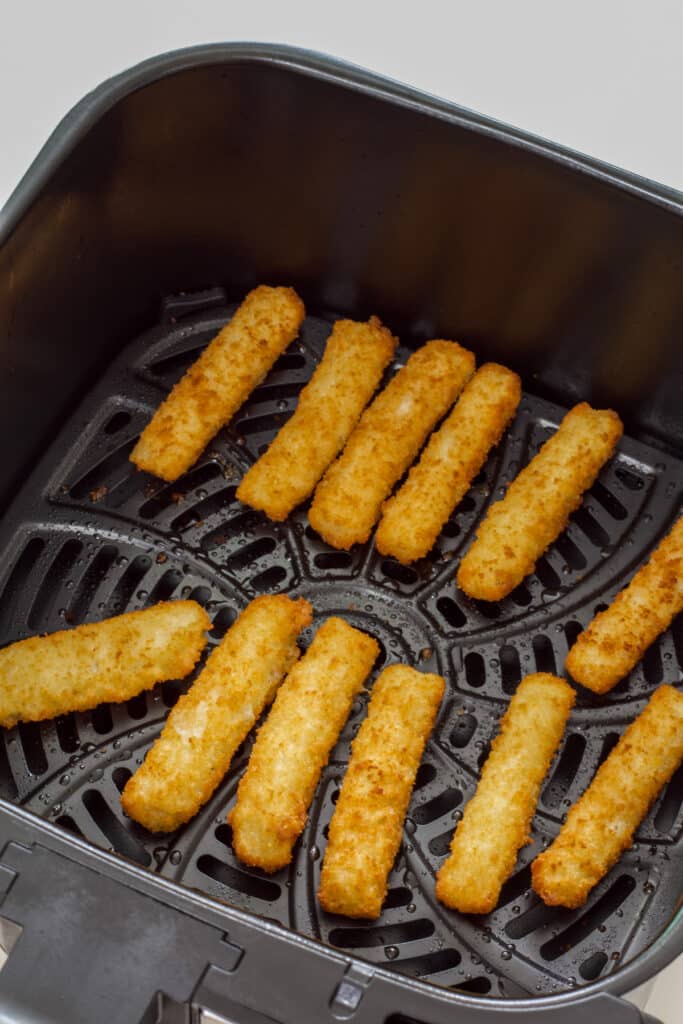
This setup helps food heat and brown sooner. The difference is most clear with small portions such as chicken wings, french fries, vegetables, fish fillets, and frozen snacks. A full-size oven still has advantages when you cook large meals, several dishes, or foods that need a wide pan.
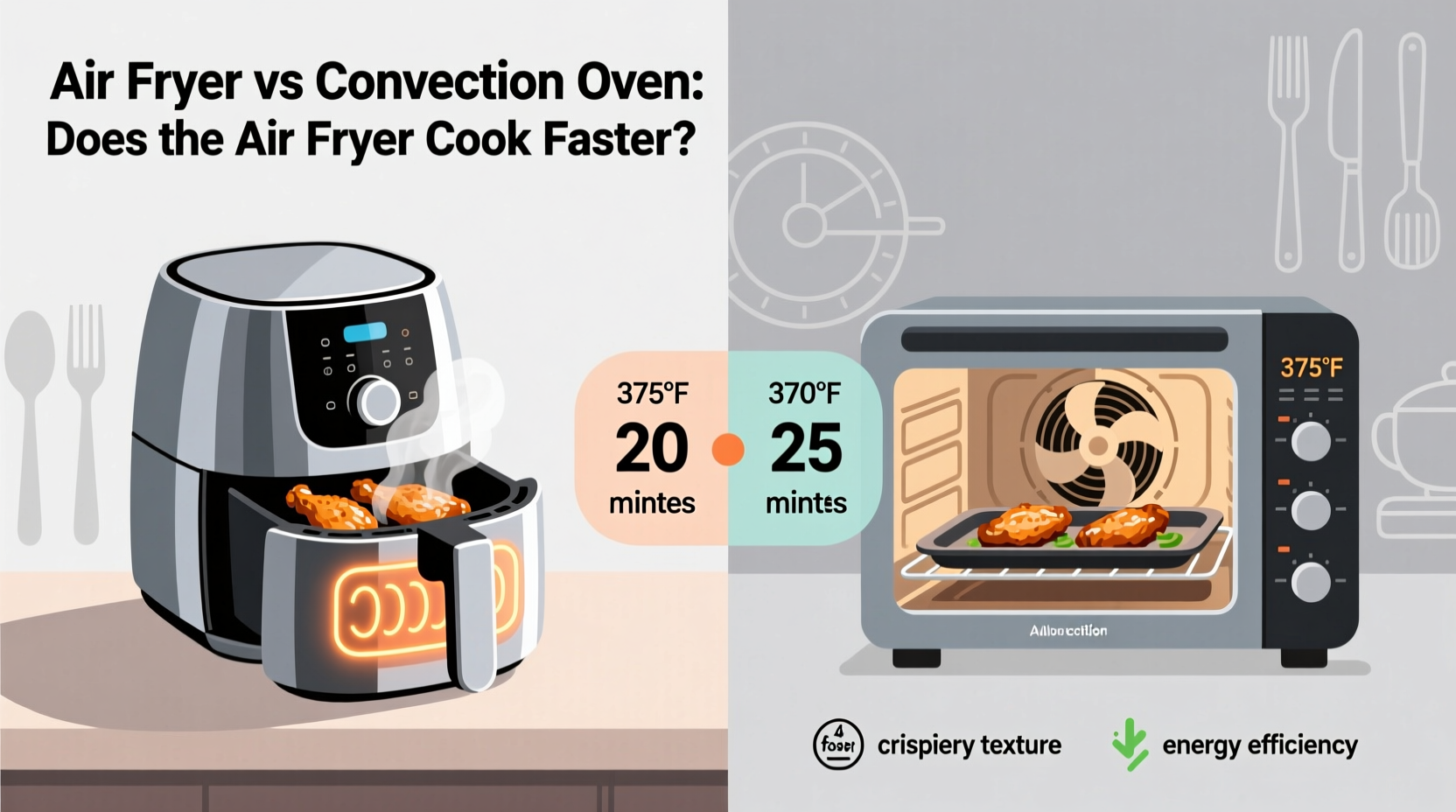
The short answer: air fryers transfer heat more efficiently
An air fryer cooks faster mainly because it transfers heat to the food more efficiently than a conventional oven.
A typical oven must heat a large cavity, racks, walls, and sometimes a heavy baking pan. An air fryer has a small cooking chamber. Less air and fewer surfaces need to warm before cooking can begin.
The fan also keeps hot air moving. Moving air removes the cooler layer of air that can sit around food. This lets heat reach the food’s surface more quickly.
The main reasons are:
- A smaller chamber: The heating element warms less space.
- Stronger air movement: A fan pushes hot air around the food.
- Closer heat source: The heating element often sits near the food.
- Less preheating: Many models reach cooking temperature quickly.
- A smaller food load: Air fryers work best with small batches.
An air fryer does not cook faster because it creates a special kind of heat. It uses familiar methods—radiant heat, hot air, and conduction—but uses them in a compact space.

How an air fryer works
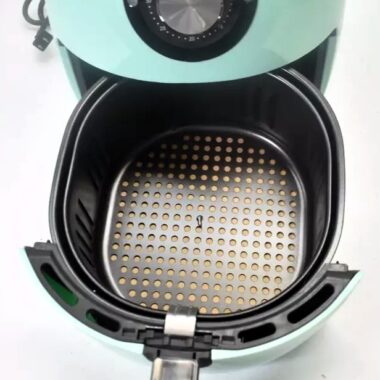
An air fryer is a small convection oven with a perforated basket or tray. The heating element warms the air, while a fan circulates that air around the food.
Three heat-transfer methods work together:
Convection
Convection is heat transfer through moving air. In an air fryer, the fan sends hot air around the food and through openings in the basket.
This constant movement improves contact between hot air and the food’s surface. It can also help moisture leave the surface, which supports browning and crisping.
Radiation
The heating element sends infrared energy toward the food. Because the element is often close to the basket, the food may receive more direct radiant heat than it would in a large oven.
The effect depends on the air fryer’s design. Basket shape, heating-element position, and food placement all matter.
Conduction
Conduction occurs when heat moves through direct contact. The hot basket or tray transfers heat to the parts of the food touching it.
This matters most for foods with a flat surface, such as hash brown patties or breaded fillets. It matters less for loose foods that sit above the basket.

Why the small cooking chamber matters
A full-size oven may hold several cubic feet of air. A basket-style air fryer may hold only a fraction of that amount. The air fryer therefore has less empty space to heat.
A smaller chamber also places the food closer to the heating element and fan. Hot air has less distance to travel before it reaches the food.
The result is not always a shorter total cooking time. It is more accurate to say that an air fryer often reaches effective cooking conditions sooner.
For example, a large oven may spend several minutes heating its cavity before the food receives steady heat. An air fryer may begin heating the food almost at once. Some models still need preheating, but the preheat period is often shorter.
The exact result depends on:
- The air fryer’s wattage and design
- The oven’s temperature and fan setting
- The amount and type of food
- Whether the food begins frozen or chilled
- How full the basket is
- Whether the appliance was preheated
- The size and thickness of each piece

Why moving air speeds cooking and browning
Still air acts like a mild insulating layer around food. As the food warms, the air next to it also warms. That layer can slow further heat transfer.
A fan disrupts this layer. It brings warmer air into contact with the food and carries away cooler air and surface moisture.
This process can produce two useful effects:
- The food surface heats sooner.
- Moisture leaves the surface more readily.
Less surface moisture helps fried-style foods become crisp. This is why an air fryer can brown frozen fries, wings, and breaded foods faster than a conventional oven at the same set temperature.
The fan does not guarantee even cooking. If food overlaps or fills the basket, air cannot circulate well. A crowded basket can cause pale, soft, or unevenly cooked areas.

Air fryer cooking times are not always a direct oven conversion
A common rule is to reduce an oven recipe by about 25 degrees Fahrenheit and shorten the cooking time by about 20%. This can be a useful starting point, but it is not a universal formula.
Air fryers vary widely. A small basket model, a toaster-oven-style air fryer, and a dual-basket model may cook the same food at different speeds.
Use the following table as a starting guide, not a guarantee:
| Oven instruction | Possible air fryer starting point |
|---|---|
| 400°F for 20 minutes | 375°F for about 14–16 minutes |
| 425°F for 25 minutes | 400°F for about 18–20 minutes |
| 350°F for 30 minutes | 325°F for about 22–25 minutes |
These are hypothetical adjustments. They are not tested results for every food or appliance.
Check the food before the original oven time ends. Turn or shake the food when the recipe or appliance manual recommends it. For meat, use a food thermometer rather than relying only on color or time.
The U.S. Department of Agriculture recommends checking meat and poultry with a thermometer and following safe minimum internal temperatures. A faster cooking time does not change the safe temperature needed for the food.
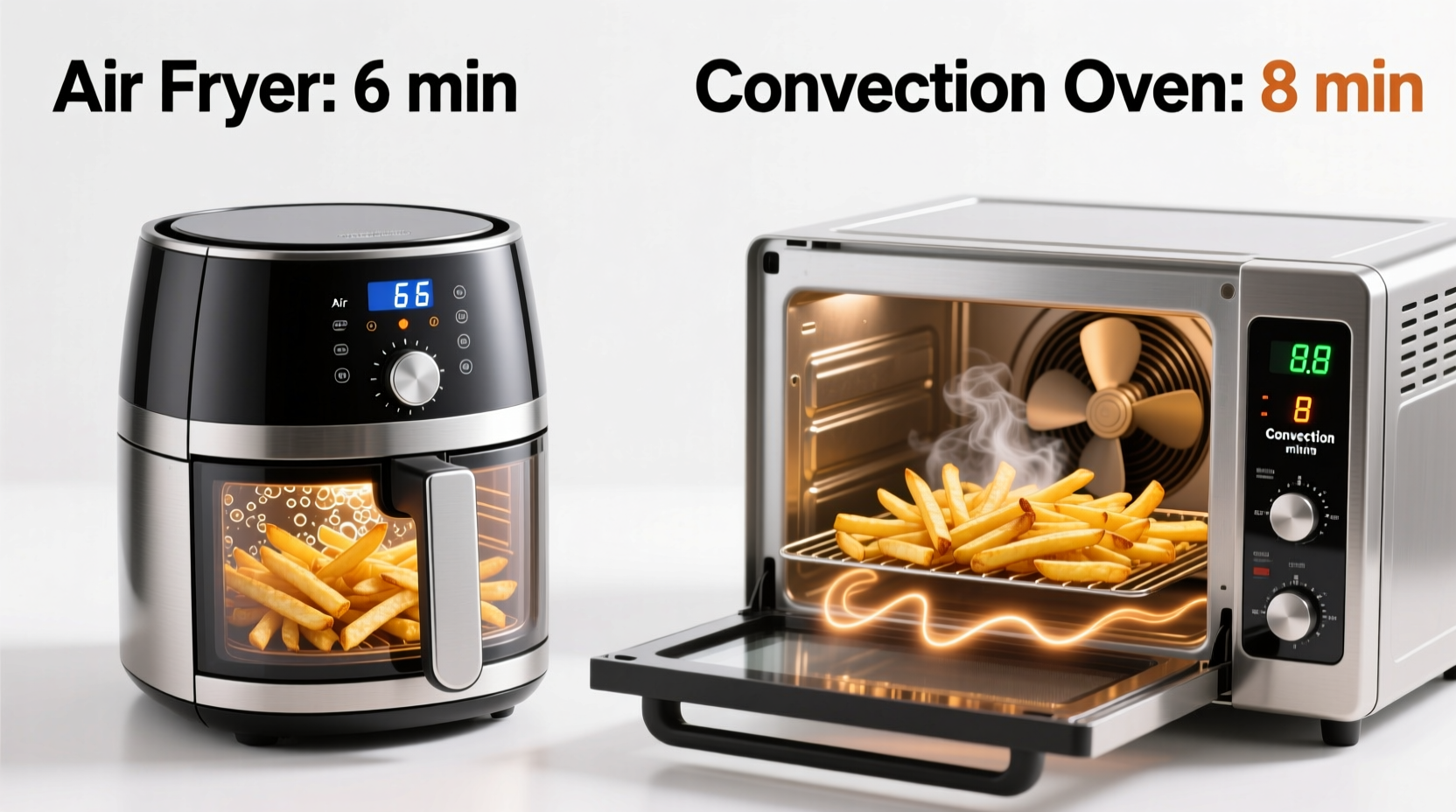
Air fryer versus oven: speed, capacity, and results
An air fryer is often faster for small portions. A full-size oven is often better for large quantities.
| Factor | Air fryer | Standard oven |
|---|---|---|
| Preheating | Usually shorter | Often longer |
| Cooking space | Small | Large |
| Air movement | Strong in many models | Depends on convection setting |
| Best batch size | Small to medium | Medium to large |
| Crisping | Often quick and effective | Can take longer |
| Multiple dishes | Limited | More practical |
| Large pans | Often cannot fit | Usually fits |
| Energy use per small batch | May be lower | May be higher |
| Cooking capacity | Limited by basket size | Better for family-size meals |
A convection oven can narrow the speed gap because it also uses a fan. However, the oven still has a much larger cavity to heat. A countertop convection oven may also hold more food than a basket air fryer, which can change the comparison.
The fairest comparison is not “air fryer versus every oven.” It is:
Which appliance can cook this amount of this food with the least wasted space and the best airflow?
For one or two servings of vegetables, wings, or frozen snacks, an air fryer often has the advantage. For a turkey, casserole, large pizza, or several trays of food, a full-size oven is usually more practical.

Does an air fryer cook faster because it is hotter?
Not necessarily. An air fryer may cook faster at the same displayed temperature because it transfers heat more efficiently.
The temperature shown on an appliance is not the only factor. Cooking speed also depends on airflow, distance from the heating element, food thickness, moisture, and load size.
Some air fryers reach high temperatures, but using the highest setting is not always better. High heat can burn a thin coating before the center is hot. It can also dry delicate foods.
Use the temperature in the recipe or the appliance manual as a starting point. Adjust only after checking how the food responds.
For foods that need a safe internal temperature, measure the thickest part. This is especially important for:
- Chicken and turkey
- Pork
- Fish
- Stuffed foods
- Thick frozen foods
- Foods cooked from partially frozen states

What makes an air fryer slow?
An air fryer may cook slowly when the basket is crowded, the food is very thick, or the appliance loses heat between batches.
An overcrowded basket
Food needs space around it for hot air to move. A packed basket traps steam and blocks airflow.
Cook in smaller batches when you want crisp results. A single layer usually works best, although some foods can be stacked if the manufacturer allows it and you shake or turn them during cooking.
Large or thick pieces
A thick chicken breast takes longer than thin strips. A whole potato takes longer than cut wedges. The center must still heat through even when the outside browns quickly.
Cut food into similar sizes when possible. This helps pieces finish at about the same time.
Frozen food
Frozen food starts at a lower temperature. It therefore needs more heat before it is ready. Ice on the surface may also create steam before crisping begins.
Avoid assuming that every frozen product follows the same time. Use the package directions as a reference, then adjust for your air fryer.
Too much opening and checking
Opening the basket releases hot air. One quick check usually has little effect, but repeated checks can extend cooking time.
Use the viewing window, if available, or check near the end of the suggested time.
A dirty or blocked appliance
Grease and food residue can affect airflow and create smoke. Keep the basket, tray, and interior clean according to the manufacturer’s instructions.
Never block the air intake or exhaust. Leave the clearance specified in the owner’s manual.

How to get the fastest, most even results
Follow these steps for better air fryer performance:
- Read the manual first. Check the allowed temperature, basket capacity, preheat guidance, and cleaning instructions.
- Preheat when useful. Preheating can improve browning and reduce the time food spends warming in the basket.
- Cut food evenly. Similar pieces cook at a similar rate.
- Leave space between pieces. Air must move around the food.
- Shake or turn food. Do this when the recipe calls for it or when the food needs even browning.
- Use a light coating of oil when appropriate. A small amount can improve browning, but too much oil may smoke or make food greasy.
- Check early. Air fryers can finish food before the oven time listed on a package.
- Measure internal temperature when safety matters. Time and appearance are not enough for many meats.
Signs of good airflow include even browning, a dry and crisp surface, and similar doneness across the basket. If the top is dark while the bottom is pale, lower the temperature, turn the food, or reduce the batch size.

Common mistakes that make air frying less effective
The most common mistake is treating an air fryer like a small deep fryer or a regular oven without changing the method.
Avoid these errors:
- Filling the basket to the top: This blocks airflow.
- Using wet batter: Loose batter may drip through the basket and fail to set properly. A dry breading system usually works better.
- Adding too much oil: Excess oil can smoke and does not always create more crispness.
- Using parchment without food on top: It can lift into the heating element. Use parchment made for the appliance and keep it secured by food.
- Covering all basket openings: This reduces airflow and may affect cooking.
- Ignoring smoke: Turn off the appliance if smoke continues or if grease ignites. Follow the manual’s safety instructions.
- Touching the basket immediately: The basket and food can remain very hot after cooking.
- Assuming a shorter time means safe food: Use a thermometer for meat, poultry, and other foods that require temperature checks.
Do not place an air fryer on a surface that cannot tolerate heat. Keep it away from water, curtains, and other materials that may catch fire. The appliance should sit on a stable, heat-safe surface with the required ventilation space.

When an oven is the better choice
Choose a full-size oven when you need capacity more than speed.
An oven is usually better for:
- Large cuts of meat
- Casseroles
- Cakes and pies
- Several trays of food
- Large pizzas
- Foods that need a wide, flat pan
- Meals with different dishes cooking at once
An air fryer is usually better for:
- One or two servings
- Frozen snacks
- Chicken wings
- Small vegetables
- Reheating foods that should become crisp
- Small portions of roasted meat or fish
A full-size convection oven may be the best middle ground for large batches. It provides moving air but offers more cooking space than a basket air fryer.
The deciding factor is the amount of food. If you must cook several small batches, the air fryer’s faster cycle may disappear. The oven may finish the entire meal sooner even if each portion takes longer.

Frequently asked questions
Does an air fryer use less energy than an oven?
It can use less energy for small portions because it heats a smaller space and may cook for less time. The result depends on the wattage, cooking time, batch size, and type of oven.
For a large meal, running several air fryer batches may use as much or more energy than using one oven cycle. Energy savings are therefore possible, not guaranteed.
Should I always reduce the oven temperature for an air fryer?
No. Use the air fryer’s recipe or manual when available. If you are converting an oven recipe, a modest temperature reduction and shorter cooking time can be a starting point, but check the food early.
Does an air fryer make food healthier?
An air fryer can reduce the amount of oil used compared with deep frying. That does not automatically make every air-fried food healthy. The ingredients, portion size, breading, salt, and cooking method still matter.
Can I put aluminum foil or parchment paper in an air fryer?
Only if the appliance manual allows it and the material does not block needed airflow. Keep foil and parchment away from the heating element. Secure parchment with food so it cannot lift.
Why is my food not crispy in the air fryer?
The basket may be too full, the food may be wet, or the surface may have too much moisture. Cook a smaller batch, dry the food when appropriate, and avoid covering the basket openings.
Is an air fryer better than a convection oven?
Neither is always better. An air fryer often cooks small portions quickly and crisps them well. A convection oven offers more space and works better for large meals or multiple dishes.
Key takeaways
- An air fryer cooks faster because it heats a small chamber and moves hot air close to the food.
- Strong airflow helps transfer heat and remove surface moisture.
- A smaller batch usually produces the biggest speed advantage.
- A crowded basket can make an air fryer slow and uneven.
- A convection oven uses a similar method but usually has more cooking space.
- Use a thermometer for meat and poultry; faster cooking does not change food-safety temperatures.
- Choose the air fryer for small portions and the oven for large meals.
Conclusion
An air fryer cooks faster than a conventional oven because its compact design wastes less heat and its fan moves hot air directly around the food. The advantage is strongest when the basket is not crowded and the portion is small.
For the best results, leave space around the food, check it early, and adjust the temperature and time for your specific appliance. If you need to cook a large meal or several dishes, the larger oven may still be the faster overall choice.
Sources and further reading
- U.S. Department of Agriculture: Safe Minimum Internal Temperatures
- U.S. Department of Energy: Estimating Appliance and Home Electronic Energy Use
- U.S. Food and Drug Administration: Food Safety at Home