Why Is An Air Fryer Different Than An Oven: Explained
An air fryer is different from a traditional oven because it cooks food in a much smaller space with strong, fast-moving hot air. In a U.S. kitchen, this often means crisp food in less time, with less need to heat a large oven. An air fryer is not a deep fryer, and it is not a completely different type of heat source. It is a compact convection oven with a basket or perforated tray.
A full-size oven remains more useful for large meals, baking, roasting, and cooking several dishes at once. An air fryer usually works best for small portions, frozen foods, vegetables, chicken, fish, and foods that benefit from a crisp surface.
Quick answer: Air fryer vs. oven
The main difference is size and airflow.
An air fryer has:
- A small cooking chamber
- A powerful fan close to the food
- A basket or perforated tray
- Fast air circulation around much of the food
- Shorter preheating and cooking times for many small meals
A conventional oven has:
- A much larger cooking chamber
- More space for baking dishes and multiple racks
- Slower air movement unless it has a convection setting
- More flexibility for large or delicate recipes
- Greater energy use when heating a large space for a small meal
Most air fryers use electric heating elements, just like electric ovens. Their cooking effect comes from the compact design and strong airflow, not from a special “frying” process.
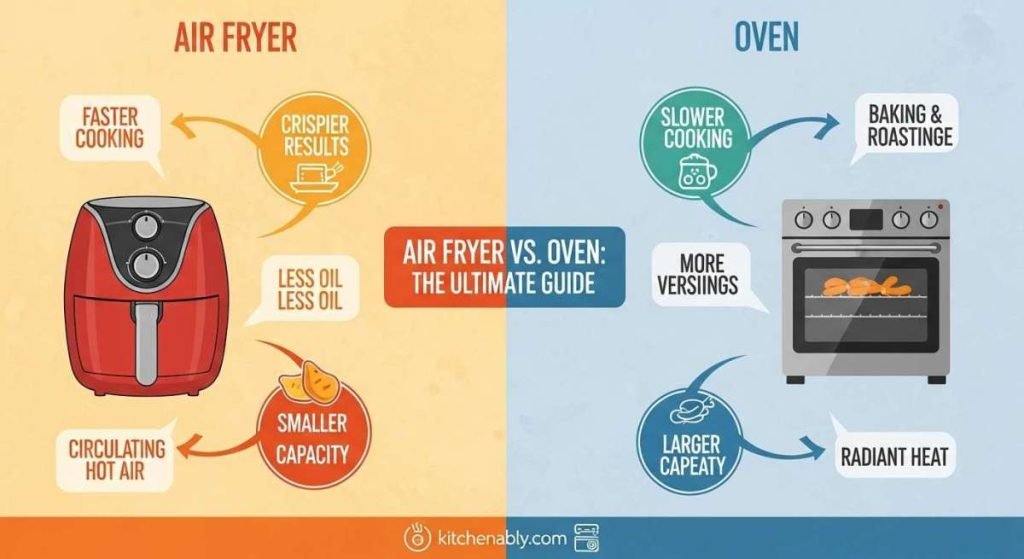
How an air fryer cooks food
An air fryer cooks by combining radiant heat, hot air, and surface drying.
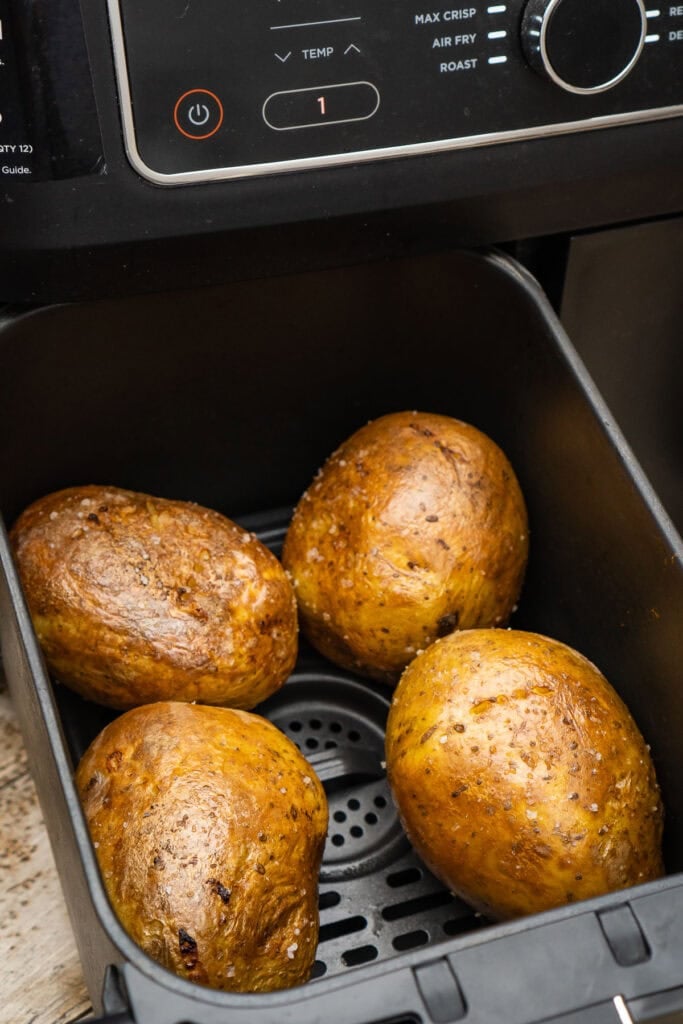
A heating element warms the air inside the appliance. A fan then moves that hot air around the food. The small chamber keeps the air close to the food, while the holes in the basket allow air to reach the underside.
This process helps remove moisture from the food’s surface. Less surface moisture allows browning and crisping to occur more quickly. That is why an air fryer can make foods such as potatoes, wings, and breaded vegetables crisp without submerging them in oil.
An air fryer does not truly “fry” food in the same way as a deep fryer. Deep frying uses hot oil to transfer heat quickly across the entire food surface. Air frying uses hot air and usually a small amount of oil.
What convection means
Convection is the movement of hot air around food. A convection oven uses a fan to improve air circulation, while a conventional oven may rely mostly on natural heat movement.
An air fryer is essentially a small, high-airflow convection oven. The fan is often stronger relative to the size of the cooking chamber. The food also sits in a basket that exposes more of its surface to moving air.
This design creates a practical advantage: the outside of many foods can brown before the inside loses too much moisture.

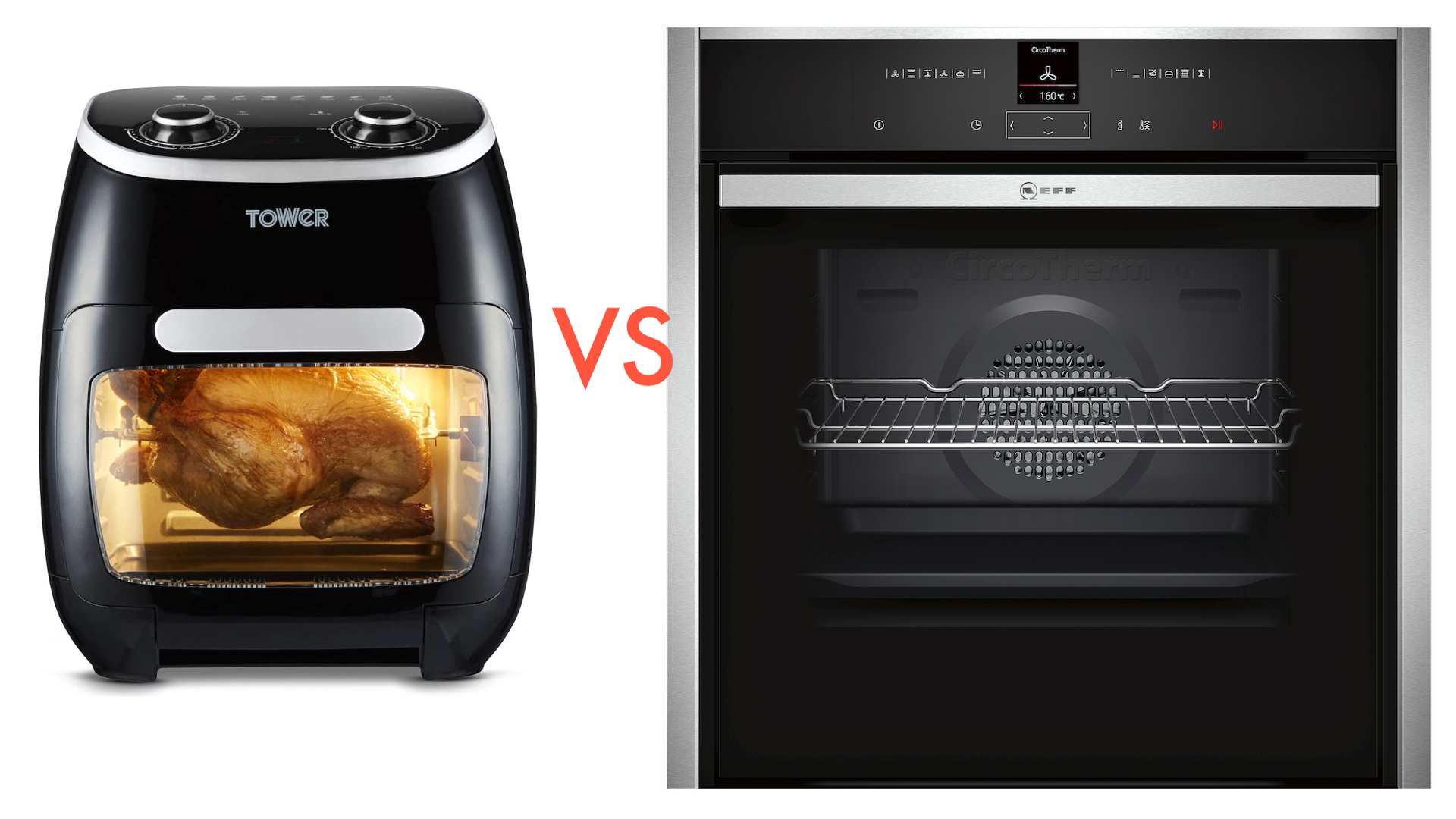
Air fryer vs. conventional oven: Key differences
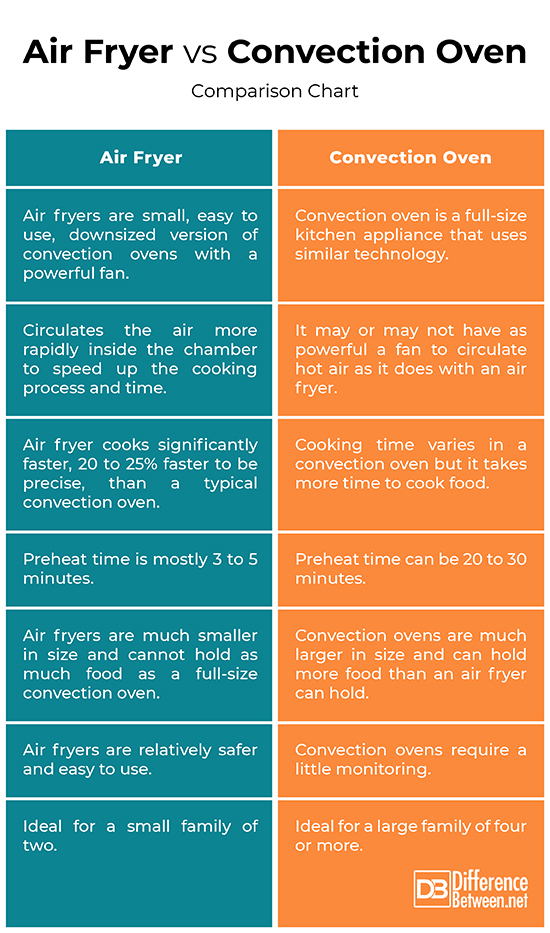
The table below shows the typical differences. Exact results depend on the appliance, food quantity, pan, recipe, and starting temperature.
| Feature | Air fryer | Conventional oven |
|---|---|---|
| Cooking space | Small | Large |
| Air movement | Strong fan-driven airflow | Little or no forced airflow |
| Preheating | Often very short or unnecessary for small foods | Usually longer |
| Best portion size | One to a few servings | Family meals and large dishes |
| Crisping | Strong for exposed foods | More limited without convection |
| Cookware | Basket or small tray | Baking sheets, pans, Dutch ovens, dishes |
| Moist foods | Can dry the surface quickly | Often gentler |
| Multiple dishes | Limited | More practical |
| Large roasts or casseroles | Usually unsuitable | Well suited |
| Energy for a small meal | May be lower because it heats less space | May be higher because it heats a larger space |
Cooking speed
An air fryer often cooks small foods faster because it has less air and cookware to heat. Strong airflow can also improve browning.
Do not assume that every air fryer recipe should be cut by a fixed percentage. Some recipes need only a small adjustment, while others need much less time. A crowded basket, frozen food, thick meat, or a cold appliance can change the result.
For a first attempt, check the food early. Use the original recipe as a starting point, then adjust based on color, texture, and internal temperature.
Crispiness
Air fryers usually produce a crisper surface than conventional ovens. The main reasons are:
- More direct airflow
- Better exposure to heat
- Faster surface moisture loss
- A basket that lets air pass below the food
A standard oven can also crisp food, especially with convection, a preheated sheet pan, or a wire rack. However, food on a solid baking pan may have less airflow underneath.
Capacity
A conventional oven wins when you need to cook a large amount of food. A full-size oven can hold a roasting pan, casserole dish, pizza, or several trays.
An air fryer has limited space. If you fill the basket too much, hot air cannot move well. The food may cook unevenly, stay soft, or need several batches.
A larger dual-basket air fryer improves capacity, but it still may not replace an oven for large meals.
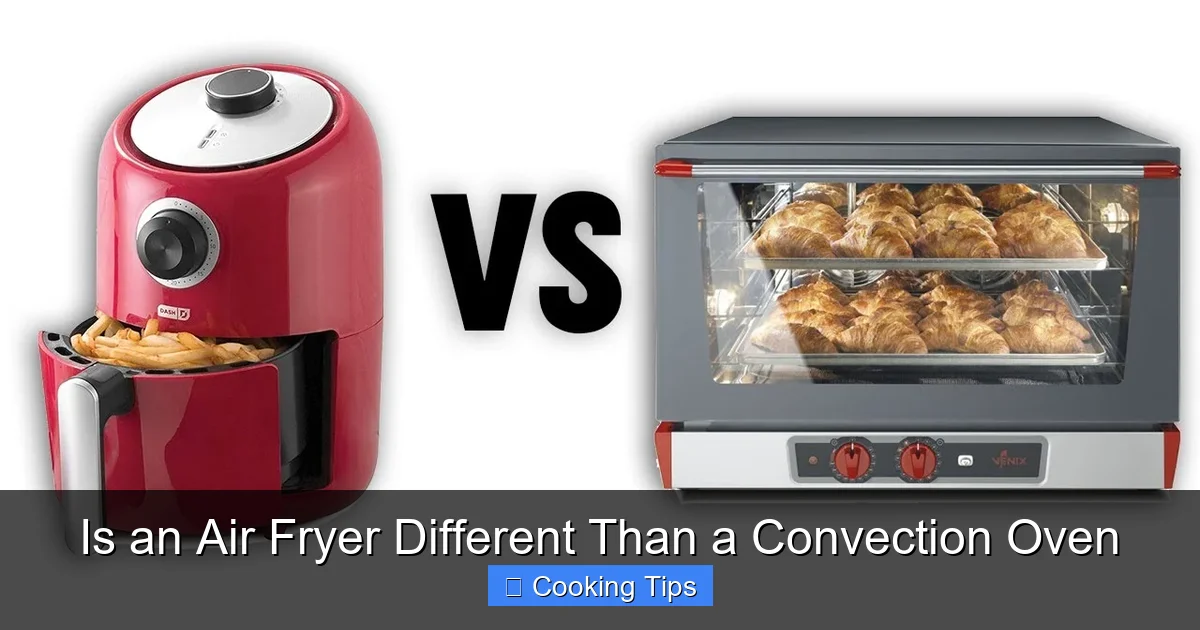
Air fryer vs. convection oven
An air fryer and a convection oven use the same basic idea: a fan moves hot air around food. The difference is usually the scale and airflow pattern.
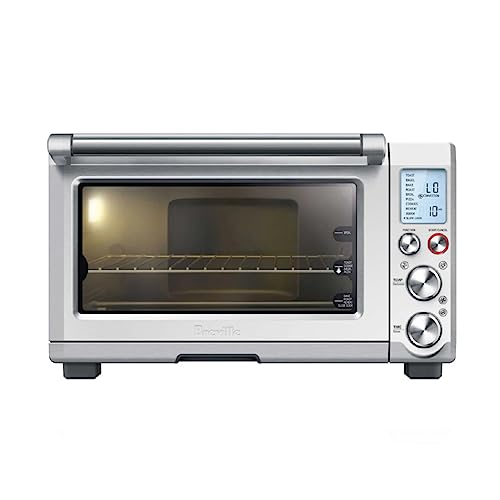
An air fryer is smaller and often places the fan and heating element close to the basket. A countertop convection oven has more room and may offer several rack positions. A full-size convection oven gives you the most capacity.
The practical difference is this:
- Choose an air fryer for small portions and fast crisping.
- Choose a convection oven for larger portions and more flexible cooking.
- Choose a conventional oven when strong airflow is not needed or when the recipe depends on a specific baking environment.
Convection settings often require a temperature reduction compared with a conventional oven. Many recipes suggest lowering the temperature by about 25°F, but the correct adjustment depends on the oven and recipe. Treat that number as a starting point, not a rule.
Air fryers also vary widely. A small basket air fryer may cook much faster than a large countertop model. Read the appliance manual before applying a conversion from a recipe written for a different device.
Which foods work better in an air fryer?
An air fryer works best when food has a relatively dry surface and benefits from browning.
Good choices include:
- French fries and potato wedges
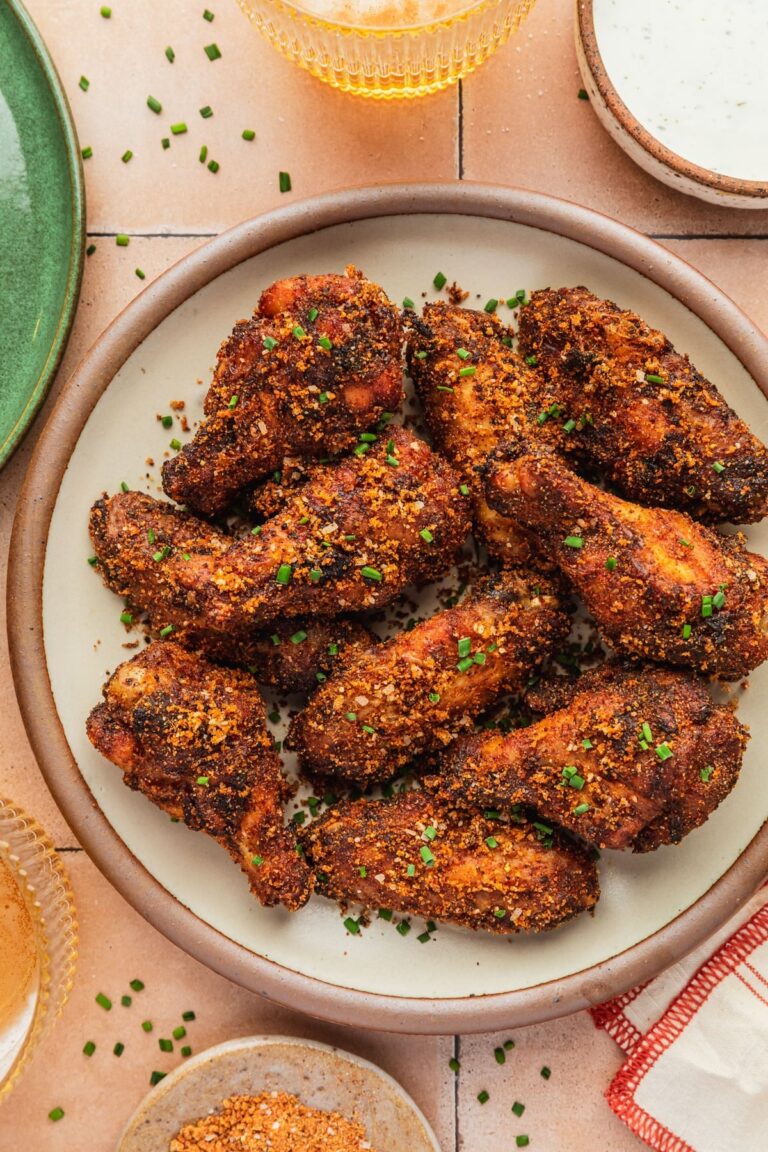
- Chicken wings and drumsticks
- Breaded fish or chicken
- Frozen snacks
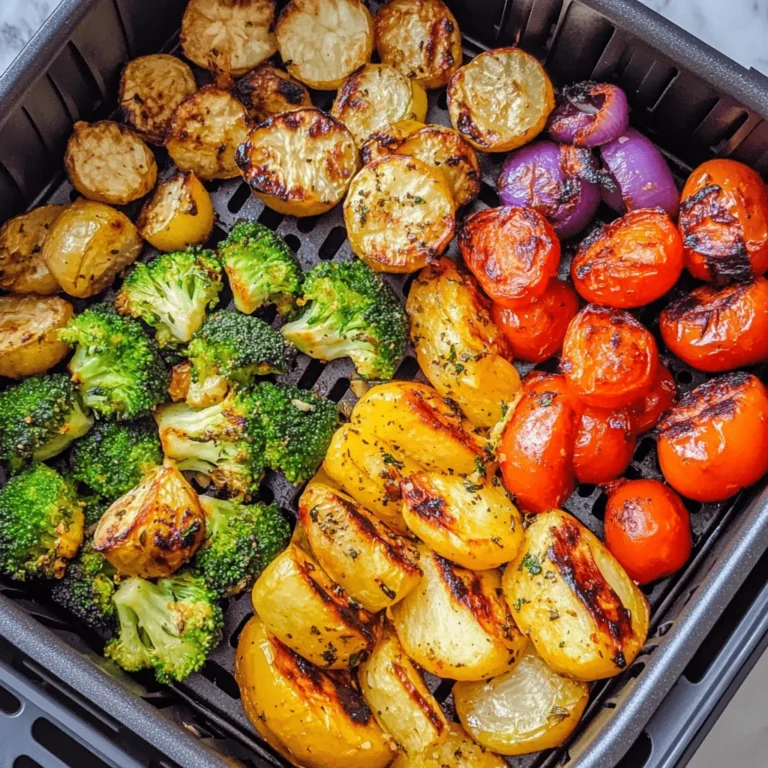
- Brussels sprouts and other firm vegetables
- Reheated pizza
- Toasted sandwiches
- Small portions of bacon
- Salmon fillets
- Roasted nuts, when the manual allows them
An air fryer may be less suitable for:
- Large soups or stews
- Very wet batter
- Large cakes or delicate pastries
- Big roasts
- Full casseroles
- Foods that need lots of liquid
- Recipes that must stay covered while cooking
Wet batter can drip through a basket before it sets. A prepared breaded coating usually works better because it stays on the food.
For delicate foods, a regular oven may provide more even and controlled heat. For large foods, the size of the air fryer is usually the main limitation.

Can you use an air fryer instead of an oven?
You can use an air fryer instead of an oven for many small meals, but not for every recipe.
Use an air fryer when:
- You are cooking one or two portions.
- You want a crisp surface.
- The food fits in one layer.
- You need a quick meal.
- You do not want to heat a large oven.
- The recipe uses dry heat and does not need a large pan.
Use an oven when:
- You are feeding several people.
- The food needs a large baking dish.
- You are making a cake, casserole, or roast.
- You need several trays at once.
- The food must cook gently or remain covered.
- You need precise control over rack position and pan size.
An air fryer can replace an oven for a meal, but it is better viewed as a second cooking tool. It fills the gap between a toaster oven and a full-size oven.
How to convert oven recipes for an air fryer
Use this process:
- Check the food size. Cut large pieces into smaller, even portions if the recipe allows.
- Use the air fryer basket or tray. Do not block the vents.
- Start with a modest temperature change. A reduction of about 25°F is a common starting point for convection-style cooking.
- Check early. Begin checking several minutes before the oven recipe’s stated time.
- Turn or shake when needed. This helps food brown more evenly.
- Use a thermometer for meat and poultry. Color alone cannot confirm safe cooking.
- Adjust the next batch. Record what worked for your appliance.
For example, a hypothetical oven recipe that calls for 400°F for 25 minutes might begin in an air fryer at 375°F. Check the food around 15 to 18 minutes, then continue until it is browned and reaches the safe internal temperature required for that food.
The example is only a starting point. Thickness and crowding can matter more than the temperature change.

Does an air fryer use less electricity than an oven?
An air fryer may use less electricity for a small meal because it heats a smaller space and often cooks faster. That does not mean it always uses less energy.
Energy use depends on:
- The appliance’s wattage
- Cooking time
- Preheating time
- Food quantity
- Oven size
- Whether the oven is gas or electric
- Whether the oven cooks several dishes at once
A simple estimate is:
Energy used in kilowatt-hours = watts ÷ 1,000 × hours of operation
For a hypothetical comparison:
- A 1,500-watt air fryer running for 20 minutes uses about 0.50 kilowatt-hours.
- A 3,000-watt electric oven running for 30 minutes uses about 1.50 kilowatt-hours.
These figures are examples, not universal measurements. Heating elements cycle on and off, and actual power use varies by model.
The air fryer’s advantage is strongest when cooking a small amount of food. If you already have the oven on for a large meal, adding another small dish to the oven may be more practical than running a separate appliance.

Air fryer safety and food quality
Use an air fryer according to its manual and keep clear space around the appliance. Many models release hot air from a vent, so do not place the vent against a wall, under a cabinet, or near items that can melt.
Follow these safety practices:
- Put the air fryer on a stable, heat-resistant surface.
- Keep the basket below its maximum fill line.
- Do not cover the air intake or exhaust vent.
- Do not use loose parchment paper without food weighing it down.
- Keep water away from the electrical parts.
- Clean grease and food buildup often.
- Use oven mitts when handling the basket.
- Check meat with a food thermometer.
- Stop using the appliance if the cord, plug, or housing is damaged.
The U.S. Department of Agriculture advises using a food thermometer to verify safe internal temperatures. For example, poultry should reach 165°F, while whole cuts of beef, pork, lamb, and veal have different temperature guidance and rest requirements. Follow the current USDA safe minimum internal temperature chart.
Do not rely on the air fryer’s display alone. Some displays show the set temperature, not the true temperature at the food.
Common air fryer mistakes
Overfilling the basket
Too much food blocks airflow. Cook in batches when necessary. A single layer usually gives the most even browning.
Adding too much oil
Air fryers need little oil for many foods. Excess oil can smoke, pool below the basket, or make breading greasy. A light coating is often enough.
Ignoring food size
Small pieces cook faster than large pieces. Cut food into similar sizes so it finishes at about the same time.
Skipping a shake or turn
Some foods need to be shaken or turned halfway through cooking. This is especially helpful for fries, vegetables, and small breaded pieces.
Using the oven temperature without checking
An air fryer may brown food before the center is done. Check thick foods early and use a thermometer for meat.
Crowding wet foods
Wet foods need room for moisture to escape. Crowding can create steam and prevent crisping.
Treating all air fryers as identical
Basket size, fan strength, heating element position, and controls vary. The manual for your model is the best source for operating limits and accessories.

Which is better: an air fryer or an oven?
Neither appliance is better for every task.
Choose an air fryer if you mainly cook small portions and want fast, crisp results. It is especially useful for reheating food, cooking frozen snacks, roasting vegetables, and preparing small servings of meat or fish.
Choose a conventional oven if you bake often, cook for several people, prepare large dishes, or need several cooking racks. A convection oven may offer some of the air fryer’s crisping benefits while keeping the larger capacity.
For many U.S. households, the most useful setup is not either-or. The air fryer handles quick, small meals while the oven handles large or delicate foods.

Key takeaways
- An air fryer is a compact, high-airflow convection oven.
- Its small chamber helps it heat and crisp small portions quickly.
- A conventional oven offers more space and greater flexibility.
- Air fryers usually work best with dry foods arranged in a loose layer.
- Cooking time and temperature conversions are starting points, not fixed rules.
- Use a food thermometer for meat and poultry.
- The best appliance depends on portion size, food type, texture, and available time.
FAQs
Is an air fryer healthier than an oven?
An air fryer can reduce the amount of oil used for some foods, but the health value depends mainly on the food, portion, coating, and cooking method. An oven can also cook food with little oil. The appliance alone does not make a meal healthy.
Does an air fryer cook faster than an oven?
It often cooks small foods faster because it heats less space and moves hot air close to the food. Thick foods, crowded baskets, and frozen items may take longer than expected.
Can I put aluminum foil in an air fryer?
Many manufacturers allow limited use of aluminum foil, but the manual for your model controls. Do not block the basket’s airflow, cover the heating element, or use foil where it can move into the fan or heating area.
Can I use glass or ceramic dishes in an air fryer?
Only use cookware that is labeled as oven-safe and fits without blocking airflow. Sudden temperature changes can damage some glass or ceramic dishes. Check both the dish instructions and the air fryer manual.
Does an air fryer replace a microwave?
No. A microwave heats food in a different way and is usually better for liquids and fast reheating without browning. An air fryer is better when you want a dry, crisp surface.
Conclusion
An air fryer differs from an oven mainly through its smaller cooking space, stronger airflow, and basket-based design. Those features make it fast and effective for crisping small portions. A traditional or convection oven remains the better tool for baking, large meals, casseroles, and multiple dishes.
The best choice is simple: use an air fryer for speed and crisp texture in small batches, and use an oven when capacity, cookware, or recipe control matters more.