What Can You Do With An Air Fryer: Easy Ideas
An air fryer can cook much more than French fries. In a U.S. kitchen, you can use it to roast vegetables, bake small foods, crisp frozen meals, reheat leftovers, cook chicken, prepare seafood, and make quick snacks with little added oil. It works like a small convection oven: a heating element warms the air, while a fan moves that hot air around the food.
An air fryer is most useful when you want browned, crisp food without heating a full-size oven. It also cooks small portions quickly. Still, it is not a deep fryer, pressure cooker, or replacement for every cooking method. The basket size, food thickness, moisture level, and model design all affect the result.

What Is an Air Fryer?
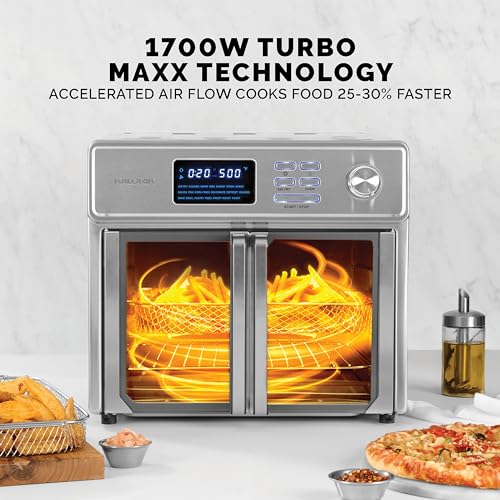
An air fryer is a countertop convection cooker with a heating element, fan, and cooking basket or tray. Hot air moves around the food and creates browning on exposed surfaces. A small amount of oil can improve color and texture, but the machine does not need a deep pool of oil.
Most U.S. air fryers use Fahrenheit settings and offer temperatures from about 200°F to 400°F. Some models reach higher temperatures or include settings such as broil, roast, bake, dehydrate, or reheat. Always check the manual because controls, basket limits, and safe accessories vary by model.
Air fryer versus deep fryer
A deep fryer cooks food while it is submerged in hot oil. An air fryer uses moving hot air and little or no added oil. This means air-fried food may have a lighter texture and less added fat than the same food cooked in a deep fryer.
That does not make every air-fried food low in calories. A breaded frozen snack, for example, can still contain a large amount of sodium, refined starch, or fat. The final nutrition depends on the food, the recipe, and the amount of oil used.
Air fryer versus convection oven
Both appliances use circulating hot air. An air fryer usually has a smaller chamber and stronger airflow near the food. This can help small portions brown fast.
A full-size convection oven is better for large batches, sheet-pan meals, cakes, and foods that need more space. An air fryer is often better for one or two servings, quick reheating, and crisping food without preheating a large oven.
What Foods Can You Cook in an Air Fryer?
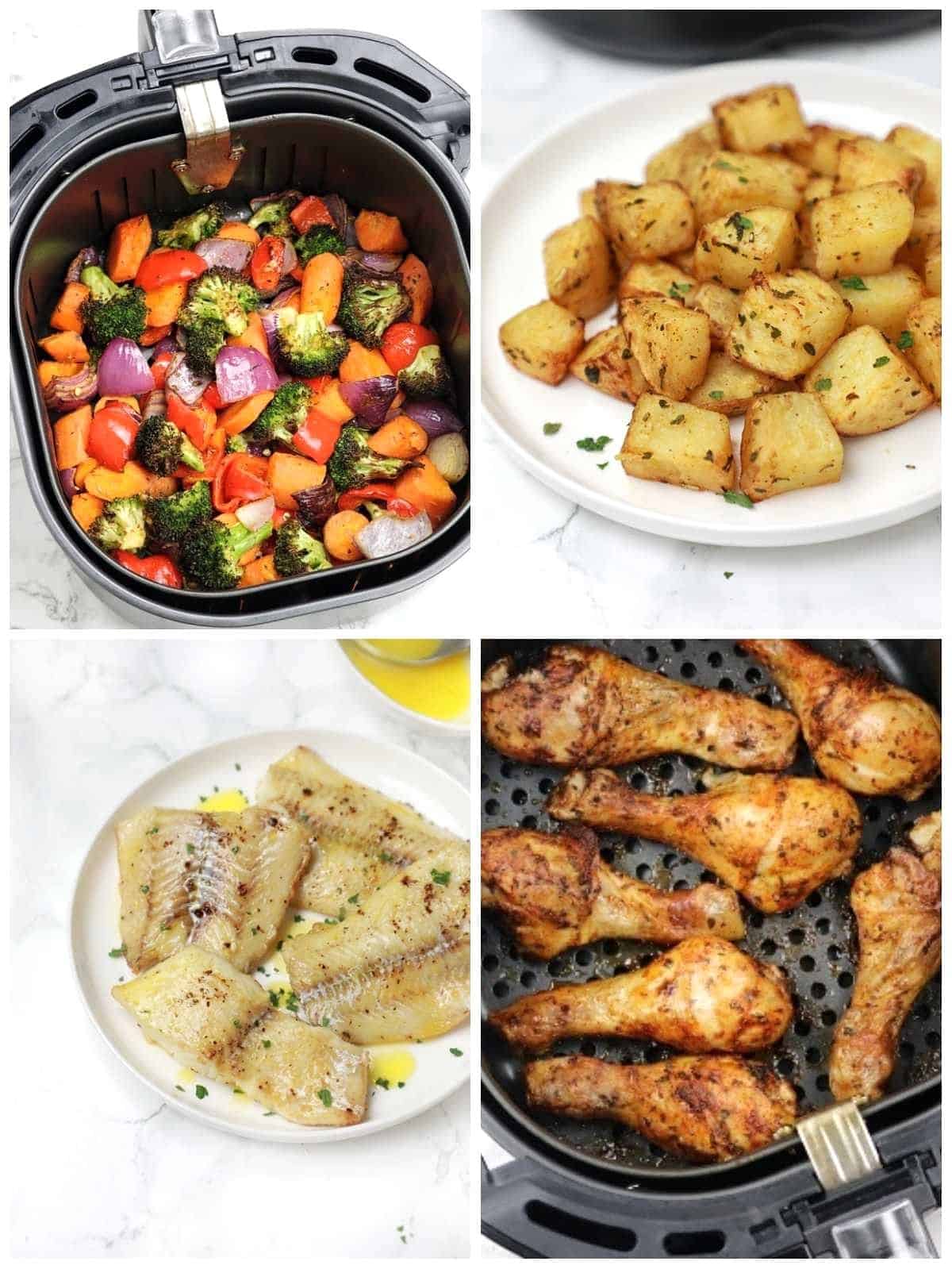
You can cook fresh, frozen, breaded, roasted, and baked foods in an air fryer. The best choices have enough surface area for hot air to reach them and do not release excessive liquid into the basket.
Vegetables
Air fryers work well for vegetables that benefit from browned edges. Try:
- Broccoli and cauliflower florets
- Brussels sprouts
- Green beans
- Asparagus
- Zucchini and yellow squash
- Bell peppers
- Carrots
- Sweet potato cubes
- Corn on the cob
- Small potatoes
- Mushrooms
Dry the vegetables before cooking. Toss them with a small amount of oil and seasonings, then arrange them in a loose layer. Shake the basket or turn the food halfway through cooking.
Tender vegetables may cook in 6 to 12 minutes at 375°F to 400°F. Dense foods, such as potatoes and carrots, may need 15 to 25 minutes. Cut pieces to a similar size so they finish at the same time.
Chicken and other poultry
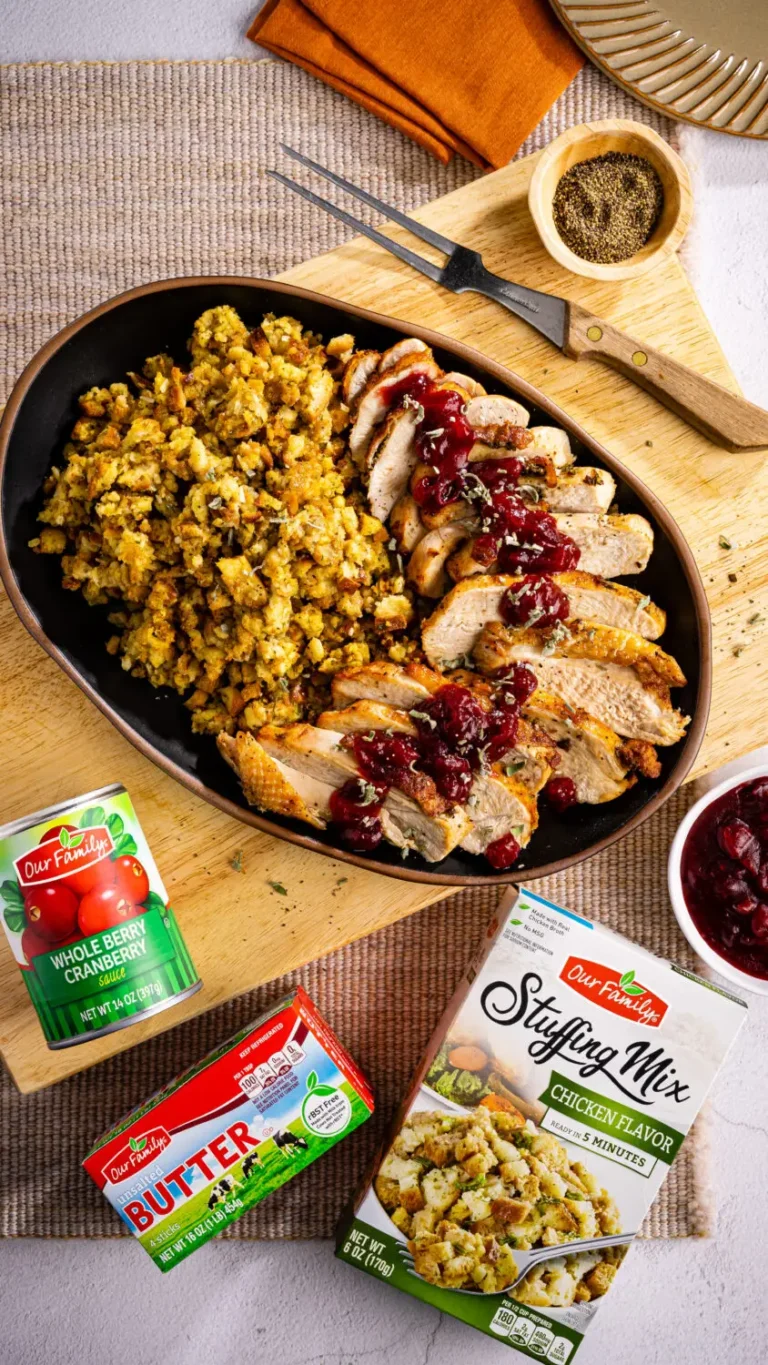
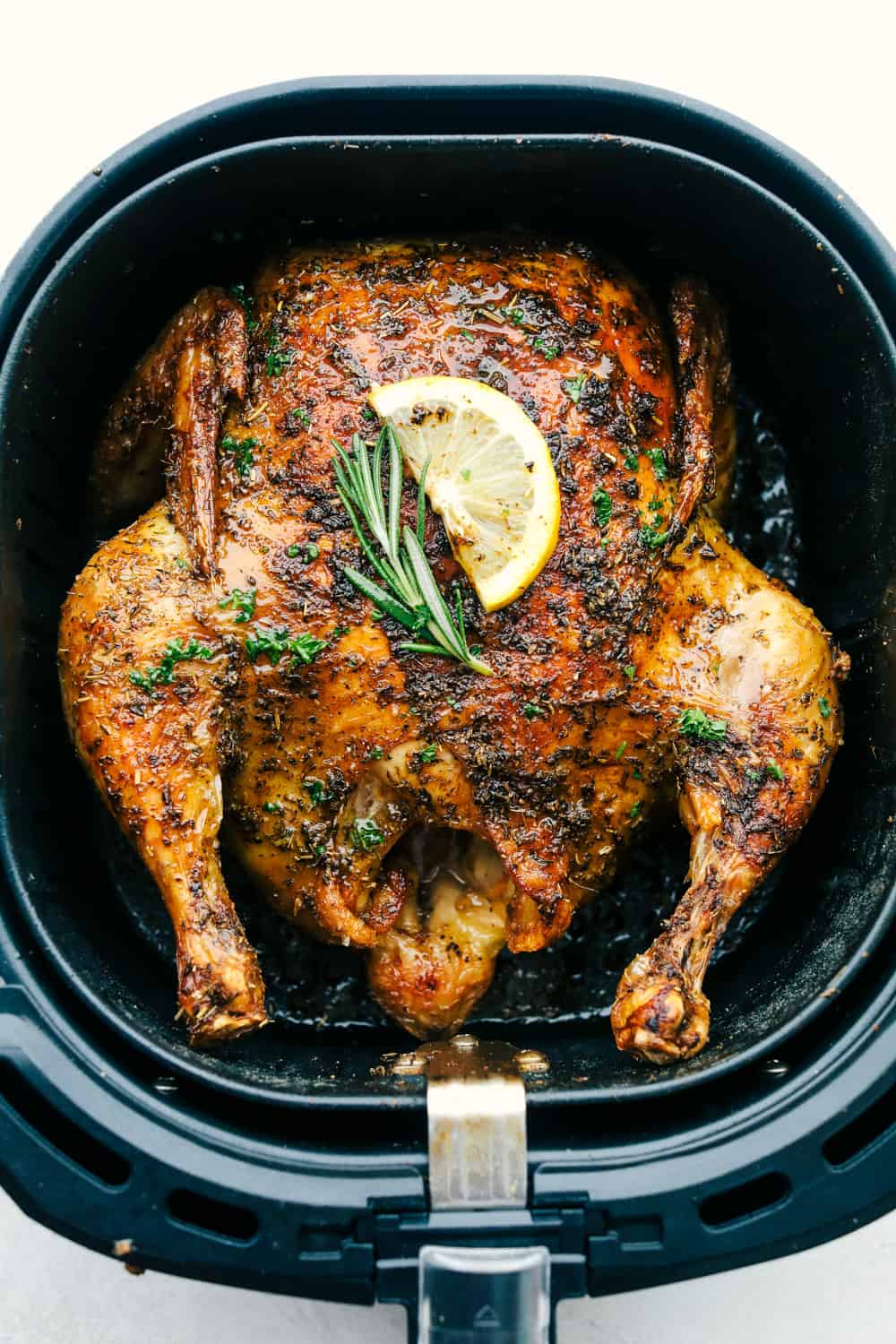
An air fryer can cook chicken breasts, thighs, wings, tenders, drumsticks, and small pieces of turkey. Skin-on poultry can become crisp because the circulating heat dries and browns the skin.
Use a food thermometer rather than color to check doneness. The USDA recommends cooking poultry to a minimum internal temperature of 165°F, measured in the thickest part and away from bone.
Chicken breasts can dry out if they are very thick or cooked too long. Flattening uneven pieces to a similar thickness can help. Bone-in pieces may need more time than boneless pieces, and crowded baskets cook less evenly.
Meat
You can cook hamburgers, meatballs, sausages, pork chops, steak portions, and small meatloaves in many air fryers. Air frying can brown the outside while the center cooks with less splatter than pan frying.
Cooking time depends on thickness and starting temperature. Ground meat should reach a safe internal temperature. The USDA lists 160°F for ground beef, pork, lamb, and veal, while whole cuts of beef, pork, lamb, and veal generally need 145°F followed by a three-minute rest.
Do not rely on a preset alone. Presets are starting points, not proof that the food is safe.
Fish and seafood
An air fryer can cook salmon, cod, tilapia, shrimp, scallops, fish fillets, and breaded seafood. Lightly oiling the food can prevent sticking and help seasonings adhere.
Delicate fish may need a lower temperature, such as 350°F to 375°F. Breaded fish often benefits from 375°F to 400°F. Leave space between pieces so the coating can brown rather than steam.
The FDA advises cooking most fish to 145°F, or until the flesh is opaque and separates easily with a fork. Shrimp and scallops should become firm and opaque.
Frozen foods
Frozen foods are among the easiest air-fryer choices. You can often cook them without thawing first. Common options include:
- French fries and sweet potato fries
- Tater tots and hash-brown patties
- Chicken nuggets and tenders
- Fish sticks
- Mozzarella sticks
- Egg rolls
- Taquitos
- Frozen vegetables
- Pizza rolls
- Frozen breakfast foods
Frozen foods often already contain oil. Check the package instructions, then begin checking the food a few minutes early. Air fryers differ in power and airflow, so the package oven directions may need adjustment.
Breakfast foods
An air fryer can prepare small breakfast portions, including:
- Bacon
- Sausage links or patties
- Hash browns
- Toasted bagels
- English muffins
- Breakfast burritos
- Frittatas in a suitable pan
- Baked eggs in a heat-safe dish
- French toast sticks
Bacon can release hot grease and smoke. Use the method recommended by the appliance manual, avoid overfilling the basket, and clean grease from the drawer after it cools.
Baked foods
You can bake small items when the pan fits and air can still circulate. Useful choices include:
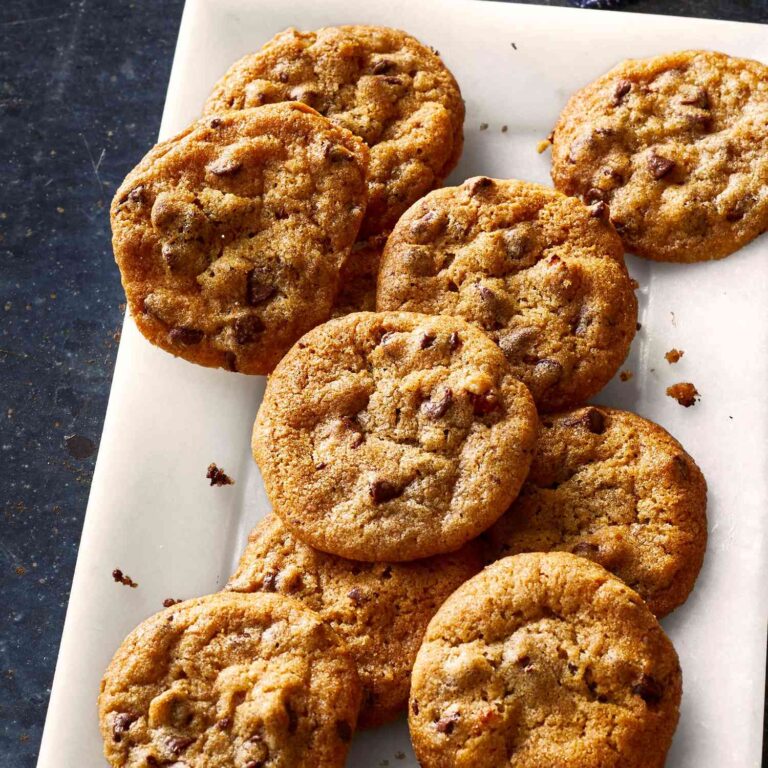
- Cookies
- Muffins
- Brownies
- Small cakes
- Biscuits
- Cinnamon rolls
- Hand pies
- Apple crisp
- Banana bread in a small loaf pan
Baking requires more care than roasting. The outside may brown before the center cooks. Lowering the temperature slightly and using a suitable pan can help. Test the center with a toothpick or thermometer when the recipe calls for it.
Snacks and appetizers
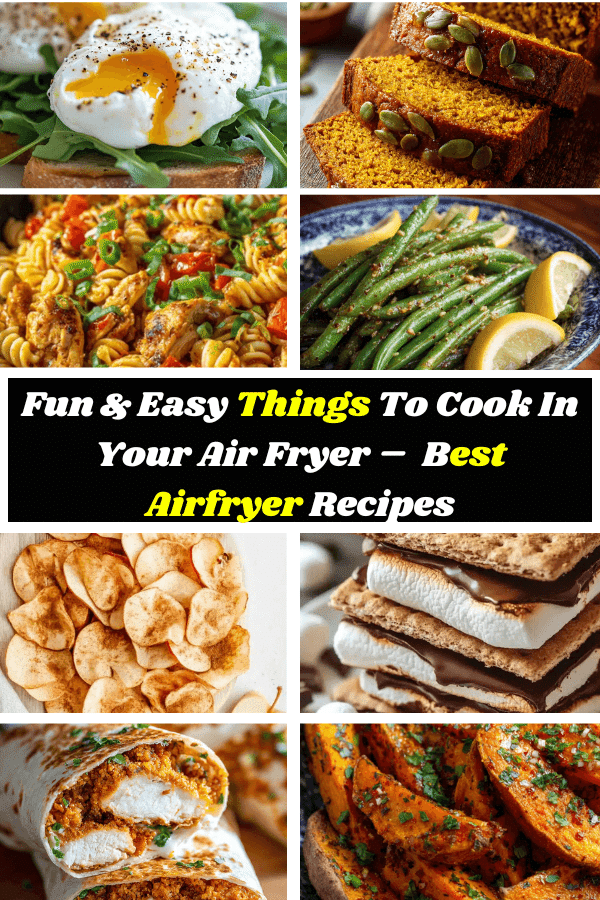
Air fryers are useful for quick snacks and party foods. Try roasted chickpeas, tortilla chips, stuffed peppers, jalapeño poppers, pita wedges, quesadillas, and toasted nuts.
Small foods can move in the fan. If the manual allows it, use a rack or accessory that holds light items down. Never block the heating element with loose parchment or foil.

What Else Can You Do With an Air Fryer?
An air fryer can also reheat, crisp, dry, melt, and finish food. These uses may save time because the small chamber heats quickly.
Reheat leftovers
Air frying is especially useful for foods that become soggy in a microwave. Reheat pizza, fried chicken, roasted potatoes, grilled sandwiches, fries, and breaded foods at about 325°F to 375°F.
Use a lower temperature for foods with a dry crust or delicate toppings. Check often because leftovers can go from warm to overcooked quickly. Reheat meat and other perishable leftovers until steaming hot. The USDA recommends reheating leftovers to 165°F.
For foods with a soft interior, add a small amount of water to an oven-safe dish or cover part of the food with foil if the appliance manual permits it. Do not cover the entire basket, since blocked airflow reduces cooking quality.
Crisp food after cooking
You can use an air fryer to finish food that needs a crisp surface. Examples include casseroles, baked pasta, nachos, roasted vegetables, and breaded chicken.
Keep the layer shallow. A short period at 375°F to 400°F may brown the top, but watch closely. Cheese and sugary sauces can burn quickly.
Dehydrate foods
Some models have a dehydrate setting. You can use it for apple slices, herbs, fruit leather, and jerky when the manual provides instructions.
Dehydration requires steady low heat and enough airflow. Food thickness matters. For meat jerky, follow a tested food-safety method. Drying meat at an unknown temperature can leave harmful bacteria alive.
Melt and toast
An air fryer can melt cheese, toast bread, warm tortillas, and brown breadcrumbs. Use a small oven-safe dish when melted food may drip through the basket.
Light items such as bread can lift into the fan. Watch the food during the first attempt. Use only accessories rated for the appliance's heat and size.

How to Use an Air Fryer Correctly
Good air-fryer results come from managing airflow, moisture, heat, and food size. Use this basic process for most foods.
1. Read the manual first
Check the manual for:
- Maximum food capacity
- Preheating instructions
- Approved pans and liners
- Cleaning rules
- Temperature limits
- Placement and ventilation needs
- Whether the basket can go in a dishwasher
Some models have a removable basket. Others use a tray or rack. The safe method can differ.
2. Preheat when useful
Preheating can help meat, frozen foods, and baked foods start cooking at the intended temperature. It may be less important for small vegetables or reheating.
If the manual does not require preheating, you can often add a few minutes to the cooking time. Begin checking early during the first attempt.
3. Dry the food
Moisture creates steam. Steam softens surfaces and slows browning. Pat vegetables, meat, and seafood dry with paper towels when appropriate.
Do not wash raw poultry or meat. Washing can spread bacteria around the sink and nearby surfaces.
4. Add oil with control
A light coating can improve browning and help spices stick. Use an oil with a smoke point that suits the cooking temperature, such as canola, avocado, peanut, or refined olive oil.
Do not pour oil into the bottom of the drawer unless the manual specifically allows it. An air fryer is not designed for deep frying, and pooled oil can create smoke or a fire risk.
5. Leave room for airflow
Spread food in a single layer when possible. A little overlap may work for some foods, but a packed basket traps steam and produces uneven results.
For a large batch, cook in rounds. The extra few minutes usually produce a better texture than forcing all the food into one basket.
6. Shake or turn the food
Shake small foods such as fries, vegetables, and nuggets halfway through cooking. Turn larger foods with tongs.
Do not shake foods that are fragile or covered with loose hot liquid. Use tongs instead.
7. Check temperature and texture
Use an instant-read thermometer for meat, poultry, seafood, casseroles, and reheated leftovers. Check the thickest part without touching bone or the basket.
Look for crisp edges, a firm surface, and even browning. These signs help with texture, but they do not replace a thermometer for safety.
Air Fryer Cooking Guide
The following ranges are starting points, not fixed rules. They assume small portions in a typical U.S. basket-style air fryer. Food thickness, quantity, frozen state, and appliance power can change the result.
| Food | Starting temperature | Approximate time | Main check |
|---|---|---|---|
| Fresh broccoli | 375°F | 8–12 minutes | Tender center, browned edges |
| Brussels sprouts | 375°F–400°F | 12–18 minutes | Tender inside |
| French fries, frozen | 400°F | 12–20 minutes | Crisp surface |
| Chicken wings | 380°F–400°F | 20–30 minutes | 165°F inside |
| Chicken breast | 375°F | 16–25 minutes | 165°F inside |
| Salmon fillet | 375°F | 8–14 minutes | 145°F inside |
| Shrimp | 375°F–400°F | 5–9 minutes | Firm and opaque |
| Hamburger patty | 375°F–400°F | 8–14 minutes | Safe internal temperature |
| Reheating pizza | 350°F–375°F | 3–6 minutes | Hot center, crisp crust |
| Frozen mozzarella sticks | 375°F–400°F | 5–9 minutes | Hot inside, coating intact |
These times are not a substitute for the instructions on packaged food or a food thermometer. Start checking early if your air fryer has a small basket or strong fan.
What Should You Not Put in an Air Fryer?
An air fryer cannot safely handle every material or food. Avoid the following unless the manufacturer specifically approves them.
- Loose parchment paper during preheating
- Loose aluminum foil that may touch the heating element
- Plastic containers not labeled for oven use
- Wet batter that can drip through the basket
- Large amounts of cheese without a pan
- Uncontrolled pools of oil
- Foods that fill the basket above its safe limit
- Light foods that can blow into the heating element
- Water inside the electrical housing
- Aerosol cooking sprays that may damage some nonstick coatings
Wet batter usually fails because it does not set before it drips. Use a flour, egg, and crumb coating instead, or place the food in a suitable oven-safe dish.
Do not use an air fryer outdoors in rain or in a cramped space. Keep it on a stable, heat-resistant surface with the ventilation area clear. The U.S. Consumer Product Safety Commission advises consumers to follow appliance instructions and keep air fryers away from flammable materials.

Common Air-Fryer Problems and Fixes
Food is not crisp
The most common causes are excess moisture, too much food, and too little heat. Dry the food, reduce the batch size, and shake or turn it during cooking.
Frozen foods may also need a few extra minutes. Do not automatically add more oil. Oil can improve browning, but it cannot fix blocked airflow.
Food burns on the outside
The temperature may be too high, or the pieces may be too small. Lower the temperature by 25°F and check the food earlier.
Sugar-rich sauces burn quickly. Add barbecue sauce, honey, or sweet glaze near the end instead of at the start.
Food cooks unevenly
Uneven pieces, crowding, or failure to turn the food can cause hot and cool spots. Cut food to a similar size and cook in a single layer.
If your model has two racks, rotate them if the manual recommends it. Some designs brown the upper rack faster.
The air fryer smokes
Smoke often comes from excess grease, food residue, or oil with a low smoke point. Turn off the appliance and unplug it if smoke continues.
Let the unit cool before cleaning. If flames appear, keep the drawer closed, unplug the appliance if safe, and use the appropriate emergency response. Do not pour water into an electrical appliance or a grease fire.
The food is dry
The food may be too lean, too thin, or overcooked. Use a thermometer and remove meat as soon as it reaches a safe temperature.
A light oil coating, a marinade, or a lower temperature may help. Rest meat for a few minutes before cutting so juices can settle.

Is Air-Fried Food Healthy?
Air frying can reduce the amount of added oil compared with deep frying, but it does not automatically make a food healthy. A meal of vegetables, beans, or fish has a different nutrition profile from a meal of heavily processed frozen snacks.
The main health benefit comes from the cooking method you replace. If air frying helps you eat more vegetables and use less deep-frying oil, it can support a balanced diet. If it mainly encourages larger portions of salty, breaded foods, the benefit may be smaller.
Avoid charring food. High-heat cooking can create unwanted compounds on browned or burned food. Remove badly burned pieces and use the lowest temperature that gives the texture you want.

How to Clean and Maintain an Air Fryer
Clean the basket and drawer after each use, especially after cooking meat, poultry, or greasy foods. Allow the appliance to cool, then wash removable parts according to the manual.
For stuck food, soak the removable parts in warm, soapy water. Use a soft sponge rather than abrasive tools that can damage a nonstick coating. Wipe the heating chamber with a damp cloth only after unplugging the appliance.
Keep the heating element free of grease and crumbs. Do not immerse the main electrical unit in water. Persistent smoke, damaged cords, cracked baskets, or unusual electrical smells are signs to stop using the appliance and contact the manufacturer or a qualified service provider.

Frequently Asked Questions
Can you put aluminum foil in an air fryer?
Often, yes, but only when the manual permits it. Secure the foil under food so it cannot move into the heating element. Never cover the full basket or block the air vents, because airflow is central to how the appliance cooks.
Can you use parchment paper in an air fryer?
You can use parchment made for oven cooking when the manual allows it. Add food on top to hold it down. Do not place loose parchment in the basket during preheating.
Perforated parchment can help air move around the food. Keep it away from the heating element.
Can you cook raw meat in an air fryer?
Yes. An air fryer can cook raw beef, pork, poultry, and seafood. Use separate tools for raw and cooked foods, wash your hands, and confirm the final internal temperature with a food thermometer.
Do you need to put oil in an air fryer?
No. Many foods cook well without added oil. A light coating may improve browning, prevent sticking, or help dry foods such as fresh potatoes. Do not fill the drawer with oil as you would with a deep fryer.
Can you put frozen food in an air fryer?
Yes. Many frozen foods can go directly into the basket. Check the package directions, avoid crowding, and inspect the food before the listed time because air fryers vary.
Can an air fryer replace a microwave?
No. An air fryer can reheat and crisp food, but it is slower for liquids, soups, and some soft foods. A microwave is usually better for fast reheating, while an air fryer is better when you want a crisp surface.

Key Takeaways
- An air fryer can roast, bake, reheat, crisp, toast, and dehydrate selected foods.
- It works best for small batches with space around each piece.
- Vegetables, chicken, seafood, frozen foods, leftovers, and small baked items are strong choices.
- Use a food thermometer for meat, poultry, seafood, and leftovers.
- Do not treat an air fryer as a deep fryer.
- Keep parchment, foil, oil, plastic, and wet batter within the limits stated by the manual.
- Clean grease and food residue after use to reduce smoke and maintain performance.
Conclusion
An air fryer is a compact convection oven that can handle many everyday cooking tasks. Its strongest uses are crisping frozen foods, roasting small portions, reheating leftovers, and cooking foods that benefit from dry heat.
Start with a small batch, use the manual as the final authority, and check food temperature when safety matters. Once you learn how your model moves heat, the air fryer can become a useful tool for fast meals rather than a machine used only for fries.
Sources for food safety and appliance use
- USDA Food Safety and Inspection Service: Safe Minimum Internal Temperatures
- USDA FSIS: Leftovers and Food Safety
- U.S. Food and Drug Administration: Selecting and Serving Fresh and Frozen Seafood Safely
- U.S. Consumer Product Safety Commission: Air Fryer Safety