What To Cook In An Air Fryer For Beginners: Easy Ideas
Introduction
For beginners in the United States, the best air fryer foods are simple items that cook well with little prep: frozen french fries, chicken wings, chicken tenders, vegetables, salmon, baked potatoes, and reheated leftovers. Start with small batches, check food early, and use a food thermometer for meat.
An air fryer is a small convection oven. A fan moves hot air around the food, which helps the surface brown and turn crisp. It does not truly “fry” food in oil, but a light coating of oil can improve color and texture.

What Is an Air Fryer?
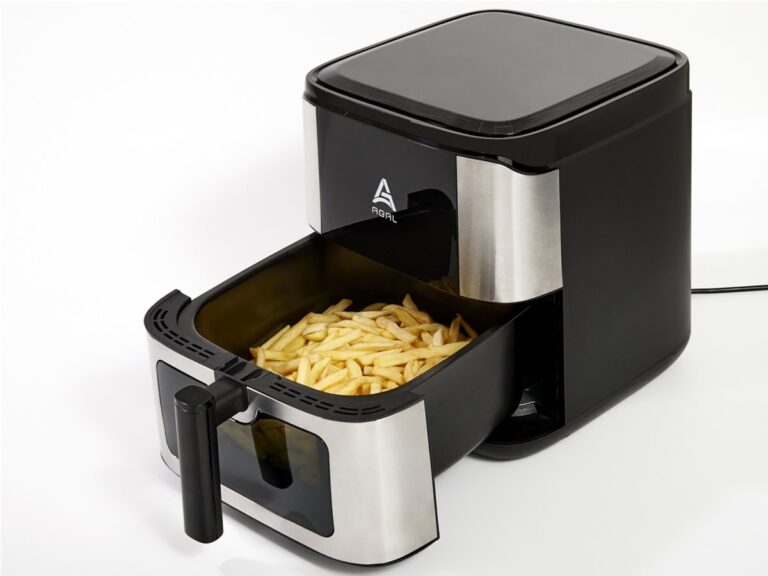
An air fryer is a countertop appliance with a heating element, a fan, and a basket or tray. Most models cook at temperatures from about 300°F to 400°F, though controls and heating power vary by brand.
The moving air cooks the outside of food quickly. This is why foods with a dry surface, such as potatoes, breaded chicken, and frozen snacks, work well.
An air fryer does not cook every food better than an oven. It works best when:
- The food is in a single layer.
- Air can move around each piece.
- The pieces are not too large or wet.
- The basket is not crowded.
- You turn or shake the food when needed.
Air fryer terms beginners should know
- Preheating: Heating the appliance before adding food. Some models need it, while others do not.
- Basket: The perforated container that holds the food.
- Convection heat: Heat carried by moving air.
- Single layer: Food placed side by side, without stacking.
- Internal temperature: The temperature at the center of the food. This is the safest way to check meat and poultry.
Read the manual for your model before cooking. Some air fryers use a basket, while others use racks, trays, or a rotating drum. Cooking times can change based on the appliance, food size, starting temperature, and amount of food.
The Best First Foods to Cook in an Air Fryer
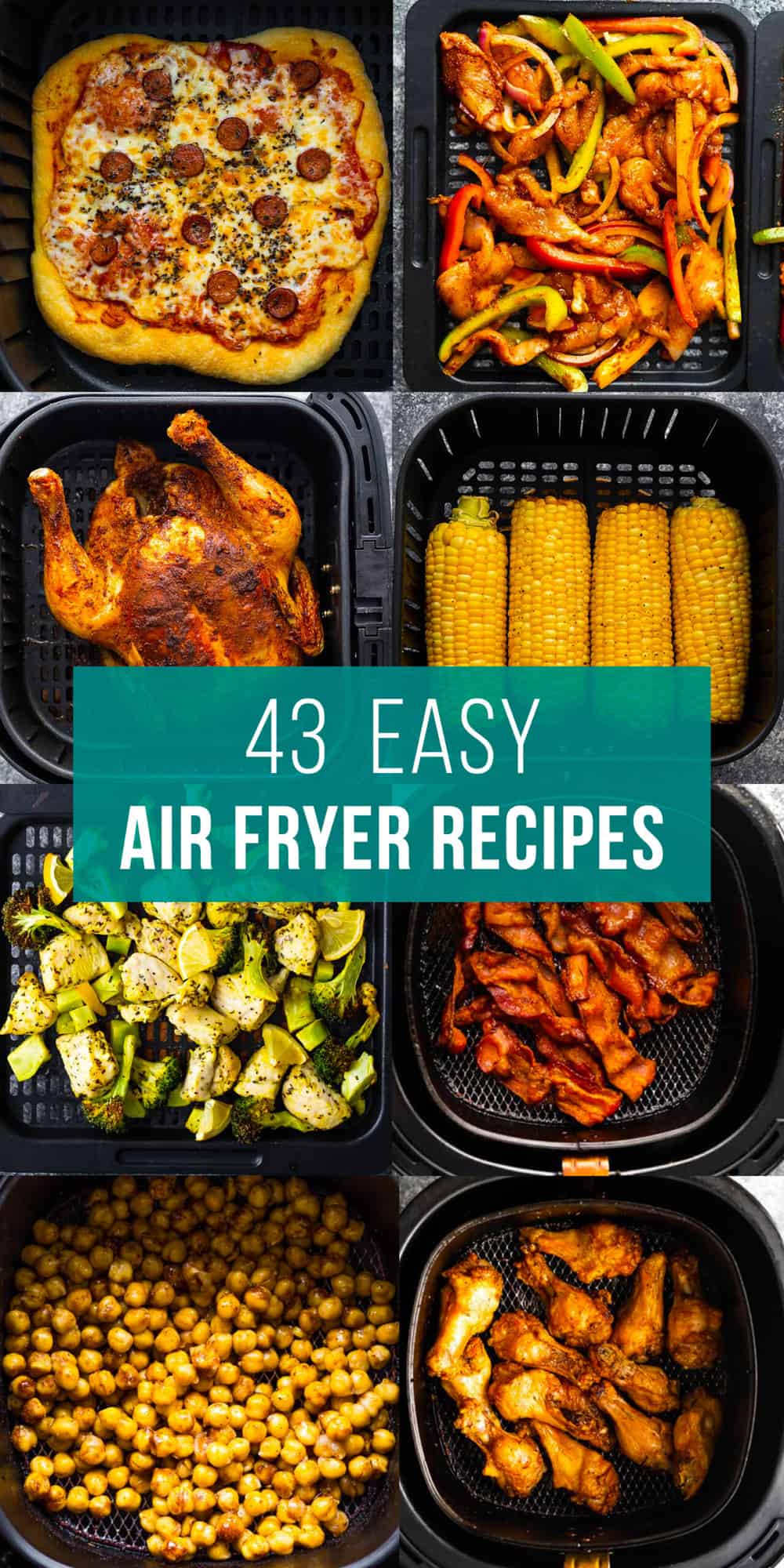
Begin with foods that are hard to ruin and easy to check. Frozen foods, vegetables, potatoes, and small pieces of meat are good starting points.
1. Frozen french fries
Frozen fries are one of the easiest air fryer foods for beginners. They already contain oil and are designed to cook from frozen.
Basic method:
- Preheat the air fryer to 400°F if your manual recommends preheating.
- Add a small handful of frozen fries.
- Cook for 10 to 18 minutes.
- Shake the basket halfway through.
- Add more time if the fries are not crisp.
The exact time depends on the thickness of the fries and the size of the batch. Thin shoestring fries cook faster than thick steak fries.
Do not thaw frozen fries first. Extra moisture can make them soft.
2. Frozen chicken tenders
Frozen chicken tenders are convenient, but check the package. Some products are raw, while others are fully cooked. Raw chicken requires more care.
Cook chicken until the thickest part reaches 165°F, measured with a food thermometer. The USDA lists 165°F as the safe minimum internal temperature for poultry.
Do not rely on the outside color alone. Breaded chicken can look brown before the center is fully cooked.
3. Chicken wings
chicken wings are a good beginner recipe because the skin can become crisp without deep frying.
Simple method:
- Pat the wings dry with paper towels.
- Toss them with a small amount of oil.
- Add salt, pepper, garlic powder, or a dry spice blend.
- Cook at about 375°F to 400°F.
- Turn the wings during cooking.
- Confirm that the thickest parts reach 165°F.
Avoid covering the wings with a thick, wet sauce at the start. The sauce may burn before the chicken cooks. Add barbecue sauce, buffalo sauce, or another glaze during the final few minutes.
4. Baby potatoes
Small potatoes cook well because their size allows the heat to reach the center.
Cut baby potatoes in half or cut larger potatoes into small cubes. Toss them with oil, salt, pepper, and dried herbs. Cook at about 380°F to 400°F for 15 to 25 minutes, shaking the basket every 7 to 10 minutes.
They are ready when a fork slides into the center with little resistance.
5. Baked potatoes
An air fryer can make a baked potato with crisp skin and a soft center.
Scrub and dry the potato. Pierce the skin a few times with a fork. Rub the skin with a little oil and salt, then cook at about 400°F for 35 to 55 minutes, depending on size.
The potato is done when a knife or skewer reaches the center easily. Large potatoes may need more time.
6. Broccoli and cauliflower
Air-fried vegetables cook quickly and develop browned edges.
Cut the vegetables into similar-size pieces. Dry them well, then toss with a little oil and seasoning. Cook at 375°F to 400°F for about 8 to 15 minutes.
Shake the basket once or twice. Add grated cheese, lemon juice, or a sauce after cooking rather than at the beginning if you want to reduce burning.
7. Salmon fillets
Salmon is simple because it cooks quickly and does not need breading.
Pat the fillet dry. Brush it with a little oil and season it with salt, pepper, lemon, or herbs. Cook at about 375°F for 7 to 12 minutes, depending on thickness.
The USDA recommends cooking fish to 145°F, or until the flesh is opaque and separates easily with a fork. Check the thickest part.
8. Toasted sandwiches
Grilled cheese, ham and cheese, and other firm sandwiches can work well in an air fryer.
Use a moderate temperature, such as 350°F. Secure very light bread with a toothpick if the fan lifts it. Remove the toothpick before eating.
Watch cheese closely. It can melt onto the basket and smoke. Avoid loose slices of bread or paper products that could move toward the heating element.
9. Reheated pizza
An air fryer can restore crispness to pizza better than a microwave.
Place one or two slices in the basket. Heat at about 350°F for 3 to 5 minutes. Check early because thin crusts can burn quickly.
Do not stack slices. Overlapping food blocks the hot air.
10. Hard-boiled eggs
Some people use an air fryer to cook eggs in the shell. Results vary by appliance and egg size, so this is better as a later experiment than a first recipe.
If you try it, cook a small test batch and cool the eggs in ice water afterward. Check that the eggs are fully set before serving. Do not assume the same time works in every model.

Easy Air Fryer Recipes for Beginners
The following recipes use simple ingredients and short steps. Times are starting points, not guarantees. Check food early and adjust for your air fryer.
Crispy air fryer potatoes
Ingredients
- 1 pound baby potatoes
- 1 tablespoon cooking oil
- ½ teaspoon salt
- ½ teaspoon garlic powder
- Black pepper to taste
Steps
- Wash and dry the potatoes.
- Cut them into halves or evenly sized chunks.
- Toss with oil and seasonings.
- Cook at 400°F for 15 to 25 minutes.
- Shake every 7 to 10 minutes.
- Test the center with a fork.
Signs of success: The outside is browned, and the inside is soft.
If they are undercooked: Lower the temperature to 375°F and cook for 5 to 10 more minutes. Large pieces need more time.
Air fryer chicken tenders
Ingredients
- Fresh or frozen chicken tenders
- A small amount of oil, if needed
- Salt and pepper
- Optional breading
Steps
- If using fresh chicken, pat it dry.
- Season or bread the tenders.
- Place them in a single layer.
- Cook at 375°F to 400°F.
- Turn halfway through.
- Check the thickest piece with a thermometer.
Chicken is ready when it reaches 165°F. If the breading browns too fast, lower the heat and continue cooking until the center reaches the safe temperature.
Air fryer broccoli
Ingredients
- 3 cups broccoli florets
- 1 to 2 teaspoons oil
- Salt and pepper
- Optional lemon juice
Steps
- Wash and dry the broccoli well.
- Toss it with oil and seasonings.
- Cook at 380°F for 8 to 12 minutes.
- Shake once or twice.
- Add lemon juice after cooking.
Dry broccoli browns better than wet broccoli. Very small pieces may burn, so cut florets to a similar size.
Air fryer salmon
Ingredients
- 1 salmon fillet
- 1 teaspoon oil
- Salt and pepper
- Optional lemon or dried herbs
Steps
- Pat the salmon dry.
- Brush with oil and season.
- Place it skin-side down if it has skin.
- Cook at 375°F for 7 to 12 minutes.
- Check the center with a thermometer.
- Remove at 145°F.
The fillet may continue cooking slightly after removal. Thick salmon needs more time than a thin fillet.
How to Choose Temperature and Cooking Time
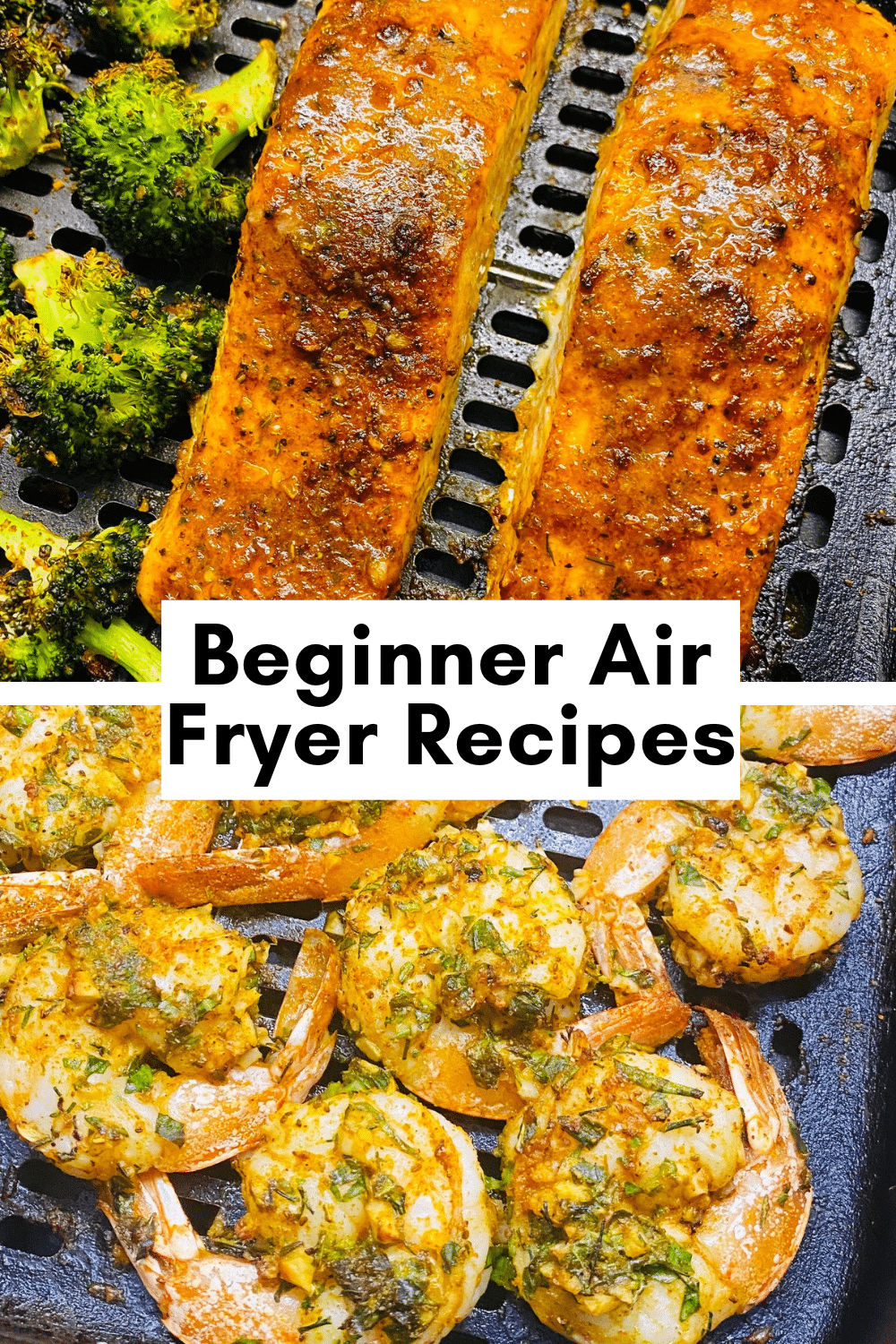
Use the food package or your air fryer manual as the starting point. Then adjust based on the food’s size, moisture, and color.
This table gives beginner starting points:
| Food | Starting temperature | Approximate time | Main check |
|---|---|---|---|
| Frozen french fries | 400°F | 10–18 minutes | Crisp edges |
| Chicken wings | 375–400°F | 20–30 minutes | 165°F inside |
| Fresh broccoli | 380°F | 8–12 minutes | Tender stems |
| Baby potatoes | 380–400°F | 15–25 minutes | Fork-tender center |
| Salmon | 375°F | 7–12 minutes | 145°F inside |
| Reheated pizza | 350°F | 3–5 minutes | Hot center, crisp crust |
| Frozen mozzarella sticks | Follow package | Often 5–8 minutes | Cheese still inside |
These ranges are approximate. A small basket may cook faster than a large one. A full basket may need more time than a half-full basket.
When to preheat
Preheating can help food brown from the start. It may be useful for:
- Frozen fries
- Breaded foods
- Steak
- Chicken wings
- Small vegetables
Some air fryers heat quickly and do not require preheating. If the manual does not require it, preheating remains a cooking preference rather than a safety rule.
When to lower the temperature
Lower the temperature if:
- The outside browns before the center cooks.
- Bread crumbs begin to burn.
- A sugary sauce darkens too quickly.
- The food smokes because grease is overheating.
A lower temperature with more time is often better for thick foods.
Why food cooks unevenly
Uneven results often come from crowding, unequal piece sizes, or poor air flow. Cut food into similar pieces and leave space between them.
If the basket is full, shake it more often or cook in batches. Two smaller batches usually brown better than one packed batch.

How to Use an Air Fryer Safely
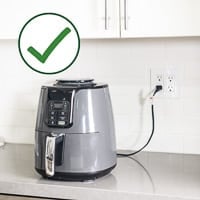
Use the appliance on a stable, heat-safe surface with open space around its vents. Keep it away from curtains, paper towels, and other items that can catch fire.
Food safety
Use a food thermometer for meat, poultry, fish, and reheated leftovers. The USDA recommends these minimum internal temperatures:
- Poultry: 165°F
- Ground beef, pork, lamb, and veal: 160°F
- Whole cuts of beef, pork, lamb, and veal: 145°F, followed by a three-minute rest
- Fish: 145°F
- Leftovers and casseroles: 165°F
Insert the thermometer into the thickest part. For thin foods, insert it from the side so the probe reaches the center.
Do not leave raw chicken or other perishable food at room temperature while the air fryer heats. Keep cold food refrigerated until you are ready to cook it.
Smoke control
Smoke can come from excess fat dripping onto the hot surface. To reduce smoke:
- Trim very thick fat.
- Avoid filling the basket with fatty foods.
- Clean the basket and drawer.
- Add a small amount of water to the drawer only if the manufacturer allows it.
- Stop cooking if smoke becomes heavy or unusual.
Do not pour water into the heating unit. Water belongs only in a removable part that the manual identifies as safe for that use.
Materials to avoid
Do not place plastic, paper towels, or loose parchment paper in the air fryer. Parchment can be used only when it is made for cooking, held down by food, and approved by the appliance instructions.
Never operate the air fryer empty with loose paper inside. The fan may lift the paper into the heating element.

How to Clean an Air Fryer
Clean the basket and drawer after each use, especially after cooking meat or greasy food.
- Unplug the appliance and let it cool.
- Remove the basket and drawer.
- Wash removable parts with warm, soapy water unless the manual gives different instructions.
- Use a soft sponge rather than metal tools that can damage a nonstick coating.
- Wipe the inside with a damp cloth.
- Remove grease from the heating area once the appliance is cool.
- Dry all parts before reassembling.
Do not immerse the main electrical unit in water. Do not use oven cleaner unless the manufacturer specifically permits it.
A dirty heating element can cause smoke and unpleasant odors. If the air fryer smells like burning plastic after several uses, unplug it and contact the manufacturer rather than continuing to cook.

Common Air Fryer Mistakes and Fixes
Mistake: Overfilling the basket
Problem: Food stays soft or cooks unevenly.
Fix: Use a single layer or cook in batches. Shake the basket during cooking when the food can move safely.
Mistake: Adding too much oil
Problem: Food becomes greasy, and the appliance may smoke.
Fix: Use a light coating. A spray, brush, or measured teaspoon gives better control than pouring oil into the basket.
Avoid aerosol cooking sprays if the appliance manual warns that they may damage the coating. Use an oil sprayer designed for cooking if needed.
Mistake: Using wet batter
Problem: Loose batter can drip through the basket before it sets.
Fix: Use dry breading or a coating that adheres well. For wet-battered foods, a conventional oven or deep fryer may work better.
Mistake: Ignoring food size
Problem: The outside looks done while the inside is cold or raw.
Fix: Cut thick foods into smaller, even pieces. Lower the temperature if the surface browns too soon.
Mistake: Trusting the preset button
Problem: The preset finishes too early or overcooks the food.
Fix: Treat presets as starting points. Food type, weight, thickness, and starting temperature still matter.
Mistake: Failing to turn food
Problem: One side browns while the other side stays pale.
Fix: Turn pieces with tongs or shake the basket halfway through, unless the food is delicate.
Mistake: Adding sauce too early
Problem: Sugar in barbecue sauce, honey, or teriyaki sauce burns.
Fix: Add sweet sauces near the end. Use a dry seasoning at the start.
Mistake: Cutting food immediately
Problem: Juices run out of meat, and the center may be less tender.
Fix: Let cooked meat rest for a few minutes. Follow food safety rules and serve it while hot.

What Not to Cook in an Air Fryer
An air fryer has limits. Avoid or use caution with these foods:
- Loose leafy greens: The fan can blow them into the heating element.
- Very wet batter: It may not set before dripping through the basket.
- Large roasts: The outside may cook before the center.
- Whole large chickens: They may not fit safely or cook evenly.
- Cheese by itself: Melted cheese can drip, burn, and stick.
- Uncooked rice or pasta: These need water and are not suited to dry air frying.
- Foods packed in sealed containers: Pressure can build or the container can melt.
- Plastic containers: Use them only if the appliance manual explicitly approves them.
- Very fatty foods: Bacon and similar foods can produce heavy smoke.
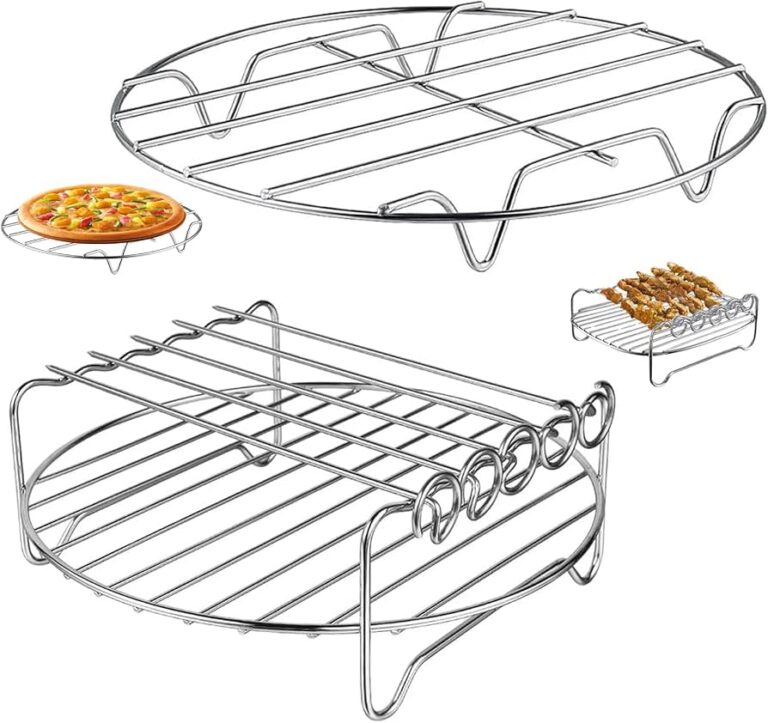
Check the manual before using foil, parchment, silicone liners, metal pans, or oven-safe dishes. A material that works in a full-size oven may not be safe in every air fryer.

A Simple Beginner Meal Plan
A short meal plan helps you learn how your appliance behaves without wasting food.
First meal: Frozen fries and chicken tenders
Cook the chicken tenders first if they need more time. Let them rest while the fries cook. Use a thermometer for the chicken.
Second meal: Salmon and broccoli
Cook the salmon in one side of the basket if there is enough room. Otherwise, cook the salmon and broccoli separately. Add lemon after cooking.
Third meal: Potatoes and vegetables
Start the potatoes first because they need more time. Add broccoli during the final 10 to 12 minutes.
Fourth meal: Reheated leftovers
Reheat pizza, roasted vegetables, and breaded foods at a moderate temperature. Stir or turn food when possible. Check that leftovers reach 165°F.
The goal is not to memorize one perfect time. It is to learn how your specific air fryer responds to food.

Air Fryer Cooking Chart for Beginners
Use this chart as a starting guide. Always follow package directions when they differ, and verify safe internal temperatures for meat and poultry.
| Food | Preparation | Temperature | Time | Turn or shake? |
|---|---|---|---|---|
| Frozen fries | Cook from frozen | 400°F | 10–18 minutes | Yes |
| Tater tots | Cook from frozen | 400°F | 12–18 minutes | Yes |
| Chicken wings | Dry and season | 375–400°F | 20–30 minutes | Yes |
| Chicken tenders | Fresh or frozen | 375–400°F | 10–20 minutes | Usually |
| Baby potatoes | Halve or cube | 380–400°F | 15–25 minutes | Yes |
| Broccoli | Dry florets | 380°F | 8–12 minutes | Yes |
| Cauliflower | Dry florets | 380°F | 10–15 minutes | Yes |
| Salmon | Seasoned fillet | 375°F | 7–12 minutes | No |
| Pizza | One or two slices | 350°F | 3–5 minutes | No |
| Baked potato | Pierce and oil skin | 400°F | 35–55 minutes | Optional |
Times change with food thickness, batch size, appliance design, and whether the food begins frozen or refrigerated.

Evidence and Food Safety Sources
The safe-temperature guidance in this article follows information from the U.S. Department of Agriculture’s Food Safety and Inspection Service. The USDA’s cooking-temperature chart is the best reference for minimum internal temperatures for meat, poultry, seafood, and leftovers.
Useful sources include:
- USDA: Safe Minimum Internal Temperature Chart
- USDA: Kitchen Thermometers
- USDA: Air Frying and Food Safety
These sources establish food-safety temperatures. They do not establish one universal air fryer time. Cooking time still depends on the model, food, amount, and starting temperature.

Key Takeaways
- Start with frozen fries, chicken tenders, wings, potatoes, broccoli, salmon, or reheated pizza.
- Use a single layer when you want crisp food.
- Shake or turn food during cooking when appropriate.
- Treat preset programs as starting points.
- Use a thermometer for meat, poultry, fish, and leftovers.
- Cook poultry to 165°F, fish to 145°F, and ground meat to 160°F.
- Clean the basket after each use.
- Follow your air fryer manual for foil, parchment, liners, and accessories.
FAQs
What is the easiest thing to cook in an air fryer for the first time?
Frozen french fries are among the easiest choices. Cook them from frozen, shake the basket halfway through, and add time until they reach your preferred crispness.
Do I need to put oil in an air fryer?
Not always. Frozen foods often contain enough oil. Fresh vegetables, potatoes, and lean meats usually benefit from a light coating, but too much oil can cause greasy food and smoke.
Should I preheat an air fryer?
Preheating can improve browning, but it is not required for every model or recipe. Follow the manual and the food package directions. If you skip preheating, the food may need a little more time.
Can I put raw chicken in an air fryer?
Yes, if the chicken fits safely and can cook evenly. Place it in a single layer and cook until the thickest part reaches 165°F. Do not judge doneness by color alone.
Can I use aluminum foil in an air fryer?
Only if the manufacturer allows it. Keep foil away from the heating element, do not block all air holes, and never place loose foil in an empty running air fryer.
Why is my air fryer food not crispy?
The basket may be crowded, the food may be wet, or you may be using too little cooking time. Dry the food, leave space between pieces, and cook in smaller batches.
Conclusion
The best way to learn an air fryer is to start with small, familiar foods. Try frozen fries, potatoes, chicken tenders, vegetables, salmon, and pizza before moving to larger or wetter recipes.
Use the manual for your model, begin checking food early, and rely on internal temperature for safety. Once you understand how your air fryer handles heat and air flow, you can adjust time, temperature, seasoning, and batch size with confidence.