What To Cook In An Air Fryer For The First Time: Easy Ideas
The best first food to cook in an air fryer is frozen French fries, chicken tenders, or a small batch of vegetables. These foods are simple, easy to check, and show how your air fryer cooks. Start with a small amount, follow the appliance manual, and use a food thermometer for meat.
This guide uses U.S. cooking terms and Fahrenheit temperatures. It also follows food-safety guidance from the USDA.
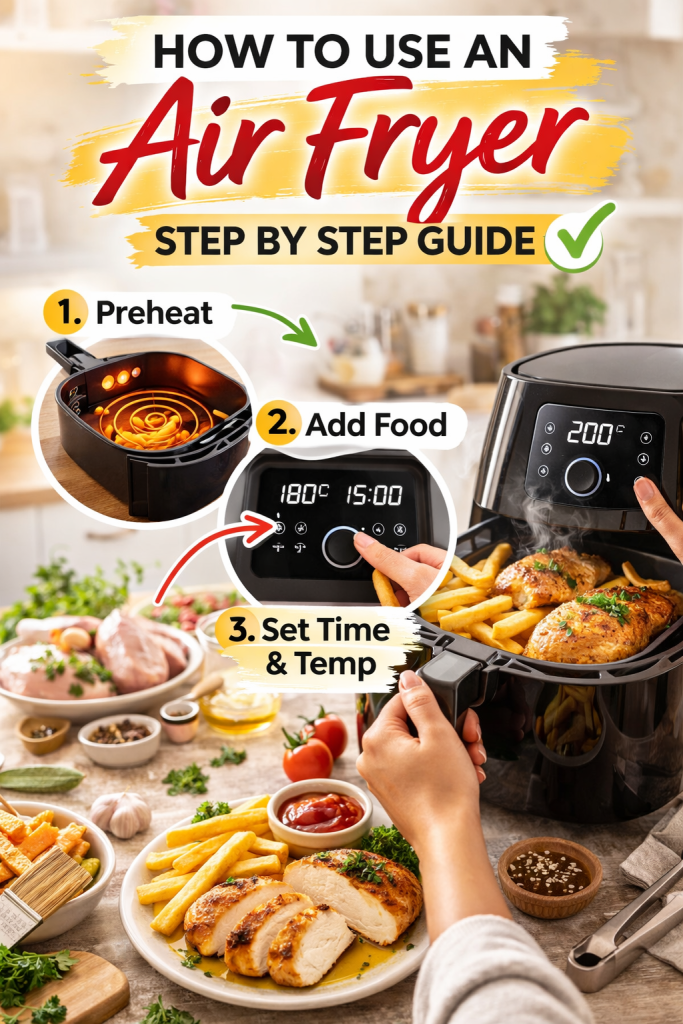
Quick Answer: Start With Frozen Fries or Chicken Tenders
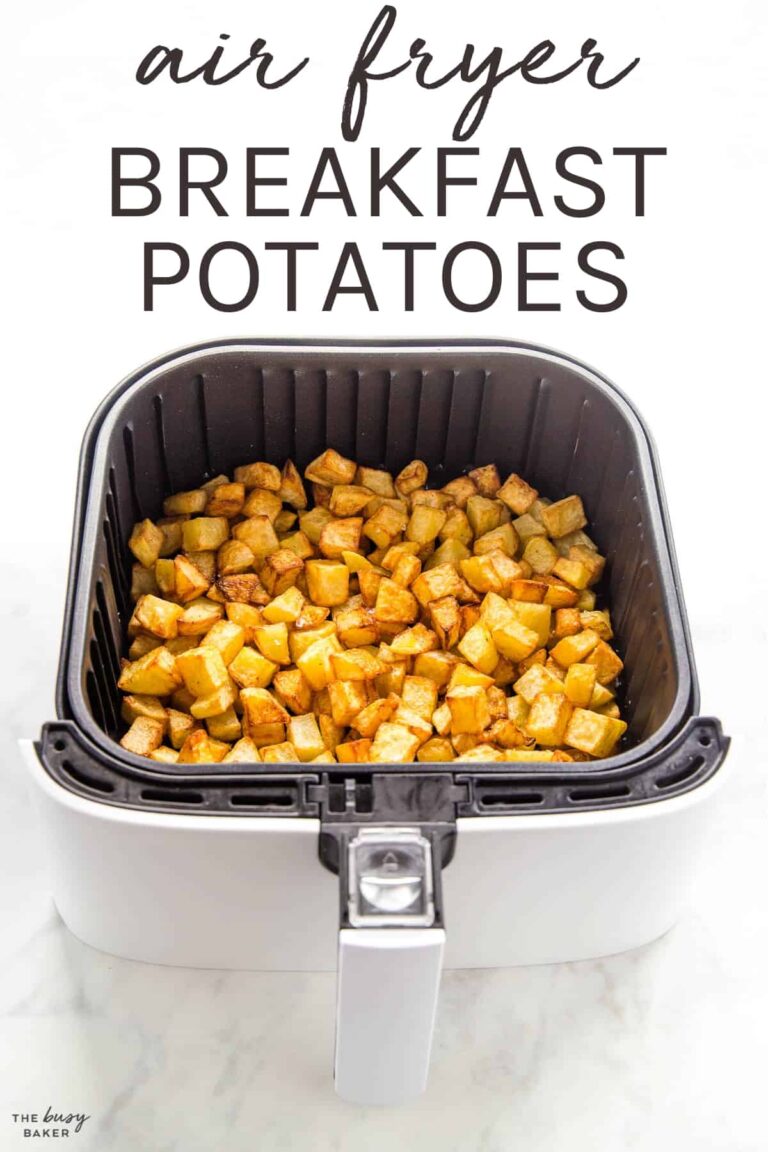
Frozen French fries are the easiest first air fryer food. They need no cutting, mixing, or raw meat handling. They also help you learn how fast your air fryer heats and how often you need to shake the basket.
Use this basic process:
- Place a small layer of frozen fries in the basket.
- Set the air fryer to 375°F to 400°F.
- Cook for about 12 to 20 minutes, depending on the fries and the appliance.
- Shake the basket halfway through cooking.
- Stop when the fries are hot and crisp.
For a more complete first meal, try breaded chicken tenders, salmon, broccoli, or baked potatoes. These foods teach you different air fryer skills, such as checking meat temperature, preventing dry food, and adjusting cooking time.
Air fryers do not all cook at the same speed. Basket size, food depth, wattage, and food shape can change the result. Treat the first batch as a test. Write down the time and temperature that work for your model.
What to Do Before Using an Air Fryer for the First Time
Before cooking, read the basic safety and cleaning instructions for your model. Remove all packing material, cardboard, stickers, and plastic film. Check that the basket and drawer lock into place.
Wash removable parts with warm, soapy water unless the manual gives different instructions. Dry them well. Wipe the inside and outside with a damp cloth. Do not place the main electrical unit in water.
Place the air fryer on a firm, heat-safe surface. Leave the open space required by your manual around the vents. Keep it away from curtains, cabinets, paper towels, and the edge of the counter.
Should You Preheat an Air Fryer?
Preheating can help some foods brown more evenly, but it is not always required. Follow the manual first. If your model has a preheat setting, use it for foods that need a firm crust, such as fries, breaded chicken, and fish.
A short preheat of 3 to 5 minutes is common, but the correct time depends on the model. Do not assume every air fryer needs the same setting.
If your manual does not call for preheating, you can place the food in a cold basket. Add a few minutes to the cooking time if needed. Check the food early during the first batch.
Do You Need Oil?
Most frozen foods already contain some oil. Fresh foods often need only a light coating. Use a small amount of cooking oil brushed or sprayed onto the food.
Avoid filling the basket with oil. An air fryer is not a deep fryer. Oil in the drawer can smoke, splatter, or create a fire risk. Use an oil spray made for cooking rather than an aerosol product that may damage a nonstick coating.

The Best First Foods to Cook in an Air Fryer
The right first food depends on your goal. Choose frozen fries for the simplest test, vegetables for a healthy side, or chicken tenders for a full meal.
| Food | Temperature | Approximate time | What to check |
|---|---|---|---|
| Frozen French fries | 375–400°F | 12–20 minutes | Shake halfway; look for crisp edges |
| Frozen chicken tenders | 375–400°F | 10–18 minutes | Center must reach 165°F |
| Broccoli florets | 375°F | 8–12 minutes | Tender stems and browned tips |
| Brussels sprouts | 375–400°F | 12–18 minutes | Tender center and browned leaves |
| Salmon fillet | 375°F | 8–12 minutes | Flakes easily; check thickest part |
| Baked potato | 390–400°F | 35–50 minutes | A fork slides into the center |
| Toasted ravioli | 375°F | 8–12 minutes | Crisp coating and hot center |
| Chicken wings | 375–400°F | 25–35 minutes | Center reaches 165°F |
Times are estimates, not guarantees. Food thickness, starting temperature, basket size, and brand can change the result. Cook in a single layer when possible.
1. Frozen French Fries
Frozen fries are a good first test because they are consistent and easy to judge. Spread them in the basket without packing them tightly. Shake the basket once or twice so hot air can reach more surfaces.
Thin fries may cook faster than thick steak fries. Waffle fries and curly fries may need extra shaking because their shapes block airflow.
2. Chicken Tenders
Frozen chicken tenders are simple, but they still require a safety check. Cook them until the thickest part reaches 165°F on a food thermometer. Do not rely only on the color of the coating.
Place the tenders in one layer. Turn them if the package or your air fryer instructions suggest it. If the coating is brown but the center is not hot enough, reduce the temperature and continue cooking.
3. Broccoli or Brussels Sprouts
Vegetables show how air frying can create browned edges without a large amount of oil. Toss bite-size pieces with a little oil, salt, and pepper. Keep the pieces close in size so they cook at the same rate.
Broccoli cooks quickly. Brussels sprouts take longer because they are dense. Cut large sprouts in half. Add a small amount of water to the seasoning mix or serve with a sauce if the vegetables become too dry.
4. Salmon
Salmon is a fast first dinner. Pat the fillet dry, brush it with a little oil, and season it. Place it skin-side down if it has skin.
Cooking time depends on the fillet’s thickness. The USDA lists 145°F as the safe minimum internal temperature for fish. Check the thickest part with a thermometer.
5. Baked Potatoes
A baked potato is forgiving and needs little attention. Scrub and dry the potato. Pierce the skin several times with a fork, rub it with a small amount of oil, and add salt.
Cook until the center is soft. Large potatoes can take close to an hour. Turn them once if the skin browns more on one side.

How to Cook Your First Air Fryer Meal
Use this simple method for nearly any first recipe.
Step 1: Choose a Small Batch
Do not fill the basket to the top. A crowded basket blocks hot air and can leave food pale, soft, or unevenly cooked.
A single layer gives the best starting point. Once you understand your air fryer, you can test a second layer if your manual allows it.
Step 2: Prepare the Food Evenly
Cut fresh food into pieces of a similar size. Pat wet food dry before adding oil or seasoning. Excess moisture can slow browning.
For breaded food, press the coating onto the food. Loose crumbs may blow around the basket and burn.
Step 3: Set the Temperature
Use the package directions as a starting point for frozen foods. For fresh food, begin with the recipe temperature. Air fryers often cook faster than a full-size oven because the small chamber moves hot air close to the food.
Do not lower the temperature simply because the outside browns quickly. Instead, reduce the heat when the outside is getting too dark before the center is cooked.
Step 4: Start the Timer
Set the timer for the low end of the suggested range. This prevents overcooking during your first attempt.
For example, if fries usually take 12 to 20 minutes, check them at 10 or 12 minutes. You can always add more time.
Step 5: Shake or Turn the Food
Shake small foods, such as fries and vegetables, halfway through cooking. Turn larger foods, such as chicken breasts or fish, when needed.
Use tongs for delicate food. Pulling the basket out may pause the heating cycle on some models, but not all.
Step 6: Check for Doneness
Use sight and texture for foods such as fries and vegetables. Use a food thermometer for meat, poultry, and reheated leftovers.
The USDA recommends these minimum internal temperatures:
- 165°F: poultry, ground poultry, and leftovers
- 160°F: ground beef, pork, lamb, and veal
- 145°F: whole cuts of beef, pork, lamb, and veal, followed by a three-minute rest
- 145°F: fish and shellfish
Insert the thermometer into the thickest part. Avoid touching the basket or bone, since either can give a false reading.
Step 7: Rest and Serve
Let meat rest for a few minutes before cutting. This helps the juices stay in the food.
Serve crisp foods soon after cooking. Steam can soften the coating if food sits in a closed container.

How to Tell When Your First Air Fryer Food Is Done
Food is ready when it meets both the cooking and safety test. Crisp edges alone do not prove that meat is safe. A browned crust alone does not prove that the center is cooked.
Use these signs:
- Fries: crisp outside, hot center, no cold spots
- Vegetables: tender when pierced with a fork and browned at the edges
- Chicken: firm texture and 165°F in the thickest section
- Fish: opaque flesh that flakes easily and reaches 145°F
- Potatoes: soft center when pierced with a fork
- Breaded foods: crisp coating and a hot center
If food is undercooked, return it to the air fryer for two- to five-minute intervals. Check again after each interval. This works better than adding a long block of time.
If food is overcooked, shorten the next batch. You can also lower the temperature by 25°F when the outside cooks too fast.

Common First-Time Air Fryer Mistakes
Most first-batch problems come from too much food, too much heat, or too little checking.
Overfilling the Basket
A full basket may look convenient, but it can stop air from moving around the food. The result is uneven cooking.
Cook in batches when crispness matters. A second batch is often better than a single crowded batch.
Using Too Much Oil
More oil does not always mean crispier food. Too much oil can make food greasy and create smoke.
Use only enough to coat the surface lightly. Frozen foods may need no added oil.
Cooking at the Highest Temperature
A high setting can brown the outside before the inside cooks. This is common with thick chicken pieces, potatoes, and frozen breaded food.
Use a moderate temperature and more time when the food is thick.
Failing to Shake or Turn
Air reaches the top of food more strongly than the bottom. Shaking or turning helps balance the browning.
Do not shake foods that may break apart. Use tongs instead.
Ignoring the Food Package
Frozen foods vary widely. One brand of fries may cook faster than another. Start with the package directions, then adjust for your appliance.
Do not follow oven directions blindly. An air fryer may need less time, a lower temperature, or both.
Using Loose Parchment or Paper
Paper can move into the heating element if it is not held down by food. Use parchment made for air fryers only when the manual permits it. Never preheat with loose paper inside the basket.
A reusable silicone liner may help with sticky foods, but it can also reduce airflow. Use it only when the model and liner instructions allow it.

Air Fryer Safety and Cleaning
Keep the air fryer away from water, heat-sensitive surfaces, and flammable items. Do not cover the vents. Do not leave the appliance running while you leave the home.
Unplug the unit after cooking and let it cool before cleaning. Wash the basket and tray based on the manufacturer’s instructions. Some parts are dishwasher-safe, but that feature differs by model.
Clean grease and crumbs after each use. Built-up grease can smoke during later cooking. If the unit produces heavy smoke, turn it off, unplug it when safe, and let it cool. Do not pour water into a hot appliance.
Do not cook food in a damaged basket or with a frayed power cord. Contact the manufacturer for replacement parts that fit your exact model.

A Simple First-Night Air Fryer Plan
If you want a low-stress first meal, use this plan:
- Preheat only if your manual recommends it.
- Cook frozen fries in a single layer at 400°F.
- Shake after about half the cooking time.
- Remove the fries when crisp.
- Cook frozen chicken tenders next.
- Check the thickest tender with a thermometer.
- Serve when it reaches 165°F.
- Let the basket cool, then wash it.
This plan lets you learn the appliance without preparing several raw ingredients at once. It also gives you a clear lesson: fries depend on texture, while chicken depends on internal temperature.
Key Takeaways
- Start with frozen fries, chicken tenders, or vegetables.
- Cook a small batch in one layer.
- Check food early because air fryers vary.
- Shake or turn food halfway through cooking.
- Use a thermometer for meat and poultry.
- Cook poultry and leftovers to 165°F.
- Clean grease and crumbs after the appliance cools.
Frequently Asked Questions
What is the easiest thing to cook in an air fryer for beginners?
Frozen French fries are usually the easiest first food. They need little preparation and show you how quickly your model cooks. Frozen tater tots, hash brown patties, and breaded vegetables are also simple choices.
Should I put oil in the air fryer before cooking?
No. An air fryer does not need a pool of oil. Add a light coating to fresh food when needed. Frozen food may already contain enough oil.
Can I cook raw chicken in an air fryer?
Yes, if the chicken fits safely and reaches 165°F in the thickest part. Do not crowd the basket. Wash your hands and clean surfaces after handling raw chicken.
Do I need to flip food in an air fryer?
Small foods usually benefit from shaking. Larger pieces often need turning. Follow the recipe and check the food during cooking. Some foods, such as delicate fish, may break if turned.
Why is my air fryer food not crispy?
The basket may be too full, the food may be wet, or the temperature may be too low. Pat fresh food dry, leave space between pieces, and shake the basket. If needed, cook for a few more minutes.
Can I use aluminum foil in an air fryer?
Many models allow foil, but the manual controls. Keep foil away from the heating element, do not block all airflow, and weigh it down with food. Never use loose foil during preheating.
How often should I clean my air fryer?
Clean the basket and tray after each use, especially after cooking greasy foods. Wipe the inside when crumbs or grease build up. Always unplug the appliance and let it cool first.
Conclusion
For your first air fryer recipe, choose a small batch of frozen fries, chicken tenders, or vegetables. Use the manual as your starting point, cook in one layer, check food early, and adjust the next batch based on what you see.
The best first lesson is simple: airflow affects texture, while internal temperature confirms safety. Once you learn those two points, you can move on to salmon, potatoes, wings, burgers, and full air fryer meals with much more confidence.