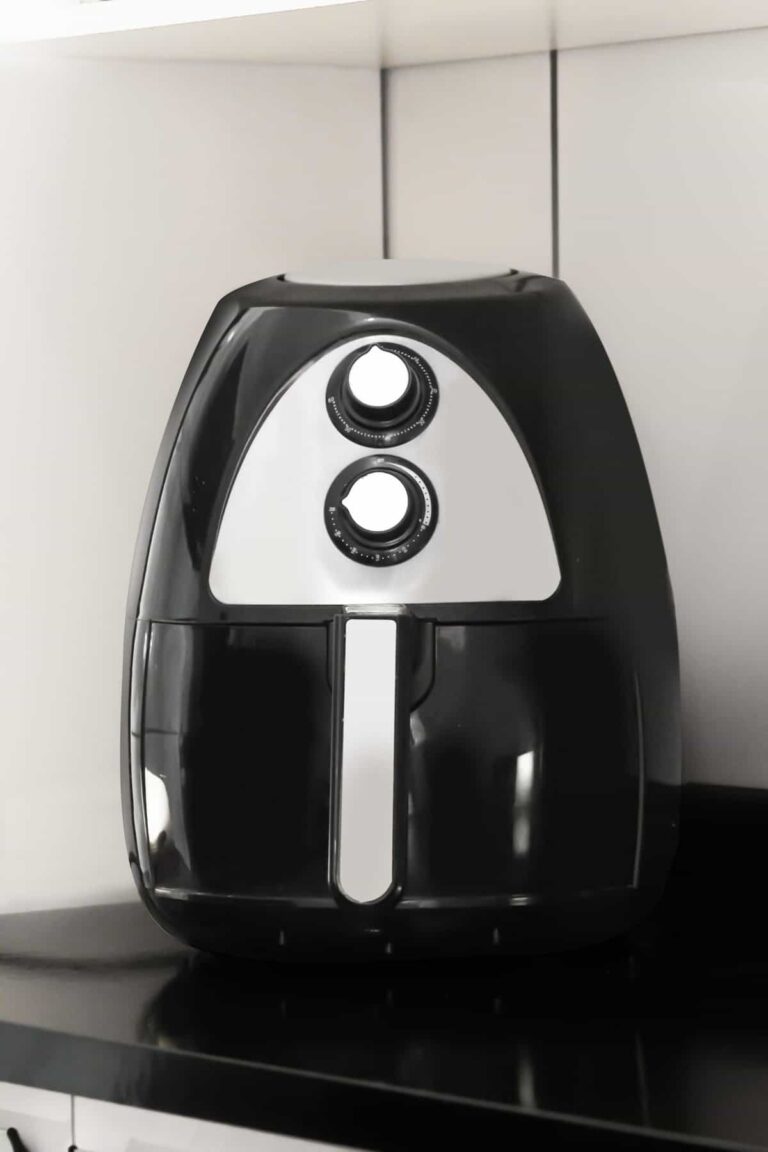
Air Fryer Error Code E1 Meaning: Causes And Easy Fixes
Air fryer error code E1 usually signals a temperature sensor, wiring, or internal control fault.
Seeing the air fryer error code E1 can be confusing, especially when your appliance stops during cooking. The exact meaning depends on the brand and model, but most E1 alerts point to a problem with temperature sensing or the electronic control system. This guide explains the likely causes, safe fixes, reset steps, and signs that professional service is needed.
What Does Air Fryer Error Code E1 Mean?
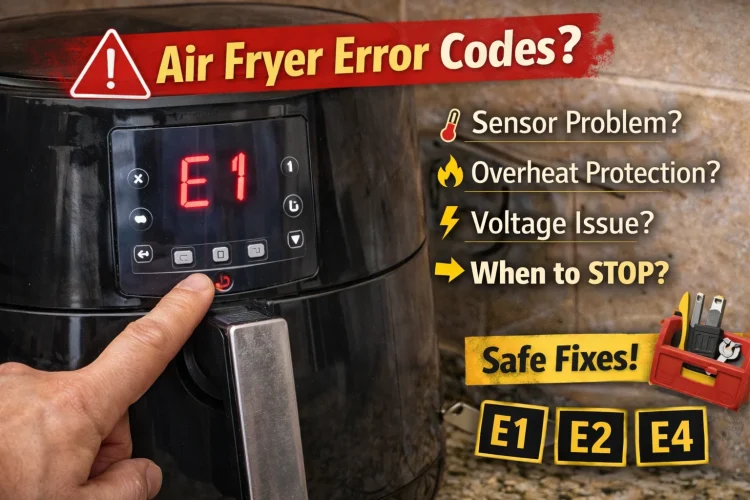
The air fryer error code E1 usually means the appliance has detected an electrical or temperature-sensing problem. The fryer may be unable to read the cooking temperature correctly, so it stops as a safety measure.
Many air fryers use a small temperature sensor near the heating element. This sensor checks the heat inside the cooking chamber. If the signal is missing, too high, too low, or unstable, the control board may show E1.
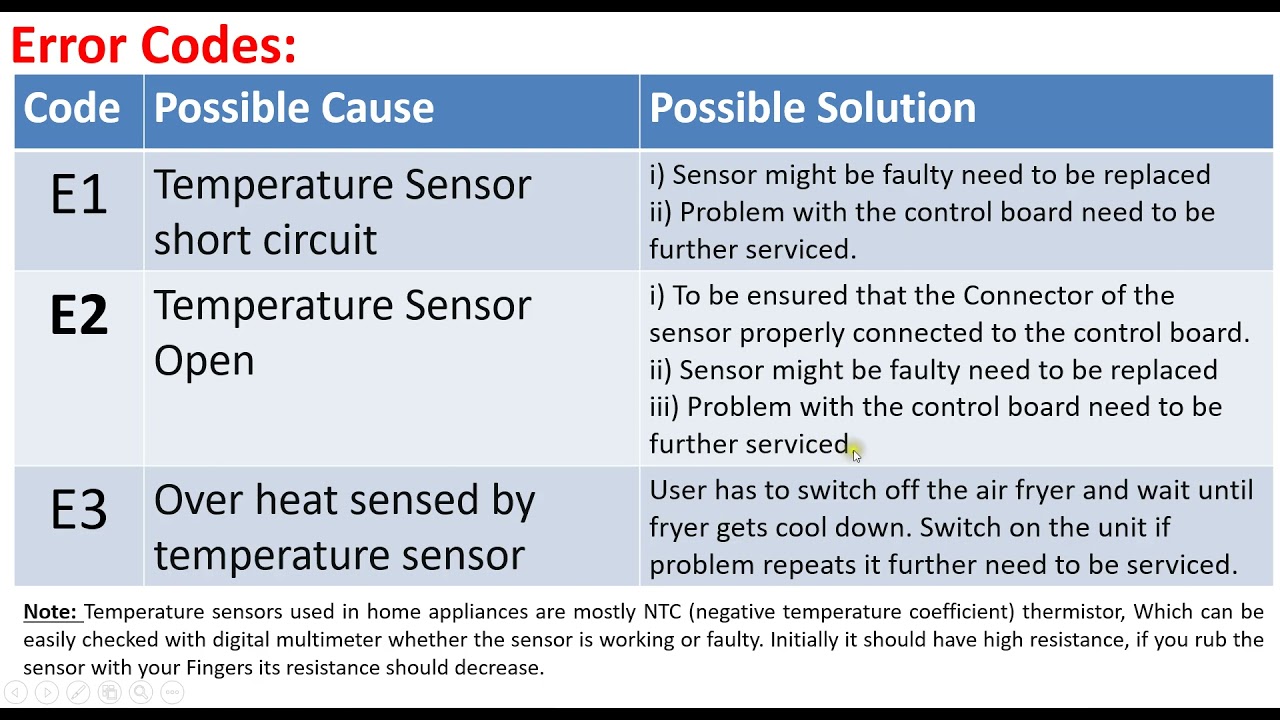
However, E1 is not a universal code. Its meaning can change between brands and models. In some appliances, E1 may indicate:
- A damaged temperature sensor
- A loose or broken sensor wire
- A control board fault
- An overheating condition
- A problem with the basket or pan detection system
- An internal electrical connection issue
Think of the sensor as the air fryer’s thermometer. If the thermometer stops working, the appliance cannot safely control heat.
Why Does the Air Fryer Error Code E1 Appear?
Several problems can trigger the air fryer error code E1. Some are simple and temporary, while others need replacement parts or professional repair.
1. Faulty temperature sensor
The temperature sensor is one of the most common causes. It may become damaged by heat, grease, moisture, or normal wear.
A faulty sensor can send incorrect readings to the control board. The air fryer may then stop heating, overheat, or display E1 soon after you press Start.
2. Loose internal wiring
A wire connects the sensor to the control board. Vibration, heat, or factory defects can loosen this connection.
You may notice that the error appears only when the air fryer moves or warms up. This often points to an unstable connection rather than a completely failed sensor.
3. Overheating
Air fryers need clear airflow around the housing and inside the cooking chamber. If vents are blocked or the unit is placed too close to a wall, heat can build up.
An overheating air fryer may display E1, shut down, or stop responding. This is a protective action, not always proof that the sensor has failed.
4. Grease or food buildup
Heavy grease near the heating element can affect airflow and heat readings. Food debris may also produce smoke or unusual odors.
Never scrape the heating element with a sharp tool. A damaged element or sensor can create a more serious electrical problem.
5. Moisture inside the appliance
Water or steam can enter areas that should remain dry. This may happen after washing the basket or pan and putting it back while it is still wet.
Moisture can cause temporary sensor errors. It can also create a shock risk, so allow the appliance to dry fully before testing it.
6. Control board failure
The control board manages the display, fan, heating element, and temperature sensor. If the board cannot process the sensor signal, it may show E1 even when the sensor itself is fine.
Control board faults are harder to diagnose at home. They often require a trained technician and may cost more to repair than an older air fryer is worth.
Is Air Fryer Error Code E1 Dangerous?
The air fryer error code E1 should be treated as a safety warning. It does not always mean the appliance is dangerous, but you should not keep using it while the error remains.
Unplug the air fryer if you notice any of these signs:
- Burning plastic or electrical smells
- Sparks or visible smoke
- A damaged power cord or plug
- Repeated overheating
- A hot control panel
- Crackling, buzzing, or popping sounds
- A housing that feels unusually hot
Do not open the air fryer while it is plugged in. Internal parts can hold electricity, and the heating element can remain hot after cooking ends.
If smoke continues after you unplug the unit, move away from it and contact emergency services if needed. Never pour water on an electrical appliance fire.
How to Reset an Air Fryer Showing E1
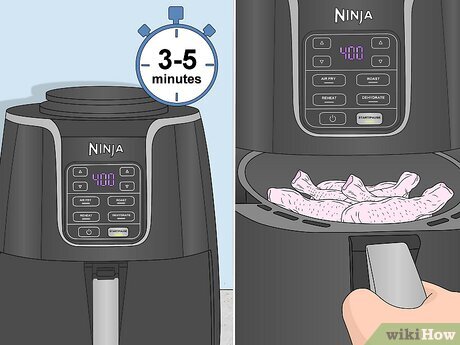
A reset may clear a temporary glitch, but it will not repair a failed sensor or damaged circuit. Follow these steps carefully.
- Press the Power button to turn the air fryer off.
- Unplug it from the wall outlet.
- Remove the basket and cooking pan.
- Let the appliance cool for at least 30 minutes.
- Check that the vents are clear.
- Wipe the basket and pan dry.
- Plug the air fryer directly into a suitable wall outlet.
- Turn it on without food inside.
- Run a short test cycle at a low temperature.
Avoid using a power strip or extension cord during testing. Some air fryers draw a high amount of power, and an unsuitable cord can cause voltage problems.
If the air fryer error code E1 disappears and does not return, the issue may have been temporary. If it comes back quickly, stop using the unit and continue with the checks below.

Step-by-Step Troubleshooting for Air Fryer Error Code E1
Use this process to narrow down the cause without taking apart the appliance.
Check the power supply
Plug another small appliance into the same outlet. If that device also fails, the outlet may be the problem.
You can also test the air fryer in a different wall outlet. Do not use an outlet that feels loose, warm, or damaged.
Inspect the cord and plug
Look for cuts, melted areas, bent prongs, or dark marks. A damaged cord should not be repaired with tape.
Replace the air fryer or have the cord serviced by a qualified professional. Do not continue testing a unit with electrical damage.
Check the basket and pan
Some models will not operate unless the basket is inserted correctly. Remove it, clean the contact areas, and slide it back into place.
Make sure the pan is not bent. A damaged pan can press against switches or fail to activate a safety sensor.
Clean the cooking chamber
Unplug the unit first. Once cool, remove crumbs and grease from the chamber with a soft, slightly damp cloth.
Do not spray cleaner directly into the air fryer. Keep liquid away from the display, heating element, fan, and control board.
Inspect the heating area
Look through the top of the cooking chamber. Check for heavy grease, stuck food, or anything touching the heating element.
Do not touch the element unless the appliance is unplugged and completely cool. Never use metal tools to remove buildup.
Confirm proper airflow
Leave space around the air fryer. A clearance of several inches on all sides is a practical starting point, but always follow the product manual.
Do not place the appliance inside a cabinet while it is operating. Blocked airflow can raise internal temperatures and trigger an error.
Brand and Model Differences Matter
The air fryer error code E1 does not have one fixed meaning across the industry. This is an important limitation when troubleshooting.
For example, one manufacturer may use E1 for a temperature sensor problem. Another may use it for a communication fault between the display and control board. A third model may use the same code for an overheating or basket-detection issue.
The most accurate source is the manual for your exact model. Look for the model number on a label beneath the air fryer, behind the unit, or near the power cord.
Search the manual for:
- Error code E1
- Temperature sensor
- Overheat protection
- Basket detection
- Control board
- Customer service or warranty repair
Avoid relying on a generic code chart if it does not list your exact brand and model. Generic advice is useful for first checks, but the manufacturer’s instructions should guide the final diagnosis.
When Should You Stop Troubleshooting?
Stop home troubleshooting when the air fryer error code E1 returns after a complete reset and basic cleaning. Repeated errors usually suggest an internal fault.
You should also stop if the appliance:
- Trips the circuit breaker
- Produces smoke or sparks
- Smells like burning plastic
- Makes unusual electrical sounds
- Shows a blank or flickering display
- Heats without responding to controls
- Displays E1 immediately after startup every time
Do not remove the outer casing unless you are trained to repair small appliances. The casing protects you from hot and electrically charged parts.
If the air fryer is under warranty, contact the manufacturer before opening it. DIY repair may cancel warranty coverage. Keep your receipt, model number, error message, and a short description of what happened.
Can You Repair the E1 Sensor Yourself?
Replacing an air fryer temperature sensor may be possible for a trained appliance technician, but it is not a beginner repair. The sensor is connected to internal wiring near the heating system.
A repair usually involves:
- Removing the outer housing
- Testing sensor resistance
- Checking wire continuity
- Inspecting the control board
- Installing the correct replacement part
- Testing the appliance for safe heat control
Using the wrong sensor can cause inaccurate temperatures or unsafe heating. Air fryer parts are not always interchangeable, even when two models look similar.
For a low-cost air fryer, replacement may be more practical than repair. For a premium model with a valid warranty, professional service is usually the better choice.

How to Prevent Air Fryer Error Code E1
Good care can reduce stress on the sensor, heating element, and control board. It cannot prevent every failure, but it may extend the appliance’s useful life.
Follow these habits:
- Keep air vents open during cooking.
- Do not overfill the basket.
- Remove grease buildup often.
- Dry the basket and pan before use.
- Keep the appliance away from sinks and splashing water.
- Use a stable wall outlet.
- Avoid moving the air fryer while it is hot.
- Follow the cleaning instructions in the manual.
- Do not operate the unit when the cord is damaged.
- Allow the air fryer to cool before storing it.
Overfilling is a common mistake. It can restrict airflow and make the air fryer work harder. Cooking in two smaller batches is often safer and gives better results.
In practical troubleshooting, the best lesson is simple: do not assume every error is a reset problem. A reset is a first step, not a complete repair.

What to Do If the Error Returns During Cooking
If the air fryer error code E1 appears in the middle of cooking, press Stop and unplug the appliance once it is safe to do so. Do not pull the basket out repeatedly while the unit is still heating.
Let the air fryer cool fully. Check for excess food, blocked vents, smoke, or an unusual smell.
If the food is partly cooked, finish it in a conventional oven or another safe appliance. Do not keep restarting an air fryer that repeatedly shows E1.
Record when the code appeared. Details such as cooking time, temperature, food amount, and whether the fan was running can help a technician find the fault faster.
Frequently Asked Questions About Air Fryer Error Code E1 Meaning
What is the most common cause of air fryer error code E1?
A temperature sensor problem is one of the most common causes. However, loose wiring, overheating, and control board faults can produce the same code on different models.
How do I clear air fryer error code E1?
Unplug the air fryer, let it cool for about 30 minutes, check the vents and basket, then reconnect it to a wall outlet. If E1 returns, the appliance likely needs service rather than another reset.
Can I keep using an air fryer with E1?
No, you should not keep using it while the code remains. The appliance may not be able to measure or control heat safely.
Does E1 always mean the temperature sensor is broken?
No. The air fryer error code E1 can also indicate a wiring issue, overheating, control board fault, or model-specific safety problem. Check the manual for your exact appliance.
Is it worth repairing an air fryer showing E1?
Repair may be worthwhile if the air fryer is expensive or under warranty. For an older, low-cost model, replacement may cost less than diagnosis and parts.
Can cleaning fix air fryer error code E1?
Cleaning may help if grease, food, or blocked airflow caused overheating. It will not fix a failed sensor, broken wire, or damaged control board.
Conclusion
The air fryer error code E1 usually points to a temperature sensor, wiring, overheating, or control problem. Start with safe steps: unplug the unit, let it cool, check the basket and vents, clean away buildup, and try one reset.
Because E1 meanings vary by brand, always confirm the code in your model’s manual. If the error returns, or you notice smoke, sparks, burning smells, or repeated overheating, stop using the air fryer and seek qualified service.
A careful check can save time, protect your appliance, and keep your kitchen safe. If this guide helped, compare it with your manufacturer’s troubleshooting instructions and share your model and experience in the comments.