Air Fryer Liner Catching Fire Risk: Safety Guide
Air fryer liners can catch fire when heat, airflow, or placement lets the paper touch the heating element.
Air fryer liner catching fire risk is real, but it is often easy to prevent. As someone who has tested air fryer cooking setups and reviewed appliance safety guidance, I know the liner itself is not always the problem. The real danger usually comes from loose paper, excess heat, poor fit, or using a liner before food weighs it down. This guide explains the warning signs, safe use steps, common mistakes, and what to do if a liner starts to smoke.

Can an air fryer liner catch fire?
Yes, an air fryer liner can catch fire under the wrong conditions. Most disposable liners are made from parchment paper or a similar heat-resistant material. However, “heat-resistant” does not mean “fireproof.”
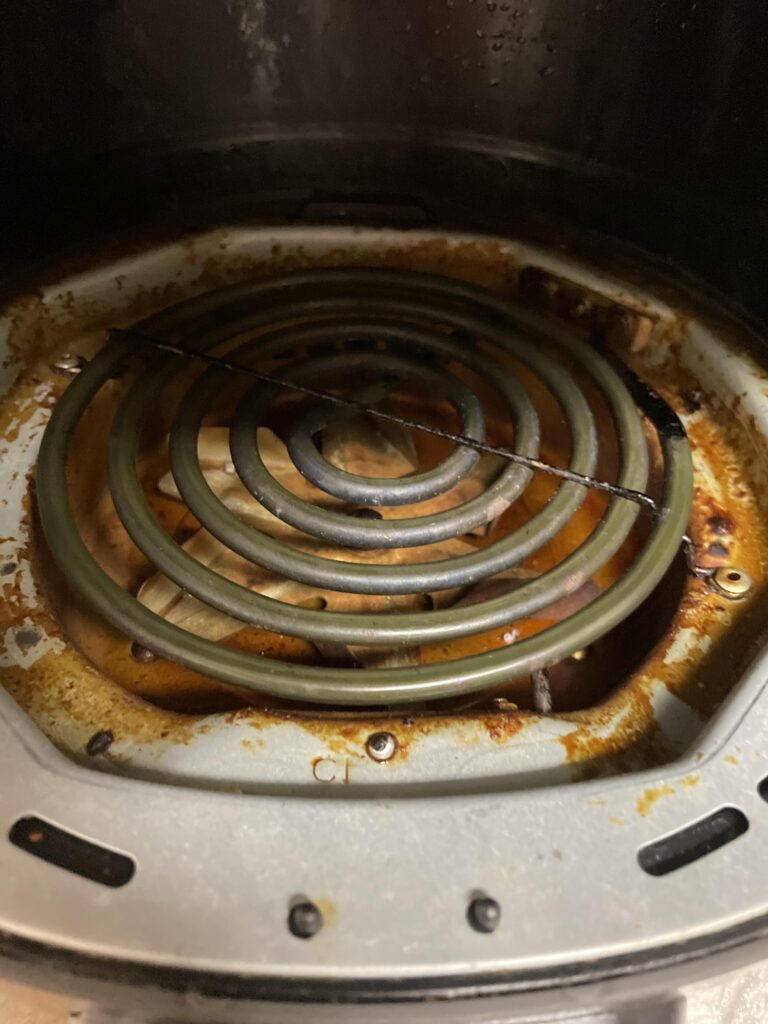
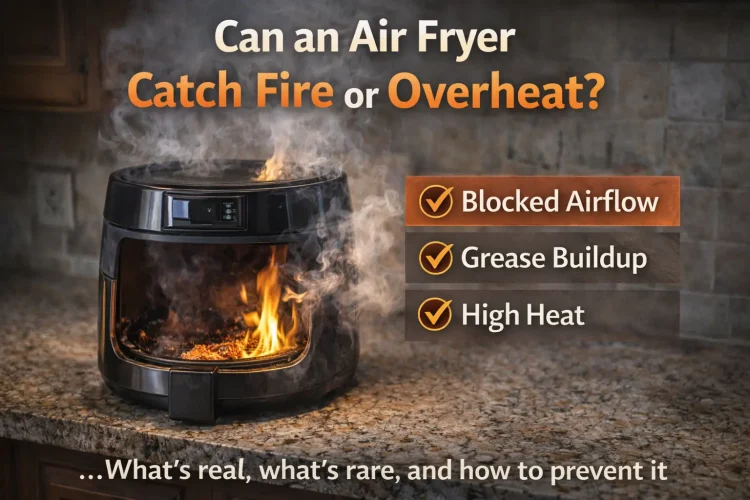
An air fryer uses a strong heating element and fast-moving hot air. If a loose liner rises into the heating coil, it may scorch, smoke, or ignite. This is the main reason for air fryer liner catching fire risk.
The risk is higher when:
• The liner is placed in an empty basket.
• The liner is too large or has tall sides.
• The liner blocks air and moves upward.
• The air fryer temperature is above the liner’s rating.
• The liner is close to the top heating element.
• Grease collects on the paper.
• The paper is damaged, folded, or not made for cooking.
A liner that stays flat under food is much less likely to move. Still, safe placement matters every time.

Why does an air fryer liner catch fire?
Several factors can turn a simple paper liner into a fire hazard. Understanding them helps you prevent the problem before cooking starts.
The liner touches the heating element
The top heating coil can become extremely hot. A loose paper edge may lift into the coil when the fan starts. The paper can then brown quickly and ignite.
This is the most serious form of air fryer liner catching fire risk. Even a liner labeled for high heat can burn when it touches a direct heating element.
The liner is used without food
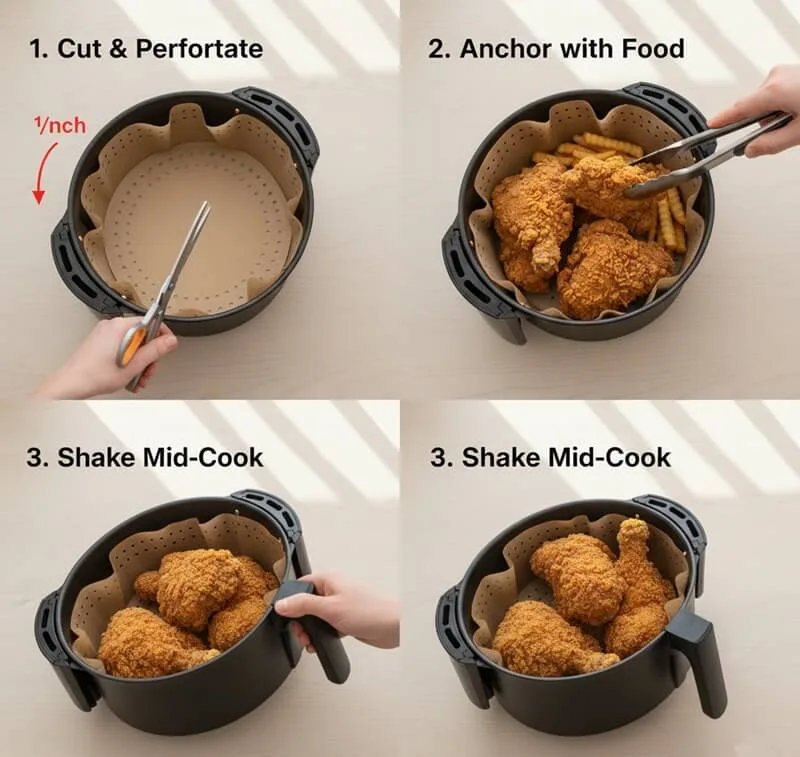
Never preheat an air fryer with a loose liner inside. The fan may lift the paper before food is added.
This mistake is common because many recipes tell cooks to preheat first. Preheat the appliance without the liner, then add the liner and food. The food should hold the liner down from the start.
The liner is too large
A liner should fit the base of the basket. Extra paper can fold upward and drift toward the heating coil.
A round liner with a small amount of clearance is usually safer than a large sheet that covers the basket wall. Some liners have holes to support airflow. Others are solid. Follow the product instructions and your air fryer manual.
The temperature is too high
Every liner has a maximum temperature rating. Many parchment products list a limit around 400°F to 450°F, but the exact limit varies by brand.
A temperature setting below the label limit does not remove all air fryer liner catching fire risk. Hot spots, direct contact, grease, and strong airflow can still cause burning.
Oil and grease soak the paper
Grease can make paper smoke and burn faster. Fat from bacon, sausages, chicken skin, or fatty burgers may collect in one place.
A small amount of cooking oil is not automatically unsafe. The problem is pooled grease combined with high heat and paper near the heating element.
The wrong material is used
Wax paper is not the same as parchment paper. Wax paper has a wax coating that can melt, smoke, or burn at air fryer temperatures.
Paper towels, napkins, grocery bags, printer paper, and cardboard should never be used as air fryer liners. They are not designed for this heat or airflow.

Parchment paper versus silicone air fryer liners
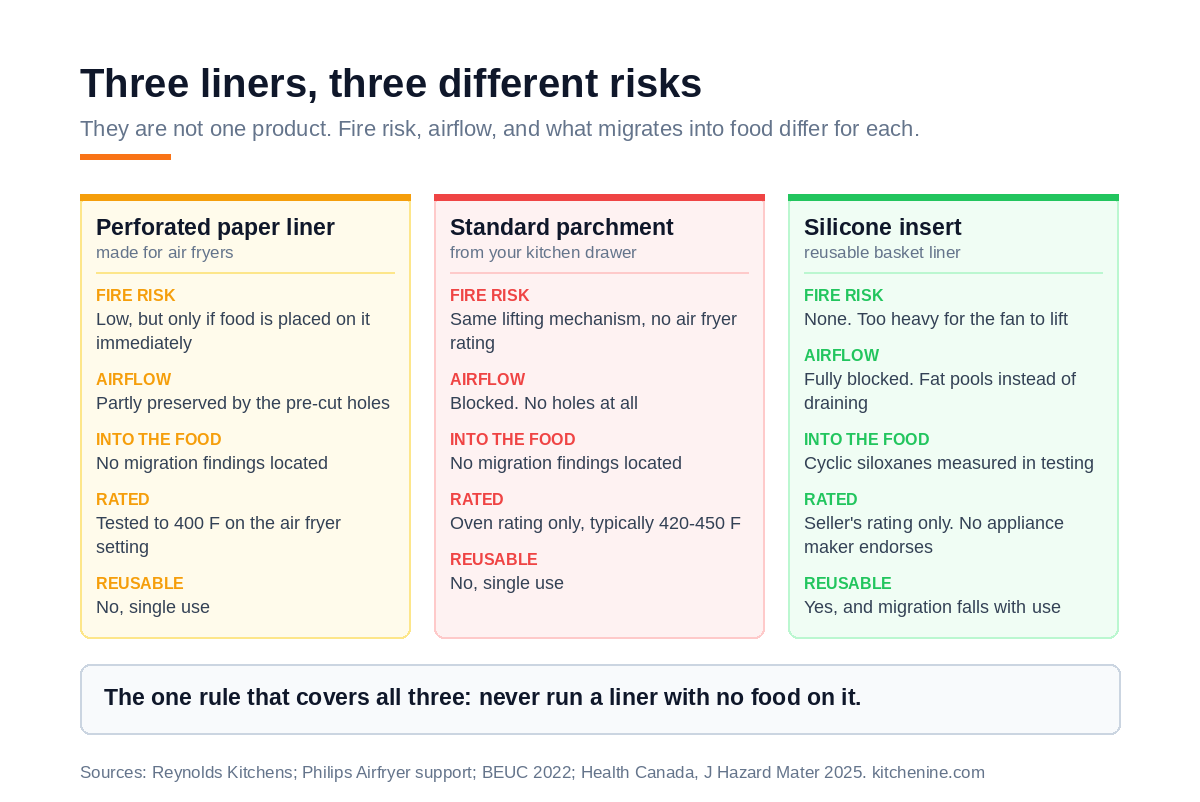
Choosing the right liner can lower air fryer liner catching fire risk, but no liner removes the need for care.
Parchment paper liners
Parchment liners are usually disposable and easy to use. They can reduce sticking and make cleanup faster. Some are pre-cut with holes for better airflow.
Their limits include:
• They can move when the basket is empty.
• They can burn if they touch the heating element.
• They may become greasy and weak during cooking.
• They are often single-use.
• Their temperature limit varies by brand.
Use only parchment paper labeled for oven or air fryer cooking. Check the package for its maximum temperature.
Silicone air fryer liners
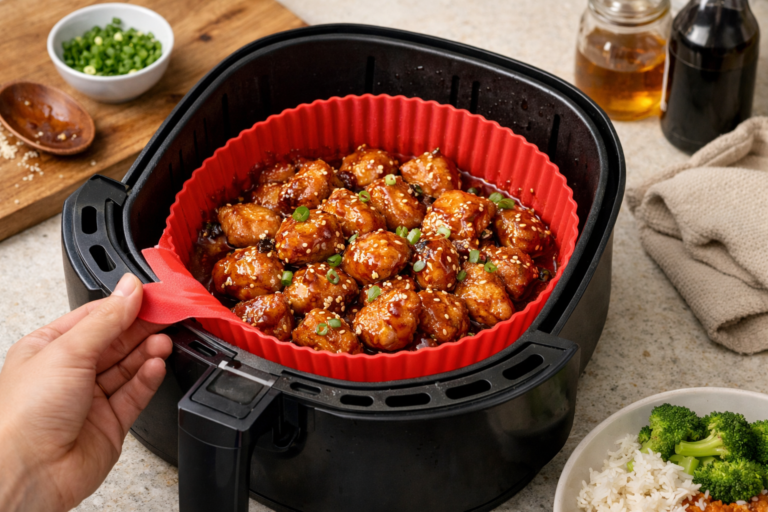
Silicone liners are reusable and often have a basket shape. They are less likely than paper to ignite, but they are not completely risk-free.
Silicone can deform, smoke, or become damaged if it exceeds its heat rating. A poor-fitting silicone liner may also block airflow and cause uneven cooking.
Choose food-grade silicone from a trusted manufacturer. Look for a clear temperature range, care instructions, and a design made for air fryer use.
Which liner is safer?
A properly sized silicone liner may reduce direct fire risk compared with loose parchment paper. However, parchment can work safely when it is held down by food and kept away from the heating element.
The safest choice depends on your appliance, cooking temperature, liner quality, and placement. Always follow the air fryer manual first.

How to use an air fryer liner safely
These steps can greatly reduce air fryer liner catching fire risk.
-
Read the air fryer manual
Check whether the manufacturer allows liners. Some manuals warn against covering the basket or blocking ventilation holes. -
Check the liner label
Confirm that it is made for cooking and that its heat rating meets your recipe temperature. -
Preheat without paper
If preheating is required, run the air fryer with no liner inside. Add the liner only after preheating. -
Add food right away
Place enough food on the liner to hold it down. Do not run an empty basket with loose parchment paper. -
Keep paper below the basket rim
The liner should not rise above the food or basket wall. Trim oversized paper before use. -
Keep the liner away from the coil
Look inside the basket before cooking. No paper edge should be able to reach the top heating element. -
Avoid excess oil
Lightly coat food if needed. Do not pour oil onto the liner or allow a deep pool of fat to collect. -
Use the correct temperature
Stay within the liner’s stated heat limit. When the package gives no clear rating, do not use it. -
Watch the first use
Stay nearby and check for smoke, curling edges, or unusual smells. Never leave an air fryer running while you are away. -
Inspect after cooking
Throw away parchment that is black, brittle, torn, or heavily soaked with grease.
A practical lesson from repeated kitchen testing is simple: fit matters more than appearance. A liner that looks neat but can lift in the fan is not a safe liner.
Signs of an air fryer liner catching fire risk
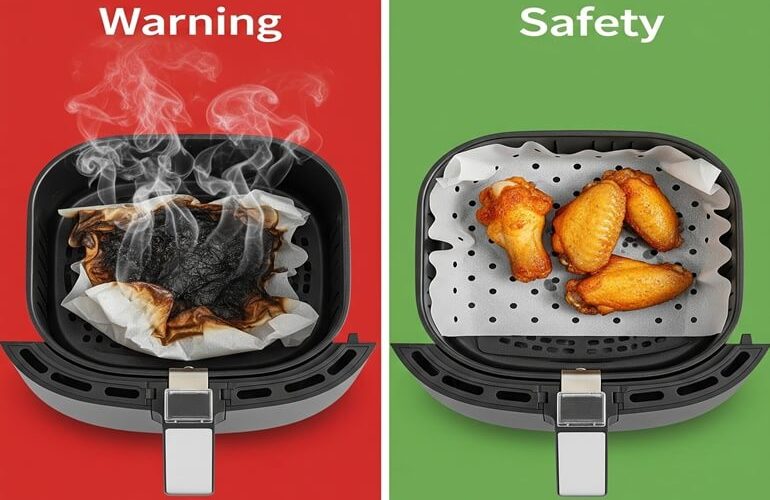
You may notice warning signs before an open flame appears. Stop the appliance if you see or smell any of these:
• Dark brown or black paper edges.
• Smoke that does not come from the food.
• A sharp burning-paper smell.
• A liner that curls, folds, or floats upward.
• Crackling near the top of the basket.
• Sudden flames or bright glowing paper.
A little steam from wet food is normal. White steam usually has a soft, moist smell. Smoke from paper often smells dry, sharp, and burnt.
Do not ignore small signs. A liner may look only slightly scorched but still be close to the heating element. Turn off the appliance and inspect it after it cools.
What to do if an air fryer liner catches fire
Stay calm and act quickly. An air fryer fire can grow if oxygen reaches burning grease or paper.
-
Turn off the air fryer and unplug it if you can do so safely.
-
Keep the basket and drawer closed. Closing it can limit oxygen.
-
Do not pour water into the appliance. Water can spread hot grease and create a dangerous burst of steam.
-
Do not move the burning basket across the kitchen.
-
Use a suitable kitchen fire extinguisher only if the fire continues and you know how to use it safely.
-
Leave the home and call 911 if flames do not stop quickly, spread, or create heavy smoke.
-
Do not use the air fryer again until it has been checked for damage.
The CPSC and fire safety professionals commonly advise people to keep a lid or approved fire blanket nearby for cooking fires. Do not use flour on flames. Flour can create a flammable dust cloud.
If anyone breathes smoke or feels unwell, move to fresh air and contact emergency medical services or poison control as appropriate.
Common mistakes that increase fire risk
Many air fryer incidents begin with a small shortcut. These mistakes are easy to avoid.
Using a liner during preheating
The empty basket gives the paper nothing to hold it down. The fan can lift it within seconds.
Covering the entire basket
A solid sheet that blocks most air holes can reduce circulation. It may also shift and press against hot parts.
Using wax paper
Wax paper may melt or smoke. It should not replace parchment paper in an air fryer.
Reusing damaged parchment
A liner with grease stains, tears, or black spots can fail faster. Disposable parchment is inexpensive, so replacement is safer than reuse.
Adding too much food
Overloading can push food against the heating element. It can also trap grease and heat around the liner.
Ignoring the manual
Air fryer designs vary. Some heating elements sit close to the basket. Others have special airflow paths. The manual gives appliance-specific limits that a general cooking tip cannot replace.
Leaving the kitchen
Even careful setup cannot predict every problem. Stay close while the air fryer runs, especially when trying a new liner or recipe.

Do air fryer liners affect cooking?
Yes, a liner can change how food cooks. It may reduce airflow under the food and slow browning. A solid liner can also trap moisture, which may make fries, wings, or vegetables less crisp.
Perforated liners usually allow more air to move around the food. However, holes do not guarantee safety. The liner can still lift if it is used without food.
For the best results:
• Use a liner only when sticking or cleanup is a concern.
• Leave space around the food.
• Avoid covering the entire basket wall.
• Turn or shake food when the recipe calls for it.
• Check that the food reaches a safe internal temperature.
A liner is a convenience tool, not a required air fryer accessory. Many foods cook well directly in a clean, lightly oiled basket.
Are air fryer liners worth using?
For some meals, yes. A liner can help with sticky foods, melted cheese, marinades, and small pieces that are hard to clean from the basket.
The main benefits include:
• Faster cleanup.
• Less sticking.
• Easier removal of delicate food.
• Protection from sugary sauces and cheese.
The drawbacks include:
• More waste when using disposable paper.
• Less crisp food if airflow is blocked.
• Added air fryer liner catching fire risk when the paper is loose.
• Extra cost compared with cooking directly in the basket.
A good rule is to use a liner only when it solves a real problem. If food does not stick, skip it. Fewer materials inside the appliance means fewer things to monitor.
How to choose a safer air fryer liner
Look for clear product information. Avoid products with vague claims such as “universal heat proof” without a temperature range.
A safer liner should have:
• A stated maximum temperature.
• Food-contact approval or clear food-grade labeling.
• A size that matches your basket.
• Instructions for air fryer use.
• Strong material without loose fibers or coatings.
• A shape that stays below the basket rim.
For paper liners, parchment is the usual choice. For reusable products, choose food-grade silicone with a documented heat rating.
Be careful with cheap, unbranded products. Poor materials may tear, smell, or fail under heat. Packaging alone cannot prove quality, so clear instructions and traceable product details matter.
Air fryer liner safety for different foods
The food you cook affects the level of risk.
Frozen fries and vegetables
These foods usually release little grease. A liner may be useful, but it can reduce browning. Keep food spread out so it holds the paper down.
Chicken wings and bacon
These foods release more fat. Check the basket during cooking if grease builds up. Pooled fat can increase smoke and fire risk.
Cheese and sauced foods
A liner can make cleanup easier. Use a properly sized liner and avoid letting melted cheese spread to the basket edges or heating area.
Baked goods
Cups, molds, and small parchment pieces can work well when they fit securely. Do not use loose paper for muffins or cakes before the batter has been added.
Small foods
Rice, herbs, crumbs, and chopped vegetables may slip through basket holes. A liner can help, but food must still hold the liner in place.
When should you avoid using a liner?
Skip the liner when it creates more risk than value. Direct basket cooking is often best for foods that need strong airflow and crisp contact.
Avoid a liner when:
• The basket is empty or nearly empty.
• The recipe uses very high heat.
• The liner does not fit the basket.
• The product has no heat rating.
• The liner touches the basket rim or top coil.
• You are cooking a large amount of greasy food.
• The appliance manual prohibits liners.
You should also avoid a liner if the air fryer has a special grill plate or raised airflow design that cannot sit correctly with paper beneath it.
Frequently Asked Questions About Air Fryer Liner Catching Fire Risk
Can parchment paper catch fire in an air fryer?
Yes. Parchment paper can catch fire if it touches the heating element, exceeds its temperature rating, or lifts into the hot airflow. Keep it below the basket rim and hold it down with food.
Is it safe to preheat an air fryer with a liner inside?
It is usually safer to preheat without a liner. An empty liner can move into the heating coil before food weighs it down.
What temperature is too hot for an air fryer liner?
The answer depends on the product. Many parchment liners are rated around 400°F to 450°F, but you should follow the exact package limit and avoid direct contact with the heating element.
Can I use wax paper as an air fryer liner?
No. Wax paper is not the same as parchment paper and may melt or smoke at air fryer temperatures. Use only a product labeled for cooking and air fryer use.
What should I do if my liner starts smoking?
Turn off and unplug the air fryer if it is safe to do so, and keep the drawer closed. Never pour water into the appliance, and call 911 if flames continue or spread.
Are silicone air fryer liners fireproof?
No. Silicone liners are often less likely to ignite than paper, but they can still overheat, deform, or smoke. Use food-grade silicone within its stated temperature range.
Can an air fryer liner block airflow?
Yes. A solid or oversized liner can restrict air movement and lead to uneven cooking. Choose a properly sized liner and leave room for hot air to circulate.
Conclusion
Air fryer liner catching fire risk usually comes from loose paper, direct contact with the heating element, excess grease, high heat, or the wrong material. Parchment can be useful when it is correctly sized, rated for the temperature, and held down by food. Silicone may offer a reusable option, but it still needs proper placement and heat limits.
Never preheat with loose paper, never use wax paper, and never add water to an air fryer fire. Check your appliance manual, stay nearby while cooking, and replace any liner that is scorched or damaged.
Use liners as a helpful option, not a requirement. Share these safety tips with other air fryer users, and check your liner’s instructions before your next meal.