What Can You Put In An Air Fryer: Best Foods To Try
Introduction
You can put many foods in a U.S. air fryer, including vegetables, chicken, fish, steak, frozen foods, potatoes, bacon, bread, and small baked goods. The best foods are those that benefit from hot, fast, circulating air and do not need a deep pool of oil or water.
An air fryer is a small convection oven. It uses a heating element and a fan to move hot air around food. This can create a browned, crisp outside with little added oil.
The main limits are simple: use heat-safe cookware, leave room for airflow, keep raw meat at a safe internal temperature, and follow the manual for your specific model.

What Foods Can You Cook in an Air Fryer?
You can cook fresh, frozen, raw, and prepared foods in an air fryer. Cooking time depends on the food’s size, starting temperature, moisture, and the air fryer model.
Vegetables
Air fryers work well for vegetables with firm surfaces and moderate moisture. Good choices include:
- Broccoli and cauliflower
- Brussels sprouts
- Green beans
- Asparagus
- Zucchini and yellow squash
- Bell peppers
- Carrots
- Sweet potatoes
- Corn on the cob
- Mushrooms
- Onions
- Frozen vegetables
Toss vegetables with a small amount of oil and seasonings. Spread them in one layer when possible. Shake the basket or turn the food halfway through cooking.
Very wet vegetables may steam rather than crisp. Pat them dry first.
Potatoes
Potatoes are among the easiest air fryer foods. You can cook:
- French fries
- Sweet potato fries
- Potato wedges
- Tater tots
- Hash browns
- Diced breakfast potatoes
- Baked potatoes
- Baby potatoes
- Potato skins
For fresh fries, rinse or soak the cut potatoes to remove some surface starch. Dry them well before adding oil. Wet potatoes will brown less and may become soft.
Meat and poultry
An air fryer can cook many cuts of meat and poultry, such as:
- Chicken breasts
- Chicken thighs
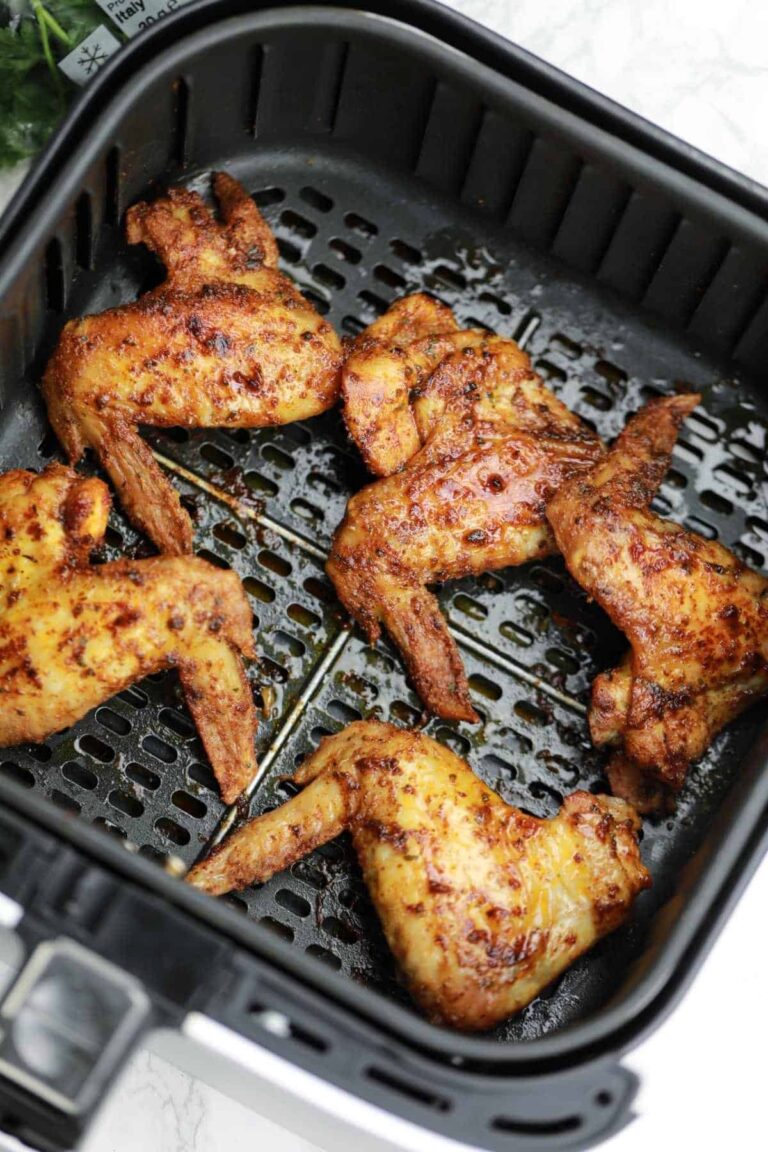
- Chicken wings
- Chicken tenders
- Turkey burgers
- Meatballs
- Pork chops
- Pork tenderloin
- Sausage
- Bacon
- Steak
- Lamb chops
Use a food thermometer. Color alone cannot confirm that meat is safe.
According to the U.S. Department of Agriculture, poultry should reach 165°F. Ground meat should reach 160°F. Whole cuts of beef, pork, lamb, and veal should reach 145°F, followed by a three-minute rest. Check the thickest part without touching bone.
Fish and seafood
Air fryers can cook:
- Salmon
- White fish fillets
- Shrimp
- Scallops
- Crab cakes
- Breaded fish
- Frozen fish sticks
- Calamari
Pat fish dry before cooking. A light coating of oil can help prevent sticking. Delicate fillets may need a piece of perforated parchment or a small air fryer-safe pan.
Fish should reach 145°F, according to the USDA. Shrimp and scallops should become firm and opaque.
Frozen foods
Frozen foods are often a strong match for an air fryer because the circulating heat removes surface moisture quickly. Common choices include:
- Frozen french fries
- Tater tots
- Mozzarella sticks
- Chicken nuggets
- Chicken wings
- Fish sticks
- Egg rolls
- Pizza rolls
- Frozen vegetables
- Frozen burgers
- Frozen breakfast foods
Most frozen foods do not need to thaw first. Cooking from frozen can help the outside brown while the inside heats. Use the package directions as a starting point, then adjust for your model.
Bread and baked foods
you can use an air fryer for small amounts of:
- Toast
- Garlic bread
- Biscuits
- Dinner rolls
- Croissants
- Muffins
- Cookies
- Brownies
- Small cakes
- Hand pies
- Donuts
Use a pan or liner if the batter is loose. The pan must fit without blocking the fan or touching the heating element.
Air fryers are best for small batches. A full cake or large loaf may cook unevenly unless your model has a large basket and a suitable pan.
Leftovers
Air fryers are useful for reheating foods that should stay crisp, including:
- Pizza
- Fried chicken
- French fries
- Roasted vegetables
- Quesadillas
- Sandwiches
- Breaded fish
- Burgers
The USDA recommends reheating leftovers to 165°F. Thick foods may need lower heat at first so the center warms before the outside becomes too dark.
What Should You Not Put in an Air Fryer?
Do not put materials or foods in an air fryer that can melt, burn, spill, or block airflow.
Avoid these items
- Plastic containers
- Plastic wrap
- Paper towels
- Non-heat-safe glass
- Loose parchment paper
- Loose aluminum foil
- Wet batter without a pan
- Large amounts of liquid
- Cheese by itself
- Lightweight food near the heating element
- Food that fills the basket above the recommended level
Plastic can melt or release unwanted substances. Paper towels can catch fire. Glass can break if it is not made for oven temperatures.
Loose parchment and foil can lift into the heating element. If you use either one, food must hold it down, and the material must not cover the entire airflow path.
Do not use an air fryer as a deep fryer
An air fryer needs only a light coating of oil. Never fill the basket or drawer with oil.
Oil can spill onto the heating element and cause a fire. Foods that require deep frying in a large amount of oil need a different cooking method.
Be careful with wet batter
A loose, wet batter may drip through the basket before it sets. This can create a mess and may cause smoke.
For battered foods, use a small heat-safe pan or choose a dry coating such as flour, breadcrumbs, or panko. A thick coating adheres better than a thin, runny batter.
Use cookware only when it is heat-safe
Some air fryers can hold small metal, silicone, ceramic, or glass dishes. The dish must be:
- Rated for oven use.
- Small enough to allow air to circulate.
- Stable inside the basket.
- Clear of the heating element.
- Approved by the air fryer manual when the manufacturer gives specific limits.
Do not assume that a dish is safe because it fits.

How to Prepare Food for an Air Fryer
Good preparation improves browning, reduces smoke, and helps food cook evenly.
1. Dry the surface
Moisture slows browning. Pat meat, fish, vegetables, and potatoes dry with a clean paper towel before cooking.
This step matters most for:
- Fresh-cut fries
- Chicken wings
- Fish
- Mushrooms
- Frozen foods with ice crystals
- Vegetables with a wet surface
2. Add a small amount of oil
Use enough oil to lightly coat the food. Too much oil can create smoke and a greasy surface.
A spray or brush works well. Avoid aerosol sprays that may damage some nonstick coatings. Check your air fryer’s care instructions.
3. Season before cooking
Dry seasonings usually work well. Salt, pepper, garlic powder, paprika, herbs, and spice blends can go directly on the food.
Sugar-based sauces can burn if added too early. Add barbecue sauce, honey, or teriyaki sauce near the end of cooking.
4. Leave space between pieces
Hot air must reach the food. A crowded basket traps steam and leads to uneven cooking.
Food does not always need to sit in a perfect single layer. Small items such as fries may overlap slightly if you shake the basket several times. Dense foods, such as chicken breasts, need more space.
5. Shake or turn the food
Shake small foods halfway through cooking. Turn larger foods with tongs.
Do not shake foods that are soft, fragile, or covered in a coating until the coating has set.

Air Fryer Temperature and Cooking Time Chart
The following chart gives starting points for common foods. It is not a substitute for a food thermometer or the instructions on packaged food.
| Food | Temperature | Approximate time | Key check |
|---|---|---|---|
| Fresh french fries | 380°F | 18–25 minutes | Shake often; check for crispness |
| Frozen french fries | 400°F | 12–20 minutes | Follow package guidance |
| Tater tots | 400°F | 12–18 minutes | Shake halfway |
| Chicken wings | 380–400°F | 20–30 minutes | Reach 165°F |
| Chicken breast | 375°F | 16–25 minutes | Reach 165°F |
| Chicken tenders | 375–400°F | 10–16 minutes | Reach 165°F |
| Salmon fillet | 375°F | 8–14 minutes | Reach 145°F |
| Shrimp | shrimp | 6–10 minutes | Cook until firm and opaque |
| Steak | 400°F | 8–16 minutes | Use thickness and internal temperature |
| Pork chop | 375°F | 12–18 minutes | Reach 145°F, then rest |
| Broccoli florets | 375°F | 8–12 minutes | Check for tender stems |
| Brussels sprouts | 375°F | 12–18 minutes | Shake or turn |
| Baked potato | 400°F | 35–50 minutes | A knife should enter easily |
| Reheated pizza | 350–375°F | 3–7 minutes | Heat to 165°F |
| Frozen mozzarella sticks | 375–400°F | 5–9 minutes | Remove before cheese bursts |
Cooking times vary by basket design, wattage, food size, and how full the basket is. Start checking early. A thermometer gives a more reliable result for meat, poultry, fish, and leftovers.

Can You Put Aluminum Foil or Parchment Paper in an Air Fryer?
You can use aluminum foil or parchment paper in some air fryers, but only when the manual allows it and the material is secured by food.
Aluminum foil
Foil can help with cleanup and can hold small foods. It may also be useful under foods that release liquid.
Follow these rules:
- Do not cover the entire basket.
- Do not block the air vents.
- Keep foil away from the heating element.
- Do not use foil with acidic foods for long periods.
- Do not place loose foil in the basket while preheating.
- Keep foil weighted down by food.
Some air fryer manufacturers discourage foil in certain models. The manual for your unit controls.
Parchment paper
Use parchment made for baking or air frying. Perforated parchment can improve airflow.
Never place empty parchment in a running air fryer. The fan may lift it into the heating element.
Parchment is helpful for:
- Fish
- Sticky marinades
- Delicate foods
- Small baked items
- Foods that tend to stick
It can reduce browning on the bottom. Remove it when it no longer helps.
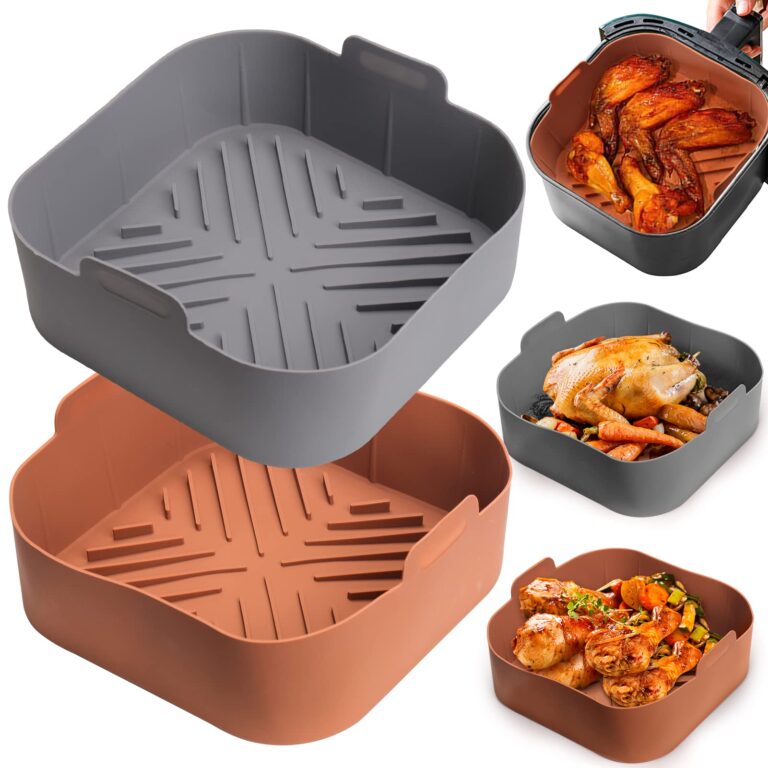
Silicone liners
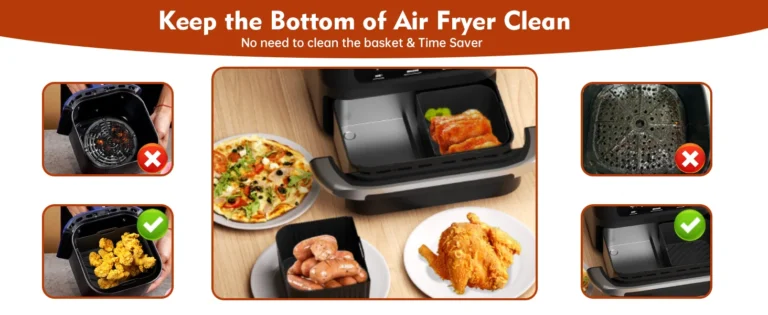
Food-grade silicone liners may be suitable for some air fryers. They can make cleanup easier, but they may reduce airflow and slow browning.
Choose a liner that fits the basket and is rated for the cooking temperature. Do not use a silicone liner that touches the heating element.
How to Cook Meat Safely in an Air Fryer
The air fryer cooks quickly, but fast cooking does not remove the need for food safety.
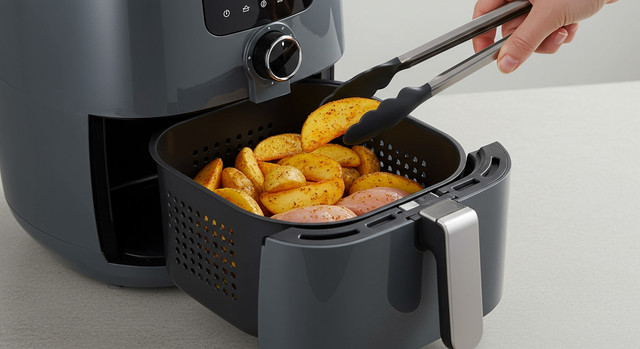
Use a thermometer
Place the thermometer in the thickest part of the food. Avoid touching bone, the basket, or the cooking tray.
Use these USDA minimum internal temperatures:
- Poultry: 165°F
- Ground beef, pork, lamb, and veal: 160°F
- Whole cuts of beef, pork, lamb, and veal: 145°F, then rest for three minutes
- Fish: 145°F
- Leftovers and casseroles: 165°F
These temperatures are for safety. Texture preferences may lead you to cook some foods longer.
Do not wash raw chicken
The USDA advises against washing raw poultry. Washing can spread bacteria through sink water and nearby surfaces.
Pat the chicken dry instead. Wash your hands, utensils, and work surfaces after handling raw meat.
Keep raw and cooked foods apart
Use clean tongs for cooked food. Do not place cooked food on a plate that held raw meat unless the plate has been washed.
Refrigerate perishable leftovers within two hours. If the air temperature is above 90°F, refrigerate them within one hour. Keep the refrigerator at 40°F or below.

Why Is Food Not Crispy in an Air Fryer?
Food may stay soft when the basket is crowded, the surface is wet, or the temperature is too low.
Try this sequence:
- Pat the food dry.
- Use less food per batch.
- Add a light oil coating.
- Shake or turn the food.
- Extend the cooking time in short steps.
- Raise the temperature slightly if the food is cooked but pale.
- Let steam escape before serving.
Frozen foods can also vary by brand. A thick layer of ice increases moisture. Shake off loose ice before cooking.
Do not solve every crispness problem by adding more oil. Better airflow and a dry surface usually help more.
Why does the air fryer smoke?
Smoke may come from excess oil, grease left in the drawer, or fatty food. Bacon, sausage, and chicken skin can release enough fat to smoke.
Turn off the air fryer if smoke becomes heavy. Let it cool before cleaning. Do not pour water into a hot appliance.
Some manuals allow a small amount of water in the lower drawer when cooking very fatty foods. Use that method only if your model’s instructions approve it.
Why is the outside burned while the inside is cold?
The temperature may be too high, the food may be too thick, or the basket may be too close to the heating element.
Lower the temperature and extend the cooking time. For thick meat, check the center with a thermometer. Cut large pieces to a more even size when possible.

How to Clean an Air Fryer After Cooking
Clean the air fryer after it cools. Food residue and grease can cause smoke during later use.
- Unplug the appliance.
- Let the basket and drawer cool.
- Remove loose crumbs and grease.
- Wash removable parts as the manual permits.
- Wipe the heating area with a damp cloth.
- Dry all parts before reassembly.
- Check that vents are clear.
Do not submerge the main electrical unit unless the manufacturer specifically permits it. Avoid harsh scouring tools that can damage a nonstick coating.
A clean basket also improves airflow. A dirty heating element can create smoke and unwanted odors.

Best Foods for Beginners
If you are new to air frying, start with foods that are easy to check and difficult to ruin:
- Frozen french fries
- Tater tots
- Chicken tenders
- Broccoli
- Brussels sprouts
- Salmon
- Shrimp
- Reheated pizza
- Toasted sandwiches
- Small potatoes
These foods show how your machine handles browning, moisture, and cooking speed.
Start with the lower end of the package time or a trusted recipe range. Check early, then add time as needed. Each air fryer has a slightly different basket shape and fan strength.
Common Air Fryer Mistakes
Overfilling the basket
A full basket blocks hot air. Cook in batches when you want crisp food.
Skipping the preheat question
Some recipes require preheating, while others do not. If your model has no preheat setting, run it empty for a few minutes only if the manual allows it.
Using too much oil
Oil does not make food crisp by itself. Excess oil can make the basket smoky and the food greasy.
Adding sauce too early
Sweet sauces can burn. Brush them on during the final few minutes.
Ignoring food size
Small pieces cook faster than thick pieces. Cut food into similar sizes so it finishes at about the same time.
Trusting the clock instead of the food
Time is only a guide. Check the texture and, for meat or leftovers, the internal temperature.
Blocking the vents
Do not place the air fryer against a wall or under a cabinet if the manual requires open space. Hot exhaust needs a safe path.

Frequently Asked Questions
Can you put raw meat in an air fryer?
Yes. An air fryer can cook raw chicken, beef, pork, lamb, fish, and ground meat. Use a food thermometer and follow the USDA minimum internal temperatures.
Can you put frozen food in an air fryer?
Yes. Many frozen foods can go directly into the basket without thawing. Frozen food often needs shaking or turning. Use the package directions as a starting point.
Can you put water in an air fryer?
Do not add water unless your air fryer manual permits it. Water can spill onto electrical parts or create steam. Some manufacturers allow a small amount in the drawer to reduce smoke from fatty foods, but the instructions for your model come first.
Can you put a glass bowl in an air fryer?
Only use a glass bowl that is clearly rated for oven temperatures and fits without touching the heating element. A regular drinking glass or storage container is not a safe substitute.
Can you use cooking spray in an air fryer?
A small amount of oil can help food brown and prevent sticking. Some aerosol sprays may damage nonstick coatings. A brush, oil mister, or food tossed with oil is often a safer choice. Check the manufacturer’s care instructions.
Can you put eggs in an air fryer?
You can cook some egg dishes in an air fryer-safe pan, such as baked eggs, frittatas, and quiche. Whole eggs in the shell require model-specific instructions because pressure, shell cracking, and cooking results can vary.
Can you put paper plates in an air fryer?
No. Paper plates can burn, lift into the heating element, or block airflow. Use cookware and liners that are rated for the air fryer’s temperature.
Key Takeaways
- An air fryer can cook vegetables, potatoes, meat, poultry, fish, frozen foods, leftovers, and small baked items.
- Dry food surfaces and avoid crowding the basket for better browning.
- Use only heat-safe pans, foil, parchment, or silicone liners.
- Never use plastic, paper towels, loose paper, or a large amount of oil.
- Use a thermometer for meat, poultry, fish, and reheated leftovers.
- Follow the manual for your exact air fryer, especially when using liners, cookware, foil, or water.
Conclusion
The most suitable air fryer foods are those that cook well with dry, circulating heat. Start with vegetables, potatoes, frozen foods, chicken, fish, and leftovers. Keep pieces similar in size, leave room for airflow, and check food before the suggested time ends.
Before trying a new ingredient, ask three questions: Is it heat-safe? Can hot air reach it? Can I confirm that it is cooked safely? If the answer to all three is yes, it is usually a reasonable air fryer candidate.