What To Put Air Fryer On: Safe Surface Guide
In U.S. kitchens, the safest place for an air fryer is a stable, level, heat-resistant countertop with open space around the appliance. Keep it away from the edge, sink, stove burners, walls, cabinets, and anything that can melt or catch fire. Always follow the clearance and surface instructions in your specific air fryer manual.

The Best Surface for an Air Fryer
A hard, flat, heat-resistant countertop is usually the best place for an air fryer. Suitable choices may include:
- Granite
- Marble
- Quartz
- Ceramic tile
- Stainless steel
- Heat-rated laminate
- A solid wood countertop, if the manufacturer allows it
The surface should not wobble, slope, or flex under the air fryer’s weight. A level base helps the basket slide correctly and keeps hot grease from moving to one side.
The air fryer also needs room to release hot air. Most models vent from the back, top, or sides. Check the manual before placing the appliance close to a wall or under a cabinet.
Why the surface matters
An air fryer creates high heat during cooking. Its heating element and exhaust air can warm the area around the unit. Some countertops can discolor, warp, crack, or lose their finish when exposed to heat or trapped steam.
The risk depends on the air fryer model, cooking temperature, cooking time, and countertop material. A surface that feels cool before cooking may become hot after a long cooking cycle.
Use a heat-resistant barrier when needed
A heat-resistant trivet, appliance mat, or board can protect the countertop. Use one only if it is:
- Rated for the temperature produced by the appliance
- Flat and stable
- Large enough to support the air fryer
- Approved by the air fryer manufacturer when required
- Free of loose fabric or flammable material
Do not use a towel, paper towel, newspaper, plastic placemat, or ordinary cutting board under a hot air fryer. These materials may scorch, melt, or trap heat.

Can You Put an Air Fryer on a Granite or Quartz Countertop?
You can often place an air fryer on granite or quartz, but the appliance manual remains the deciding source. Natural stone is heat resistant, yet sudden or uneven heat can still stress some surfaces. Quartz countertops contain resin, so prolonged heat exposure may cause discoloration or surface damage in some conditions.
For extra protection:
- Place the air fryer on a flat, heat-rated appliance mat.
- Keep the exhaust outlet away from the countertop edge and wall.
- Wipe away grease and moisture after the appliance cools.
- Do not slide the air fryer while it is hot.
- Follow any clearance rules in the owner’s manual.
A mat can protect the countertop, but it must not block air vents on the bottom or sides. Some air fryers draw air from underneath. Blocking those openings may reduce performance or create a safety problem.
Can You Put an Air Fryer on a Wooden Countertop?
A wooden countertop may be suitable if it is solid, stable, and protected by a heat-resistant barrier when the manual recommends one. Wood can scorch or lose its finish when exposed to hot exhaust air or a warm appliance base.
Avoid placing an air fryer directly on:
- Unfinished wood
- A thin wood shelf
- A cutting board that can slide
- A wood surface with an oil, wax, or finish not rated for heat
- A narrow shelf with poor ventilation
Check the wood after the first few uses. Stop using the setup if you see dark marks, bubbling finish, smoke, warping, or a burnt smell.

Can You Put an Air Fryer on a Glass Stove or Cooktop?
Do not assume that a glass stove or cooktop is a safe air fryer surface. A glass cooktop may support the weight, but the hot base or exhaust can damage the glass, controls, or surrounding parts. The air fryer may also scratch the cooktop.
There is another risk: someone could accidentally turn on a burner under or near the air fryer. This could damage the appliance or start a fire.
If the air fryer manual does not clearly approve use on a cooktop, choose a separate countertop instead. Never place it over an active burner, even for a short time.
Can You Put an Air Fryer Under a Cabinet?
An air fryer can damage cabinets if hot air vents upward. Some models allow limited use beneath cabinets, while others require open space above the appliance. The correct clearance varies by design.
Before using an air fryer under a cabinet:
- Read the manufacturer’s clearance instructions.
- Identify where the hot exhaust leaves the unit.
- Make sure steam does not hit the cabinet door or underside.
- Pull the appliance forward if the manual permits it.
- Do not store paper towels, plastic items, or food packaging above it.
- Keep the cabinet door open only if the manufacturer allows that setup.
Steam and heat can slowly damage wood veneer, paint, laminate, and adhesives. If the air fryer sends hot air straight upward, an open countertop area is safer.

How Much Space Should You Leave Around an Air Fryer?
Use the clearance listed in the owner’s manual. There is no single safe distance for every air fryer because models vent in different directions.
As a practical setup rule, leave clear space around the air fryer so air can move freely and hot exhaust does not hit a wall, cabinet, curtain, or appliance. The rear and top usually need the most attention.
Keep these items away from the air fryer:
- Curtains and cloth
- Paper towels and napkins
- Plastic containers
- Wooden utensils
- Aerosol cans
- Food packaging
- Cleaning chemicals
- Other small appliances
- Cords that can touch hot surfaces
Do not place the air fryer at the edge of a counter. A pulled-out basket can shift the appliance forward, especially if the counter is crowded or the unit has a short power cord.
Can You Put an Air Fryer on a Silicone Mat?
A silicone appliance mat may help protect a countertop, but it is not automatically safe for every air fryer. Choose a mat that is rated for the expected heat and designed for appliances.
Before using one, check that:
- The mat does not cover bottom vents.
- The mat does not make the air fryer unstable.
- The mat does not extend near an open burner.
- The mat does not trap grease under the appliance.
- The manufacturer does not prohibit mats or liners.
Do not confuse a countertop protection mat with a silicone air-fryer basket liner. A basket liner goes inside the cooking basket. It is not designed to support the appliance.

What to Put Under an Air Fryer: Quick Comparison
The table below compares common surfaces for a typical countertop air fryer. The manual for the exact model should override this general guidance.
| Surface or location | Usually suitable? | Main concern |
|---|---|---|
| Granite or marble | Often | Heat shock, trapped moisture, and manufacturer clearance |
| Quartz | Often with care | Resin may discolor under prolonged heat |
| Ceramic tile | Often | Grout can collect grease; surface must be level |
| Stainless steel | Often | Heat transfer and sliding |
| Solid wood | Sometimes | Scorching, finish damage, and heat marks |
| Laminate | Sometimes | Warping, bubbling, or discoloration |
| Glass cooktop | Not preferred | Scratches, heat damage, and accidental burner use |
| Plastic table or mat | No | Melting and fire risk |
| Cloth or towel | No | Scorching and blocked airflow |
| Inside a closed cabinet | No | Poor ventilation and heat buildup |
| On top of another appliance | Usually no | Instability, heat transfer, and blocked vents |
“Usually suitable” does not mean suitable for every model. It means the surface may work when it is stable, heat resistant, ventilated, and allowed by the manufacturer.

Safe Air Fryer Setup: Step-by-Step
Follow these steps before the first use and whenever you move the appliance.
1. Read the owner’s manual
Find the sections about:
- Countertop placement
- Required clearance
- Vent locations
- Extension cords
- Heat-resistant surfaces
- Cleaning and grease buildup
Manufacturer instructions vary. A small basket air fryer may vent differently from a large oven-style model.
2. Choose a stable location
Set the air fryer on a flat surface that can support its weight. Make sure the feet sit fully on the counter and do not hang over the edge.
Do not place the appliance on a sink board, a narrow shelf, or an uneven stack of mats.
3. Check the exhaust path
Look at the back, top, and sides of the unit. Identify where hot air and steam leave the appliance. Keep that path clear.
If the vent points toward a wall or cabinet, move the air fryer if the manual does not provide enough clearance.
4. Protect the surface if needed
Add a heat-rated appliance mat or trivet if the countertop material is sensitive to heat. Make sure the barrier is flat and does not cover vents.
5. Use a suitable electrical outlet
Plug the air fryer directly into a properly grounded wall outlet unless the manual gives different instructions. Avoid overloaded power strips and extension cords.
The U.S. Consumer Product Safety Commission advises consumers to use electrical products according to manufacturer instructions and to stop using products with damaged cords or plugs.
6. Test the location
Run a short cooking cycle while staying nearby. Look and listen for:
- Smoke from the countertop or surrounding material
- A burning or plastic smell
- Unusual heat on nearby surfaces
- Cabinet discoloration
- Appliance movement
- A tripped circuit breaker
- Steam collecting under a cabinet
If any of these occur, stop the appliance and let it cool. Move it only after it is safe to handle, then review the manual.
Where Not to Put an Air Fryer
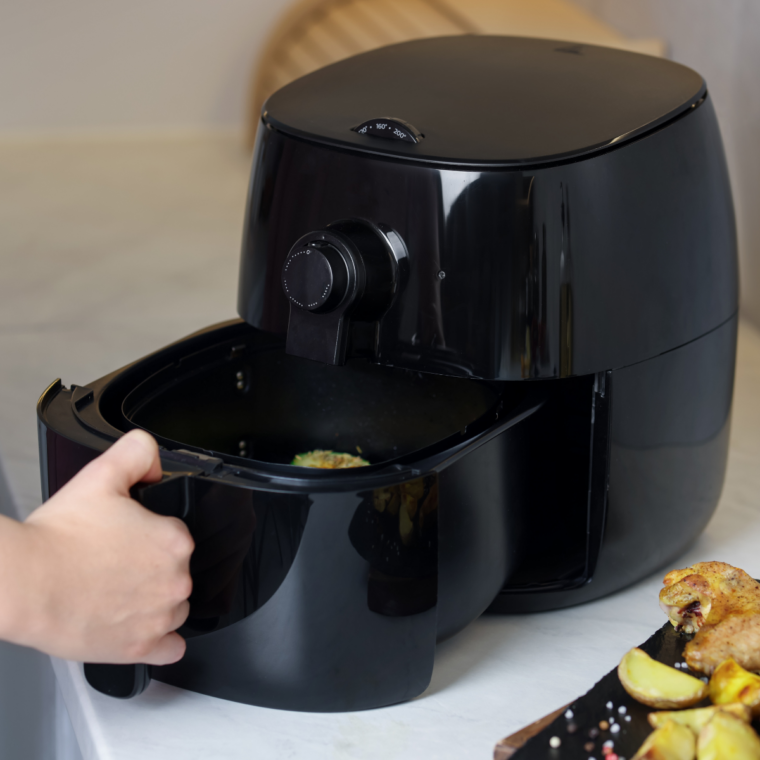
Do not use an air fryer in a location that blocks ventilation, creates a tipping risk, or exposes nearby materials to excessive heat.
Avoid these locations:
Inside a closed cabinet
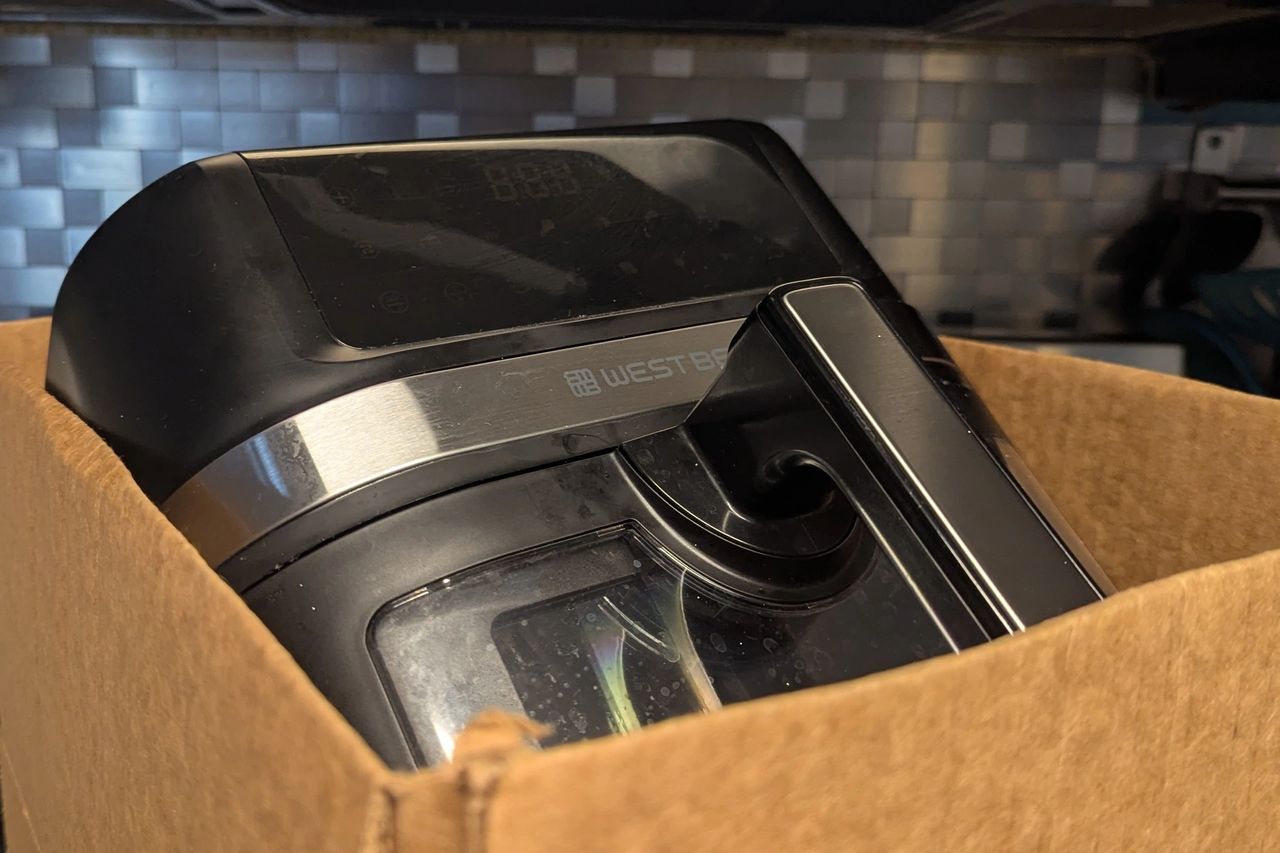
A closed cabinet traps heat and steam. It can also expose the cabinet interior to grease and moisture. Remove the air fryer from storage before use unless the manufacturer specifically designed the cabinet for appliance operation.
On the floor
The floor is unstable, hard to clean, and easy to bump. It also places the hot appliance within reach of children and pets.
Beside a sink
Water and electricity are a dangerous combination. A sink area also exposes the air fryer to splashes and excess moisture.
Next to a gas stove
Open flames, hot burners, grease, and electrical cords should not be close to one another. Do not place the air fryer where a burner flame or hot pan can contact it.
On a refrigerator or washing machine
These surfaces may vibrate, become warm, or lack enough space. The air fryer could slide or fall. Large appliances may also have vents that should not be covered.
On a plastic table
Plastic can soften or melt from heat. Use a solid, heat-rated surface instead.
What to Do If the Countertop Gets Hot
A warm countertop does not always indicate a problem. Air fryers release heat, and some surfaces conduct heat more than others. However, a surface that becomes very hot, changes color, smells burnt, or shows damage needs attention.
Use this check:
- Stop the air fryer if you see smoke, melting, or discoloration.
- Unplug it after the cooking cycle ends and the appliance is safe to handle.
- Inspect the countertop and appliance feet.
- Check the vent clearance in the manual.
- Confirm that a mat or trivet is not blocking airflow.
- Move the air fryer to a more open, heat-resistant area.
- Contact the manufacturer if the appliance base becomes unusually hot or the cord shows damage.
Do not pour water on the appliance or move it while it is hot. If a fire starts, leave the area and call 911. Use a fire extinguisher only if you have a clear exit and know how to use it safely.
Common Air Fryer Placement Mistakes
Covering the air fryer with a towel
A towel may seem useful for protecting cabinets or keeping dust away. Never cover an operating air fryer. Fabric can block ventilation and ignite.
Using parchment under the appliance
Parchment paper belongs in the cooking basket only when the manufacturer allows it. It should not go under the air fryer because it can block vents and scorch.
Treating a trivet as universal protection
A trivet protects only if it is heat rated, stable, and compatible with the appliance. A thin plastic or decorative trivet may melt.
Pushing the air fryer against the wall
This can block the rear vent and send heat directly into the wall. Leave the clearance stated in the manual.
Ignoring steam
Steam can damage cabinets and nearby electronics even when the countertop stays cool. Watch where moisture travels during cooking.
Leaving the air fryer unattended
The National Fire Protection Association recommends staying in the kitchen while cooking. This advice applies to air fryers as well as other countertop cooking appliances.

Does an Air Fryer Need a Special Stand?
Most air fryers do not need a special stand. They need a stable, heat-resistant surface that supports the unit and allows proper ventilation.
A stand may help when:
- The countertop is heat sensitive.
- The stand is made for high heat.
- The stand does not block vents.
- The stand is wide and stable.
- The manufacturer permits its use.
Avoid homemade stands made from cardboard, thin plastic, stacked books, or loose wood pieces. Do not raise the air fryer on an unstable platform to make room for storage underneath.
Can You Use an Air Fryer on a Wooden Table?
You can use an air fryer on a wooden table only when the table is sturdy, heat resistant, and placed away from flammable items. A heat-rated appliance mat may reduce surface damage, but it does not remove the need for ventilation.
Keep the table away from curtains, walls, paper, and children’s reach. A dining table may also be too low, making it easier for a child or pet to touch the hot basket.
Is It Safe to Put an Air Fryer on a Countertop Overnight?
Do not leave an air fryer running while you sleep or leave home. Once the appliance has cooled, unplug it if the manual recommends unplugging after use and store it in a dry place.
Allow the basket and interior to cool before cleaning or storage. Grease buildup can smoke during later use, so clean the basket, tray, and interior according to the manufacturer’s instructions.
Final Answer
Put your air fryer on a flat, stable, heat-resistant countertop with clear space around its vents. Granite, marble, ceramic tile, and stainless steel are often practical choices. Wood, quartz, laminate, glass cooktops, and other heat-sensitive surfaces need extra care or a manufacturer-approved heat barrier.
The safest setup is simple: keep the air fryer away from water, burners, cabinets, walls, flammable items, and the edge of the counter. When general advice conflicts with your owner’s manual, follow the manual for your exact model.
Frequently Asked Questions
Can I put an air fryer directly on the kitchen counter?
Usually, yes, if the counter is stable, level, and heat resistant. Check the manual and use a suitable appliance mat if the countertop may be damaged by heat or steam.
Can an air fryer sit on a laminate countertop?
It may be possible, but laminate can bubble, discolor, or separate when exposed to heat. Follow the manufacturer’s instructions and use a heat-rated barrier that does not block ventilation.
Should an air fryer be on a cutting board?
A thick, stable, heat-rated board may work if the manufacturer allows it. A thin, sliding, plastic, or ordinary wooden cutting board is not a safe choice.
Can I put an air fryer beside my stove?
Only if there is enough space to prevent contact with flames, burners, hot pans, grease, and steam. A separate counter area away from the stove is safer.
Do air fryer feet protect the countertop?
The feet provide stability and may create a small air gap, but they do not guarantee that the countertop will remain safe. The base and exhaust can still transfer heat.
What is the safest place for an air fryer in a small kitchen?
Choose the most open, stable counter area you have. Move the air fryer away from the stove and sink during use, keep vents clear, and avoid operating it inside a cabinet or beneath a low cabinet unless the manual approves it.