Why Is My Air Fryer Chicken Dry: Fixes For Juicy Results
If your air fryer chicken is dry, the most likely cause is overcooking. Chicken loses moisture as its internal temperature rises, and the air fryer cooks with strong, fast-moving heat. Thin chicken breasts, small pieces, high heat, overcrowding, and skipping a short rest can all make dryness worse.
For safe chicken, the USDA says poultry should reach 165°F (74°C) in the thickest part. The goal is to reach that temperature without cooking far beyond it.

The Main Reasons Air Fryer Chicken Turns Out Dry
Dry chicken usually comes from too much heat, too much time, or too little protection from the hot air. Check these causes first.
1. You cooked the chicken too long
This is the most common reason air fryer chicken becomes dry. The air fryer heats the outside quickly, and the center can pass 165°F before you notice.
Chicken breast is especially easy to overcook because it has little fat and a fairly lean structure. A few extra minutes may make a clear difference.
Cooking time depends on:
- The cut of chicken
- The weight and thickness
- Whether the chicken is boneless or bone-in
- Starting temperature
- The air fryer model
- Whether the basket is crowded
- The cooking temperature
A recipe that works for a 7-ounce chicken breast may dry out a smaller 4-ounce breast.
2. You used chicken breasts that are uneven in size
A thick end and a thin end do not cook at the same speed. The thin end may be dry while the thick center is just done.
Pounding chicken breasts to an even thickness helps solve this problem. It also makes cooking time more predictable.
For best results, aim for pieces that are close to the same thickness. Do not flatten them so much that they become very thin, since thin pieces can dry quickly.
3. The air fryer temperature was too high
Many air fryer recipes use 400°F. That setting can work, but it may be too hot for small chicken breasts, thin cutlets, or pre-cooked chicken.
High heat browns the outside fast. It does not always cook the center more evenly. If the outside looks done before the middle reaches a safe temperature, the chicken may need a lower setting and a longer cooking time.
Try these general starting points:
- Chicken breasts: 350°F to 380°F
- Chicken tenders: 350°F to 375°F
- Chicken thighs: 375°F to 400°F
- Chicken wings: 380°F to 400°F
These are starting ranges, not guaranteed cooking times. Use a food thermometer to check the thickest part.
4. You did not use enough oil or another moisture barrier
An air fryer does not “fry” food in the same way as oil in a deep fryer. It moves hot air around the food. A small amount of oil can help the surface brown and reduce moisture loss.
Lightly coat the chicken with oil before seasoning. You can also use:
- A yogurt-based marinade
- Buttermilk
- Mayonnaise mixed with seasoning
- A thin sauce or glaze added near the end
- A light breading
Oil will not rescue chicken that is already overcooked, but it can protect the surface and improve texture.
5. You skipped brining or marinating when the cut needed it
A short brine can help chicken breast hold more moisture. A simple dry brine uses salt applied before cooking. Let the seasoned chicken sit in the refrigerator for about 30 minutes to a few hours, then pat it dry before placing it in the air fryer.
A wet brine can also help, but it takes more space and requires careful handling. Do not leave chicken at room temperature while it brines.
Marinades add flavor and may protect the surface. However, an acidic marinade can change the texture if the chicken sits in it too long. Follow the recipe’s time range rather than assuming longer is better.
6. The basket was too full
Air fryers need space for hot air to move around the food. If chicken pieces overlap, some areas may cook slowly while exposed edges dry out.
Crowding can lead to:
- Uneven browning
- Longer cooking
- Dry outer edges
- A pale or soft surface
- More turning and repeated heating
Place the chicken in one layer when possible. Leave a little space between pieces. Cook in batches if needed.
7. You started with very cold or partly frozen chicken
Frozen chicken takes longer to cook. The outer surface may become dry before the center is safe to eat.
If you cook chicken from frozen, use a method designed for frozen poultry and check the center with a thermometer. Do not rely only on the outside color.
For more even results, thaw chicken in the refrigerator. Never thaw raw chicken on the kitchen counter.
8. You cut the chicken open too soon
Cutting into chicken right after cooking lets hot juices run onto the cutting board. A short rest gives the juices time to settle.
Rest boneless chicken breasts for about 5 minutes before slicing. Larger bone-in pieces may need longer. The rest will not make unsafe chicken safe, so always verify that the chicken reached 165°F first.
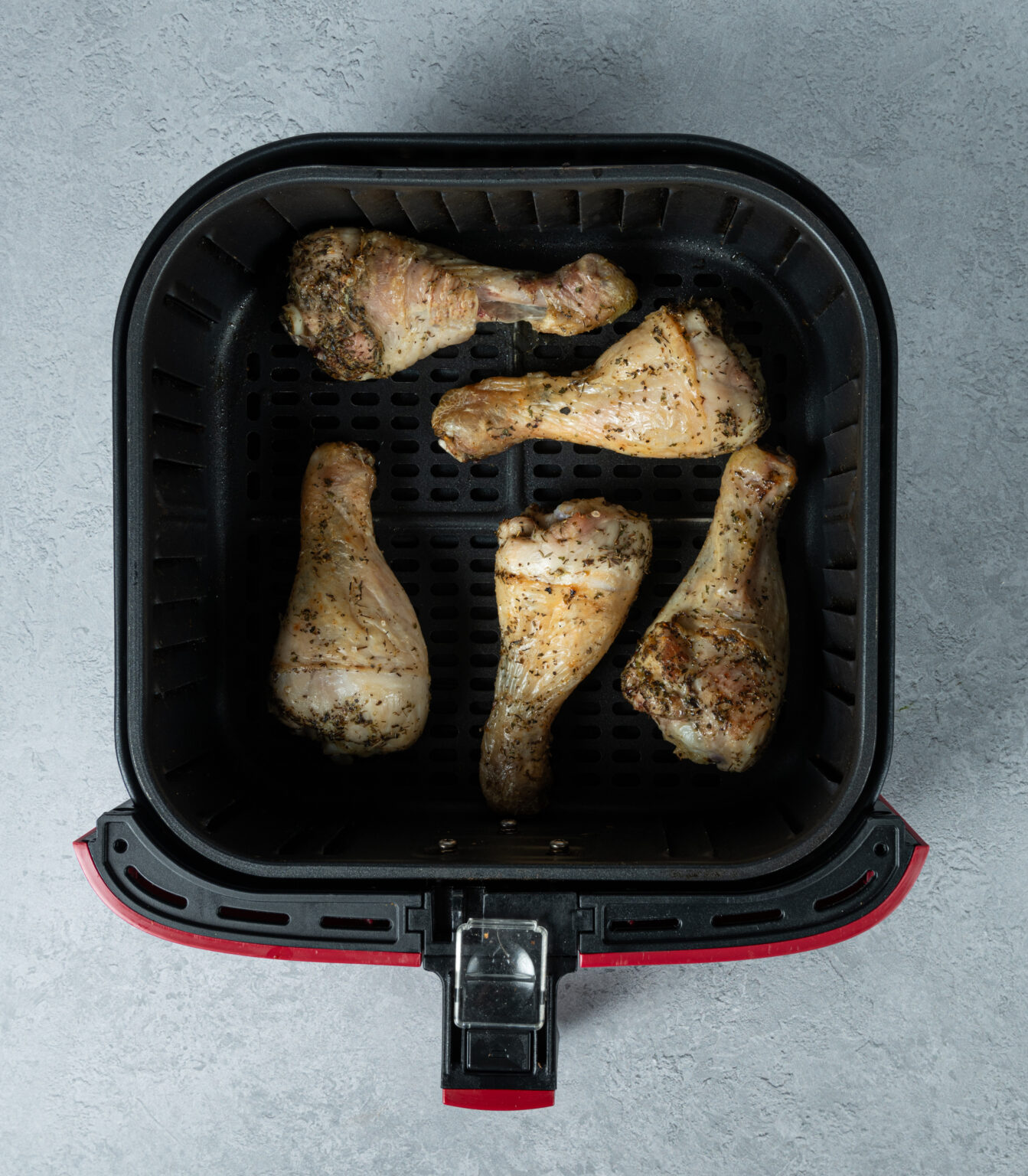
How to Keep Air Fryer Chicken Juicy
The best method is simple: prepare evenly sized chicken, use moderate heat, check the internal temperature early, and stop cooking as soon as the chicken is safe.
Step 1: Choose the right cut
Chicken thighs are usually more forgiving than chicken breasts. Thighs contain more fat and connective tissue, so they tend to stay juicy when cooked longer.
Chicken breast can still turn out moist, but it needs closer timing. Choose pieces of similar size and thickness.
Step 2: Even out the thickness
Place a chicken breast between two sheets of plastic wrap or parchment. Gently pound the thickest area until the piece has a more even thickness.
Do not pound so hard that the meat tears. Even thickness matters more than making the chicken very thin.
Step 3: Season and add a light coating
Pat the chicken dry. Then coat it with a small amount of oil and seasonings.
A basic mix might include:
- 1 tablespoon of oil for about 1 pound of chicken
- Salt
- Black pepper
- Garlic powder
- Paprika
- Onion powder
Adjust the salt if you use a salty marinade, seasoning blend, or breading.
Step 4: Preheat only if your model or recipe calls for it
Some air fryers heat quickly and do not need a long preheat. Others give more consistent results when preheated.
Follow the manufacturer’s instructions for your model. If you preheat, keep the time short and watch small pieces closely. A hot basket can reduce cooking time.
Step 5: Cook in a single layer
Put the chicken in the basket with space around each piece. Avoid stacking or tightly overlapping the meat.
Turn the chicken halfway through cooking if the recipe or your air fryer calls for it. Turning can improve even browning, but it does not replace temperature checking.
Step 6: Check the temperature early
Insert an instant-read thermometer into the thickest part of the chicken. Avoid touching bone, the basket, or a very thin edge.
The USDA recommends a minimum internal temperature of 165°F for all poultry. Check more than one piece if the pieces vary in size.
Begin checking a few minutes before the recipe’s suggested finish time. Air fryers vary, and a small chicken breast can finish sooner than expected.
Step 7: Rest before slicing
Remove the chicken when it reaches a safe temperature. Let it rest briefly, then slice across the grain.
If the chicken is very lean, slice it just before serving. Sliced chicken loses moisture more quickly than a whole piece.
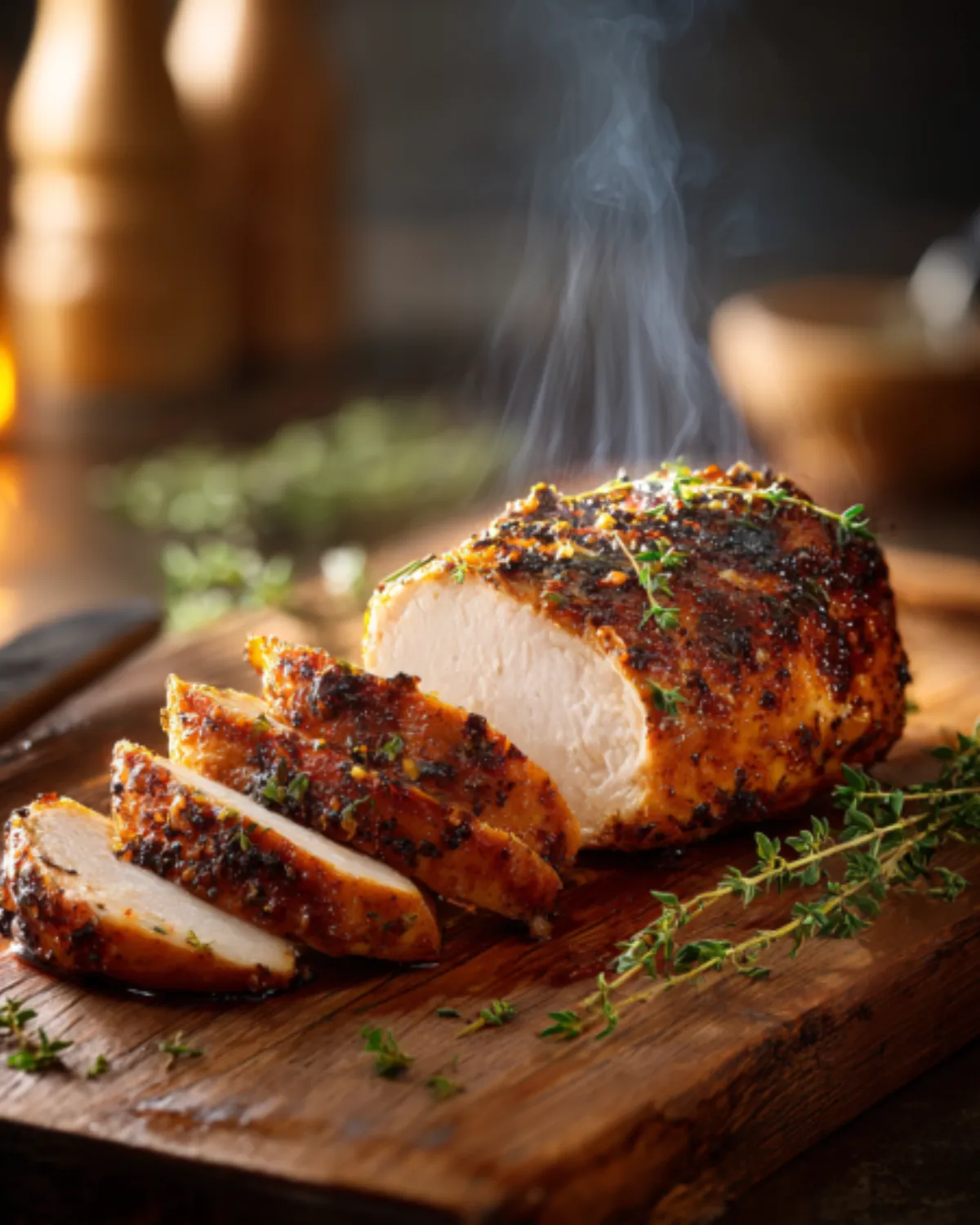
Air Fryer Chicken Temperature and Time Guide
Use this table as a starting point. The thermometer is more reliable than the clock.
| Chicken type | Starting temperature | Approximate time | What to check |
|---|---|---|---|
| Boneless chicken breast | 360°F to 380°F | 15 to 22 minutes | Thickest part reaches 165°F |
| Thin chicken cutlet | 350°F to 375°F | 8 to 14 minutes | Check early; thin meat dries fast |
| Boneless chicken thighs | 380°F to 400°F | 16 to 24 minutes | Center reaches at least 165°F |
| Bone-in chicken thighs | 375°F to 400°F | 22 to 30 minutes | Check near the bone without touching it |
| Chicken tenders | 350°F to 375°F | 8 to 14 minutes | Small pieces need early checks |
| Chicken wings | 380°F to 400°F | 20 to 30 minutes | Confirm 165°F near the thickest area |
These times can change with the air fryer’s size, fan strength, basket design, and the chicken’s starting temperature. Treat the chart as a guide, not a guarantee.
For safety, do not judge doneness by color alone. Cooked chicken can remain slightly pink near the bone, while fully cooked chicken can look white before it reaches a safe temperature.

What to Do If Your Chicken Is Already Dry
You cannot restore all of the moisture lost during cooking, but you can make dry chicken easier to eat.
Slice the chicken thinly and add a moisture-rich topping, such as:
- Pan gravy
- Barbecue sauce
- Salsa
- Tzatziki
- Ranch dressing
- A little broth
- A lemon-and-herb sauce
- Chicken salad dressing
You can also chop the meat for tacos, wraps, soup, pasta, or salad. Adding sauce after cooking works better than continuing to heat the dry chicken.
If the chicken is dry in the center but has not reached 165°F, return it to the air fryer and cook it until safe. Food safety comes before texture.

Why Is My Air Fryer Chicken Dry on the Outside but Raw Inside?
Chicken that is dry outside and raw inside usually has one of three problems: the pieces are too thick, the cooking temperature is too high, or the basket is overcrowded.
Lower the temperature slightly and cook longer. Separate the pieces so air can flow around them. For thick chicken breasts, pound them to an even thickness before cooking.
Use a thermometer in the thickest area. Do not keep cooking based on the outside color, because the surface may darken long before the center is done.
Why Is My Air Fryer Chicken Breast Dry but Chicken Thighs Are Juicy?
Chicken breast is leaner than chicken thigh. It has less fat and connective tissue, so it loses moisture faster when cooked beyond 165°F.
Chicken thighs can tolerate longer cooking and often become more tender as connective tissue softens. This does not mean thighs should be left unchecked. They still need to reach at least 165°F for safety.
If chicken breast dries out often, try a lower temperature, a short brine, even thickness, and earlier temperature checks.
Should You Flip Chicken in an Air Fryer?
Flipping can help chicken brown more evenly, especially in air fryers with stronger heat from the top. It is not always required.
If the chicken is in a single layer and your air fryer circulates heat well, it may cook evenly without flipping. Follow the instructions for your model, but always check the internal temperature in the thickest part.
Can You Put Raw Chicken Directly in an Air Fryer?
Yes. Raw chicken can be cooked in an air fryer if the appliance is used correctly and the chicken reaches 165°F internally.
Prevent cross-contamination by washing your hands after handling raw chicken. Keep raw poultry away from ready-to-eat food, use clean utensils, and refrigerate leftovers promptly.
Do not rinse raw chicken. The USDA and other food-safety authorities advise against rinsing poultry because splashing water can spread bacteria around the sink and nearby surfaces.
Can You Use Frozen Chicken in an Air Fryer?
You can cook some chicken cuts from frozen, but the cooking process takes longer and may be less even. Follow a tested recipe for the exact cut and size.
Check the thickest part with a thermometer. If the outside browns too fast, reduce the temperature and continue cooking until the center reaches 165°F.
Frozen breaded chicken products may have different directions from raw frozen chicken. Follow the package instructions when available.
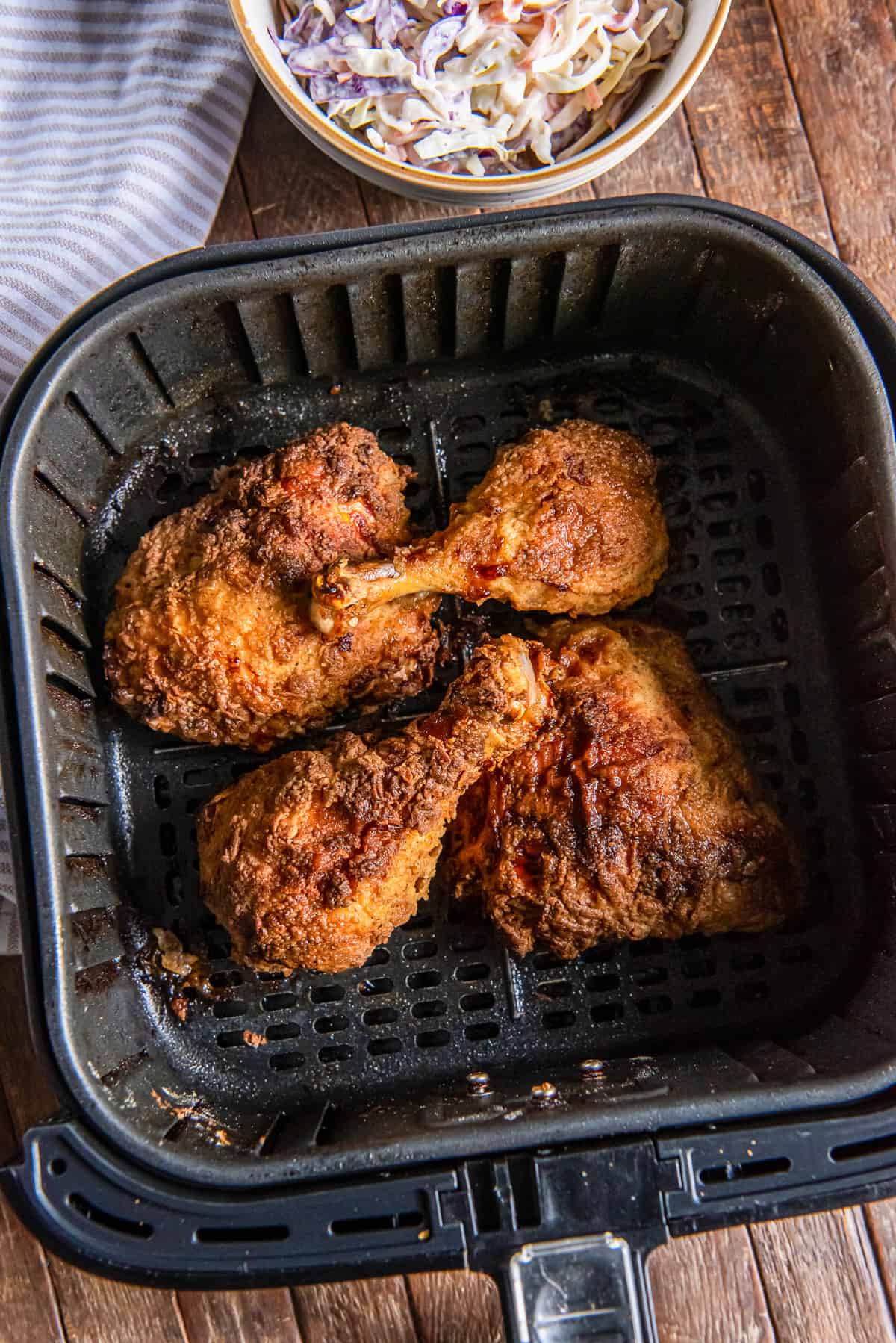
A Simple Troubleshooting Checklist
Use this order the next time your air fryer chicken turns out dry:
- Check the internal temperature. If it went far above 165°F, overcooking is the main issue.
- Measure the thickness. Uneven pieces cook unevenly.
- Lower the temperature. Try 350°F to 375°F for lean chicken breast.
- Check earlier. Start measuring several minutes before the recipe says the chicken is done.
- Use a light oil coating. This helps protect the surface.
- Avoid crowding. Leave space between pieces.
- Rest the chicken. Wait about 5 minutes before slicing.
- Compare your air fryer with the recipe. Different models can cook at different speeds.
The most useful change is often the simplest one: use a thermometer and remove the chicken as soon as it reaches a safe temperature.
Key Takeaways
- Air fryer chicken is usually dry because it was cooked too long.
- Chicken breast needs more care than chicken thighs because it is leaner.
- Cook pieces of similar thickness in a single layer.
- Use moderate heat and check the temperature early.
- Chicken is safe when the thickest part reaches 165°F.
- Rest the chicken briefly before slicing.
- Add sauce or broth to help dry leftovers, but do not keep overcooking them.
Frequently Asked Questions
What is the best temperature for juicy air fryer chicken?
For boneless chicken breast, start at 360°F to 380°F and check the temperature early. Chicken thighs can often handle 380°F to 400°F. The best setting depends on the cut, thickness, and air fryer model.
How do I keep chicken breast moist in an air fryer?
Use evenly thick pieces, lightly coat them with oil, avoid crowding, and check the thickest part early with an instant-read thermometer. Remove the chicken once it reaches 165°F and let it rest before slicing.
Does marinating prevent air fryer chicken from drying out?
A marinade can add flavor and help protect the surface, but it cannot prevent dryness caused by overcooking. Internal temperature and cooking time still matter most.
Should I cover chicken in an air fryer?
Do not cover the basket with foil in a way that blocks airflow or creates a safety risk. A light coating, marinade, or breading is usually a better way to protect the chicken’s surface.
How long should air fryer chicken rest?
Rest boneless chicken for about 5 minutes before slicing. Larger pieces may need more time. Always confirm that the chicken reached 165°F before resting.
Conclusion
The answer to “why is my air fryer chicken dry” is usually overcooking combined with lean meat, high heat, or uneven thickness. Use a thermometer instead of relying on time alone. Prepare chicken pieces evenly, leave room for airflow, cook at a moderate temperature, and let the meat rest before serving.
Those small changes can make air fryer chicken tender and juicy without adding much oil.