Can You Throw Air Fryer In Trash: Safe Disposal Guide
You usually should not throw an air fryer in the trash; recycle, donate, or use an approved e-waste program instead.
If you are asking, “Can you throw an air fryer in the trash?” the answer depends on your local waste rules, the fryer’s condition, and its parts. Most air fryers are small electrical appliances made from plastic, steel, wiring, and electronic parts. This guide explains the safest disposal options, what to do with a broken unit, and how to avoid common recycling mistakes.
Can You Throw an Air Fryer in the Trash?
In some areas, you can place a small air fryer in the regular trash. However, that does not always make it the best choice. Many cities treat air fryers as electronic waste because they contain electrical parts, circuit boards, and valuable metals.
Before deciding, check your city or county waste website. Local rules can vary widely. Some waste services allow small appliances in household trash, while others require drop-off at an e-waste or household hazardous waste site.
The safest general rule is simple:
• Do not place an air fryer in your curbside recycling bin.
• Do not put it in the trash if your local authority bans electrical appliances.
• Recycle or donate it whenever possible.
• Remove food, oil, and grease before disposal.
• Keep the power cord attached unless the recycling center gives different instructions.
So, can you throw an air fryer in the trash? You may be allowed to in some locations, but recycling or responsible reuse is usually the better option.

Why Air Fryers Should Not Go in the Recycling Bin
An air fryer may look like an ordinary plastic container, but it is a small appliance with several mixed materials. Its heating element, fan, thermostat, wiring, circuit board, and plastic housing must be handled in different ways.
Curbside recycling systems are designed for common items such as cardboard, cans, bottles, and certain containers. They are not built to sort appliances. An air fryer can damage sorting equipment or contaminate other recyclable materials.
The basket and cooking tray may contain steel, aluminum, or a nonstick coating. These parts may be recyclable at a scrap metal facility, but they usually do not belong in your household recycling cart.
Electrical appliances also contain materials that can be recovered through specialized recycling. This reduces the need to mine new metals and keeps useful parts out of landfills.
What parts are inside an air fryer?
Most air fryers include:
• A metal heating coil
• A small electric fan
• A thermostat or temperature sensor
• A circuit board
• Copper wiring
• Plastic panels and controls
• A metal cooking basket or tray
• Rubber feet and insulation
These parts are not all processed in the same way. That is why an air fryer should be treated as a small appliance rather than regular plastic waste.

The Best Ways to Dispose of an Air Fryer
There is no single disposal method for every unit. The right choice depends on whether the air fryer still works, whether it is clean, and what services are available near you.
1. Donate a working air fryer
if the air fryer works safely, donation is often the most useful option. A local charity, thrift store, community center, or mutual-aid group may accept it.
Clean the basket and tray first. Include the power cord, user manual, and accessories if you still have them. Do not donate an air fryer with a damaged cord, exposed wires, smoke damage, or a faulty heating element.
You can also offer it through a local community group. Be honest about its age and condition. A clear description helps another person decide whether it meets their needs.
2. Use an electronics recycling program
An electronics recycling center is usually the best option for a broken air fryer. These programs can separate metal, plastic, wiring, and electronic parts.
Search your local government website for terms such as:
• Small appliance recycling
• E-waste drop-off
• Electronics recycling
• Household hazardous waste collection
• Appliance recycling event
Some retailers and manufacturers also accept small appliances. Call before visiting because accepted items, fees, and drop-off rules can change.
3. Take it to a scrap metal facility
A scrap metal recycler may accept the metal basket, tray, or housing. Some facilities accept the complete air fryer, while others require you to separate the metal from plastic and electronic parts.
Do not take the unit apart unless the facility asks you to. Opening an appliance can expose sharp metal edges, wiring, and stored electrical energy.
4. Follow local trash instructions
If your local waste service confirms that small countertop appliances may go in household trash, prepare the air fryer properly.
Clean out all food and oil. Place the appliance in a sturdy bag or box if your waste provider recommends it. Keep it separate from your recycling bin, and never leave it beside the curb unless the service specifically accepts bulky or small appliances.
This is the situation in which people often ask, “Can you throw an air fryer in the trash?” The answer may be yes under local rules, but it should be the last practical choice rather than the first.
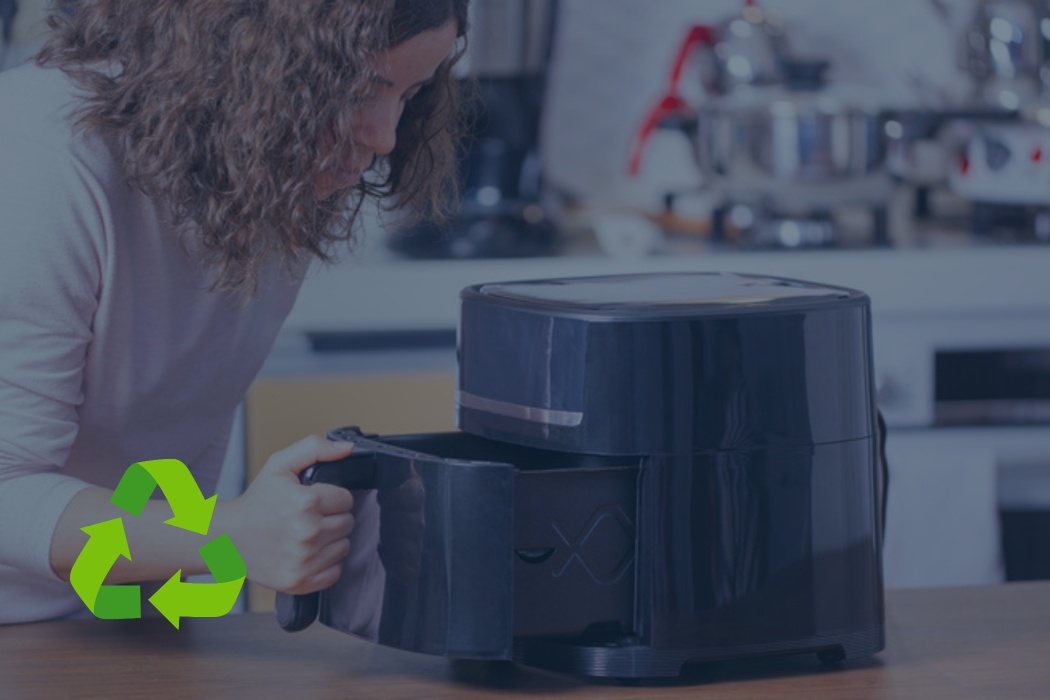
How to Prepare an Air Fryer for Disposal
Proper preparation protects waste workers and prevents leaks, odors, and damage during transport.
Follow these steps:
-
Unplug the air fryer and let it cool completely.
-
Remove the basket, tray, rack, and other detachable parts.
-
Wash away grease, food residue, and crumbs.
-
Dry every part fully.
-
Inspect the power cord for cuts, burns, or exposed wires.
-
Check your local disposal instructions.
-
Place the appliance in a box or bag if required.
-
Take it to the selected recycling or drop-off location.
Do not pour oil down the drain before disposal. Let cooking oil cool, place it in a sealed container, and follow your local oil disposal rules.
If the air fryer smells strongly of burnt plastic, has melted parts, or has caused sparks, do not plug it in again. Place it somewhere dry and away from children until you can arrange safe disposal.
Should you remove the battery?
Most standard countertop air fryers plug into a wall outlet and do not contain a rechargeable battery. Some newer portable or smart appliances may have a battery or backup power component.
If your model contains a lithium-ion battery, do not place it in household trash or curbside recycling. Batteries can cause fires when crushed in collection trucks or sorting machines. Ask your local recycling center how to handle the battery.

Can You Put an Air Fryer in a Dumpster?
A dumpster is still part of the waste stream, so the same local rules apply. If your apartment, workplace, or rental property has a dumpster, do not assume that every item is permitted.
Some property managers prohibit appliances because they create extra disposal costs. Others may require residents to use a designated bulk-waste area.
Before placing an air fryer in a dumpster, ask:
• Does the property accept small electrical appliances?
• Is the dumpster for general waste or construction debris?
• Does the waste company have appliance restrictions?
• Is there a local recycling drop-off nearby?
Never hide an air fryer inside another container to avoid disposal rules. This can create a hazard for workers and may violate local regulations.
What to Do With an Air Fryer That Still Works
Throwing away a working air fryer creates unnecessary waste. Many units can serve another household for years, especially if the issue is cosmetic or the appliance is simply no longer needed.
Consider these options:
• Give it to a friend, neighbor, or family member.
• Donate it to a charity or thrift store.
• Offer it through a community sharing group.
• Sell it online after cleaning and testing it.
• Ask a local food pantry or community kitchen if it can use the appliance.
Test the air fryer safely before giving it away. Check that the fan runs, the basket locks correctly, the controls respond, and the unit does not produce smoke or unusual odors.
Do not give away an appliance with a damaged plug or frayed cord. A cheap replacement cord may not solve the problem, and repairs to heating appliances should be done by a qualified technician.

Can You Recycle the Air Fryer Basket Separately?
In many cases, the basket and tray can be recycled as scrap metal, but the answer depends on their coating and the rules of the facility. Nonstick coatings may prevent acceptance in some metal recycling programs.
Do not place the basket in your curbside recycling bin unless your local program specifically accepts it. The basket may be too large, too heavy, or made from a material that the facility cannot process.
You can ask a scrap metal center whether it accepts:
• Stainless steel baskets
• Aluminum trays
• Metal racks
• Nonstick-coated cooking parts
If the basket is clean and still usable, consider reusing it. Some people use old trays for craft projects, workshop storage, or gardening tasks. Avoid using a damaged or peeling basket for cooking.

Common Mistakes to Avoid
Many disposal problems happen because people treat an air fryer like an ordinary food container. Avoid these mistakes:
• Putting the complete air fryer in the curbside recycling bin
• Throwing away a unit with oil or food still inside
• Placing a lithium battery in the trash
• Donating an appliance with a damaged power cord
• Taking apart the appliance without proper tools or knowledge
• Leaving it next to the curb without checking collection rules
• Burning or melting the plastic housing
• Pouring old cooking oil into a drain
A particularly serious mistake is using a damaged air fryer until it fails. A faulty heating element, fan, or cord can create a fire or shock risk. If the appliance shows signs of electrical damage, stop using it and arrange safe disposal.

What Do Environmental Rules Say?
The U.S. Environmental Protection Agency encourages reuse, repair, and recycling before disposal when practical. Electrical appliances can contain recoverable materials, and recycling reduces the amount of waste sent to landfills.
The Consumer Product Safety Commission also advises consumers to stop using products with damaged cords, overheating, smoke, sparks, or other dangerous signs. These warnings matter because an air fryer combines electricity with high heat.
Rules still differ by location. Federal guidance does not replace city, county, or state disposal requirements. Your local waste authority has the final say about whether an air fryer belongs in the trash, at an e-waste site, or at a special collection event.
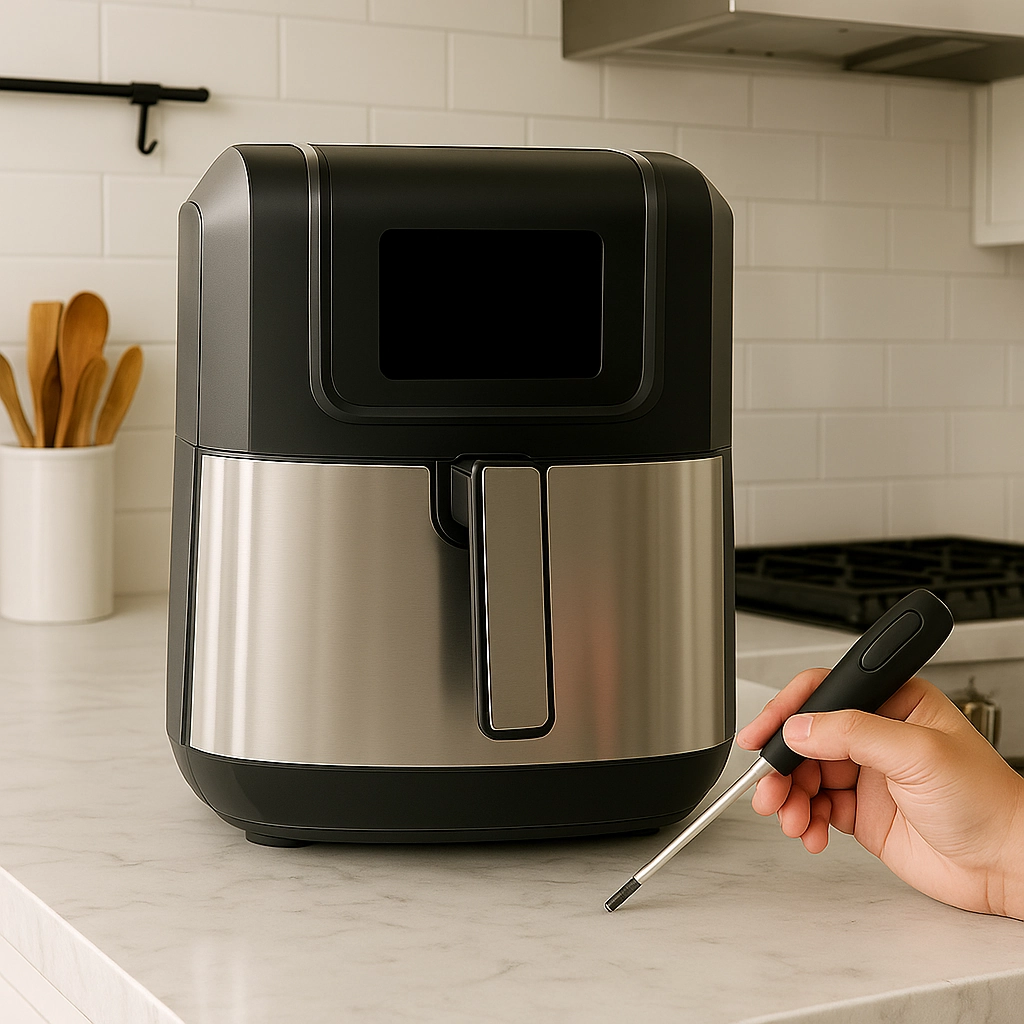
How to Find Local Air Fryer Disposal Options
Finding a legal disposal option often takes only a few minutes.
Start with your city or county website. Search for “small appliance disposal” or “e-waste recycling.” You can also call the waste department and ask where to take a countertop air fryer.
Check these places:
• City or county recycling centers
• Household hazardous waste facilities
• Electronics recycling events
• Scrap metal recyclers
• Appliance repair shops
• Retail take-back programs
• Manufacturer recycling programs
Ask whether the service charges a fee. Also confirm whether it accepts the full appliance or only separated parts.
If you live in an apartment, contact the property manager before using a shared dumpster. If you live in a rural area, the nearest recycling center may have different rules from your town’s curbside service.
How to Decide Between Trash, Recycling, and Donation
Use this simple decision guide:
-
If the air fryer works safely, donate, sell, or give it away.
-
If it is broken but clean, look for an electronics or small appliance recycling program.
-
If only the basket is damaged, check whether the manufacturer sells a replacement part.
-
If the unit is unsafe, do not test it or donate it. Ask a recycling center for handling advice.
-
If your local authority allows it and no recycling option exists, place it in regular trash as directed.
This approach keeps usable products in circulation and sends only true waste to the landfill. It also answers the question, “Can you throw an air fryer in the trash?” without ignoring the environmental and safety issues.
Frequently Asked Questions
Can you throw an air fryer in the trash?
Sometimes, but local rules decide whether it is allowed. Recycling or donating the unit is usually a better option because an air fryer contains metal and electronic parts.
Can an air fryer go in curbside recycling?
Usually not. Most curbside recycling programs do not accept small electrical appliances, so use an approved e-waste or appliance recycling service instead.
Should I remove the air fryer basket before disposal?
Remove the basket if your recycling center gives separate instructions for metal parts. Otherwise, keep the appliance together and ask the facility how it wants the unit prepared.
Can I donate a broken air fryer?
Do not donate an air fryer with a damaged cord, exposed wires, smoke damage, or a faulty heating element. Donate only a clean appliance that works safely and completely.
Can an air fryer go to a scrap metal recycler?
Some scrap metal facilities accept air fryers, while others accept only certain metal parts. Call ahead and ask whether the facility accepts mixed-material small appliances.
What should I do with an air fryer that smells like burnt plastic?
Stop using it and unplug it after the appliance has cooled. Do not donate it or place it in recycling until a qualified service or local recycling facility advises you on safe disposal.
Can you throw an air fryer in the trash if it has a lithium battery?
No. A lithium battery should not go in household trash or curbside recycling because it may cause a fire when crushed. Take it to a battery or electronics recycling location that accepts lithium batteries.
Conclusion
The safest answer to “Can you throw an air fryer in the trash?” is: check local rules first, but choose reuse or recycling whenever possible. Donate a clean, working unit, use an e-waste program for a broken one, and keep it out of the curbside recycling bin unless your local service clearly accepts small appliances.
Clean the air fryer, remove food and oil, inspect the cord, and contact your waste authority before disposal. If this guide helped, share it with someone replacing an old kitchen appliance or check your local recycling program for the correct drop-off option.