What To Do Before Using An Air Fryer: Safety Tips
Before using an air fryer in a U.S. kitchen, remove all packaging, wash and dry the removable parts, place the appliance on a clear heat-safe surface, and read the model’s manual. Then check whether the manufacturer requires preheating or an empty first run. These steps help prevent smoke, odors, uneven cooking, and avoidable safety problems.
An air fryer is a small countertop convection oven. A heating element warms the air, while a fan moves that air around the food. Because the appliance gets hot and may use significant power, setup matters as much as the cooking method.

1. Read the manual before plugging in the air fryer
The manual is the best source for model-specific instructions. Air fryers can look alike but differ in basket design, heating controls, dishwasher guidance, preheat settings, and electrical requirements.
Find the sections labeled Before First Use, Important Safeguards, Cleaning, and Cooking Guide. Check for:
- Required space around the appliance
- Whether the basket and tray are dishwasher-safe
- Whether the unit needs preheating
- Whether an empty test run is recommended
- Maximum food and liquid limits
- Approved accessories
- Cleaning products to avoid
- Warranty and electrical instructions
Do not assume that instructions for one air fryer apply to another. Some models have a removable basket inside a drawer. Others use racks, rotating baskets, or multiple cooking zones.
Check the power requirements
Use the voltage and power information printed on the appliance or in its manual. Most air fryers sold for U.S. homes are designed for standard household outlets, but their power draw can vary.
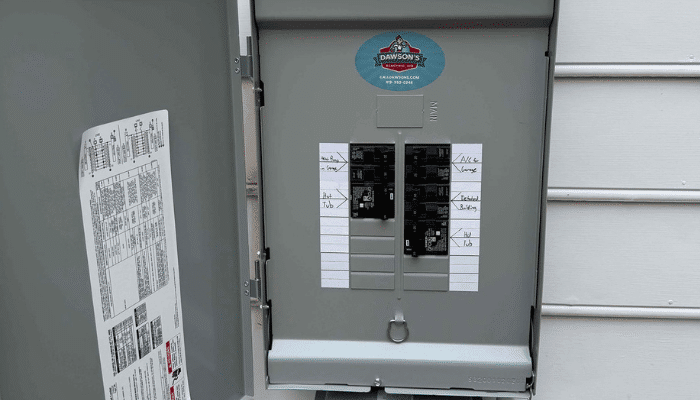
Plug the air fryer into a properly installed wall outlet unless the manual gives different instructions. Avoid using a loose outlet, damaged cord, power strip, or overloaded extension cord. Keep the cord away from hot surfaces and areas where it could be pulled.
The U.S. Consumer Product Safety Commission provides general guidance on safe use of high-wattage household appliances, including keeping cords and heat-producing equipment away from hazards. The air fryer manual remains the controlling source for that model.
2. Remove every piece of packaging
Inspect the air fryer before washing or operating it. Remove all visible shipping materials from the outside and inside.
Look for:
- Cardboard inserts
- Plastic film
- Foam blocks
- Tape
- Twist ties
- Paper labels
- Protective stickers
- Plastic bags around trays or racks
- Packing material beneath the basket
Open the drawer or cooking chamber and check the area near the heating element. Do not place the air fryer on heat until all packaging is gone.
Some appliances have thin protective film on metal or plastic surfaces. Leaving it in place can cause smoke, melting, or a strong plastic smell.
Keep the manual and model number. You may need them later for cleaning instructions, replacement parts, or a safety notice.
3. Inspect the air fryer for damage
Do not use the appliance if it arrived cracked, dented in a way that affects the basket, or damaged near the cord or plug.
Check these parts:
- Power cord
- Plug
- Basket handle
- Basket coating
- Cooking tray or crisper plate
- Drawer rails
- Heating chamber
- Control panel
- Rubber feet
The basket should slide in and out without forcing it. The drawer should close fully. A loose tray can affect airflow and may cause food to cook unevenly.
Contact the retailer or manufacturer before use if you find damage, missing parts, exposed wiring, or a plug that feels hot or loose. Do not try to repair a new air fryer yourself.

4. Wash and dry the removable parts
Wash the basket, crisper plate, racks, or other removable cooking parts before the first use. Use warm water, mild dish soap, and a soft sponge unless the manual gives different instructions.
Avoid:
- Steel wool
- Abrasive powders
- Metal scrapers
- Harsh oven cleaner
- Strong chemicals
- Sharp tools
These products can damage a nonstick coating or leave residue on cooking surfaces.
If the parts are labeled dishwasher-safe, follow the manual. “Dishwasher-safe” does not always mean every part can go in the dishwasher. The main unit, cord, and heating assembly should never be submerged or placed in a dishwasher.
Dry each part fully before putting it back. Water left near electrical parts or under a heating area can create problems. A dry basket also reduces early steam and splatter.
Should you season the basket?
Only season the basket if the manufacturer recommends it. Some air fryers have a nonstick coating that does not need seasoning. Adding oil when it is not required may create smoke or leave a sticky film.
If the basket has a bare metal surface, follow the care instructions in the manual rather than using a general cast-iron seasoning method.
5. Choose a safe location
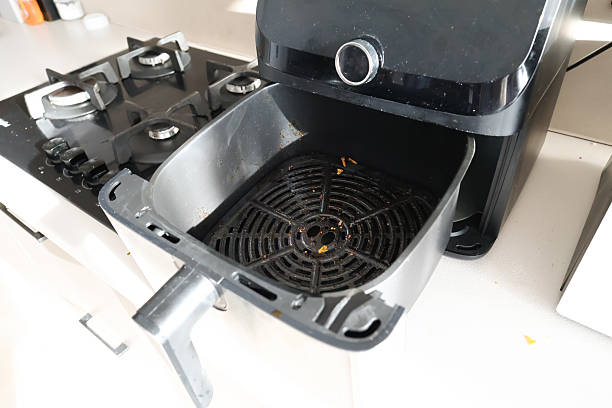
Place the air fryer on a stable, level, heat-resistant surface. A clear kitchen counter is often suitable if the surface can handle heat and the appliance has room for airflow.
Keep the air fryer:
- Away from the edge of the counter
- Away from curtains and paper towels
- Away from cabinets that could be damaged by heat
- Away from the sink and splashing water
- Away from the stovetop
- Out of reach of children and pets
- In a place where hot steam can escape safely
Leave the amount of space required by the manual. If the manual does not state a distance, do not push the appliance tightly against a wall or beneath a low cabinet. Air fryers release hot air and steam through vents, usually near the back or top.
Do not cover the vents during cooking. Restricted airflow can affect cooking and may raise the temperature around the appliance.
Protect delicate countertops if the manufacturer warns that the base may become hot. Do not place the air fryer directly on a hot burner, wet surface, cloth, or unstable cutting board.
6. Decide whether to preheat or run an empty cycle
Preheating depends on the model and the recipe. Some air fryers preheat automatically. Others give the best results when you heat them for a few minutes first. Many recipes also include a preheat step because it can help food brown sooner.
Follow the manual and recipe instructions instead of using a universal rule.
An empty first run is also model-specific. Some manufacturers advise running the air fryer without food for a short period to remove manufacturing odors. Others do not require it. If your manual recommends an empty cycle:
- Place the clean basket or tray inside.
- Set the time and temperature listed by the manufacturer.
- Open a window or use the range hood if a mild odor appears.
- Stop the cycle if you see heavy smoke, sparks, melting, or unusual noise.
- Let the unit cool completely before wiping it again.
A mild new-appliance odor may occur during the first heating cycle. Heavy smoke, a burning-wire smell, flames, or repeated strong fumes are not normal. Unplug the air fryer if it is safe to do so, keep the drawer closed if there is a fire, and follow the manufacturer’s safety instructions. Do not pour water into an electrical appliance.
7. Learn the basket and airflow limits
Air fryers need moving air to cook well. The crisper plate or perforated tray lifts food above the bottom of the basket and lets hot air circulate.
Before adding food, confirm that:
- The crisper plate is seated correctly.
- The basket is not overfilled.
- The drawer closes fully.
- Food will not touch the heating element.
- The air vents remain clear.
- Any rack is installed in the correct position.
Do not pack food into a solid, deep layer if the recipe depends on crisping. A crowded basket may produce soft or unevenly cooked food. Cook in batches when needed.
Do not pour loose liquid into the main drawer unless the manual specifically allows it. Air fryers are not usually designed for deep frying. A small amount of liquid used as directed by the manual may help with drippings or smoke, but too much can cause splashing and steam.
Use only accessories that fit the model and are rated for its temperature. Do not place plastic containers, paper products, or cookware in the air fryer unless the manufacturer confirms they are safe for that use.

8. Prepare the food safely before cooking
An air fryer cooks food quickly, but it does not make unsafe food safe. Wash produce, prevent cross-contamination, and keep raw meat separate from ready-to-eat foods.
For raw meat, poultry, seafood, and egg dishes, use a food thermometer. The U.S. Department of Agriculture lists these minimum internal temperatures:
| Food | Minimum internal temperature |
|---|---|
| Poultry, including chicken and turkey | 165°F |
| Ground meats | 160°F |
| Whole cuts of beef, pork, lamb, and veal | 145°F, followed by a 3-minute rest |
| Fish and shellfish | 145°F |
| Leftovers and casseroles | 165°F |
These temperatures measure the food, not the air inside the appliance. Place the thermometer in the thickest part of the food and avoid touching bone or the basket.
Pat wet foods dry when appropriate. Excess surface moisture can create steam and reduce browning. Use a small amount of oil only when the recipe needs it. Do not spray oil into the heating element or onto a running appliance.
9. Check what the first cooking session needs
For your first recipe, choose a simple food that does not require delicate timing. Frozen fries, vegetables, or a small portion of a familiar food can help you learn how the controls work.
Before pressing Start, confirm:
- The cooking temperature uses Fahrenheit.
- The timer is set correctly.
- The food is in a single, sensible layer.
- The basket is fully inserted.
- The unit is on a stable surface.
- You know how to pause or stop the appliance.
- You have heat-safe tools ready.
Use tongs or a silicone utensil to turn food. Do not shake a basket over an open flame or near a sink full of water. The basket and food can be very hot.
Stay nearby during the first use. Listen for unusual sounds and watch for heavy smoke. The outside, basket, and escaping air may become hot even when the controls look cool.

Common mistakes to avoid before using an air fryer
Leaving the plastic film on
Protective film can melt or produce smoke. Check the inside and outside before heating the unit.
Using the wrong cleaning method
Abrasive tools can damage the basket coating. The main appliance should not be submerged.
Blocking the air vents
Pushing the air fryer against a wall or under a low cabinet can trap heat and steam.
Overfilling the basket
A full basket can block airflow. This often leads to pale, soft, or uneven food.
Adding too much oil
Air fryers need little oil. Excess oil can smoke, splatter, and collect beneath the basket.
Treating every odor as normal
A mild first-use odor may be expected when the manual allows it. Heavy smoke, sparks, flames, or an electrical smell require you to stop and inspect the appliance.
Using unapproved liners or accessories
Parchment liners, foil, racks, and silicone molds can change airflow. Use them only when the manual or a reliable recipe confirms they fit the model and cooking method. Never place a loose liner in the air fryer during preheating; the fan may lift it into the heating element.

Quick pre-use checklist
Use this checklist before the first cooking cycle:
- The manual is available.
- All packaging and protective film are removed.
- The cord, plug, basket, and drawer are undamaged.
- Removable parts are washed and fully dried.
- The air fryer is on a stable, heat-safe surface.
- The vents have clear space.
- The outlet and power setup follow the manual.
- Preheating or an empty cycle has been checked.
- The food fits without blocking normal airflow.
- A food thermometer is ready for meat, poultry, seafood, or egg dishes.
If the appliance does not turn on, first check that the basket or drawer is fully closed and seated. Then check the outlet and the manual’s setup instructions. If the cord, plug, or housing is damaged, stop troubleshooting and contact the manufacturer or retailer.
Frequently asked questions
Do I need to wash an air fryer before first use?
Yes. Wash the removable basket, tray, rack, or crisper plate with mild soap and warm water unless the manual says otherwise. Do not wash or submerge the main electrical unit.
Should I run an air fryer empty before cooking?
Only if the manufacturer recommends it. Some models use an empty cycle to reduce first-use odors, while others do not require one. Follow the instructions for your exact model.
Do I need to preheat an air fryer?
Not always. Preheating may improve browning and shorten the cooking time for some foods, but many air fryers can cook without it. Follow the appliance manual and recipe.
Can I put aluminum foil or parchment paper in an air fryer?
Only when the manual permits it and the material is secured by food. Loose paper can move into the heating element. Foil or paper can also reduce airflow if it covers too much of the basket.
Why does my new air fryer smell or smoke?
A light odor during the first heating cycle can come from manufacturing residue. Stop using the appliance if the smoke is heavy or persistent, or if you notice sparks, flames, melting, or an electrical smell.
Conclusion
Before using an air fryer, remove its packaging, inspect it, wash and dry the removable parts, set it on a clear heat-safe surface, and follow the model’s manual. Check the power setup, airflow space, preheat instructions, and food safety needs before cooking.
For the first meal, use a small batch and stay nearby. Learn how the basket, controls, vents, and cooking time work before preparing a full meal.