Air Fryer Temperature Conversion From Oven: Easy Guide
For most recipes, lower the oven temperature by 25°F and check your food early.
Moving a recipe from an oven to an air fryer is simple once you understand the heat difference. This guide to air fryer temperature conversion from oven explains the best temperature chart, cooking time changes, food safety tips, and common mistakes. You will also learn when the usual 25°F rule needs adjustment.
How Air Fryers Differ From Ovens
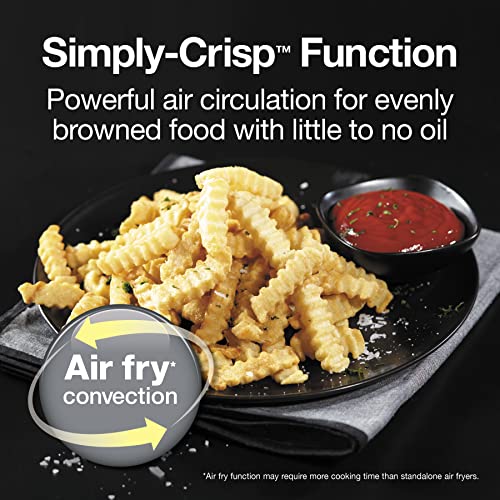
An air fryer is a small convection oven. It uses a heating element and a fan to move hot air around food. Since the cooking space is small, the air heats quickly and reaches the food more directly.
A full-size oven has more space. It may also lose heat when you open the door or place in a cold tray. An air fryer usually recovers heat faster, which helps food cook and brown sooner.
This difference is why air fryer temperature conversion from oven often requires a lower temperature. The fan also dries the surface of food, which helps create a crisp crust on fries, chicken, vegetables, and breaded foods.
The oven setting matters, too:
• A conventional oven has still air and usually needs the biggest adjustment.
• A convection oven already uses a fan, so the air fryer change may be smaller.
• A toaster oven may cook more like an air fryer if it has a strong fan and a small chamber.
Think of the air fryer as a focused heat tool. It is not simply a smaller oven. It is more like a small wind tunnel that sends hot air around every exposed surface.
The Basic Air Fryer Temperature Conversion From Oven
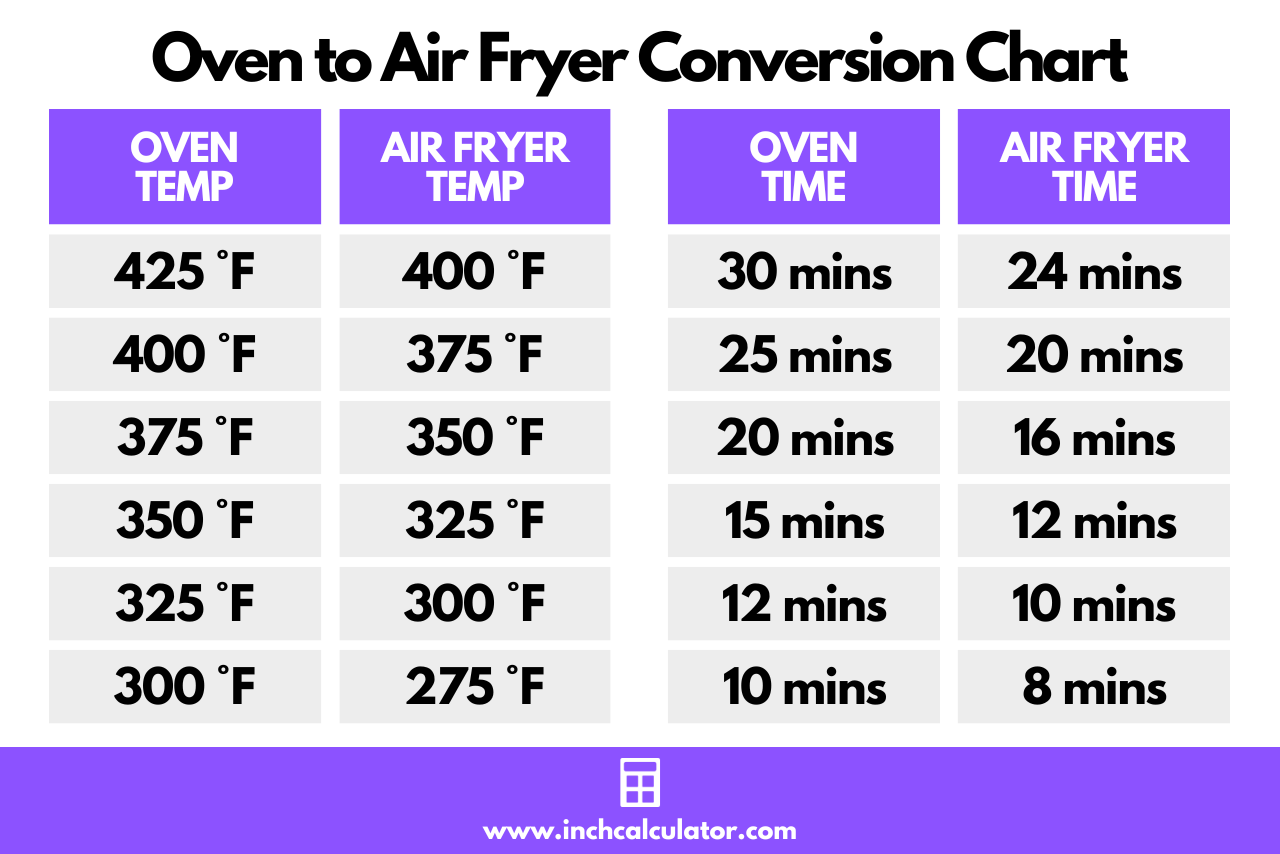
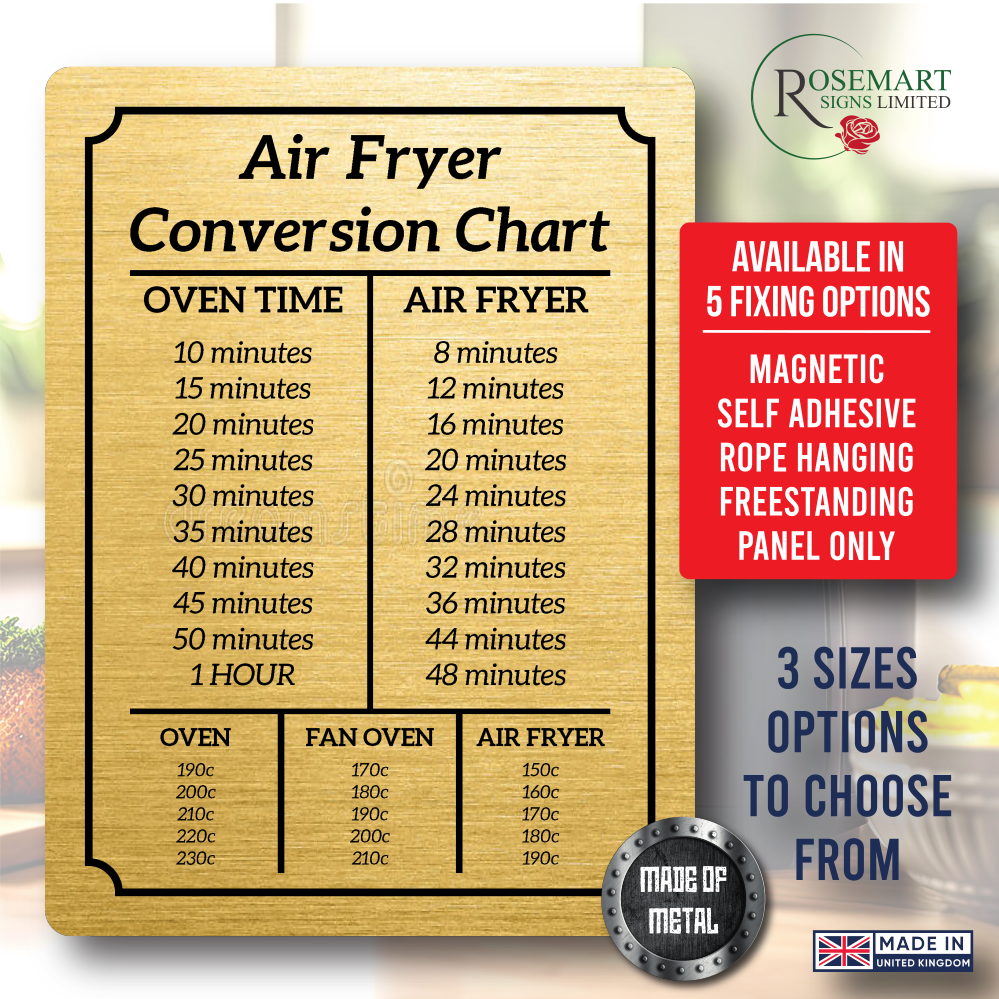
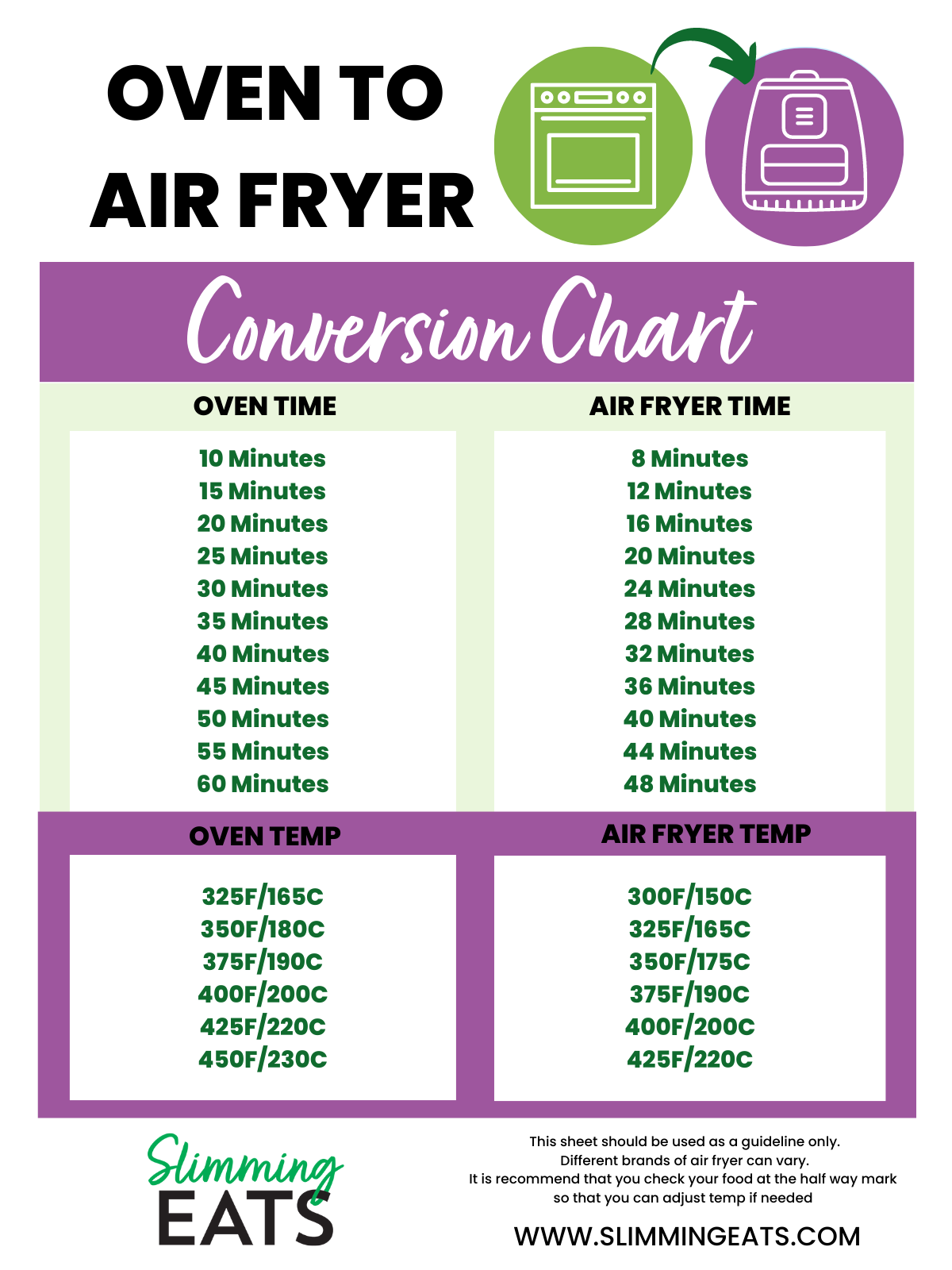
The standard rule is to reduce the oven temperature by 25°F. You can also reduce the cooking time by about 20%, then check the food before the original oven time ends.
For example, a recipe that says 400°F for 20 minutes often works at 375°F for about 16 minutes in an air fryer.
The air fryer temperature conversion from oven is a starting point, not a strict law. Food size, moisture, coating, basket style, and air fryer power all affect the final result.
Use this simple method:
-
Lower the oven temperature by 25°F.
-
Reduce the cooking time by 20%.
-
Start checking the food halfway through the new cooking time.
-
Turn or shake the food if needed.
-
Use a food thermometer for meat, poultry, and seafood.
Basic conversion examples
| Oven setting | Suggested air fryer setting | Oven time | Suggested air fryer time |
|---|---|---|---|
| 325°F | 300°F | 30 minutes | 24 minutes |
| 350°F | 325°F | 25 minutes | 20 minutes |
| 375°F | 350°F | 20 minutes | 16 minutes |
| 400°F | 375°F | 20 minutes | 16 minutes |
| 425°F | 400°F | 15 minutes | 12 minutes |
| 450°F | 425°F | 12 minutes | 10 minutes |
The table works well for many roasted foods, frozen snacks, and breaded items. It may need changes for cakes, delicate fish, thick meat, or recipes that depend on slow cooking.
Air Fryer Temperature Conversion Chart
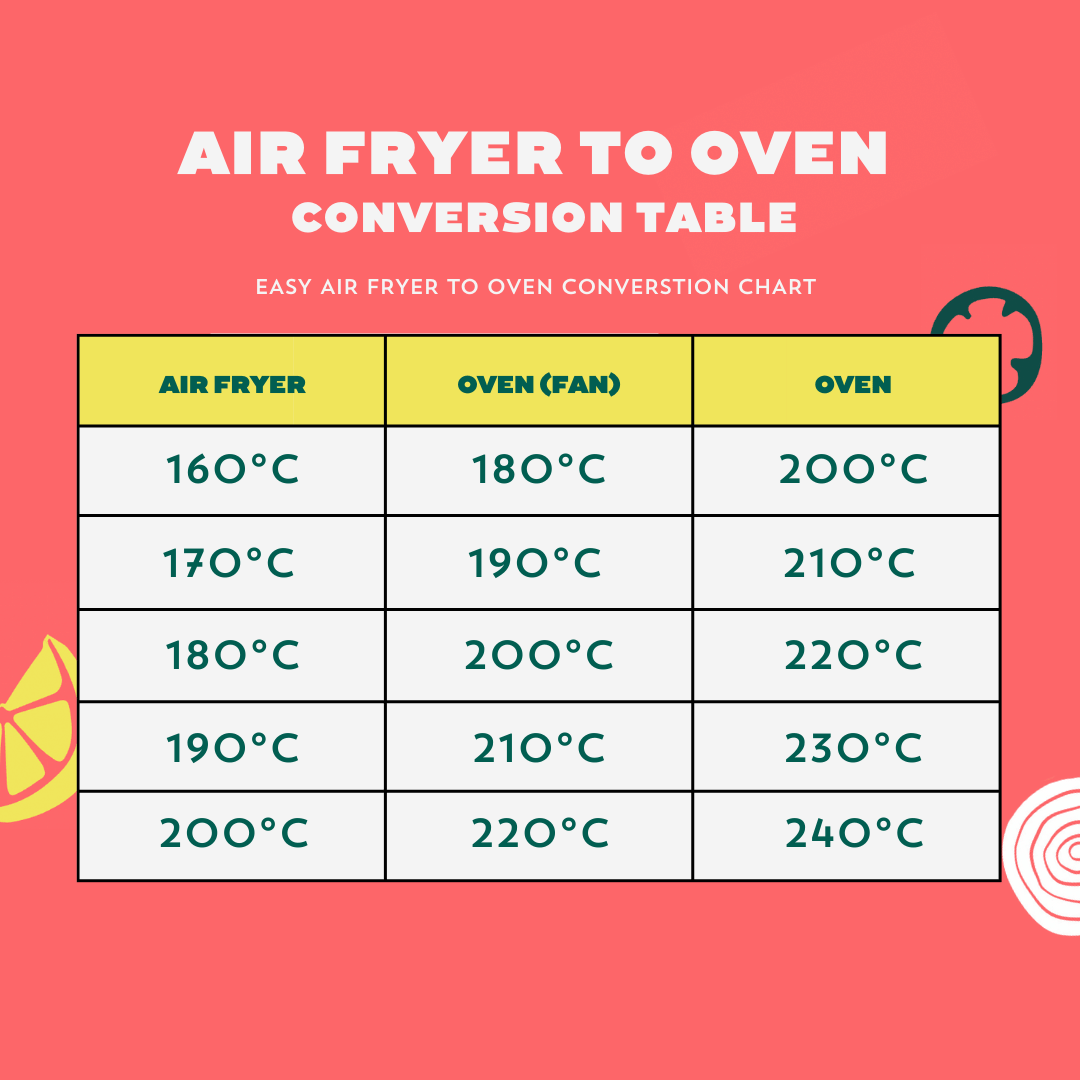
A clear air fryer temperature conversion from oven chart makes recipe changes faster. Use the chart below when a recipe gives only an oven temperature.
| Conventional oven | Air fryer |
|---|---|
| 250°F | 225°F |
| 275°F | 250°F |
| 300°F | 275°F |
| 325°F | 300°F |
| 350°F | 325°F |
| 375°F | 350°F |
| 400°F | 375°F |
| 425°F | 400°F |
| 450°F | 425°F |
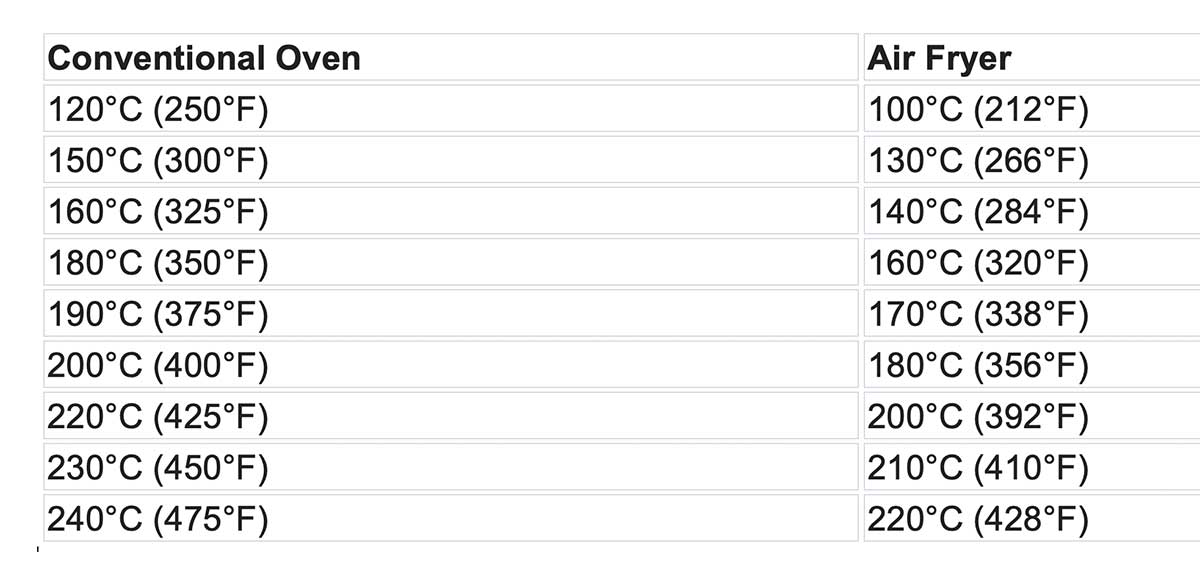
For Celsius settings, reduce the temperature by about 10°C to 15°C. The exact change depends on the recipe and the air fryer model.
| Conventional oven | Air fryer |
|---|---|
| 160°C | 150°C |
| 175°C | 165°C |
| 190°C | 180°C |
| 200°C | 190°C |
| 220°C | 210°C |
| 230°C | 220°C |
Most US recipes use Fahrenheit, while many appliance manuals use Celsius. Always confirm which scale your air fryer display uses before cooking.
One important note: some recipes already list convection temperatures. If the oven recipe says “fan oven” or “convection oven,” reduce the temperature by only 10°F to 15°F at first. A full 25°F reduction may make the food cook too slowly.
How to Convert Oven Cooking Time for an Air Fryer
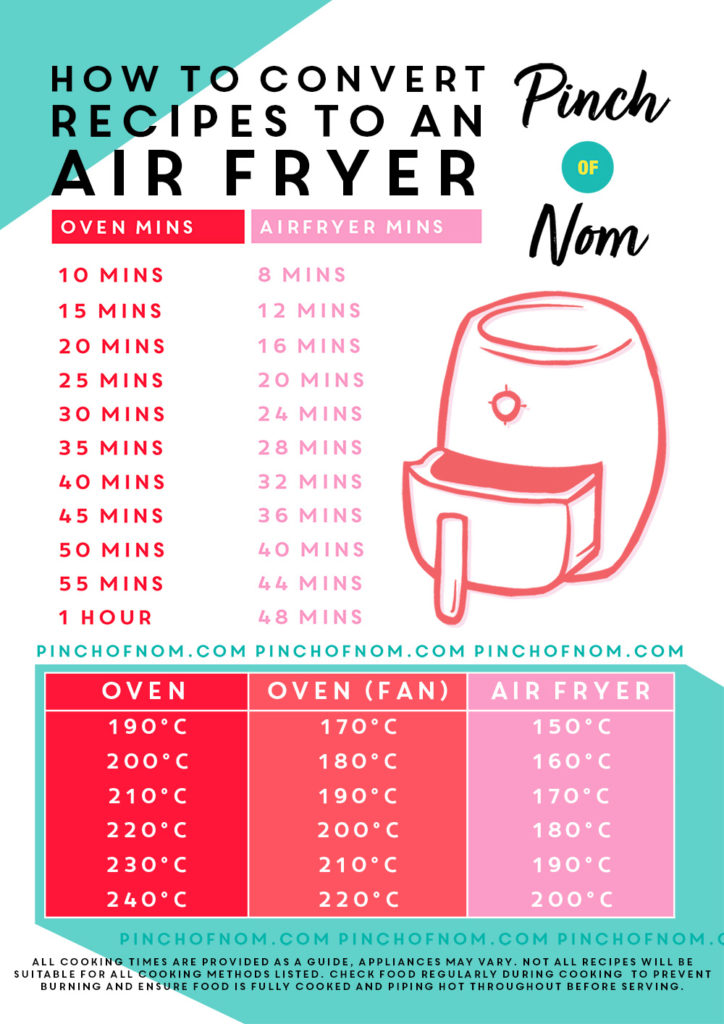
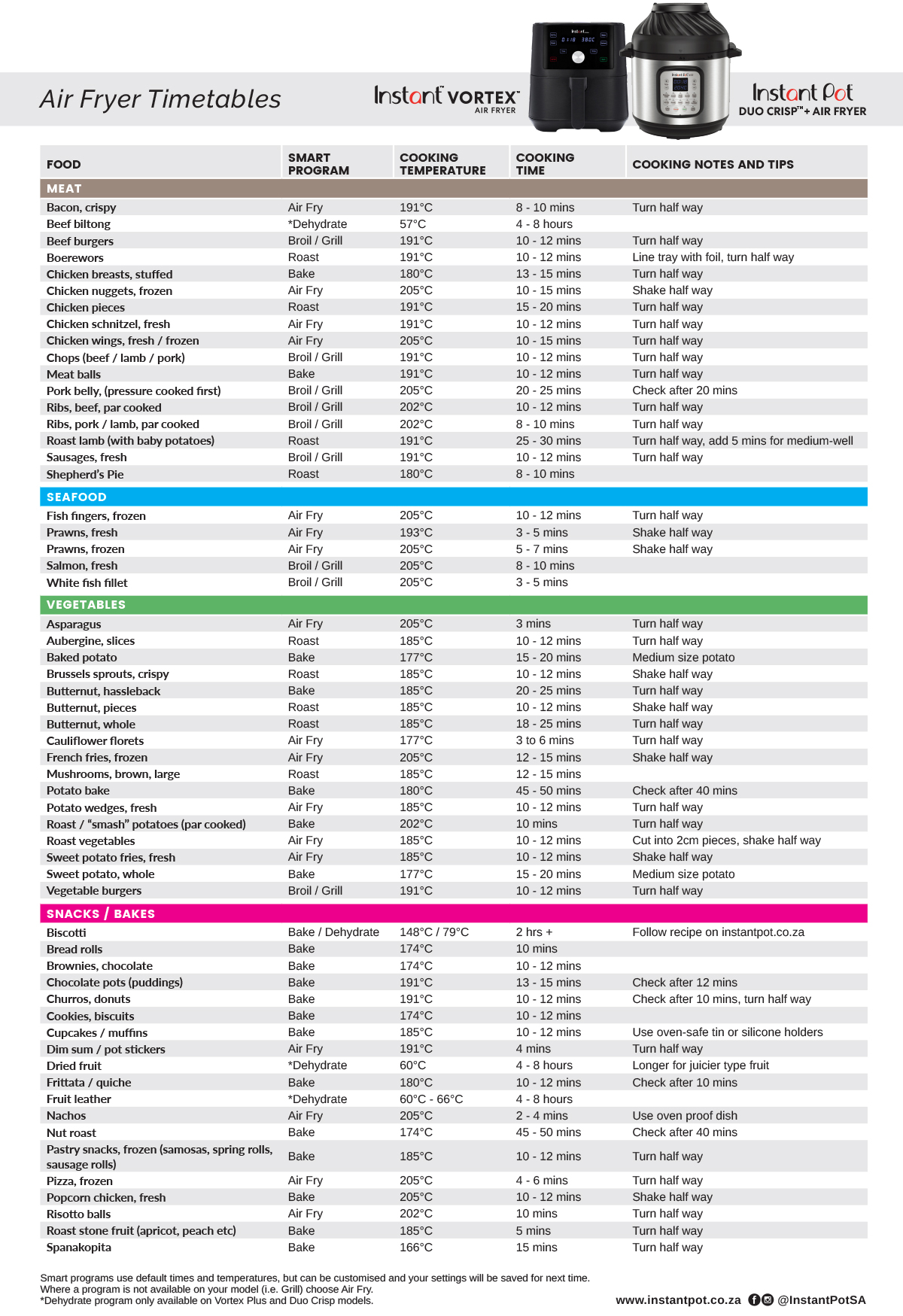
Temperature is only half of the conversion. Air fryers often cook food faster because the hot air moves constantly and the basket keeps food close to the heat source.
A practical time rule is:
Air fryer time = oven time × 0.8
For a 30 minute oven recipe:
30 × 0.8 = 24 minutes
For a 45 minute oven recipe:
45 × 0.8 = 36 minutes
This formula is useful, but it should not replace visual checks or temperature checks. A thin chicken cutlet may finish much sooner than a thick chicken breast, even if both began with the same oven instructions.
Use these timing habits:
• Check thin foods after half the calculated time.
• Shake small foods such as fries or vegetables every 5 to 8 minutes.
• Turn meat halfway through cooking unless the basket design allows even heating.
• Add a few minutes for crowded baskets.
• Add time in small steps of 2 to 4 minutes when food is almost done.
• Let meat rest after cooking so the juices can settle.
In my kitchen testing, the most common mistake was trusting the timer too much. The outside looked crisp, but the center needed more time. A quick cut into the thickest piece or a thermometer reading solved the problem.
Adjustments for Different Foods
The best air fryer temperature conversion from oven depends on the food. Different ingredients hold heat and moisture in different ways.
Chicken and other poultry
Chicken wings, tenders, and small thighs usually do well with the 25°F reduction. For example, use 375°F instead of 400°F, then check for doneness early.
The thickest part of poultry should reach 165°F. Do not judge chicken by color alone. A food thermometer gives a safer answer.
Beef, pork, and lamb
Small steaks, pork chops, and meatballs can cook quickly in an air fryer. Use the conversion as a starting point, but rely on the desired internal temperature.
Thick cuts may brown before the center cooks. In that case, lower the air fryer temperature by another 25°F and allow more time.
Frozen foods
Frozen fries, onion rings, fish sticks, and mozzarella sticks often need little conversion. Their package directions may already be written for an air fryer or convection oven.
Start with the package air fryer instructions when available. If there are only oven instructions, lower the temperature by 25°F and check the food several minutes early.
Vegetables
Vegetables usually roast well in an air fryer. Toss them with a small amount of oil, leave space between pieces, and shake the basket during cooking.
Dense vegetables such as potatoes, carrots, and squash may need more time than soft vegetables such as zucchini or bell peppers.
Cakes and baked goods
Baking needs more care. The air fryer may brown the top before the center sets. Use a lower temperature, often 25°F to 50°F below the oven recipe, and choose a small pan that allows air to move around it.
Do not fill a cake pan too high. Leave room for the batter to rise and avoid blocking the air vents.

Step by Step: Converting Any Oven Recipe
You can use this process for nearly any suitable recipe.
-
Read the oven recipe carefully. Note the temperature, cooking time, pan size, and whether it uses a conventional or convection oven.
-
Lower the temperature by 25°F for a conventional oven recipe.
-
Reduce the time by about 20%.
-
Choose an air fryer safe pan or place the food in the basket.
-
Avoid crowding. Hot air must reach the food.
-
Start checking early.
-
Turn, shake, or rotate the food when needed.
-
Check the center with a thermometer, skewer, or visual test.
-
Add a few minutes if the food needs more cooking.
-
Write down the successful setting for next time.
For example, suppose a recipe calls for vegetables at 425°F for 25 minutes. Set the air fryer to 400°F and begin checking after 16 to 18 minutes. Shake the basket twice and continue until the vegetables are tender and lightly browned.
This approach makes air fryer temperature conversion from oven less stressful. You are not guessing. You are making a small, controlled change and watching the result.

Common Air Fryer Conversion Mistakes
Even a correct temperature chart can fail if the cooking setup is poor.
Crowding the basket
Food needs space around it. A packed basket traps steam and blocks hot air. The result may be soft food with uneven browning.
Cook in batches when possible. A second small batch is often better than one large, soggy batch.
Using too much oil
An air fryer needs little oil. Too much oil can make breading greasy and may create smoke. A light spray or a small toss is usually enough.
Ignoring the food shape
Small pieces cook faster than large pieces. A thin potato slice and a thick potato wedge cannot use the same cooking time.
Cut food into pieces of similar size for more even results.
Forgetting to preheat
Some air fryers need preheating, while others heat quickly enough without it. Preheating can improve browning and make timing more consistent.
If you preheat, two to five minutes is often enough. Follow your appliance manual for specific instructions.
Using the wrong pan
A solid pan can block air under the food. A basket or perforated tray often gives better crisping.
For cakes and casseroles, use a pan that fits while leaving space around the sides.
Covering food loosely
Foil or parchment can move into the heating element if it is not held down by food. Use only accessories approved for your model, and never block all air openings.
Safety Tips for Reliable Results
Temperature conversion should never replace basic food safety. The appearance of food can be misleading, especially with poultry, pork, and thick seafood.
Use these safety habits:
• Cook poultry to 165°F.
• Cook ground meats to a safe internal temperature recommended by food safety authorities.
• Check the thickest part of meat without touching bone.
• Keep raw meat separate from cooked food.
• Wash hands and tools after handling raw ingredients.
• Do not place loose paper, plastic, or non-rated materials near the heating element.
• Clean grease and crumbs from the air fryer after it cools.
• Keep the appliance on a heat-safe surface with open space around it.
A thermometer is one of the best tools for air fryer cooking. It removes uncertainty and helps prevent both undercooking and overcooking.
Also remember that air fryers vary. A compact model may cook more quickly than a large oven-style model. Wattage, basket shape, fan strength, and food placement all matter.
When You Should Not Use a Simple Conversion
The standard air fryer temperature conversion from oven is useful, but some recipes need a different plan.
Avoid a direct conversion when the recipe depends on:
• A large covered casserole
• Long, slow braising
• A deep cake or loaf
• A very thick roast
• A water bath
• A delicate custard
• A recipe that needs steam
Air fryers remove moisture from the surface. That is helpful for crisp food but less helpful for dishes that must stay moist.
For a large roast, you may need a lower temperature and a longer cooking time. For a cake, use a lower setting and test the center with a toothpick. For a casserole, use an air fryer safe dish and cover it only when the recipe and appliance allow it.
The best conversion is based on food behavior, not just numbers. Watch the crust, center, moisture, and internal temperature.
PAA Questions About Air Fryer Temperature Conversion From Oven
Can I use the same oven temperature in an air fryer?
You can, but the food may cook too fast or brown too much. For most conventional oven recipes, lower the temperature by about 25°F and check the food early.
How much faster does an air fryer cook than an oven?
Many foods cook about 20% faster in an air fryer. The exact time depends on food size, basket crowding, appliance power, and whether the original recipe uses a conventional or convection oven.
Do I need to reduce the temperature for a convection oven recipe?
Usually, make a smaller adjustment of about 10°F to 15°F. Since a convection oven already moves hot air, a full 25°F reduction may not be necessary.
Should I preheat my air fryer?
Preheating can improve browning and make cooking times more consistent. Many models need only two to five minutes, but you should follow the instructions for your appliance.
Can I convert any oven recipe for an air fryer?
Many roasted, baked, and breaded recipes convert well. Large casseroles, slow braises, water bath recipes, and very deep baked goods may not work well because an air fryer has limited space and removes moisture quickly.
How do I know when converted food is done?
Use color, texture, and a food thermometer together. For meat and poultry, the internal temperature is more reliable than the outside appearance.
Conclusion
Air fryer temperature conversion from oven is easy when you use a simple starting rule: lower the temperature by 25°F and reduce the cooking time by about 20%. Then check the food early, avoid crowding, and use a thermometer for meat and poultry.
The chart is a guide, not a guarantee. Your air fryer model, food size, pan, and recipe type all affect the result. Try the method with one familiar recipe, record what works, and adjust with confidence. Explore more air fryer cooking guides or share your best conversion tips in the comments.