Can You Use Air Fryer To Dehydrate Fruit: Easy How-To
Yes, you can use an air fryer to dehydrate fruit when it has a low-temperature or dehydrate setting.
Can you use air fryer to dehydrate fruit and get crisp, sweet snacks at home? Yes, but success depends on gentle heat, good airflow, thin slices, and patience. I’ll explain the best fruits, temperatures, drying times, storage methods, common mistakes, and food safety tips so your first batch turns out well.
Can you use an air fryer to dehydrate fruit?
Yes, an air fryer can dehydrate fruit by using warm air to remove moisture slowly. This is the same basic idea used by a food dehydrator, but an air fryer often has a smaller space and stronger airflow.
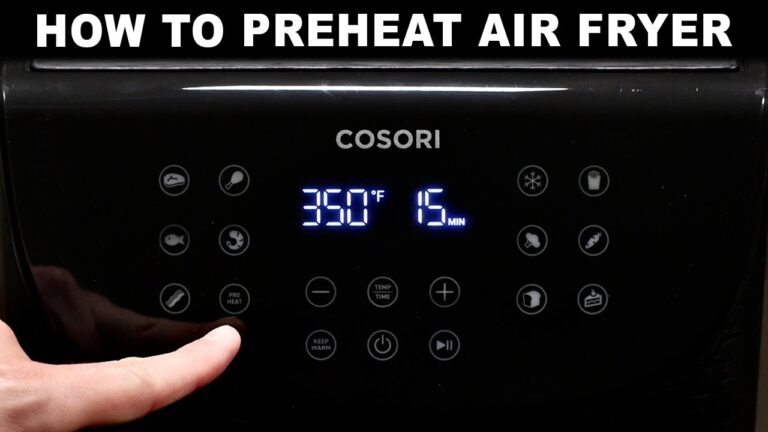
The main challenge is temperature. Many air fryers start at 170°F, which is warmer than the ideal range for slow fruit dehydration. That higher heat can cook the fruit before it dries. It may also cause browning, hard edges, or a chewy center.
The best air fryer for dehydrating fruit has one or more of these features:
• A dehydrate setting
• A temperature range of about 125°F to 145°F
• Multiple racks for better airflow
• A fan that runs at a low speed
• A timer that can run for several hours
If your model only reaches 170°F, you can still try it. Use very thin slices, check the fruit often, and keep the air fryer door slightly open only if the manufacturer allows it. Never block vents or bypass safety features.
Can you use air fryer to dehydrate fruit? You can, but think of the process as slow drying rather than regular air frying. Air frying uses high heat to cook food quickly. Dehydrating uses low heat to remove water over time.
How does air fryer fruit dehydration work?
Fruit contains a large amount of water. During dehydration, warm air moves across the fruit and carries that water away. As the moisture leaves, the fruit becomes smaller, sweeter, and firmer.
An air fryer helps because its fan keeps air moving. This airflow is important. Still air can leave fruit damp in the center, while moving air helps dry each slice more evenly.
The process has three main parts:
- Prepare the fruit.
- Arrange it in a single layer.
- Dry it at a low temperature until it reaches the texture you want.
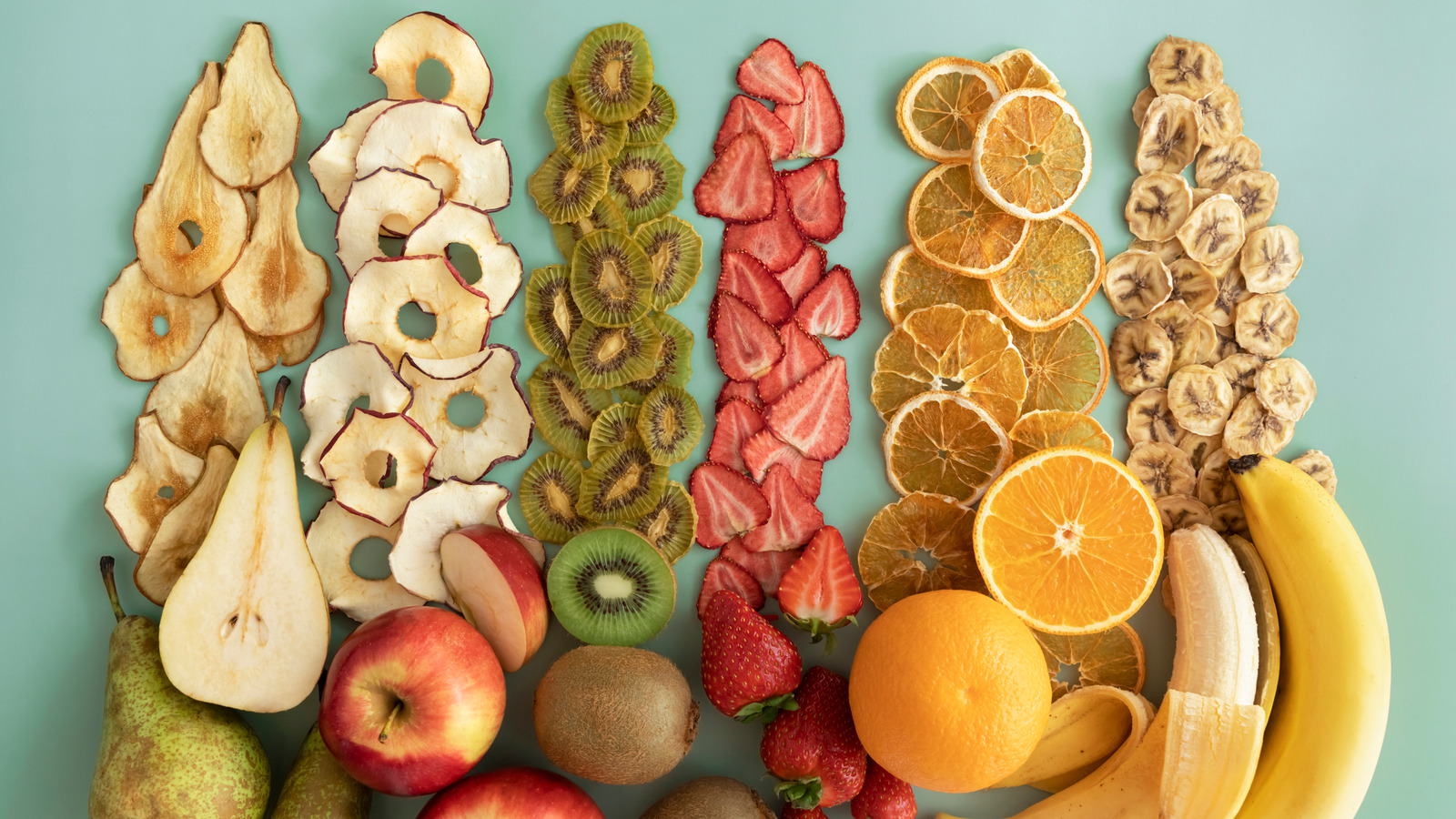
The final texture may be chewy, leathery, or crisp. It depends on the fruit, slice thickness, temperature, and total drying time.
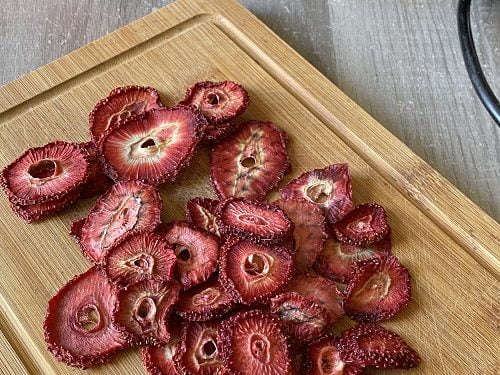
For example, apples often become pleasantly chewy. Bananas may turn soft and slightly sticky. Strawberries can become crisp around the edges while staying chewy in the middle.
Can you use air fryer to dehydrate fruit without adding sugar? Yes. Most fruit has enough natural sugar to taste sweet after drying. Added sugar is optional and can make the fruit stickier.
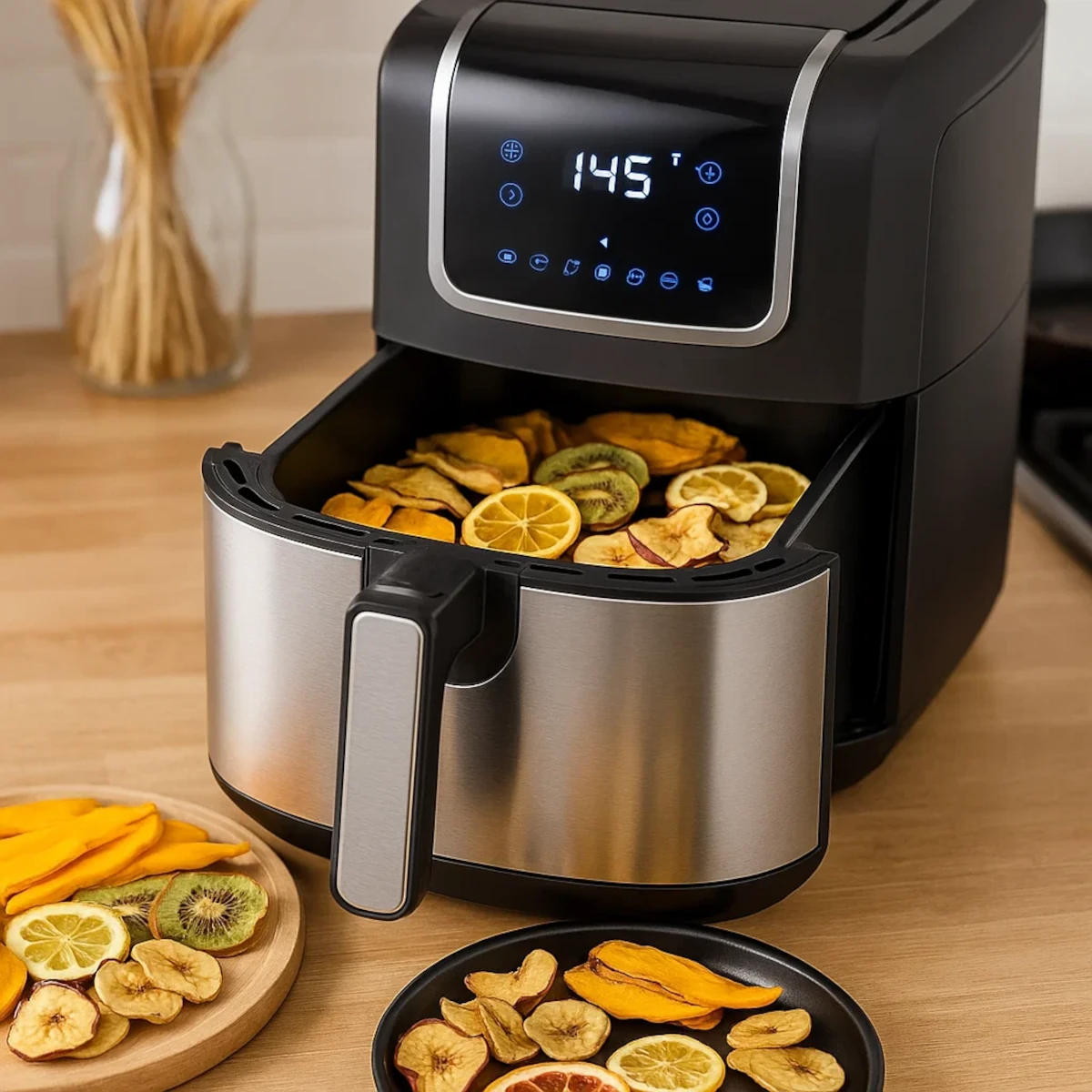
Best fruits to dehydrate in an air fryer
Some fruits dry faster and more evenly than others. Firm fruits with moderate moisture are often the easiest choices for beginners.
Apples
Apples are one of the best fruits for air fryer dehydration. Wash them, remove the core, and slice them about ⅛ inch thick.
You can leave the peel on for more fiber and color. A small amount of lemon juice may help slow browning, although it can add a tart taste.
Dry apple slices at 135°F to 145°F for about 4 to 7 hours. Turn them once if your air fryer dries unevenly.
Bananas
Bananas become sweet and chewy after dehydration. Choose bananas that are ripe but still firm. Very soft bananas can be difficult to slice and may stick to the basket.
Slice bananas about ⅛ to ¼ inch thick. A light brush of lemon juice can reduce browning.
Dry them at 135°F to 145°F for about 3 to 6 hours. Thicker slices will take longer.
Strawberries
Strawberries have a high water content, so they need time. Remove the green tops and slice the berries lengthwise.
Try to keep the slices similar in thickness. Uneven pieces may finish at different times, leaving some dry and others wet.
Dry strawberry slices at 135°F to 140°F for about 5 to 8 hours. They may remain slightly flexible when done.
Mango
Mango makes a sweet, soft, candy-like snack. Use a firm ripe mango rather than one that is very soft.
Peel the mango and cut it into thin strips. Thick pieces can stay wet inside even when the outside looks dry.
Dry mango at 135°F to 145°F for about 5 to 8 hours. It is usually ready when it bends without feeling wet.
Pineapple
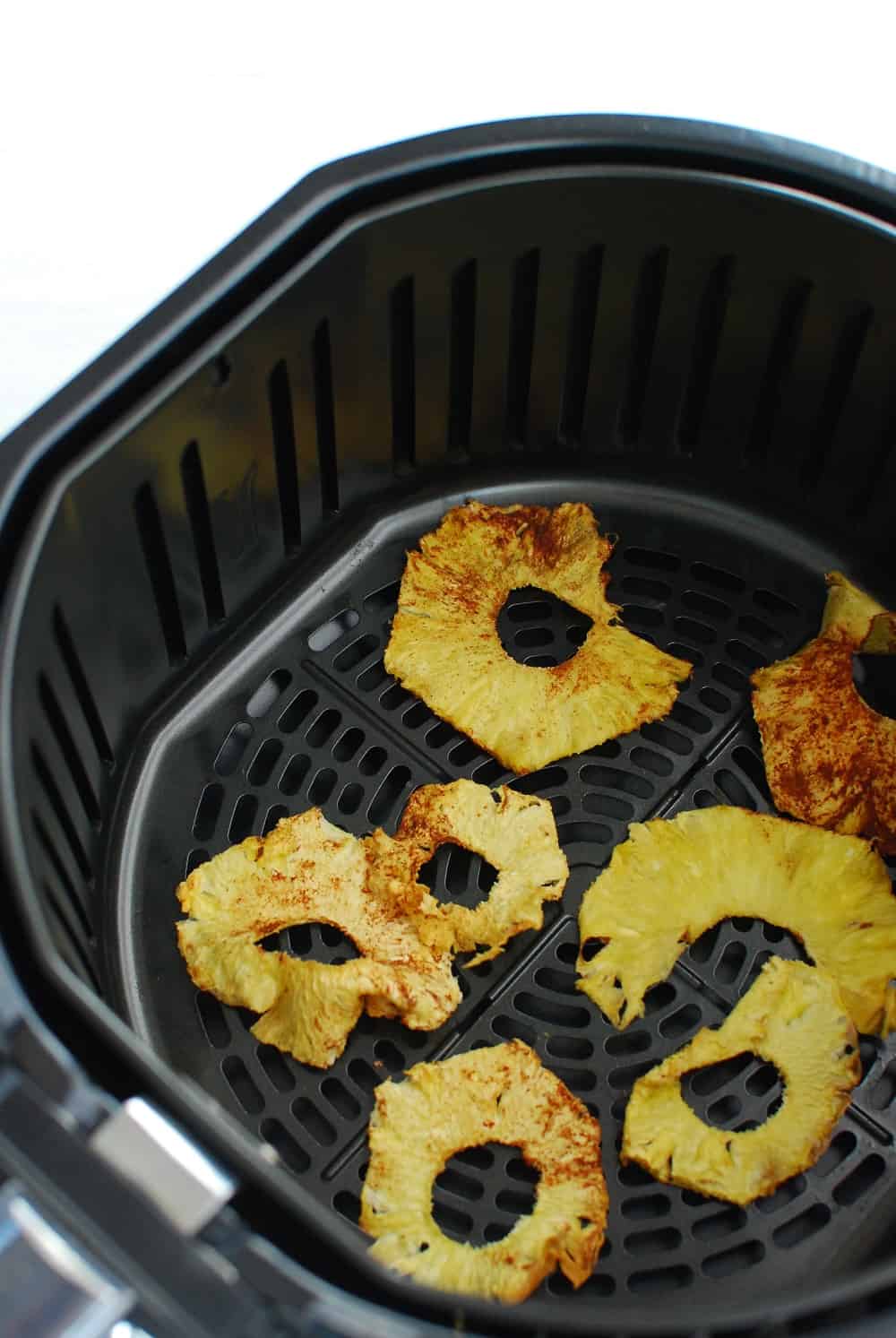
Pineapple dries well but contains a lot of juice. Remove the peel and tough core, then cut the fruit into thin pieces.
Fresh pineapple can take 6 to 10 hours. Canned pineapple should be drained very well and patted dry first.
The natural sugars may make pineapple sticky. A silicone air fryer liner with large holes can help, but do not use a solid liner that blocks airflow.
Oranges and lemons
Citrus slices look attractive in drinks and decorations. They can also be eaten, although the peel may taste bitter.
Slice citrus very thinly and remove seeds. Dry at about 135°F to 145°F for 5 to 8 hours.
Citrus may need extra time because the peel holds moisture. Let the slices cool before judging the final texture.

How to dehydrate fruit in an air fryer
Can you use air fryer to dehydrate fruit with simple kitchen tools? Yes. You usually need only fresh fruit, a knife, paper towels, and an air fryer with a rack or basket.
Follow these steps for a reliable batch.
1. Choose fresh, firm fruit
Avoid fruit with mold, bruises, or leaking juice. Dehydration does not make spoiled fruit safe.
Fruit should be ripe enough to taste good but firm enough to slice. Overripe fruit contains more liquid and can become messy.
2. Wash and dry the fruit
Rinse the fruit under cool running water. Dry it well with a clean towel.
Extra surface water adds drying time. It can also cause fruit to steam instead of dry during the first part of the process.
3. Slice the fruit evenly
Aim for slices between ⅛ and ¼ inch thick. Thin slices dry faster, while thicker slices create a softer snack.
Try to cut all pieces of one fruit to the same thickness. This is one of the most useful lessons from hands-on testing. A mixed batch often looks finished on top but stays damp underneath.
4. Treat fruit that browns easily
Apples, bananas, and pears may darken after cutting. Toss them with a little lemon juice or dip them briefly in a lemon-water mixture.
Use lemon juice lightly. Too much can make the finished fruit sour and wet.
5. Preheat only when needed
Some air fryers do not need preheating for dehydration. If your manual recommends preheating, follow it.
If you do preheat, use the same low temperature that you will use for drying. Avoid preheating at a high cooking temperature.
6. Arrange the slices
Place the fruit in one layer. Leave a small gap between pieces so air can move around them.
Do not pile fruit in the basket. Crowding traps moisture and leads to uneven results.
7. Set a low temperature
Use the dehydrate setting if your air fryer has one. Otherwise, set the lowest temperature available.
A useful starting point is:
• 125°F to 135°F for delicate fruit
• 135°F to 145°F for most fruit
• 150°F to 170°F only when your air fryer cannot go lower
8. Check the fruit often
Begin checking after 3 hours for thin slices. Large or juicy fruit may need much longer.
Turn or rotate the pieces if your air fryer has hot spots. Remove pieces that finish early so they do not become too hard.
9. Cool before storing
Finished fruit may feel softer while warm. Let it cool at room temperature for 20 to 30 minutes before deciding whether it needs more drying.
Cooling allows the texture to set. It also helps you spot hidden moisture.
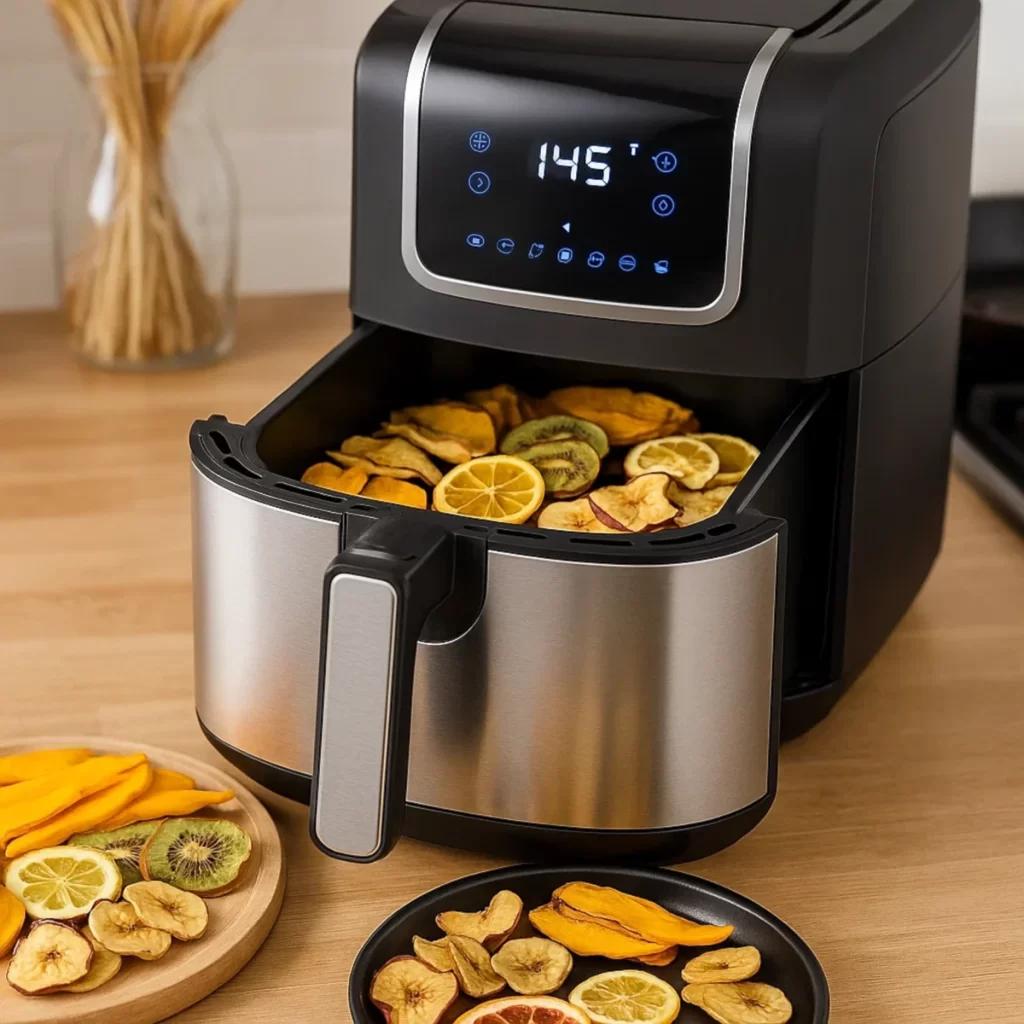
Air fryer fruit dehydration temperature and time chart
Can you use air fryer to dehydrate fruit at one fixed temperature? Not always. Each fruit has a different water content, and air fryers vary in fan strength and heat accuracy.
Use this chart as a starting guide:
| Fruit | Slice thickness | Temperature | Approximate time | Finished texture |
|---|---|---|---|---|
| Apples | ⅛ inch | 135°F to 145°F | 4 to 7 hours | Chewy |
| Bananas | ⅛ to ¼ inch | 135°F to 145°F | 3 to 6 hours | Chewy |
| Strawberries | ⅛ inch | 135°F to 140°F | 5 to 8 hours | Chewy to crisp |
| Mango | ⅛ to ¼ inch | 135°F to 145°F | 5 to 8 hours | Soft and leathery |
| Pineapple | ⅛ to ¼ inch | 135°F to 145°F | 6 to 10 hours | Chewy |
| Pears | ⅛ inch | 135°F to 145°F | 5 to 8 hours | Soft and chewy |
| Citrus | ⅛ inch | 135°F to 145°F | 5 to 8 hours | Dry and firm |
These times are estimates, not guarantees. Slice thickness, fruit ripeness, humidity, basket size, and fan speed all affect the result.
The fruit is usually ready when it feels dry on the surface and has no wet center. Chewy fruit should bend without releasing moisture. Crisp fruit should snap or break when cooled.
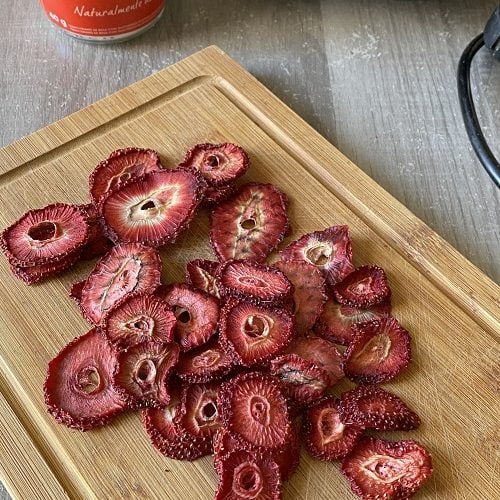
How to tell when dehydrated fruit is done
Texture is the best guide. Color alone is not reliable because some fruit darkens naturally during drying.
Use these checks:
• Press the center of a cooled slice. It should not feel wet or mushy.
• Tear a thick piece in half and look for moisture inside.
• Bend chewy fruit. It should flex but not feel sticky with water.
• Break crisp fruit after it cools. It should snap cleanly.
• Place several pieces in a sealed container for a few hours and check for condensation.
The last step is called conditioning. It helps reveal moisture that may be trapped inside the fruit.
To condition the fruit, place cooled pieces in a clean glass jar. Leave the jar at room temperature for several days. Shake it once a day and watch for fog, droplets, or soft pieces.
If you see moisture, return the fruit to the air fryer for more drying. Moisture is a warning sign because it can encourage mold during storage.
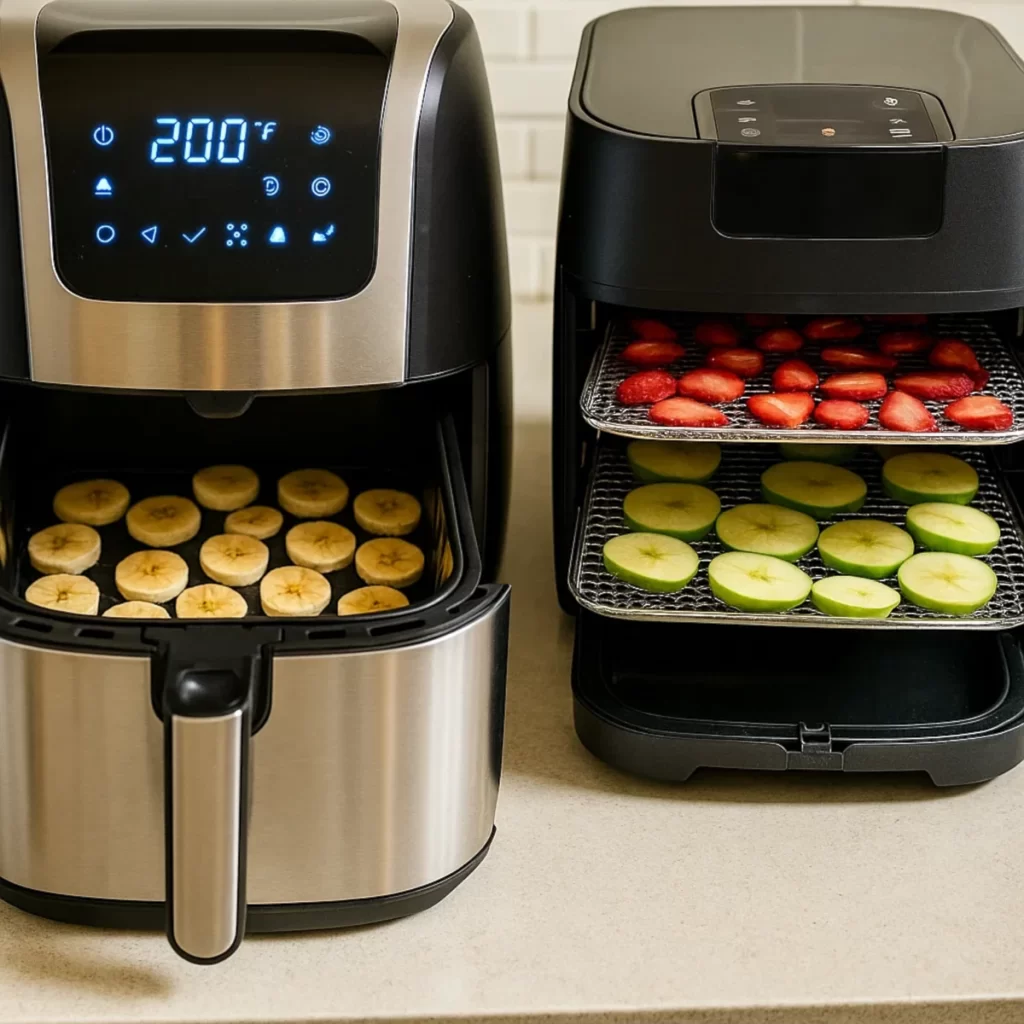
How to store air fryer dehydrated fruit
Proper storage protects the flavor and helps prevent mold. Let the fruit cool completely before packing it.
Use clean, dry containers with tight lids. Glass jars, sealed food containers, and quality resealable bags can work well.
For the best results:
• Store fruit in a cool, dark, dry place.
• Keep different fruits in separate containers.
• Label each container with the fruit and date.
• Check the container for condensation during the first week.
• Refrigerate fruit if it is still soft or contains noticeable moisture.
• Freeze fruit for longer storage.
Fully dried fruit may last for weeks or months, depending on its moisture level and storage conditions. Homemade fruit often has more moisture than commercial dried fruit, so it may not last as long.
When in doubt, use the refrigerator or freezer. Discard fruit if it develops mold, an unusual smell, or a slimy texture. Do not scrape off mold and eat the rest.
Can you use air fryer to dehydrate fruit for long-term storage? Yes, but a dedicated dehydrator gives more consistent control. For long storage, careful drying, conditioning, and airtight packaging matter more than the appliance itself.
Common mistakes to avoid
Can you use air fryer to dehydrate fruit if you fill the basket? You can turn it on, but the results will likely be uneven. Good airflow is the heart of dehydration.
Avoid these common problems:
Using too much heat
High heat cooks the outside quickly. The surface may become hard while the middle stays moist.
Use the lowest practical temperature. If your air fryer starts at 170°F, check the fruit often and use thinner slices.
Cutting slices too thick
Thick fruit can look dry outside while remaining wet inside. Thin, even slices are safer and more predictable.
Overlapping the fruit
Overlapping pieces block airflow. Arrange them in a single layer and use extra racks if your model supports them.
Adding oil
Oil is not needed for dehydration. It can make fruit greasy and may shorten storage life.
Using too much lemon juice
Lemon juice can reduce browning, but too much adds liquid and sharp flavor. A light coating is enough.
Leaving the fruit unattended for too long
Air fryers differ widely. One model may dry apple slices in four hours, while another may need seven.
Check the first batch several times. Write down what worked for your appliance.
Storing fruit while warm
Warm fruit can create condensation inside a sealed jar. Always cool it first.

Air fryer versus food dehydrator
An air fryer is convenient because many people already own one. It works well for small batches and quick snacks.
A food dehydrator is usually better for frequent use. It offers more tray space, lower temperatures, steadier airflow, and better control for long drying sessions.
Choose an air fryer when:
• You want to test dehydration before buying another appliance.
• You make small batches.
• Your air fryer has a true dehydrate function.
• You need a snack within the same day.
Choose a dehydrator when:
• You dry fruit often.
• You want to make large batches.
• You need more even results.
• You plan to dry herbs, vegetables, mushrooms, or meat.
Can you use air fryer to dehydrate fruit as well as a food dehydrator? Sometimes, but not always. The final quality depends on the air fryer design, temperature control, and how carefully you prepare the fruit.
Safety tips for dehydrating fruit
Dehydration reduces water, but it does not remove every food safety risk. Start with clean hands, clean tools, and fresh produce.
Keep these points in mind:
• Wash fruit before slicing it.
• Clean the air fryer basket and racks.
• Do not dehydrate fruit with mold or spoilage.
• Avoid cross-contamination from raw meat or eggs.
• Dry fruit fully before room-temperature storage.
• Refrigerate fruit that remains soft or moist.
• Throw away fruit with mold or a bad smell.
Do not assume that very dry-looking fruit is automatically shelf stable. The safest home approach is to use proper drying, condition the fruit, and store it in the refrigerator or freezer when you are unsure.
People with food allergies should also check flavored coatings, shared equipment, and added ingredients. Plain fruit is usually the simplest choice.
Easy flavor ideas for homemade dried fruit
Plain fruit tastes wonderful, but small additions can make each batch more interesting.
Try these combinations:
• Apples with cinnamon
• Pears with a small pinch of ginger
• Mango with lime zest
• Pineapple with chili powder
• Bananas with cinnamon
• Strawberries with a tiny amount of vanilla sugar
• Oranges with a light dusting of cinnamon
Use dry seasonings sparingly. Wet sauces add moisture and can make the fruit difficult to dry.
Dried fruit also works well in oatmeal, trail mix, yogurt, salads, muffins, and homemade granola. Chop dried apples into breakfast cereal or add dried mango to a rice bowl for a sweet contrast.
One practical lesson is to keep the first batch simple. Test the plain fruit before adding flavors. That way, you learn how your air fryer handles moisture and heat.
Frequently asked questions about can you use air fryer to dehydrate fruit
Can you use air fryer to dehydrate fruit without a dehydrate setting?
Yes, if the air fryer can run at a low temperature. Use the lowest setting available, arrange fruit in one layer, and check it often because higher heat can cook the fruit.
How long does it take to dehydrate fruit in an air fryer?
Most fruit takes about 3 to 10 hours. Thin apple or banana slices may finish sooner, while juicy pineapple and strawberries often need more time.
What temperature is best for dehydrating fruit in an air fryer?
A temperature between 125°F and 145°F works well for most fruit. If your air fryer only reaches 170°F, use thin slices and monitor them closely.
Should fruit be turned while dehydrating?
Turning is not always required, but it can help when the air fryer has uneven airflow. Rotate the racks or flip the slices halfway through if one side dries faster.
Can you use air fryer to dehydrate fruit with parchment paper?
You can use perforated parchment made for air fryers, but it must not block airflow. Avoid loose paper during preheating, and do not use a solid sheet that covers the entire basket.
How do you know when air fryer dried fruit is safe to store?
The fruit should feel dry, with no wet center or condensation after cooling. If moisture appears in the storage container, dry the fruit again or refrigerate it.
Is air fryer dehydrated fruit healthy?
It can be a nutritious snack because it contains fiber and natural fruit nutrients. However, dehydration concentrates natural sugar and calories by volume, so moderate portions are wise.
Conclusion
Can you use air fryer to dehydrate fruit? Yes, and it is a simple way to make sweet, portable snacks at home. Use firm fruit, thin slices, low heat, open airflow, and enough drying time.
Start with apples or bananas because they are easy to prepare and forgiving. Check the texture after cooling, condition the fruit before storage, and refrigerate it when moisture remains.
Try one small batch today and record the temperature, slice size, and drying time. Once you learn how your air fryer behaves, you can explore mango, pineapple, berries, citrus, and your own favorite flavor combinations. Share your best fruit and method in the comments.