What To Season Potatoes With In Air Fryer: Best Ideas
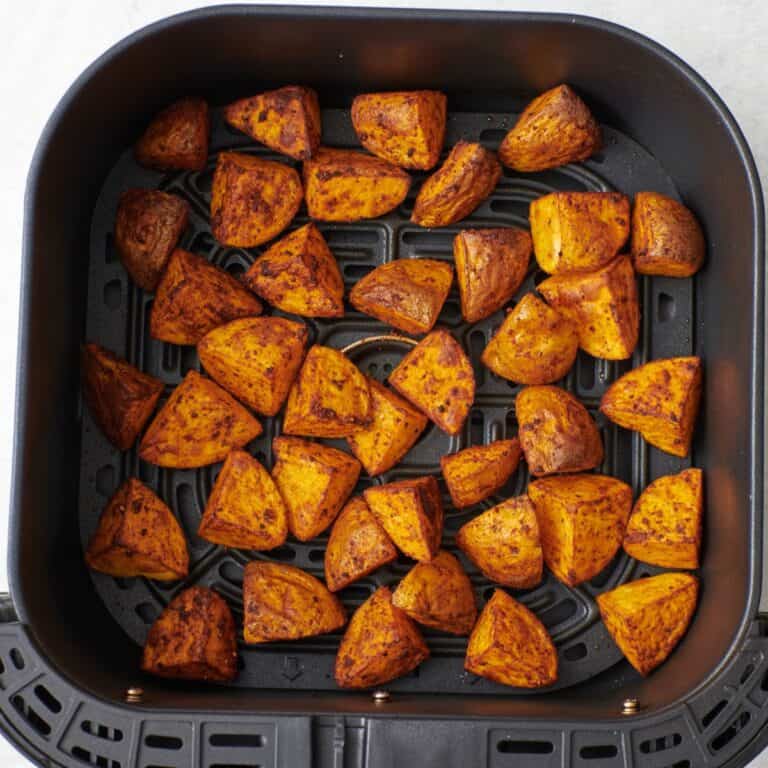
The best seasonings for air-fryer potatoes are salt, black pepper, garlic powder, paprika, and a small amount of oil. This base works for wedges, cubes, fries, and baby potatoes. You can then add herbs, cheese, chili, lemon, or other spices to match your meal.
For crisp potatoes, coat the pieces with oil and seasonings before cooking. Add delicate herbs, fresh garlic, citrus juice, and grated cheese near the end so they do not burn.

The Best Basic Seasoning for Air-Fryer Potatoes
A simple mix gives potatoes a crisp crust and a savory taste:
- 1 tablespoon neutral oil or olive oil
- ½ teaspoon kosher salt, or ¼ teaspoon fine salt
- ½ teaspoon garlic powder
- ½ teaspoon paprika
- ¼ teaspoon black pepper
Use this amount for about 1 pound of potatoes. Toss the potatoes well so each piece has a thin coat of oil and seasoning.
Paprika adds color and mild sweetness. Garlic powder gives an even flavor without the risk of fresh garlic burning. Black pepper adds mild heat and depth.
Why oil matters
Oil helps seasonings stick to the potato surface. It also helps the outside brown and crisp. You do not need much. Too much oil can make the potatoes greasy and may slow browning.
A neutral oil, such as avocado, canola, or vegetable oil, works well. Olive oil also works at common air-fryer cooking temperatures. Use the oil you enjoy, but avoid soaking the potatoes.
Salt before or after cooking?
Salt before cooking gives the potato more flavor. A small final pinch after cooking can improve the taste, too.
Use less salt at the start if you plan to add salty toppings such as:
- Parmesan cheese
- Feta cheese
- Bacon
- Ranch seasoning
- Seasoned salt
- Soy sauce
- Pickle seasoning

Seasoning Ideas for Different Potato Styles
The best seasoning depends on the type of potato and the meal. Use the combinations below as starting points, then adjust the salt to taste.
| Flavor style | Seasonings for 1 pound of potatoes | Best with |
|---|---|---|
| Classic savory | Salt, black pepper, garlic powder, paprika | Burgers, chicken, steak |
| Herb and garlic | Garlic powder, dried rosemary, dried thyme, pepper | Roast chicken, pork, vegetables |
| Smoky | Smoked paprika, garlic powder, cumin, black pepper | Brisket, grilled foods, beans |
| Spicy | Chili powder, smoked paprika, cayenne, garlic powder | Tacos, chili, grilled corn |
| Ranch-style | Dried parsley, dill, garlic powder, onion powder | Sandwiches, wraps, chicken |
| Italian-style | Italian seasoning, garlic powder, Parmesan after cooking | Pasta, meatballs, chicken |
| Lemon herb | Dried oregano, black pepper, garlic powder, lemon zest after cooking | Fish, shrimp, chicken |
| Cajun-style | Cajun seasoning, paprika, garlic powder | Sausage, shrimp, chicken |
| Curry-style | Curry powder, turmeric, cumin, black pepper | Chickpeas, roasted vegetables |
| Sweet and smoky | Smoked paprika, a little brown sugar, chili powder | Pulled pork, ribs, baked beans |
Garlic and onion
Garlic powder and onion powder are easy to use. They spread well and can cook with the potatoes from the start.
Fresh garlic has more sharp flavor, but minced garlic can burn in the air fryer. Add it during the last 2 to 3 minutes, or toss it with the hot potatoes after cooking.
Paprika
Use regular paprika for mild flavor and bright color. Use smoked paprika for a wood-smoke taste. Use hot paprika when you want heat without adding cayenne.
Paprika can darken quickly. Check the potatoes near the end of cooking if you use a large amount.
Dried herbs
Dried rosemary, thyme, oregano, and Italian seasoning work well before cooking. Crush large rosemary leaves between your fingers so they spread through the potatoes.
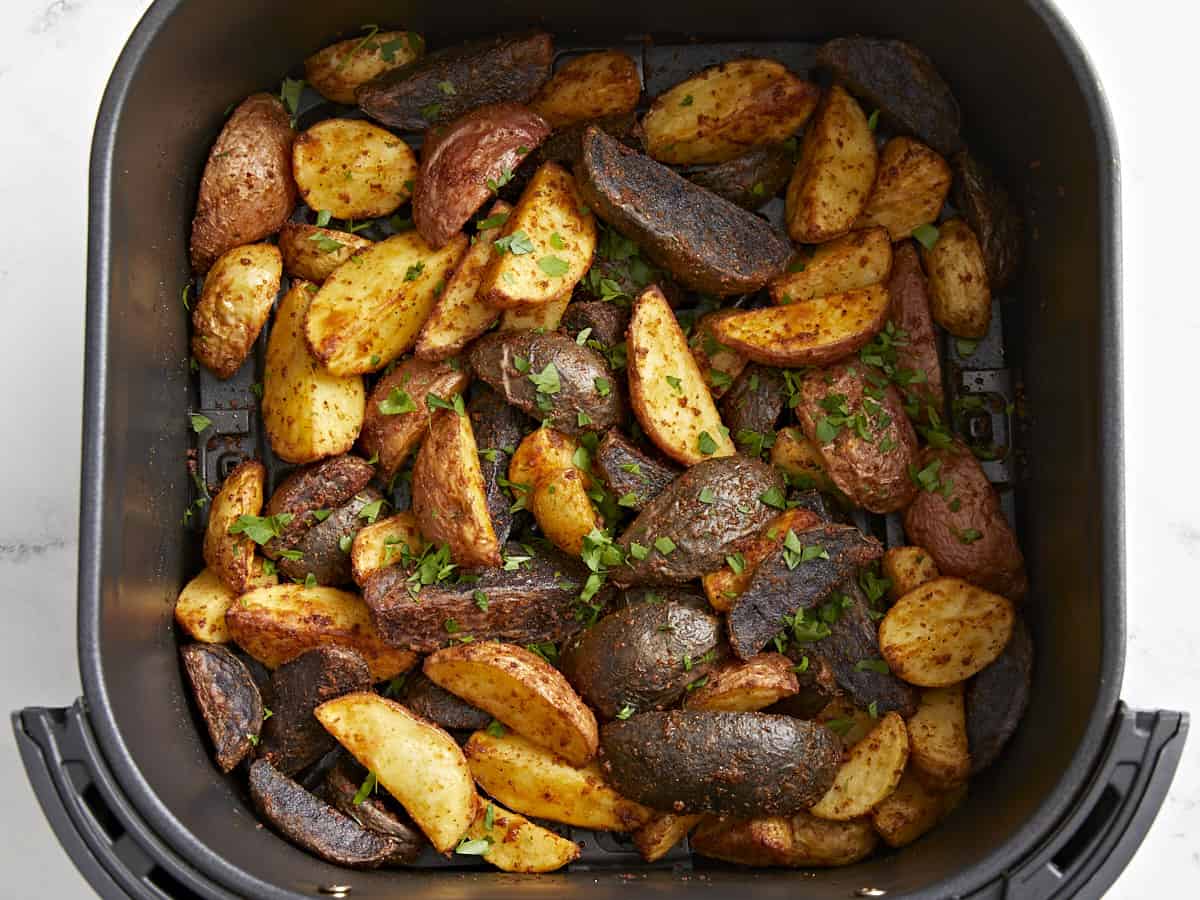
Fresh herbs are more delicate. Add chopped parsley, cilantro, dill, or chives after cooking.
Chili and spice blends
Chili powder, cayenne, red pepper flakes, and Cajun seasoning can add heat. Start with a small amount. You can always add more after cooking, but you cannot remove it.
Pre-made blends often contain salt. Read the label and reduce added salt when needed.

How to Season Potatoes for the Air Fryer
Follow these steps for crisp, evenly seasoned potatoes.
1. Choose and cut the potatoes
You can air-fry nearly any common potato. Russet potatoes give a fluffy center and crisp outside. Yukon Gold potatoes have a creamy center and rich flavor. Red potatoes and baby potatoes hold their shape well.
Cut the potatoes into pieces of similar size. This helps them finish at the same time.
Good sizes include:
- Cubes: about ¾ to 1 inch
- Wedges: about 1 inch thick at the widest part
- Baby potatoes: halved or quartered
- Fries: about ¼ to ½ inch thick
2. Rinse or soak when needed
Rinse cut potatoes under cold water if you want to remove some surface starch. This can help fries brown and crisp.
For very crisp fries, soak them in cold water for about 20 to 30 minutes. Drain them well and dry them fully with a clean towel.
Do not put wet potatoes in the air fryer. Water on the surface creates steam and can lead to soft potatoes.
3. Dry the potatoes well
Dry potatoes are easier to crisp. Press them with a towel until the surface no longer looks wet.
This step matters more for fries and wedges than for small roasted cubes. Still, all cuts benefit from a dry surface.
4. Add oil and seasoning
Place the potatoes in a bowl. Add the oil first, then the dry seasonings.
Toss until the potatoes look lightly coated. The seasoning should cling to the surface instead of collecting at the bottom of the bowl.
5. Arrange the potatoes in one layer
Place the potatoes in the air-fryer basket with space between the pieces. A crowded basket traps steam.
Cook in batches if needed. A smaller batch often gives better browning than a full basket.
6. Cook and shake
For many potato cubes and wedges, start at 400°F. Cook for about 15 to 25 minutes, shaking the basket halfway through.
The exact time depends on:
- Potato size
- Potato variety
- Basket size
- Amount in the basket
- Air-fryer design
- Desired level of browning
The potatoes are ready when they are golden outside and tender in the center. Test a large piece with a fork.

When to Add Each Seasoning
Not every ingredient should go into the basket at the same time. Use this guide to protect flavor and prevent burning.
| Ingredient | Add before cooking? | Best timing |
|---|---|---|
| Salt | Yes | Before cooking, with a small final pinch if needed |
| Black pepper | Yes | Before cooking |
| Garlic powder | Yes | Before cooking |
| Onion powder | Yes | Before cooking |
| Paprika | Yes | Before cooking, but avoid excess |
| Dried herbs | Yes | Before cooking |
| Fresh garlic | Usually no | Last few minutes or after cooking |
| Fresh herbs | No | After cooking |
| Lemon juice | No | After cooking |
| Lemon zest | Usually no | After cooking |
| Parmesan | Sometimes | Last 1 to 2 minutes or after cooking |
| Brown sugar | Use care | Last few minutes or after cooking |
| Hot sauce | No | After cooking |
| Ranch dressing | No | Serve on the side or drizzle after cooking |
Acidic ingredients such as lemon juice can make the surface less crisp if added before cooking. Add them after the potatoes come out.
Sugar can burn at high heat. If you use brown sugar, mix it with the potatoes near the end or use it as part of a finishing glaze.

How Much Oil and Seasoning Should You Use?
For 1 pound of potatoes, start with:
- 1 tablespoon oil
- ½ teaspoon kosher salt
- ½ to 1 teaspoon total dry spices
- ¼ teaspoon black pepper
These amounts are a starting point, not a fixed rule. Thick potato pieces may need more seasoning because they have less surface area. Small cubes and thin fries may need less.
A useful method is to season in two stages:
- Add most of the oil and dry seasoning before cooking.
- Taste one cooked potato and add a small amount of salt or spice after cooking.
This helps prevent over-seasoning. It also lets you adjust for salty spice blends and toppings.
Kosher salt versus table salt
Kosher salt crystals are larger than table salt crystals. A teaspoon of table salt may taste saltier than a teaspoon of some kosher salts.
Because brands vary, use the amount on the recipe as a starting point. Add salt in small amounts and taste after cooking.

Seasoning Mistakes That Make Air-Fryer Potatoes Taste Poor
Most seasoning problems come from too much moisture, too much salt, or a crowded basket.
Using too much oil
Excess oil can make potatoes heavy and greasy. It may also cause seasoning to slide off.
Use enough oil to coat the potatoes lightly. If the pieces shine with a thick layer of oil, you likely used too much.
Adding wet ingredients too early
Lemon juice, vinegar, hot sauce, and wet marinades add water. That water can soften the crust.
Add wet ingredients after cooking or during the last few minutes.
Crowding the basket
When potatoes overlap, they steam instead of roast. The inside may cook, but the outside will stay pale and soft.
Spread the potatoes into one layer. Shake them once or twice during cooking.
Adding fresh garlic at the start
Small pieces of fresh garlic can burn before the potatoes are done. Burnt garlic tastes bitter.
Use garlic powder for all-over flavor. Add minced garlic near the end.
Using too much paprika or sugar
Paprika can become bitter when heavily browned. Sugar can burn even faster.
Use these ingredients in small amounts. Add sweet seasonings late in the cooking process when possible.
Failing to taste after cooking
Potatoes can absorb salt and spices. Taste one piece while it is hot, then adjust.
A final sprinkle of salt, herbs, cheese, or lemon zest often makes the flavor brighter.
How to Match Potato Seasoning to Your Meal
Choose seasonings that support the main food rather than compete with it.
For breakfast potatoes
Try:
- Salt
- Black pepper
- Paprika
- Garlic powder
- Onion powder
- Chives after cooking
This mix works with eggs, sausage, bacon, and breakfast sandwiches.
For burgers and sandwiches
Use:
- Salt
- Black pepper
- Garlic powder
- Smoked paprika
- A little onion powder
Serve the potatoes with ketchup, barbecue sauce, ranch, or a garlic aioli.
For chicken
Try:
- Paprika
- Garlic powder
- Dried thyme
- Black pepper
- Lemon zest after cooking
Use oregano instead of thyme for a more Mediterranean flavor.
For steak
Use:
- Kosher salt
- Black pepper
- Garlic powder
- Smoked paprika
- Dried rosemary
Do not use too much rosemary. Its flavor can quickly overpower the potatoes.
For fish or shrimp
Use:
- Garlic powder
- Dill
- Black pepper
- Paprika
- Lemon zest after cooking
Keep the seasoning light so it does not hide the flavor of the seafood.
For tacos and Mexican-style meals
Try:
- Chili powder
- Cumin
- Paprika
- Garlic powder
- Onion powder
- Cayenne, if desired
Finish with lime juice, cilantro, or cotija cheese after cooking.
Are Potatoes Better Seasoned Before or After Air Frying?
Season potatoes before air frying when using dry spices. This gives the seasoning time to stick to the oiled surface and develop flavor.
Season potatoes after air frying when using fresh herbs, citrus, cheese, hot sauce, or other wet toppings. These ingredients stay brighter and are less likely to burn.
For the best balance, use both methods. Add dry spices before cooking, then finish with a small amount of salt, herbs, zest, or cheese.
Can You Use Seasoned Salt on Air-Fryer Potatoes?
Yes. Seasoned salt works well on potatoes, but it often contains regular salt along with paprika, garlic, onion, and other spices.
Start with a small amount and skip extra salt until you taste the cooked potatoes. This prevents the dish from becoming too salty.
You can also mix seasoned salt with black pepper and garlic powder. Add paprika only if the blend needs more color or flavor.
Do You Need to Boil Potatoes Before Air Frying?
No. Most potato cubes, wedges, and baby potatoes cook well without boiling.
Parboiling can soften the center and may help thick wedges cook more evenly. However, it adds an extra step and requires the potatoes to be dried before air frying.
For a simple method, cut the potatoes into even pieces, dry them well, coat them lightly with oil and seasoning, and cook them in a single layer.
How Do You Keep Air-Fryer Potatoes Crisp?
To keep potatoes crisp:
- Cut them into even pieces.
- Rinse or soak fries if desired.
- Dry them very well.
- Use a light oil coating.
- Avoid crowding the basket.
- Shake the basket during cooking.
- Serve the potatoes soon after cooking.
Do not cover hot potatoes tightly. Trapped steam softens the crust.
What Is the Best Temperature for Seasoned Potatoes?
For most potato cubes, wedges, and baby potatoes, 400°F is a useful starting temperature. Thin fries may cook well at 375°F to 400°F, depending on the air fryer.
Check the potatoes early because air fryers vary. If the outside browns before the center softens, reduce the heat slightly and continue cooking. If the potatoes are tender but pale, increase the heat briefly or cook them in a less crowded basket.

Frequently Asked Questions
What is the best all-purpose seasoning for air-fryer potatoes?
Use salt, black pepper, garlic powder, paprika, and a little oil. This mix is mild, savory, and suitable for most meals.
Should I season frozen potatoes before air frying?
Most frozen fries and potato products already contain oil and salt. Cook them according to the package directions first, then taste before adding more seasoning. Add dry seasoning after cooking if it does not stick well.
Can I use fresh herbs on air-fryer potatoes?
Yes, but add most fresh herbs after cooking. Parsley, chives, dill, and cilantro can lose flavor or burn at high heat.
Why do my seasonings fall off the potatoes?
The potatoes may be too wet, or the seasoning may not have enough oil to stick. Dry the potatoes well and toss them with a light oil coating before adding dry spices.
Can I use Parmesan cheese on air-fryer potatoes?
Yes. Add finely grated Parmesan during the last 1 to 2 minutes or sprinkle it on after cooking. Adding it too early may cause the cheese to burn.
Conclusion
The best way to season potatoes in an air fryer is to start with oil, salt, garlic powder, paprika, and black pepper. Add dried herbs and spices before cooking, then finish with fresh herbs, lemon, cheese, or hot sauce after cooking.
Dry the potatoes, avoid crowding the basket, and taste before adding more salt. For your next batch, use the basic seasoning mix for 1 pound of potatoes, cook at about 400°F, and adjust the finishing flavors to match your meal.
Sources
- USDA Food Safety and Inspection Service: Safe Minimum Internal Temperatures
- U.S. Food and Drug Administration: Food Safety at Home
- USDA FoodData Central