What Are The Functions Of An Air Fryer: How It Works
Introduction
An air fryer is a small countertop convection oven. Its main function is to cook food with hot, fast-moving air. It can fry food with little oil, but it can also bake, roast, broil, reheat, toast, dehydrate, and cook some foods from frozen.
The exact functions depend on the model. A basic basket air fryer may offer only air fry, roast, and reheat settings. A larger U.S. countertop model may include bake, broil, toast, dehydrate, proof, or rotisserie modes. Always check the manual for your specific appliance before using an unfamiliar setting.
For food safety, use the temperature guidance from the U.S. Department of Agriculture (USDA), especially when cooking meat, poultry, seafood, and egg dishes. An air fryer can brown food quickly, but brown color alone does not prove that food is safe to eat.

How an Air Fryer Works
An air fryer uses a heating element and a high-speed fan to move hot air around food. This process is a form of convection cooking. The hot air removes moisture from the food’s surface and helps create a crisp outer layer.
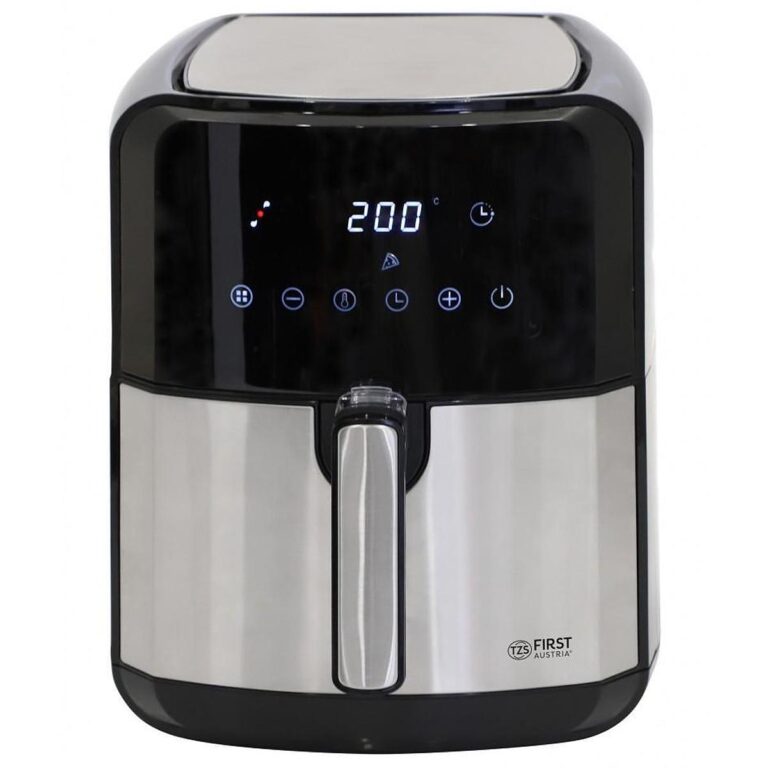
Most air fryers have these main parts:
- Heating element: Produces heat above or around the food.
- Fan: circulates hot air through the cooking chamber.
- Basket or tray: Holds food while allowing air to move underneath and around it.
- Temperature controls: Set the cooking heat, often in degrees Fahrenheit.
- Timer: Controls the cooking period and may shut the unit off.
- Cooking chamber: Keeps hot air contained during cooking.
An air fryer does not truly deep-fry food. Deep frying places food in hot oil. Air frying uses heated air and, in many cases, a small amount of oil brushed or sprayed onto the food.
The fan makes air frying different from using a standard oven. The smaller chamber usually heats quickly, and the moving air can brown exposed surfaces well. However, performance varies with the food, basket design, load size, temperature, and model.

What Are the Main Functions of an Air Fryer?
The main air fryer functions are air frying, baking, roasting, broiling, reheating, toasting, and dehydrating. Some models also proof dough, cook with a rotisserie, or perform other specialty tasks.
1. Air frying
Air frying is the primary function of most air fryers. It cooks food with circulating hot air and little or no added oil.
This setting works well for foods that benefit from a dry, crisp surface, such as:
- French fries
- Tater tots
- Chicken wings
- Fish sticks
- Breaded shrimp
- Mozzarella sticks
- Frozen vegetables
- Potato wedges
- Breaded chicken
- Small pieces of tofu
For even browning, place food in a loose layer when possible. Shake the basket or turn larger pieces during cooking. A crowded basket blocks airflow and can leave food soft or unevenly cooked.
Air frying does not automatically make food low in calories or healthier. The result depends on the food, the amount of oil, the portion size, and the overall meal.
2. Baking
The bake function uses controlled hot air to cook foods such as cakes, muffins, biscuits, and small casseroles.
You can use an oven-safe pan or dish that fits inside the cooking chamber. Leave space around the pan so air can circulate. A pan that blocks most of the basket may cause slow or uneven cooking.
Air fryers often cook small baked goods faster than a full-size oven because the chamber is smaller. Check food before the time listed in a conventional oven recipe. A toothpick, internal temperature, or visual doneness check can help confirm when baked food is ready.
Use only cookware labeled as safe for oven use. Do not place plastic, paper, or materials that can melt or catch fire inside the appliance.
3. Roasting
The roast function cooks food with dry heat and is useful for vegetables, potatoes, meat, and poultry.
Roasting can produce browned edges and a firm surface. Good examples include:
- Brussels sprouts
- Carrots
- Broccoli
- Cauliflower
- Sweet potatoes
- Small potatoes
- Pork tenderloin
- Chicken pieces
- Sausage
- Salmon portions
Cut vegetables into similar sizes so they finish at about the same time. Toss them with a small amount of oil and seasonings before cooking. For meat and poultry, check the thickest part with a food thermometer and follow USDA safe minimum internal temperature guidance.
4. Broiling or grilling
Some air fryers use a broil or grill function to apply intense heat to the surface of food.
This setting can brown cheese, crisp the top of a dish, sear thin foods, or finish a cooked meal. It may use a top heating element and a rack positioned close to the heat.
Broiling needs close attention. Food can burn quickly, especially when it contains sugar, cheese, or a thin coating. Do not leave the appliance unattended during broiling unless the manufacturer specifically permits it.
Not every air fryer has a true grill function. A ridged grill plate may create grill marks, but it does not necessarily provide the same heat as an outdoor gas or charcoal grill.
5. Reheating
Reheating is one of the most useful air fryer functions because it can restore crispness better than a microwave for some foods.
It works well for:
- Pizza
- Fried chicken
- French fries
- Egg rolls
- Quesadillas
- Roasted vegetables
- Breaded foods
- Baked potatoes
A microwave heats food mainly through electromagnetic energy and moisture movement. An air fryer uses dry circulating heat, so the surface can become crisp again. The trade-off is that reheating usually takes longer than microwaving and may dry out delicate foods.
For safe leftovers, refrigerate food promptly and reheat it until it is hot throughout. The USDA recommends reheating leftovers to 165°F.
6. Toasting
Some oven-style air fryers can toast bread, bagels, English muffins, and similar foods.
A toaster-style air fryer may include a rack, toast shade control, and a broad cooking chamber. A small basket model may not toast evenly because the bread sits too close to the heating element or cannot lie flat.
Watch toast closely during the first use. Bread can brown faster than expected, and crumbs can collect near the heating element. Clean the appliance after it cools.
7. Dehydrating
The dehydrate function removes moisture from food at a low temperature over a long period.
It can be used for:
- Apple slices
- Bananas
- Strawberries
- Herbs
- Mushrooms
- Vegetable chips
- Fruit leather, if the model supports it
- Jerky, when the manual provides safe instructions
Dehydrating is not the same as cooking. It depends on thin, even slices and steady airflow. Food that is too thick may stay moist inside.
Meat and poultry require special care. Follow a tested jerky method and USDA safety guidance. Drying alone may not destroy all harmful bacteria if the meat was not heated correctly first.
8. Proofing dough
Some air fryers have a proof setting that provides gentle, warm conditions for yeast dough.
Proofing allows yeast dough to rise before baking. Use a bowl or container that fits safely inside the appliance. Keep the temperature low. Excess heat can damage yeast or begin cooking the dough.
This function is not available on every model. If the manual does not list proofing, do not assume that the lowest temperature is safe for dough.
9. Rotisserie cooking
Large air-fryer ovens may include a rotisserie function for foods that can turn on a spit.
Rotisserie cooking can help brown food on multiple sides. Common examples include:
- Whole chicken
- Small roasts
- Kebabs
- Vegetables
- Sausages
The food must fit within the chamber and remain balanced on the spit. An overloaded or poorly balanced rotisserie can strain the motor or cause uneven cooking. Secure the food and use the drip tray if the manual requires it.

Air Fryer Cooking Functions at a Glance
The following table shows what each function generally does and when to use it.
| Function | Main cooking action | Common foods | Key tip |
|---|---|---|---|
| Air fry | Fast, circulating dry heat | Fries, wings, nuggets, vegetables | Avoid crowding the basket |
| Bake | Gentler convection heat | Muffins, cakes, biscuits | Use an oven-safe pan |
| Roast | Dry heat for browning | Vegetables, potatoes, meat | Cut food into even pieces |
| Broil | Strong direct heat from above | Cheese toppings, thin meat, browned crusts | Watch food closely |
| Reheat | Restores heat and surface texture | Pizza, fried foods, leftovers | Use lower heat for delicate food |
| Toast | Browns bread with dry heat | Toast, bagels, English muffins | Check early during first use |
| Dehydrate | Removes moisture slowly | Fruit, herbs, jerky | Slice food evenly |
| Proof | Keeps dough warm for rising | Yeast dough | Use only if listed in the manual |
| Rotisserie | Turns food during cooking | Whole chicken, small roasts | Balance the food securely |
The names are not standardized across all brands. One manufacturer may call a setting “air roast,” while another may use “convection roast.” Read the manual to learn what the buttons actually control.

What Foods Can You Cook in an Air Fryer?
An air fryer can cook many foods that are normally baked, roasted, fried, or reheated. It works best when hot air can reach much of the food’s surface.
Foods that usually work well
- Frozen fries and snacks
- Chicken wings and drumsticks
- Breaded fish
- Shrimp
- Vegetables
- Potatoes
- Bacon
- Sausage
- Small steaks
- Salmon fillets
- Tofu
- Grilled cheese sandwiches
- Cookies and small baked goods
- Leftover pizza
Foods that may need extra care
- Wet batter
- Light leafy greens
- Very small pieces of food
- Delicate fish
- Large roasts
- Foods with a high sugar content
- Cheese without a coating
- Loose seasoning or flour
Wet batter can drip through a basket before it sets. For battered foods, use a suitable pan or a coating that adheres firmly. Light foods may blow around inside the chamber and touch the heating element.
Large items may cook unevenly if the outside browns before the center reaches a safe temperature. Use a thermometer rather than relying only on cooking time.

How to Use an Air Fryer Correctly
Use the following basic process unless your model’s manual gives different instructions.
- Read the manual first. Check the approved cookware, maximum food weight, rack positions, and cleaning instructions.
- Preheat only when useful or required. Some foods brown more evenly in a preheated chamber. Other models and recipes do not require preheating.
- Prepare the food. Pat wet food dry, add a small amount of oil when needed, and season it evenly.
- Load the basket or tray loosely. Leave room for hot air to move around the food.
- Set the temperature and time. Start with the food maker’s directions, then adjust for your model.
- Shake or turn the food when appropriate. This helps expose more surfaces to the moving air.
- Check doneness safely. Use a food thermometer for meat, poultry, seafood, and egg dishes.
- Remove the food carefully. The basket, tray, and cooking chamber remain hot after the cycle ends.
- Clean the appliance after it cools. Remove crumbs and grease according to the manual.
A successful result usually has an evenly browned surface, a cooked center, and no excess smoke. If food is pale, soft, or undercooked, reduce the load, turn the pieces, or add more cooking time. If the outside burns first, lower the temperature and check the food sooner.

Do You Need Oil in an Air Fryer?
You do not always need oil, but a small amount can improve browning and texture. Frozen foods often contain oil already. Fresh vegetables, potatoes, and lean proteins may benefit from a light coating.
Use oil in one of these ways:
- Toss food in a bowl before placing it in the basket.
- Brush a thin layer onto the food.
- Use a cooking spray that the manufacturer allows.
Avoid filling the basket with oil. An air fryer is not designed for deep frying, and pooled oil can create smoke, splatter, or a fire risk.
Use high-heat cooking oils that suit the recipe. Keep aerosol sprays and flammable materials away from the hot appliance unless the product instructions specifically approve them.

Air Fryer Limitations and Common Mistakes
An air fryer is flexible, but it cannot replace every kitchen appliance. Knowing its limits helps prevent poor results and damage.
Overfilling the basket
Overfilling blocks airflow. Food may steam instead of crisping, and cooking may become uneven. Cook in batches when needed.
Using too much oil
Excess oil can collect under the basket and produce smoke. It can also make food greasy rather than crisp.
Adding loose parchment or foil
Parchment paper or aluminum foil can move into the heating element if it is not held down by food. Use these materials only when the manual allows them and only in a safe, secured way.
Cooking wet batter directly in a basket
Liquid batter may run through the basket and burn on the heating element. Use a suitable pan or a firm coating instead.
Blocking vents
Do not cover the air intake or exhaust vents. Place the appliance on a stable, heat-resistant surface with the clearance specified by the manufacturer.
Ignoring smoke
A small amount of smoke may come from excess grease or food residue. Turn off the appliance if smoke increases, unplug it when safe, and keep the door or basket closed if a grease fire occurs. Never pour water on an electrical or grease fire. Call 911 if the fire does not stop quickly or spreads.
Assuming the air fryer is always faster
A small air fryer may cook a small batch quickly, but a full basket or several batches may take longer than using a full-size oven. Compare total cooking time, not only the time for one small portion.

Air Fryer Safety Tips for U.S. Homes
Follow the instructions for the exact model because designs and safety features differ. The U.S. Consumer Product Safety Commission has recalled some air fryer models for hazards such as overheating, melting, and fire. Check the CPSC recall database if you are unsure about an older or secondhand appliance.
Use these basic safety practices:
- Place the air fryer on a stable, heat-resistant surface.
- Keep it away from curtains, paper, cabinets, and other flammable items.
- Do not operate it beneath a low cabinet unless the manual permits it.
- Keep the power cord away from hot surfaces.
- Do not immerse the electrical base in water.
- Unplug the appliance before cleaning.
- Let the unit cool before washing removable parts.
- Do not use a damaged cord, plug, basket, or heating element.
- Keep children away from the hot basket and exterior.
- Use a thermometer for foods that require safe internal temperatures.
- Do not leave a grease-producing food unattended if the manual warns against it.
For poultry, the USDA lists 165°F as the safe minimum internal temperature. Other foods have different targets. Measure in the thickest part of the food and avoid touching bone when taking a reading.

Air Fryer Functions Compared With Other Appliances
An air fryer overlaps with several kitchen appliances, but each one has a different strength.
| Appliance | Best strength | Main difference from an air fryer |
|---|---|---|
| Microwave | Fast reheating and soft foods | Does not usually crisp food |
| Toaster | Fast bread toasting | Has limited cooking space and functions |
| Full-size oven | Large meals and baking | Takes longer to heat and uses more space |
| Deep fryer | Traditional fried texture | Uses a large amount of hot oil |
| Convection oven | Even baking and roasting | Usually has a larger chamber |
| Slow cooker | Long, moist cooking | Does not create a crisp surface |
| Pressure cooker | Fast moist cooking | Uses pressure rather than dry circulating heat |
The best choice depends on the food and serving size. An air fryer is useful for crisping small portions and reheating fried foods. A full-size oven is usually better for large meals, several trays, or large baking dishes.

How to Choose an Air Fryer Based on Its Functions
Choose a model by matching its functions to the way you cook. More buttons do not always mean better results.
Choose a basket model if you mainly want to:
- Crisp frozen foods
- Cook wings and fries
- Reheat small portions
- Prepare food for one or two people
- Save counter space
Choose an air-fryer oven if you want to:
- Bake or toast regularly
- Cook several layers
- Use racks or a rotisserie
- Prepare larger portions
- Replace some toaster-oven functions
Check these specifications before buying
- Basket or tray capacity
- Interior dimensions
- Temperature range in Fahrenheit
- Minimum and maximum timer setting
- Number and type of racks
- Dishwasher guidance
- Required counter clearance
- Cord length and electrical requirements
- Whether the manual includes safe cooking charts
- Whether replacement baskets or trays are available
Capacity labels can be confusing. A stated quart size does not tell you the usable cooking area or how much food can cook in one layer. Interior shape matters as much as the number printed on the box.

Key Takeaways
- An air fryer is a small convection oven that cooks with hot, moving air.
- Its main function is air frying, but many models can also bake, roast, broil, reheat, toast, or dehydrate.
- Proofing and rotisserie cooking are available only on some models.
- Air frying is not the same as deep frying because it uses little or no oil.
- Do not crowd the basket if you want crisp, even results.
- Use a food thermometer for meat, poultry, seafood, and egg dishes.
- Follow the manual for cookware, foil, parchment, cleaning, and safe clearances.
- Choose the appliance type based on portion size and the functions you will use most.
Frequently Asked Questions
Can an air fryer replace a microwave?
Usually, no. An air fryer can reheat and crisp many foods, but a microwave is generally faster for liquids, soft foods, and large portions. Many kitchens use both appliances for different tasks.
Can you cook raw meat in an air fryer?
Yes. Air fryers can cook raw chicken, beef, pork, fish, and other meats when the food fits safely and reaches the correct internal temperature. Use a food thermometer rather than relying only on the preset button.
Can you put aluminum foil in an air fryer?
Sometimes. The model’s manual should allow it, and the foil must not block airflow or touch the heating element. Secure it under food when appropriate. Never let loose foil circulate inside the appliance.
Do air fryers use a lot of electricity?
Energy use depends on the wattage, cooking time, load, and local electricity rate. A simple estimate is:
Cost = power in kilowatts × cooking time in hours × electricity price per kilowatt-hour
For example, a 1,500-watt air fryer uses about 1.5 kilowatts while heating at full power. Actual use may be lower because the heating element cycles on and off.
Why is food not getting crispy in my air fryer?
The most common causes are a crowded basket, excess moisture, too little cooking time, or a low temperature. Pat food dry, leave space between pieces, shake or turn the basket, and cook in smaller batches.
Conclusion
The functions of an air fryer extend well beyond frying. It can air fry, bake, roast, broil, reheat, toast, and dehydrate, while some models also proof dough or cook with a rotisserie. Its core advantage is fast, dry convection heat in a compact chamber.
For the best results, match the function to the food, avoid crowding, use only approved accessories, and check safe internal temperatures. The next step is simple: read your model’s manual, identify its available modes, and begin with a small batch of food that suits the function you want to try.