What Can I Cook In My New Air Fryer: Easy Ideas
A new air fryer can cook far more than French fries. In a U.S. kitchen, you can use it to make chicken wings, salmon, vegetables, burgers, baked potatoes, grilled cheese, reheated pizza, and small desserts. It works like a small, fast convection oven. Hot air moves around the food and helps the outside brown with little oil.
Start with simple foods that cook well in a basket. Learn how your model heats, how much food it can hold, and how quickly it cooks. Air fryer sizes and settings vary, so use the times below as starting points and check your food before serving.
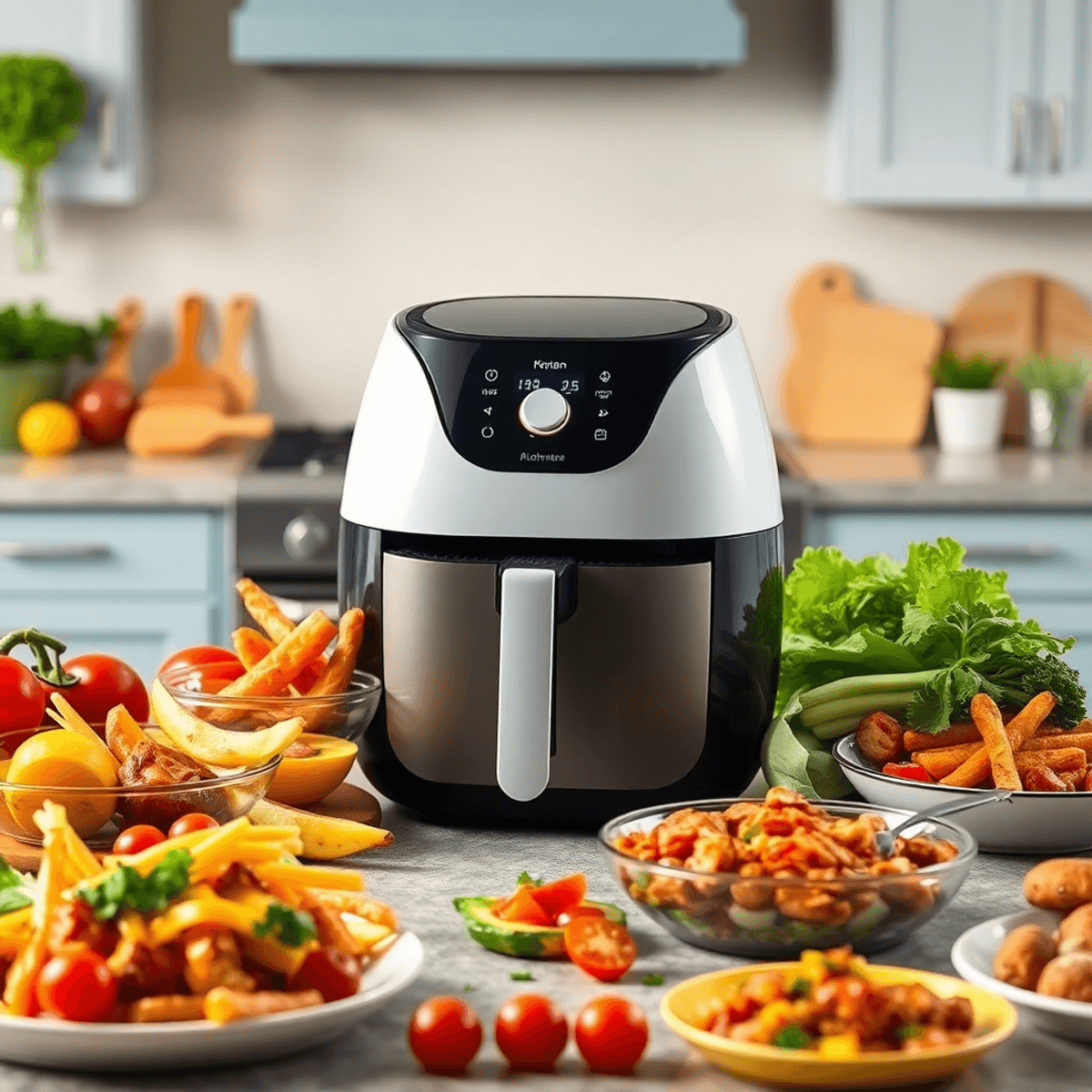
What to Do Before Using a New Air Fryer
Before cooking, wash the removable basket and tray with warm, soapy water. Dry all parts well. Place the air fryer on a flat, heat-safe surface with open space around its vents. Keep it away from cabinets, walls, and items that can melt.
Read the manual for your exact model. It may give special instructions for preheating, cleaning, baking pans, foil, parchment paper, and dishwasher use. Some air fryers need a short empty run to remove a new-plastic smell. Do this only if the manual allows it.
A few first-use rules help prevent common problems:
- Do not fill the basket above its maximum line.
- Do not pour loose oil into the cooking chamber.
- Use a light coating of oil on food, not a deep pool of oil.
- Keep paper towels, plastic, and other loose items away from the heating coil.
- Use oven mitts when removing the hot basket.
- Let steam escape away from your face and hands.
Most air fryers do not need a long preheat. A short preheat can help foods brown more evenly, but it also adds time. Follow the manual when it gives a specific preheat instruction.
The Best Foods to Cook in an Air Fryer
The best air fryer foods have a surface that can brown or crisp. Foods with a little fat often turn golden and crisp. Moist foods can cook well, but they may not become crisp unless you use a coating or drain excess moisture.
Chicken wings and chicken pieces
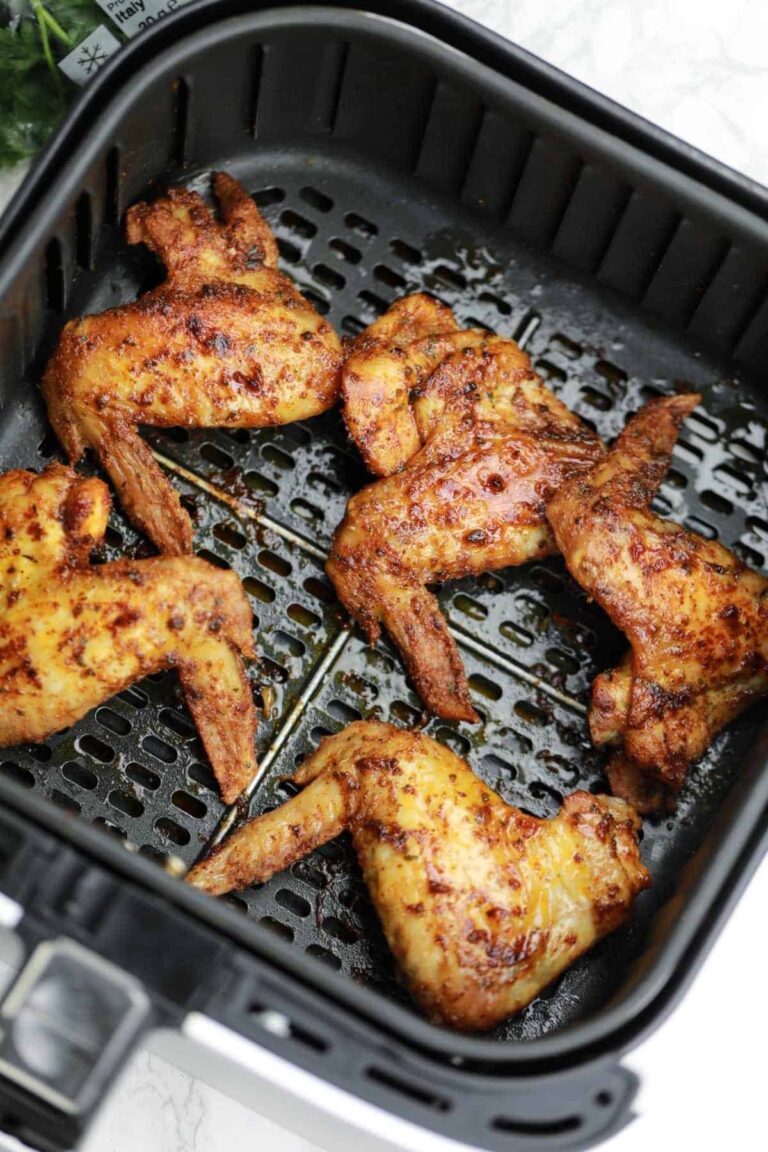
Chicken wings are one of the easiest foods to cook in an air fryer. Pat the wings dry, season them, and place them in one layer. Cook at about 380°F to 400°F, turning or shaking once.
Chicken thighs, drumsticks, and boneless chicken breasts also work well. Bone-in pieces may need more time than small boneless pieces. Use an instant-read thermometer in the thickest part. The USDA says poultry should reach 165°F for safety.
French fries and potato wedges
You can cook frozen French fries straight from the freezer. Shake the basket during cooking so the fries brown more evenly. Fresh potato wedges need a rinse or soak, followed by thorough drying. A small amount of oil helps them brown.
Do not pack the basket tightly. A crowded basket traps steam and often produces soft fries.
Vegetables
Air fryers are useful for quick vegetable sides. Try:
- Broccoli florets
- Cauliflower
- Brussels sprouts
- Green beans
- Asparagus
- Carrot sticks
- zucchini
– Bell pepper strips - Sweet potato cubes
- Corn on the cob
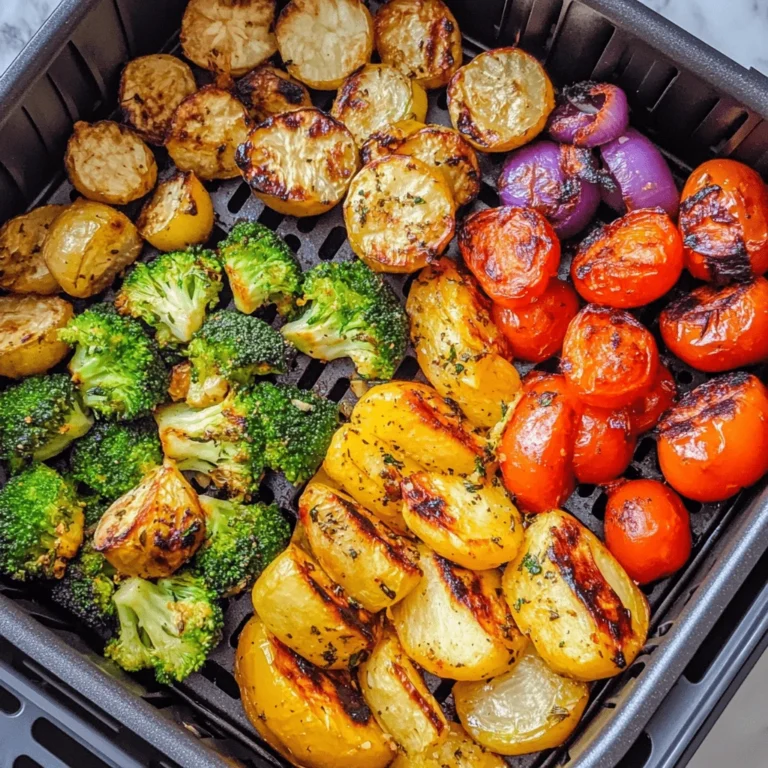
Toss vegetables with a little oil, salt, and pepper. Cook in a single layer when possible. Cut hard vegetables into small, even pieces so they finish at the same time.
Salmon and other fish
Salmon fillets cook quickly and stay moist when you avoid overcooking them. Brush the fish with oil, then add salt, pepper, lemon, garlic, or a spice blend. Place the fillet skin-side down if it has skin.
Thin fish fillets cook faster than thick ones. The USDA lists 145°F as the safe minimum internal temperature for fish. Check the center with a thermometer when the fillet looks opaque and flakes easily.
Burgers and meatballs
Air fryers can cook beef, turkey, and chicken burgers with less mess than a skillet. Leave space between patties so hot air can move around them. Turn the burgers halfway through if your model does not brown both sides evenly.
For ground beef, pork, lamb, and veal, the USDA safe temperature is 160°F. Ground poultry should reach 165°F. A thermometer is more reliable than color alone.
Frozen snacks
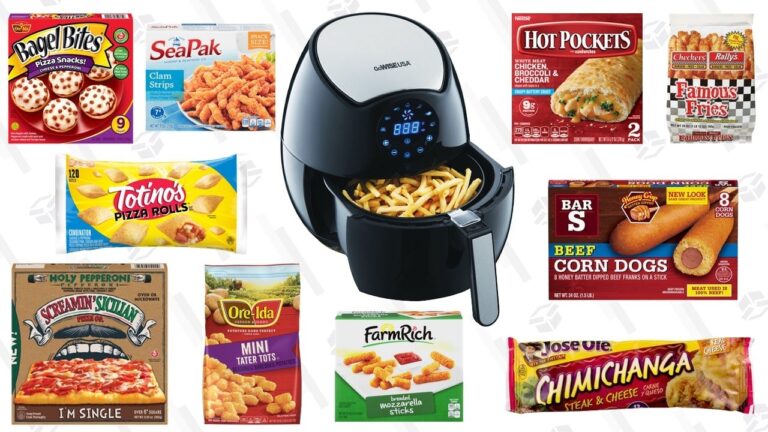
A new air fryer is especially useful for frozen foods. You can cook:
- Mozzarella sticks
- Chicken nuggets
- Fish sticks
- Tater tots
- Taquitos
- Egg rolls
- Pizza rolls
- Frozen hash browns
- Breaded shrimp
Start with the package temperature, then reduce the cooking time if needed. Air fryers often cook faster than a full-size oven. Check early to prevent burnt breading or leaking cheese.
Breakfast foods
You can make several breakfast items in an air fryer:
- Bacon
- Sausage links
- Breakfast potatoes
- Toasted bagels
- English muffins
- Egg bites
- Small frittatas
- Reheated pancakes or waffles
Use a small oven-safe dish for eggs and liquid batter. Do not pour loose liquid directly into a basket with large holes.
Reheated leftovers
An air fryer can restore crispness to foods that become soft in a microwave. Try it for:
- Pizza
- Fried chicken
- French fries
- Onion rings
- Roasted vegetables
- Tacos
- Grilled sandwiches
Use a lower temperature, such as 300°F to 350°F, and check often. Thick foods may need a lower heat so the center warms before the outside dries.
Small baked foods
Many air fryers can bake small portions of:
- Cookies
- Brownies
- Muffins
- Cinnamon rolls
- Apple crisps
- Hand pies
- Biscuits
Use an air fryer-safe pan that fits with space around it. Reduce the temperature used in a conventional oven by about 25°F as a starting point, but do not treat this as a fixed rule. Check the food early because air fryer designs differ.
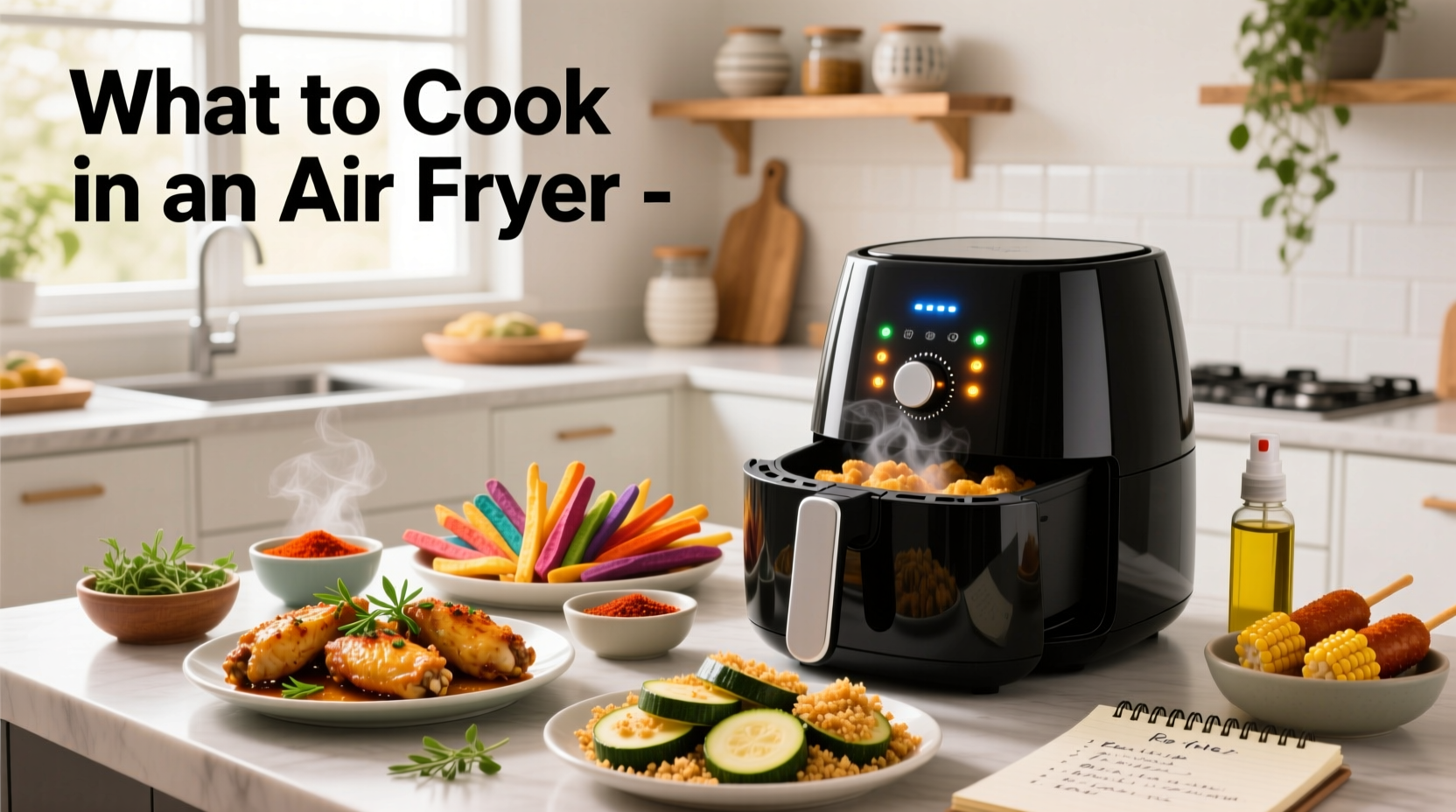
An Easy Air Fryer Cooking Chart
Use this chart as a starting guide. Cooking time depends on food size, starting temperature, basket design, and how full the basket is.
| Food | Temperature | Starting time | Helpful step |
|---|---|---|---|
| Frozen French fries | 400°F | 12–20 minutes | Shake twice |
| Potato wedges | 390°F | 18–25 minutes | Turn halfway |
| Chicken wings | 400°F | 20–30 minutes | Turn or shake |
| Chicken breast | 375°F | 16–24 minutes | Check at the thickest point |
| Salmon fillet | ahu? 390°F | 8–12 minutes | Check for 145°F |
| Broccoli | 375°F | 8–12 minutes | Shake once |
| Brussels sprouts | 380°F | 12–18 minutes | Cut large sprouts in half |
| Burger patties | 375°F | 10–16 minutes | Check for 160°F |
| Frozen chicken nuggets | 400°F | 8–12 minutes | Shake once |
| Bacon | 350°F | 7–12 minutes | Watch near the end |
| Reheated pizza | 350°F | 3–6 minutes | Check often |
| Frozen mozzarella sticks | 375°F | 5–8 minutes | Remove before cheese leaks |
The table is a guide, not a guarantee. Use the product package, your air fryer manual, and a food thermometer when needed. Thick food may look done outside while remaining undercooked inside.
Five Simple Air Fryer Recipes for Beginners
1. Crispy air fryer chicken wings
Ingredients
- 1 pound chicken wings
- 1 teaspoon baking powder, optional
- 1 teaspoon garlic powder
- 1 teaspoon paprika
- Salt and pepper
- 1 teaspoon oil, if needed
Method
- Pat the wings dry with paper towels.
- Mix the seasonings. Add the optional baking powder for a drier, crisp surface.
- Coat the wings lightly.
- Place them in the basket without stacking.
- Cook at 400°F for about 20 to 30 minutes.
- Turn or shake the basket halfway through.
- Confirm that the thickest piece reaches 165°F.
Add sauce after cooking. Sauces with sugar can burn if added too early.
2. Air fryer salmon
Ingredients
- Salmon fillets
- A little oil
- Salt and pepper
- Lemon
- Garlic or dried herbs, optional
Method
- Pat the salmon dry.
- Brush it lightly with oil and season it.
- Put the fillets in the basket with space between them.
- Cook at 390°F for about 8 to 12 minutes.
- Check the center for 145°F.
- Rest the fish for a minute before serving.
Thicker fillets need more time. Start checking early because salmon can dry out quickly.
3. Roasted vegetables
Ingredients
- 3 cups chopped vegetables
- 1 tablespoon oil
- Salt and pepper
- Garlic powder or Italian seasoning
Method
- Cut the vegetables into similar-size pieces.
- Dry them well.
- Toss with oil and seasonings.
- Cook at 375°F to 400°F for 8 to 18 minutes.
- Shake once or twice.
- Remove the vegetables when they are tender and browned at the edges.
Do not mix very hard vegetables with delicate ones unless you cut them into different sizes or add them at different times.
4. Air fryer baked potato
Ingredients
- Russet potatoes
- Oil
- Salt
Method
- Scrub and dry the potatoes.
- Pierce each potato a few times with a fork.
- Rub the skin with a small amount of oil and salt.
- Cook at 400°F for about 35 to 50 minutes.
- Turn once if your model browns unevenly.
- Test with a fork before serving.
Large potatoes take longer. Smaller potatoes may finish in less time.
5. Air fryer grilled cheese
Ingredients
- Two slices of bread
- Butter or mayonnaise
- Sliced cheese
Method
- Spread butter or mayonnaise on the outside of the bread.
- Place cheese between the slices.
- Cook at 360°F for 6 to 10 minutes.
- Turn the sandwich once.
- Remove it when the bread is golden and the cheese has melted.
If the top slice lifts from the fan, use a toothpick only if your manual permits it and remove it before eating. Never use loose metal items that could contact the heating element.
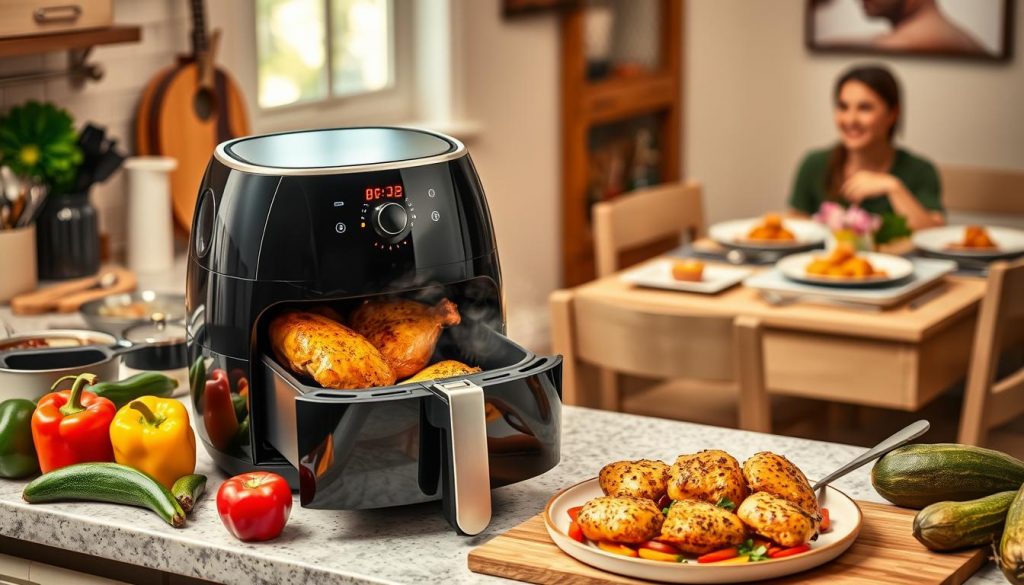
How to Make Air Fryer Food Crisp
Dry food before cooking. Water on the surface turns to steam, which can soften the outside. Pat chicken, fish, potatoes, and vegetables dry before adding oil or seasoning.
Use a small amount of oil. Oil helps browning, but more oil does not always create more crispness. Too much can drip into the bottom, smoke, or make breading greasy.
Leave room between pieces. Air must reach the food surface. Cook in batches when needed. A full basket may save one cooking cycle but can produce pale, soft food.
Shake small foods during cooking. Fries, tots, vegetables, and nuggets benefit from one or two shakes. Turn larger foods such as chicken breasts, burgers, and fish when practical.
For breaded food, use a dry coating that sticks well. A basic coating order is flour, beaten egg, then breadcrumbs. Spray or brush the crumbs lightly with oil. Wet batter can drip through the basket and may not set well.
Foods You Should Not Put in an Air Fryer
An air fryer is not suitable for every food. Avoid putting these items in the basket unless the manual gives clear instructions:
- Loose batter
- Very wet foods
- Large roasts that block airflow
- Cheese by itself
- Plastic containers
- Paper towels
- Wax paper
- Water or soup
- Food packed in sealed containers
- Lightweight items that the fan can lift
Parchment paper can help with sticky foods, but use air fryer parchment with holes when possible. Add it only with food on top so it cannot rise into the heating element. Never use it during an empty preheat.
Foil use varies by model. If allowed, keep foil secured under food and away from the heating coil. Follow the manual rather than assuming every air fryer has the same rule.

Common Air Fryer Problems and Fixes
Food is not crisp
The basket may be too full, the food may be wet, or the temperature may be too low. Dry the food, use less food per batch, and add a short final cooking period.
Food burns before the center is done
The pieces may be too large, the temperature may be too high, or the food may have a sugary coating. Lower the temperature and cook longer. For meat, use a thermometer instead of judging by color.
The air fryer smokes
A small amount of smoke can come from fat dripping onto a hot surface. Stop the unit if smoke is heavy, unplug it when safe, and let it cool. Clean the basket and bottom pan before using it again.
Do not pour water into a hot air fryer. If the manual permits it, a small amount of water in the bottom pan may reduce smoke from very fatty foods, but follow the model instructions first.
The basket sticks
Use a light oil coating and avoid moving delicate food too early. Fish and breaded items often release more easily after the surface has cooked. A compatible liner may help, but it must not block airflow or touch the heating element.
The cooking time seems wrong
Air fryers vary in wattage, basket shape, fan strength, and temperature control. Food size also matters. Begin checking several minutes before the suggested finish time and record what works for your model.
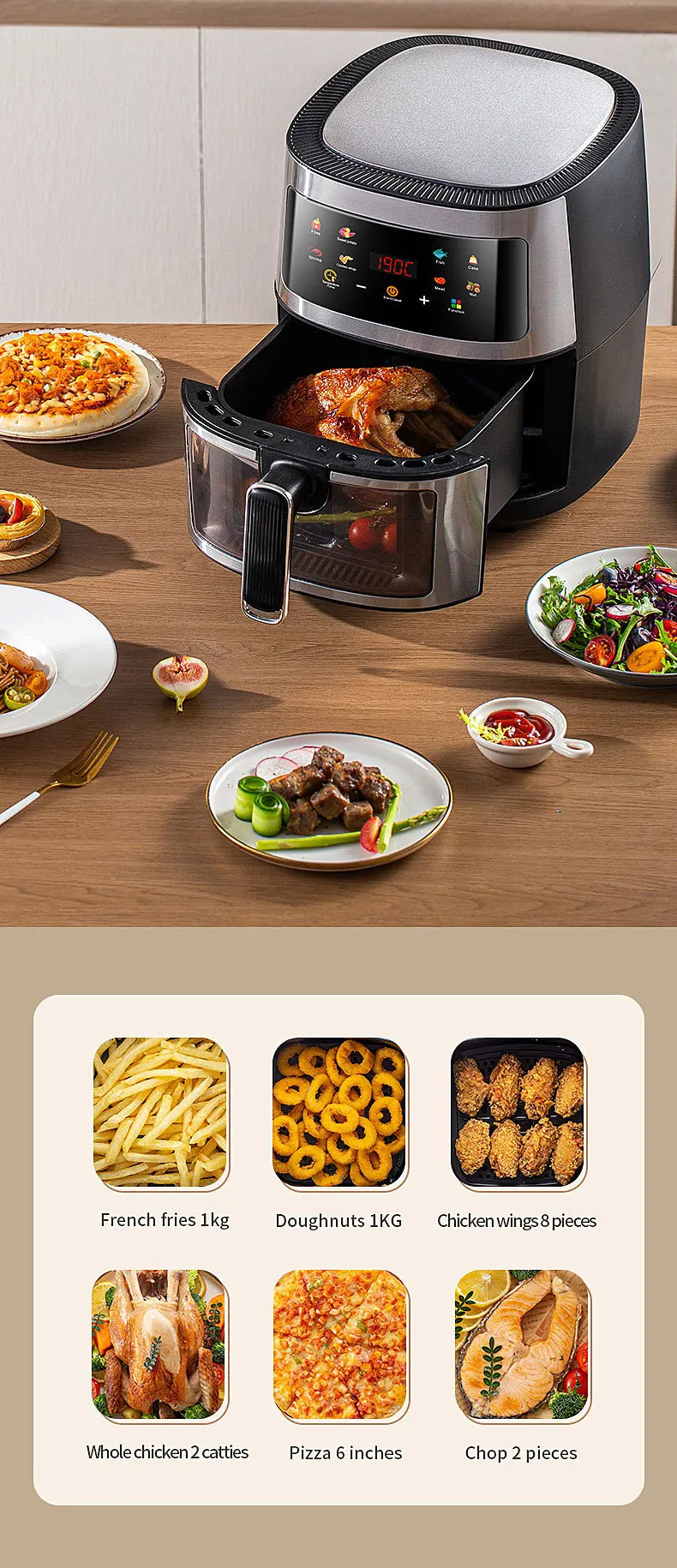
Air Fryer Safety and Food Temperature Rules
Cook raw meat, poultry, seafood, and eggs to safe internal temperatures. The USDA lists these minimum temperatures:
- Poultry: 165°F
- Ground poultry: 165°F
- Ground beef, pork, lamb, and veal: 160°F
- Whole cuts of beef, pork, lamb, and veal: 145°F, followed by a three-minute rest
- Fish: 145°F
- Egg dishes: 160°F
Check the thickest part with a food thermometer. Avoid touching bone, the basket, or the cooking tray with the probe because those surfaces can give a false reading.
Wash hands, utensils, and cutting boards after contact with raw meat. Do not place cooked food back on a plate that held raw meat unless the plate has been washed.
The USDA provides current safe-temperature guidance through its Safe Minimum Internal Temperature Chart.
How to Clean an Air Fryer
Let the air fryer cool before cleaning it. Remove the basket and tray, then wash them according to the manual. Wipe the inside with a damp cloth and remove grease from the heating area when the unit is cool.
Do not submerge the main electrical unit. Avoid harsh cleaners, steel wool, and sharp tools that can damage the coating. Clean after cooking fatty foods, since old grease can smoke during the next use.
A clean basket improves airflow and reduces unwanted odors. Check the vents from time to time and keep them free of grease and dust.
Frequently Asked Questions
Can I cook raw meat in an air fryer?
Yes. An air fryer can cook raw chicken, beef, pork, turkey, and fish. Arrange the pieces in a single layer when possible, and confirm the correct internal temperature with a food thermometer.
Do I need to add oil to an air fryer?
No, not always. Frozen foods with oil already in the coating may need none. Fresh vegetables, potatoes, and lean meats often brown better with a small amount of oil.
Can I put aluminum foil in an air fryer?
Sometimes. The answer depends on the model. If the manual allows foil, keep it secured under food and away from the heating element. Never let loose foil block the fan or touch the coil.
Can I cook frozen food without thawing it?
Usually, yes. Many frozen foods can go directly into the basket. Start with the package directions, check the food early, and add time only as needed.
Can I use an air fryer every day?
Yes, if you clean it and use it as directed. It can handle daily meals, but do not overload the basket or use materials that the manual does not approve.
Conclusion: Start With Simple Air Fryer Foods
The easiest foods to cook in a new air fryer are frozen fries, chicken wings, vegetables, salmon, burgers, potatoes, and reheated leftovers. Use moderate portions, leave space for airflow, and check food before the suggested finish time.
Begin with one food at a time. Write down the temperature, cooking time, and basket size that work best. Within a few meals, you will have a reliable list of air fryer recipes for fast weeknight dinners, crisp snacks, and simple sides.