What Is The Best Food To Cook In An Air Fryer: Easy Ideas
The best foods to cook in an air fryer are chicken wings, French fries, roasted vegetables, salmon, breaded foods, and reheated leftovers. These foods benefit from hot, fast air that dries the surface and creates a crisp finish.
For most people in the United States, chicken wings are the best overall choice. They cook well without much oil, the skin turns crisp, and the small pieces cook more evenly than a large roast. Still, the best food depends on what you value most: crisp texture, speed, ease, nutrition, or low cleanup.
This guide explains which foods work best, how to cook them, what temperatures to use, and which foods need extra care.
Why Some Foods Work Better in an Air Fryer
An air fryer is a small convection oven. A fan moves hot air around the food while the heating element raises the temperature. This process cooks food quickly and helps moisture leave the outer surface.
Foods work especially well when they have:
- A dry or lightly oiled surface
- A small or medium size
- A shape that lets hot air reach several sides
- A goal of crisping, browning, or reheating
- A short cooking time
An air fryer does not truly “fry” food in the same way as a deep fryer. Deep frying cooks food while it is surrounded by hot oil. An air fryer uses moving air and little or no added oil.
That difference matters. An air fryer can make food crisp, but it may not give battered foods the same shell as deep frying. Wet batter can drip through the basket, stay soft, or make a mess. Dry coatings, such as seasoned breadcrumbs or panko, usually work better.
What makes food crisp?
Crisp food has a dry outer surface. Heat helps water move out of that surface. A small amount of oil can improve browning, but too much oil may smoke, drip, or make the food greasy.
Crowding also reduces crispness. When food pieces touch, steam becomes trapped between them. Leave space for air to move around each piece.
The Best Foods to Cook in an Air Fryer
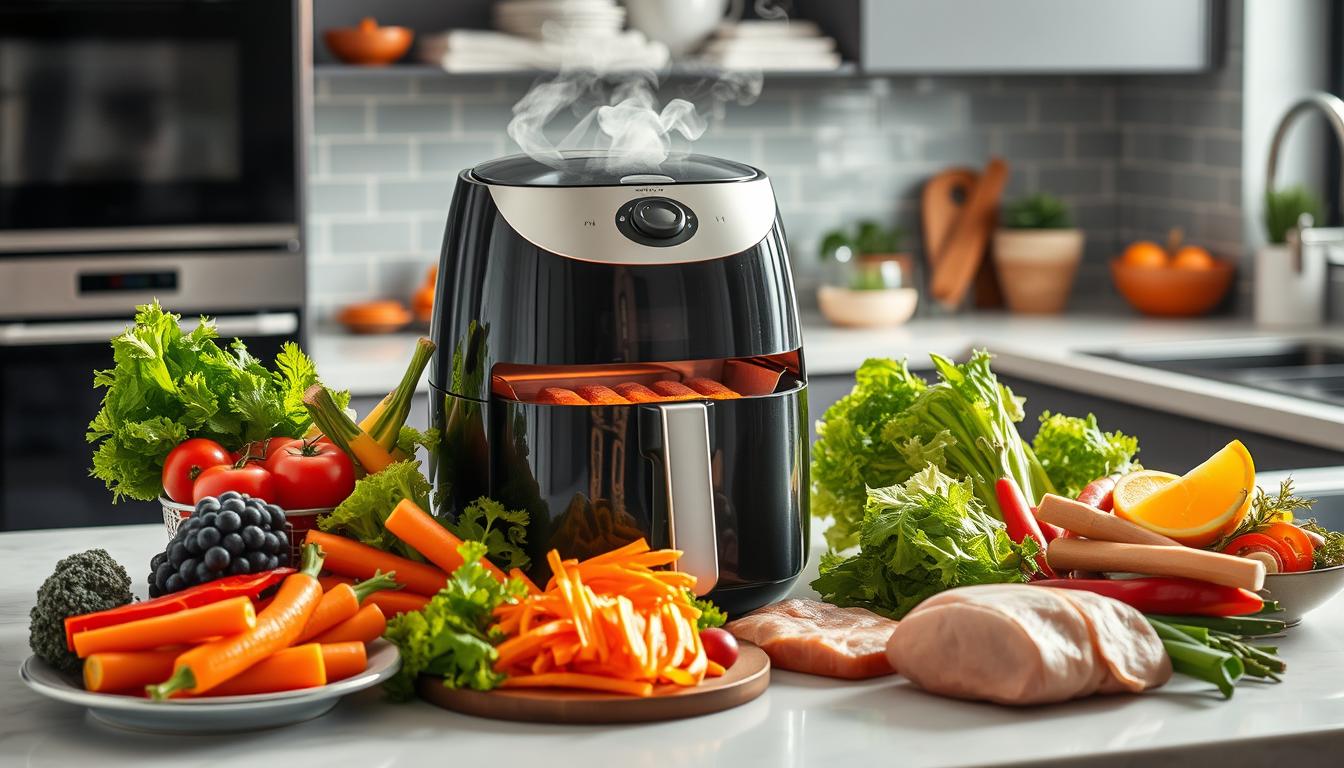
The best air fryer foods offer a clear benefit over a standard oven or skillet. They cook in a small space, brown well, and need little added fat.
1. Chicken wings
Chicken wings are the best all-around air fryer food. Their skin contains enough fat to brown, and the pieces are small enough to cook fairly quickly.
Basic method:
- Pat the wings dry with paper towels.
- Season with salt, pepper, and any dry spices.
- Place them in a single layer.
- Cook at about 380°F to 400°F until browned and cooked through.
- Turn or shake the basket once or twice.
- Check that the thickest part reaches 165°F.
The exact cooking time depends on wing size, whether the wings are fresh or frozen, and the air fryer model. Use an instant-read thermometer rather than color alone.
For extra crisp skin, dry the wings well before cooking. A small amount of oil can help spices stick, but wings usually do not need much oil.
2. French fries and potato wedges
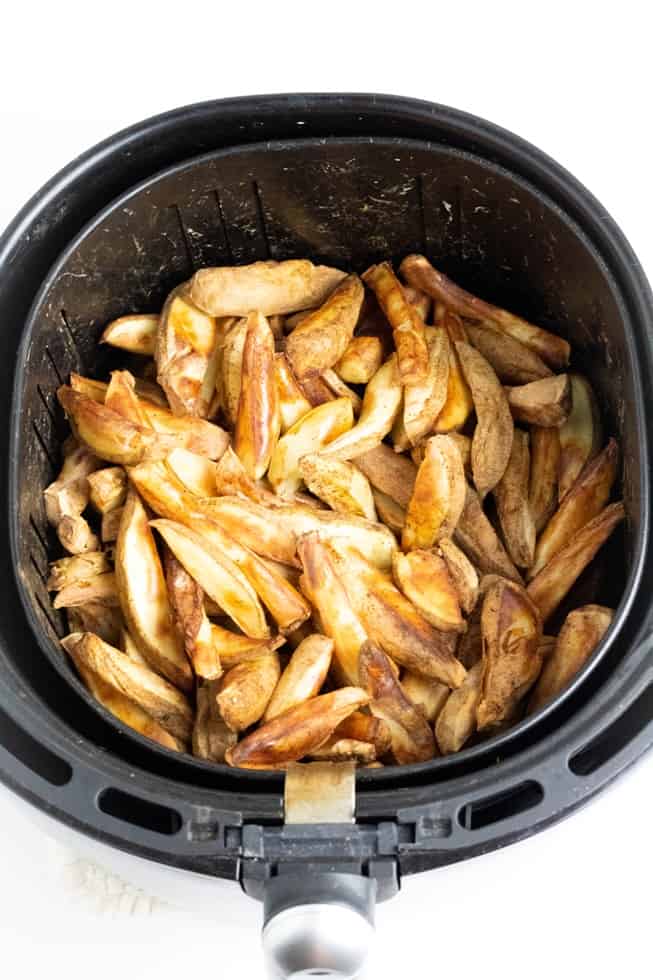
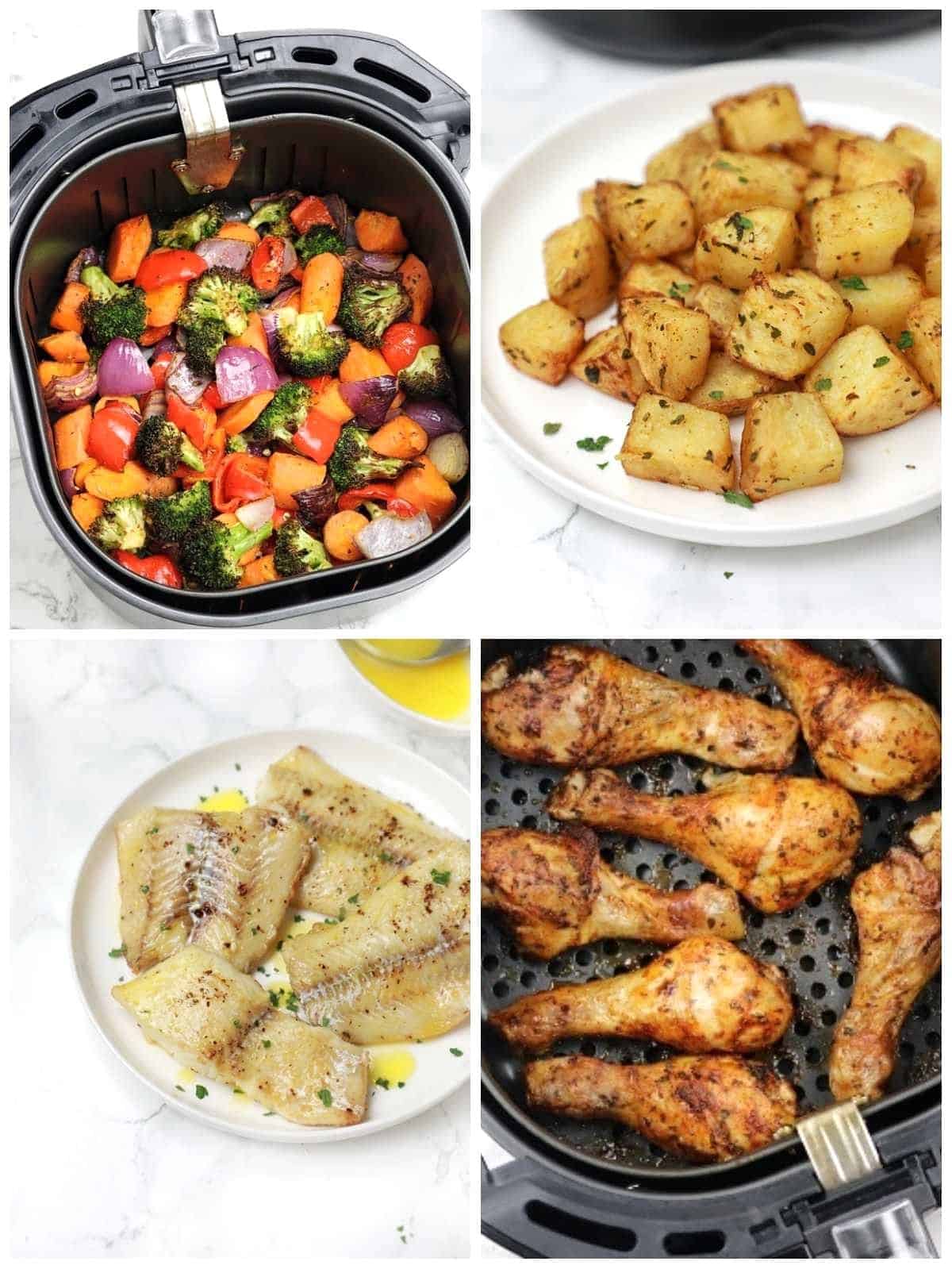
air fryers are well suited to fries, wedges, tater tots, and hash browns. Frozen fries often produce the most reliable results because they are made for consistent cooking.
For fresh potatoes:
- Cut pieces to a similar size.
- Rinse or soak them if you want to remove some surface starch.
- Dry them very well.
- Toss with a small amount of oil.
- Cook in a single layer when possible.
- Shake the basket during cooking.
Thin fries cook faster than thick wedges. A crowded basket produces soft potatoes instead of crisp ones. For a large batch, cook in rounds.
Do not assume that every frozen potato product needs the same setting. Check the package directions, then adjust based on the food’s color and texture.
3. Vegetables
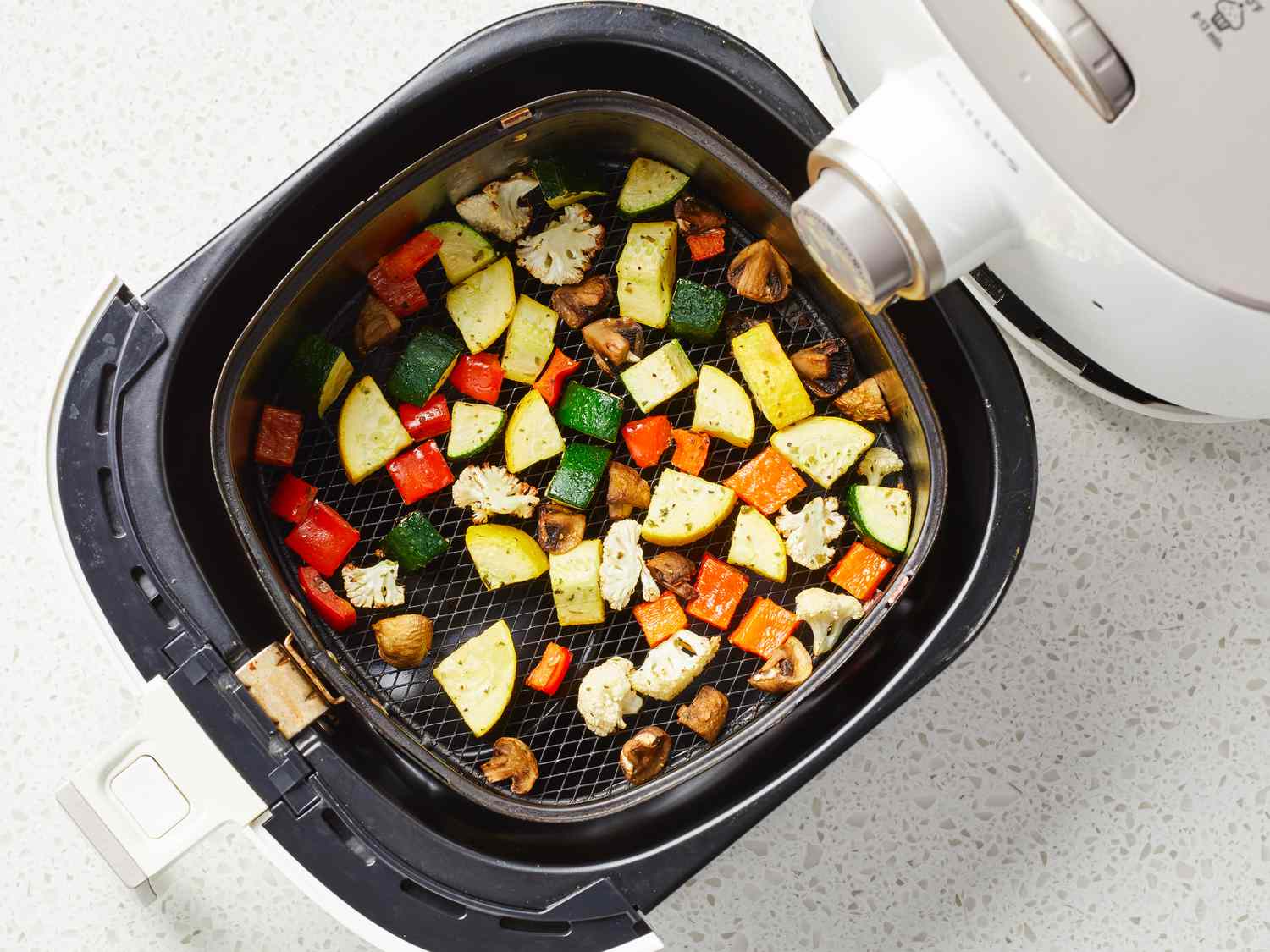
Many vegetables become sweet and browned in an air fryer. Good choices include:
- Broccoli
- Cauliflower
- Brussels sprouts
- Green beans
- Asparagus
- Bell peppers
- Zucchini
- Carrots
- Sweet potatoes
- Corn on the cob
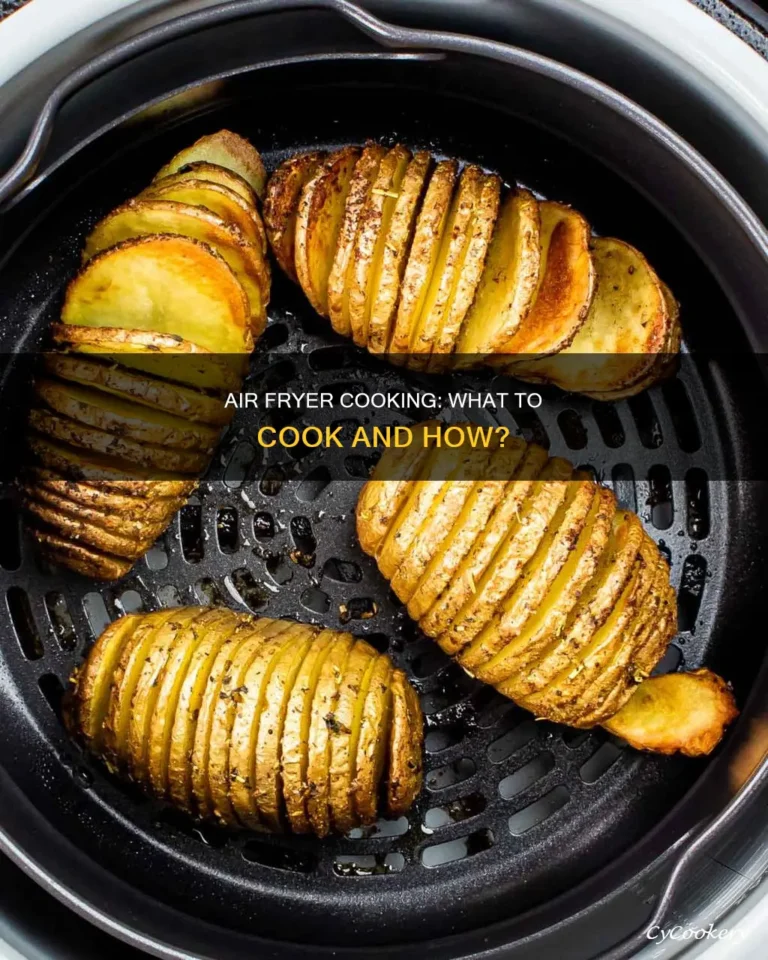
Cut vegetables into even pieces. Toss them with a small amount of oil and seasoning. Cook at about 375°F to 400°F, depending on the vegetable and the size of the pieces.
Dense vegetables, such as carrots and sweet potatoes, need more time than asparagus or green beans. You can microwave dense vegetables briefly before air frying if you want a faster result.
Air-fried vegetables may brown before they become tender. If that happens, reduce the temperature and add a few minutes of cooking time.
4. Salmon and other fish
Salmon cooks well because it needs a short cooking time and develops a lightly browned surface. The air fryer can also cook cod, tilapia, haddock, and shrimp.
Brush the fish with a thin layer of oil or a sauce that is not too runny. Place the fish skin-side down when it has skin. Avoid stacking fillets.
Fish can dry out quickly, so begin checking early. The USDA recommends cooking fin fish to 145°F, or until the flesh is opaque and separates easily with a fork. A thermometer gives a more reliable result than appearance.
Shrimp cook even faster. Watch them closely because overcooked shrimp become firm and rubbery.
5. Breaded chicken, fish, and vegetables
An air fryer works well for dry-coated foods, such as:
- Chicken tenders
- Breaded fish fillets
- Mozzarella sticks
- Onion rings
- Zucchini slices
- Breaded mushrooms
- Chicken nuggets
For the best coating, use this order:
- Flour or a dry flour mix
- Beaten egg
- Breadcrumbs or panko
Press the crumbs onto the food. A light oil spray can help the coating brown.
Do not use loose wet batter unless the recipe is designed for an air fryer. The batter may run through the basket before it sets.
6. Tofu
Tofu develops a firm, browned surface in an air fryer. Extra-firm tofu works best.
Press the tofu to remove excess water. Cut it into cubes or strips, then toss it with a small amount of oil and a dry coating such as cornstarch, garlic powder, or paprika.
Cook the tofu in a single layer. Turn the pieces once or twice so they brown on more than one side. Tofu can become dry if you cook it too long, so remove it when the outside is firm and golden.
7. Reheated leftovers
An air fryer is often better than a microwave for reheating foods that should stay crisp. Good examples include:
- Pizza
- French fries
- Fried chicken
- Egg rolls
- Roasted potatoes
- Chicken tenders
- Quesadillas
- Garlic bread
Use a lower temperature than you would for raw food, often around 300°F to 350°F. Check the food early. Thin foods can burn quickly.
For leftovers, the USDA recommends reheating to 165°F. Refrigerate perishable food within two hours, or within one hour if the temperature is above 90°F, according to USDA guidance.

Quick Comparison: Which Air Fryer Food Should You Choose?
The table below matches common foods with the main reason to cook them in an air fryer. Times are starting points, not guarantees. Basket size, food thickness, starting temperature, and brand all affect results.
| Food | Typical temperature | Main benefit | Key tip |
|---|---|---|---|
| Chicken wings | 380°F–400°F | Crisp skin | Pat dry and check for 165°F |
| Frozen fries | Follow package, often 375°F–400°F | Fast browning | Shake the basket |
| Fresh vegetables | 375°F–400°F | Brown edges | Cut pieces evenly |
| Salmon | About 375°F–400°F | Fast, gentle cooking | Check early to prevent drying |
| Breaded foods | About 375°F–400°F | Crisp coating | Use dry crumbs, not loose batter |
| Tofu | About 375°F–400°F | Firm, browned surface | Press and avoid crowding |
| Pizza and leftovers | 300°F–350°F | Restores crispness | Use a lower heat |
If you want the simplest starting point, choose frozen fries or chicken wings. If you want a vegetable side, try broccoli or Brussels sprouts. If you want to replace a microwave, reheat pizza or fried foods at a lower temperature.
How to Cook Food Well in an Air Fryer
Good air fryer results come from controlling moisture, space, heat, and time.
1. Read the air fryer manual
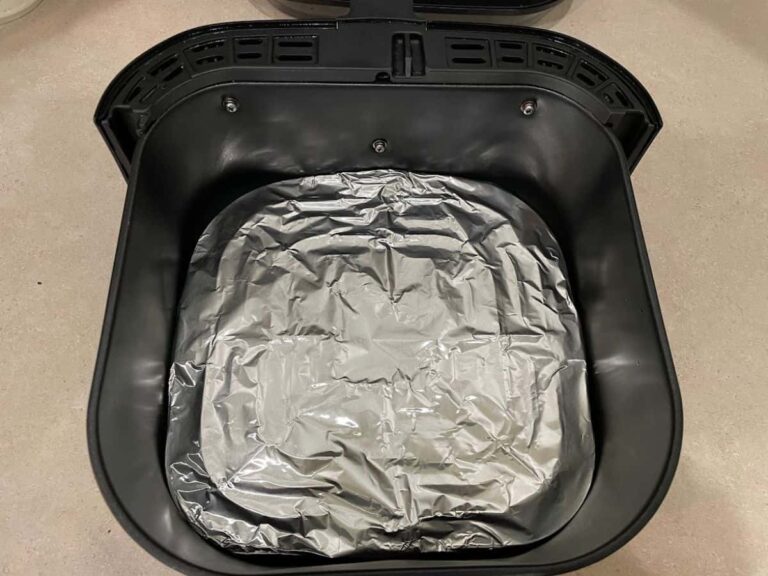
Air fryers differ in basket size, heating power, and controls. Some models have a strong fan. Others cook more slowly. The manual may also list rules for foil, parchment, silicone cups, and dishwasher use.
Do not block the air vents. Keep the appliance on a stable, heat-safe surface with the clearance recommended by the manufacturer.
2. Preheat when it helps
Preheating can help food brown sooner. It is most useful for:
- Steak
- Chicken wings
- Frozen foods
- Breaded foods
- Foods that need a crisp crust
Some foods do not need preheating. Vegetables and reheated leftovers can often begin in a cold basket, but cooking may take a little longer.
If the recipe gives a preheat instruction, follow it. If not, add a few minutes and check the food early.
3. Dry the food
Moisture is the main enemy of crispness. Pat meat, fish, tofu, and vegetables dry before seasoning.
For frozen foods, remove loose ice when practical. Large amounts of ice can create steam and slow browning.
4. Use only a light layer of oil
A small amount of oil can help food brown. Toss the food in oil before cooking, or use a spray made for cooking.
Avoid spraying aerosol oil directly into a hot air fryer unless the manual says it is safe. Some aerosol propellants may damage nonstick surfaces. Do not pour oil into the drawer as you would with a deep fryer.
5. Leave room for air
Food should usually sit in one layer. A little overlap may be acceptable for items you plan to shake, such as fries. Large pieces of chicken, fish, or vegetables need more space.
If food stays pale or soft, the basket may be too full. Cook a smaller batch.
6. Shake or turn when needed
Shake small foods halfway through cooking. Turn larger foods with tongs.
You do not need to turn every food. A fish fillet or delicate pastry may break when moved. Use the food’s shape and the recipe as your guide.
7. Check temperature and texture
Use an instant-read thermometer for meat, poultry, fish, and leftovers. The USDA lists these minimum internal temperatures:
- Poultry: 165°F
- Ground beef, pork, lamb, and veal: 160°F
- Beef, pork, lamb, and veal steaks, chops, and roasts: 145°F, followed by a three-minute rest
- Fish: 145°F
- Leftovers and casseroles: 165°F
Insert the thermometer into the thickest part. Avoid touching bone, the basket, or the cooking surface.

Foods That Do Not Work Well in an Air Fryer
Some foods are poor choices because they are too wet, too loose, too delicate, or too large.
Wet batter
Loose batter can drip through the basket. It may not set fast enough to form a crust.
Use a dry coating instead, or freeze the coated food briefly before cooking if the recipe supports that method.
Leafy greens
Light greens, such as spinach and kale, can blow around under the fan. They may cook unevenly or stick to the heating element.
If you air fry greens, use enough weight and watch them closely. A conventional oven or skillet may be easier.
Large roasts
A large roast may brown outside before it cooks evenly inside. A regular oven gives more room and steadier heat.
An air fryer can handle small roasts or compact cuts, but use a thermometer and leave space around the food.
Very light foods
Parchment, bread, and thin cheese can move around. If a loose item touches the heating element, it may burn.
Only use parchment that is rated for the temperature and held down by food. Never preheat with loose parchment inside the basket unless the manufacturer specifically permits it.
Foods with excess cheese
Cheese can melt through the basket and burn on the heating element. Use a tray or a suitable container when the recipe allows it.

Common Air Fryer Mistakes
Overfilling the basket
This is the most common reason food turns soft. Hot air cannot reach every surface when the basket is packed.
Fix: Cook in batches or use a larger air fryer.
Using too much oil
Extra oil does not always create extra crispness. It can smoke and leave food greasy.
Fix: Use a thin coating and choose foods with a naturally dry surface.
Trusting the preset
A “chicken” or “fries” button is only a starting point. Presets may assume a certain food size and amount.
Fix: Check the food early and use an internal thermometer for foods that need a safe temperature.
Cutting food unevenly
Small pieces may burn while large pieces remain firm.
Fix: Cut pieces to a similar size.
Adding sauce too early
Sugary sauces can burn before the food finishes cooking.
Fix: Add barbecue sauce, honey, teriyaki sauce, or glaze near the end.
Failing to clean the basket
Old grease and crumbs can smoke. They can also transfer burnt flavors to new food.
Fix: Let the appliance cool, then clean the basket and drawer according to the manual. Remove baked-on residue with a method approved for the coating.

Air Fryer Safety and Food Safety
An air fryer is a small high-heat appliance, so safe handling matters.
Keep the appliance away from water, curtains, paper, and other items that can burn. Do not cover the air vents. Use oven mitts when handling a hot basket.
For food safety, do not rely on cooking time alone. Food thickness and starting temperature can change the result. The USDA advises using a food thermometer to check meat, poultry, fish, and leftovers.
Do not wash raw chicken. The CDC explains that rinsing raw poultry can spread germs through splashes. Instead, pat it dry with a disposable towel, discard the towel, and wash your hands and surfaces after handling it.
Air frying may reduce the amount of oil used for some foods, but it does not automatically make a food low in calories, low in sodium, or healthy. A large serving of fries is still a large serving of fries. The ingredients and portion size matter.
Some starchy foods can form acrylamide during high-heat cooking. The FDA recommends avoiding overcooking and aiming for a golden-yellow color rather than a dark brown or burnt surface, especially with potatoes and bread products.

Frequently Asked Questions
What is the number-one food to cook in an air fryer?
Chicken wings are the best overall choice for many home cooks. They brown well, need little added oil, and fit the air fryer’s small cooking space. Check that the thickest part reaches 165°F.
What food should you not put in an air fryer?
Avoid loose wet batter, very light foods, and large items that block airflow. Wet batter may drip through the basket, while light foods may move into the heating element. Follow the appliance manual for foil, parchment, and containers.
Is an air fryer better than an oven?
An air fryer can cook small portions faster and may brown the surface more quickly. A full-size oven is better for large meals, large roasts, and several trays of food. The better choice depends on batch size and the result you want.
Do you need oil in an air fryer?
No. Many foods cook well without added oil. A small amount may improve browning and help seasonings stick, especially on vegetables, tofu, and breaded foods.
Can you cook frozen food in an air fryer?
Yes. Frozen fries, vegetables, chicken nuggets, fish fillets, and snacks often work well. Follow the package instructions when available, avoid crowding the basket, and confirm that meat or poultry reaches a safe internal temperature.
Key Takeaways
- Chicken wings are the best all-around air fryer food.
- Frozen fries and tater tots offer some of the easiest results.
- Vegetables develop browned edges with little oil.
- Salmon and shrimp cook quickly but need close attention.
- Dry coatings work better than loose wet batter.
- Keep food in a loose layer so hot air can circulate.
- Use a thermometer for meat, poultry, fish, and leftovers.
- An air fryer uses less oil for some dishes, but the food is not automatically healthier.
Conclusion
The best food to cook in an air fryer is food that benefits from fast heat and a dry, browned surface. Start with chicken wings, frozen fries, roasted vegetables, salmon, or reheated pizza.
For the best results, dry the food, use a light amount of oil, avoid crowding, and check the internal temperature when safety matters. Once you learn how your specific air fryer cooks, you can adjust the time and temperature without relying on presets alone.