What Makes Chicken Crispy In The Air Fryer: Crisp Tips
Air fryer chicken becomes crispy when its surface dries, its coating sets, and hot air browns the outside. For cooks in the United States, the most reliable method is simple: dry the chicken well, use a light layer of oil, leave space around each piece, and cook until the thickest part reaches 165°F, the safe minimum internal temperature listed by the USDA.
The air fryer does not truly “fry” chicken in deep oil. It uses fast-moving hot air to remove surface moisture. That dry heat helps create browning, a firm crust, and crisp chicken skin with much less oil.

The Short Answer: Dryness, Heat, Airflow, and Browning
Four things make chicken crispy in an air fryer:
- A dry surface gives the crust room to brown.
- High heat drives off moisture and triggers browning.
- Strong airflow removes steam from the surface.
- A thin layer of oil or starch helps the coating turn golden and crisp.
Water is the main enemy of crispness. As chicken cooks, water escapes as steam. If the pieces touch, sit in a wet marinade, or crowd the basket, that steam can collect around the food. The chicken may cook safely, but the outside can stay soft.
The best texture comes from a balance. The chicken needs enough heat to brown, but it also needs enough cooking time for the center to reach 165°F. A thin chicken tender may crisp quickly. A thick bone-in thigh may need more time before its center is safe.
What the air fryer does differently
An air fryer moves hot air around the chicken. This airflow helps replace the moist air near the surface with hotter, drier air. The effect is similar to a small convection oven, but the compact cooking chamber can brown food quickly.
The air fryer cannot make wet food instantly crisp. It can only speed up the drying and browning process. This is why patting chicken dry and avoiding excess marinade matter so much.

How Moisture Affects Crispy Chicken
Moisture controls whether chicken browns or steams. Before the chicken can develop a crisp crust, surface water must heat and evaporate. Until much of that water is gone, the surface temperature remains limited by evaporation.
That is why wet chicken often turns pale and soft. The hot air is spending energy changing water into steam rather than browning the surface.
Dry the chicken before seasoning
Use paper towels to blot chicken on all sides. Pay close attention to folds, the underside, and areas near the bone. Do not rinse raw chicken. The USDA advises against washing poultry because splashing water can spread raw chicken bacteria around the sink and nearby surfaces.
For skin-on chicken, drying the skin is especially important. If time allows, place the seasoned chicken uncovered in the refrigerator for several hours or overnight. This uncovered rest allows the surface to dry further. Keep raw chicken refrigerated at 40°F or below during this step.
Use marinades carefully
A wet marinade adds flavor, but too much liquid can delay browning. Before air frying, let excess marinade drip off and pat the chicken dry. Thick sugary marinades can also burn before the chicken finishes cooking.
For the crispiest result, use wet marinades as a flavor step, not as the final surface layer. A dry rub, flour coating, or starch coating will brown more easily.
Why Oil Helps Crisp Chicken
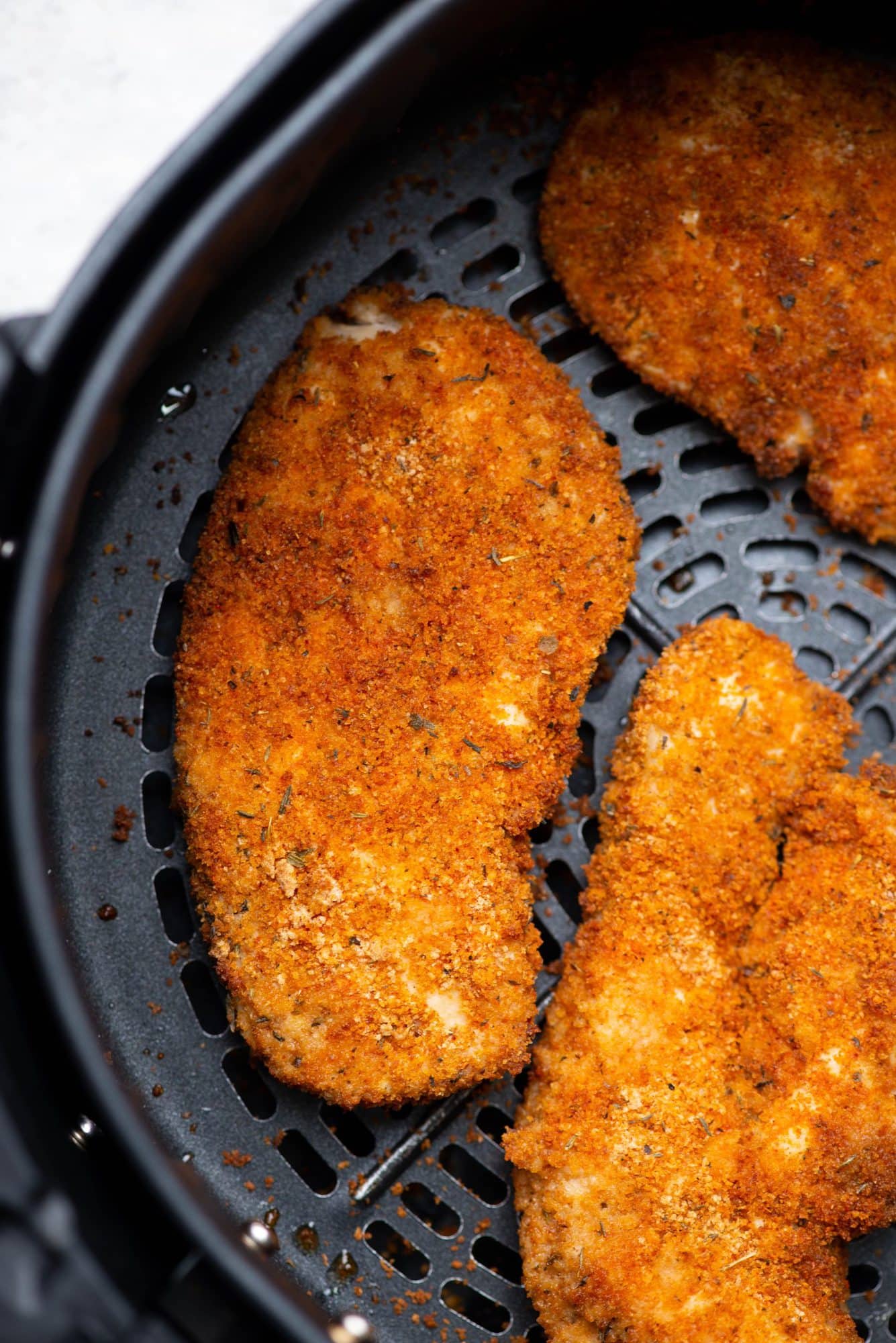
Oil helps transfer heat and promotes even browning. It also coats flour, breadcrumbs, and chicken skin so they can become golden and firm instead of dry and dusty.
You do not need a pool of oil. A light spray or small amount brushed over the chicken is usually enough. Too much oil can drip into the basket, soften the crust, and create smoke.
Use an oil with a suitable cooking temperature, such as:
- Canola oil
- Vegetable oil
- Avocado oil
- Peanut oil, if no one has a peanut allergy
For breaded chicken, spray any dry flour spots. These pale areas often stay powdery because they did not receive enough oil.
Oil is not the same as crispness
Oil alone cannot fix wet or crowded chicken. It supports browning after the surface has dried. If the chicken is packed tightly into the basket, steam may still soften the crust.
Think of oil as the finishing coat on a dry surface. It helps the heat work better, but it cannot replace airflow or spacing.

How Breading and Starch Create a Crisp Crust
Breading creates a separate outer layer that can dry and harden before the chicken becomes overcooked. The coating also adds texture through flour, cornstarch, breadcrumbs, or crushed cereal.
A basic air fryer coating works well with this order:
- Pat the chicken dry.
- Season it.
- Dip it in a thin wet binder, such as beaten egg or buttermilk.
- Coat it with seasoned flour, cornstarch, breadcrumbs, or a blend.
- Press the coating gently onto the chicken.
- Spray the coating lightly with oil.
Flour versus cornstarch
Flour gives breading structure and a familiar fried-chicken flavor. Cornstarch tends to create a lighter, more brittle crust. A blend often gives a useful balance.
For example, a practical coating may use:
- ¾ cup all-purpose flour
- ¼ cup cornstarch
- Salt, pepper, paprika, garlic powder, and other seasonings
This is a formula, not a fixed rule. The important point is to keep the coating thin and even. A thick, loose layer may fall off or stay floury.
Baking powder and chicken skin
A small amount of baking powder in a dry rub can help skin become crisp. It may raise the surface pH and support browning while also helping the skin dry. Use baking powder, not a large amount of baking soda. Baking soda is much stronger and can leave a bitter or soapy taste.
A simple skin-on rub can include salt, pepper, garlic powder, paprika, and a small amount of baking powder. Avoid covering the chicken with a heavy white layer. Excess powder will not improve the crust.
Why breadcrumbs sometimes stay soft
Breadcrumbs can remain soft when they are too thick, under-oiled, or placed on wet chicken. Fine breadcrumbs usually adhere more evenly. Panko breadcrumbs can create a rougher, crunchier crust, but they need enough oil to brown.
If the coating looks pale halfway through cooking, add a light spray of oil rather than turning the temperature sharply higher.

The Best Air Fryer Method for Crispy Chicken
The most dependable process is to prepare the surface first, then manage heat and airflow.
1. Choose pieces of similar size
Small tenders, wings, and boneless thighs cook at different rates. Try to cook pieces with similar thickness in the same batch. This helps the coating brown at about the same time the chicken reaches 165°F.
Bone-in pieces may need more time than boneless pieces. A thermometer is more reliable than color or cooking time alone.
2. Dry and season the chicken
Blot the chicken well. Add salt and dry seasonings. If using a wet marinade, remove excess liquid before coating or cooking.
Salt can draw moisture toward the surface if the chicken sits for only a short time. A longer rest can allow the salt to move into the meat while the uncovered surface dries. Either method can work, but the outside should be dry before it enters the basket.
3. Preheat when your model recommends it
Preheating can help the chicken begin browning as soon as it enters the basket. Some air fryer models do not require preheating, so follow the appliance manual.
If you preheat, a range of 375°F to 400°F works for many breaded or skin-on chicken recipes. The correct setting depends on the piece size, coating, and air fryer design.
4. Arrange chicken in one layer
Leave space between pieces. Air must move around the chicken, including underneath it. A crowded basket traps steam and creates pale, soft spots.
Do not stack chicken unless the recipe and appliance are specifically designed for it. If you need more food, cook in batches.
5. Use a light oil coating
Spray or brush the chicken lightly. Coat dry flour patches and exposed breadcrumbs. Avoid soaking the chicken in oil.
Some aerosol sprays can damage certain nonstick surfaces. Check the air fryer manual and use a refillable oil sprayer or brush if needed.
6. Turn only when useful
Turn thicker pieces halfway through cooking if the underside is not browning. Turning can help both sides receive direct airflow, but opening the basket too often releases heat and extends cooking.
For chicken wings or pieces with skin on all sides, turning may improve evenness. For delicate breading, turn gently with tongs once the crust has set.
7. Check temperature in the thickest part
Use an instant-read thermometer in the thickest part of the meat. Avoid touching bone, which can give a misleading reading. Chicken should reach 165°F according to USDA guidance.
Crispness and safety are separate checks. A golden crust does not prove that the center is cooked. A safe internal temperature does not guarantee a crisp surface.

Temperature and Time Guide
Cooking time varies with piece size, starting temperature, bone-in or boneless meat, coating, and air fryer design. Use the table as a starting point, then verify the center with a thermometer.
| Chicken type | Starting temperature | Approximate air fryer setting | Typical time range |
|---|---|---|---|
| Boneless tenders | Refrigerated | 380°F | 10–16 minutes |
| Boneless chicken thighs | Refrigerated | 380°F | 16–22 minutes |
| Breaded cutlets | Refrigerated | 375°F–400°F | 10–18 minutes |
| Bone-in thighs | Refrigerated | 375°F–385°F | 22–30 minutes |
| Chicken wings | Refrigerated | 380°F–400°F | 20–30 minutes |
These ranges are not a safety guarantee. Very thick pieces may need more time. Frozen chicken usually needs a different method because ice and surface moisture delay browning.
For very crisp skin, some cooks use a two-stage approach: start at a moderate temperature to cook the meat, then raise the heat briefly to brown the outside. Watch closely because small pieces and sugary coatings can burn quickly.
A useful temperature decision
- Brown too fast, center under 165°F: Lower the heat and continue cooking.
- Center reaches 165°F, surface pale: Increase heat briefly or continue in short intervals.
- Surface burns before the center cooks: Use smaller pieces, a thinner coating, or a lower cooking temperature.
- Chicken is safe but soft: Improve drying, spacing, and oil coverage next time.

Why Air Fryer Chicken Turns Out Soft
Soft chicken usually points to excess moisture, weak airflow, or a coating problem. Check the most common causes first.
The basket is overcrowded
Too many pieces create a humid environment. Cook fewer pieces at a time and leave clear gaps between them.
The chicken went into the basket wet
Excess marinade, condensation from frozen chicken, or poor drying can stop the surface from browning. Pat the chicken dry before adding oil or breading.
The coating has too much flour
Dry flour needs moisture and oil to form a crust. Shake off extra coating and spray the remaining layer lightly with oil.
The chicken was flipped too early
A coating may stick before it has formed a crust. Let it cook until the underside looks set, then turn it carefully.
The air fryer is dirty or blocked
Grease buildup and blocked air vents can affect airflow and heating. Unplug the appliance, let it cool, and clean it according to the manufacturer’s instructions. Do not block the air fryer’s external vents.
The basket or food was lined incorrectly
Parchment paper can restrict airflow if it covers too much of the basket. Use only air-fryer parchment designed for the appliance, keep it under food so it cannot lift into the heating element, and follow the manual.

Skin-On Chicken Versus Breaded Chicken
Skin-on chicken and breaded chicken need different crisping strategies.
For skin-on chicken
Dry the skin thoroughly. Season it evenly, and place skin-side up when possible. A small amount of baking powder in the dry rub may help, but a dry surface and open airflow matter more.
Do not brush the skin with a thick wet sauce at the start. Add barbecue sauce, buffalo sauce, or another glaze near the end. Wet sauce can soften the skin and sugary sauce can burn.
For breaded chicken
Use a thin, even coating. Press it onto the meat and spray visible dry areas. Panko, fine breadcrumbs, flour, and cornstarch all behave differently, so adjust the oil and cooking time.
Breaded chicken often benefits from a gentle turn once the crust has set. If the coating breaks away, the chicken may have been too wet, the layer too thick, or the crust turned before it firmed.
For frozen chicken
Frozen pieces release water as they thaw and cook. That moisture can make breading soft. If cooking frozen chicken, follow a tested recipe for the exact product and appliance. Check the internal temperature rather than relying only on package timing.

Common Mistakes to Avoid
- Do not rinse raw chicken. It can spread bacteria through splashes.
- Do not rely on color alone. Use a thermometer and confirm 165°F in the thickest part.
- Do not stack pieces. Stacking blocks airflow and traps steam.
- Do not drown the chicken in oil. Excess oil can soften the crust and cause smoke.
- Do not use a thick wet coating. It slows browning.
- Do not add sweet sauce too early. Sugar can burn before the chicken is ready.
- Do not cut the chicken open repeatedly. This releases juices and makes cooking less even.
- Do not leave cooked chicken at room temperature for long periods. Refrigerate leftovers promptly in shallow containers, following USDA food-safety guidance.
After cooking, place crispy chicken on a wire rack for a few minutes rather than directly on a plate. A flat plate can trap steam under the crust. Do not cover the chicken tightly while it is hot if crispness matters.

Frequently Asked Questions
Does baking soda make chicken crispy?
A very small amount can change browning, but too much may create a bitter or soapy flavor. Baking powder is usually easier to use in a dry rub for chicken skin. Drying the chicken and leaving space around it have a greater effect.
Should I put flour or cornstarch on chicken in the air fryer?
Either can work. Flour gives a classic coating, while cornstarch can make the crust lighter and more brittle. A blend is often practical. In every case, use a thin layer and add enough oil to remove dry flour spots.
Do I need to flip chicken in an air fryer?
Not always. Flip thicker or breaded pieces when the underside needs more browning. Avoid flipping too early, because the coating may not have set.
Why is my air fryer chicken crispy outside but dry inside?
The pieces may be too small, the heat may be too high, or the chicken may have cooked well past 165°F. Use similar-size pieces, check the temperature early, and lower the heat if the crust browns before the center is ready.
Can I make chicken skin crispy without oil?
Yes, especially with skin-on chicken. Thorough drying and good airflow can produce crisp skin. A small amount of oil usually improves browning, but oil is not a substitute for dry skin or an uncrowded basket.
Key Takeaways
- Dry chicken before cooking.
- Use high, steady heat and strong airflow.
- Leave space between pieces.
- Add only a light layer of oil.
- Use starch or breadcrumbs for a firm crust.
- Add wet or sugary sauces near the end.
- Check the thickest part with a thermometer and cook to 165°F.
- Rest crispy chicken on a wire rack so steam does not soften the coating.
Conclusion
Crispy air fryer chicken comes from controlling moisture. Dry the surface, use a thin coating, add a small amount of oil, and give hot air room to circulate. Then cook at a suitable temperature and verify that the center reaches 165°F.
If the chicken is safe but not crisp, improve the surface and airflow before adding more oil or heat. In most kitchens, better drying and less crowding solve the problem faster than a more complicated recipe.