Air Fryer Smells Burnt After Cleaning: Quick Fixes
A burnt smell after cleaning often comes from trapped moisture, cleaner residue, or food oil heating inside.
When your air fryer smells burnt after cleaning, it can feel confusing and unsafe. A clean basket should not produce a sharp odor, smoke, or taste in your food. In most cases, the cause is easy to fix, but a burning smell can also point to hidden grease, a blocked vent, or an electrical fault. This guide explains the likely causes, safe checks, cleaning methods, and signs that your air fryer needs professional help.
:max_bytes(150000):strip_icc()/faw-toaster-ovens-air-fryers-test-chefman-3-7qt-turbofry-rkilgore-111-487d903950824b019a89d671ec68e254.jpg)
Why Your Air Fryer Smells Burnt After Cleaning
An air fryer smells burnt after cleaning when moisture, soap, grease, or food bits remain in areas that become very hot. The heat can burn off these materials during the next cooking cycle.
Some air fryers also have a new-appliance smell after deep cleaning. This may happen when water reaches warm surfaces and slowly evaporates. A mild smell that fades after one or two empty heating cycles is usually less worrying than thick smoke or a strong electrical odor.
The most common causes include:
• Cleaner or dish soap trapped under the basket or around the heating unit
• Water left inside the appliance after washing
• Grease hidden near the heating element or fan
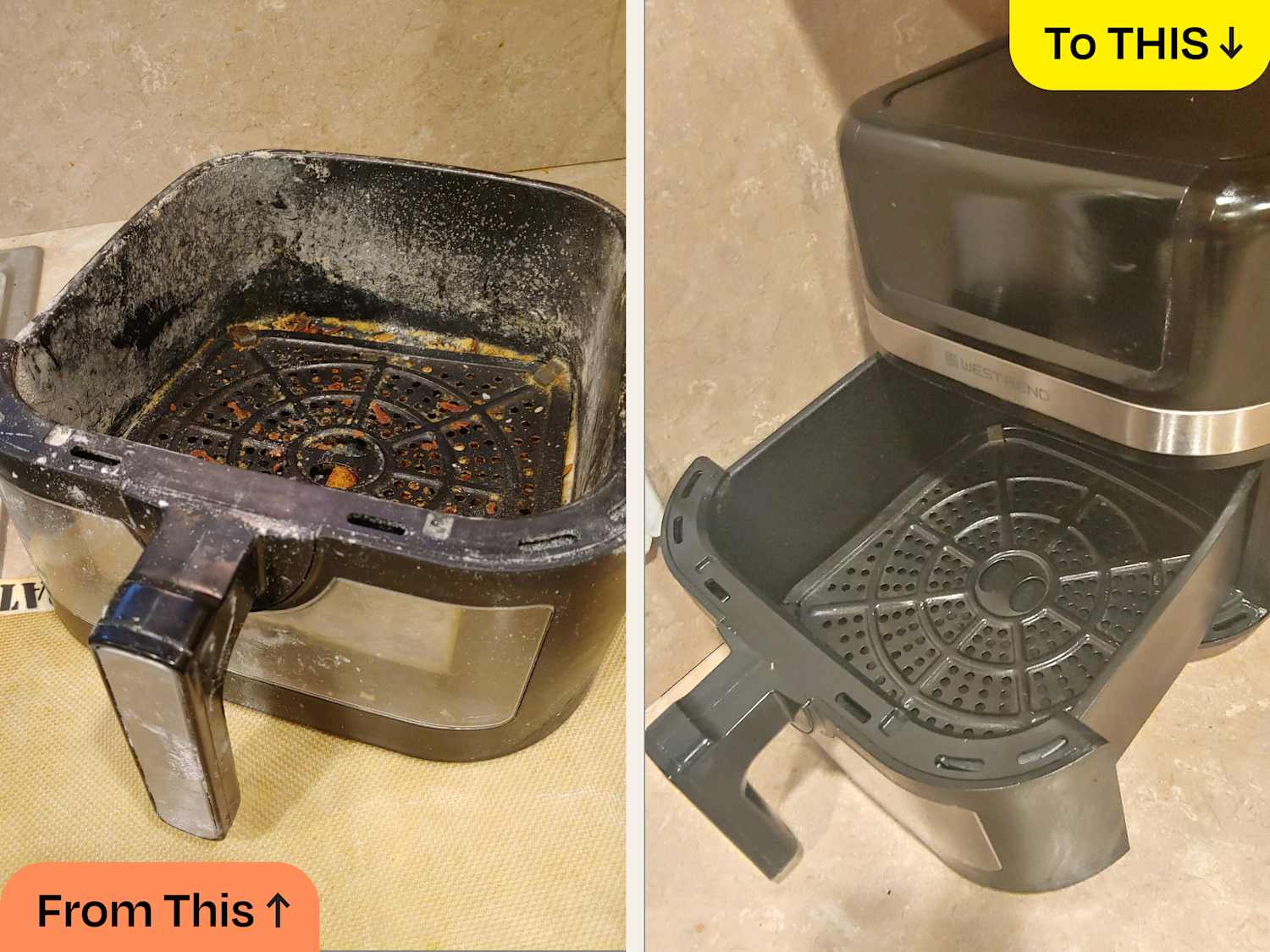
• Burnt crumbs stuck in the drawer or cooking chamber
• Food-safe coating or plastic parts overheating
• A damaged power cord, plug, motor, or heating component
In my experience, the most common mistake is putting the basket back while it is still wet. Even a small amount of moisture can create steam, loosen old grease, and produce an odd burnt smell.
Common Causes of a Burnt Smell After Cleaning
Cleaner residue
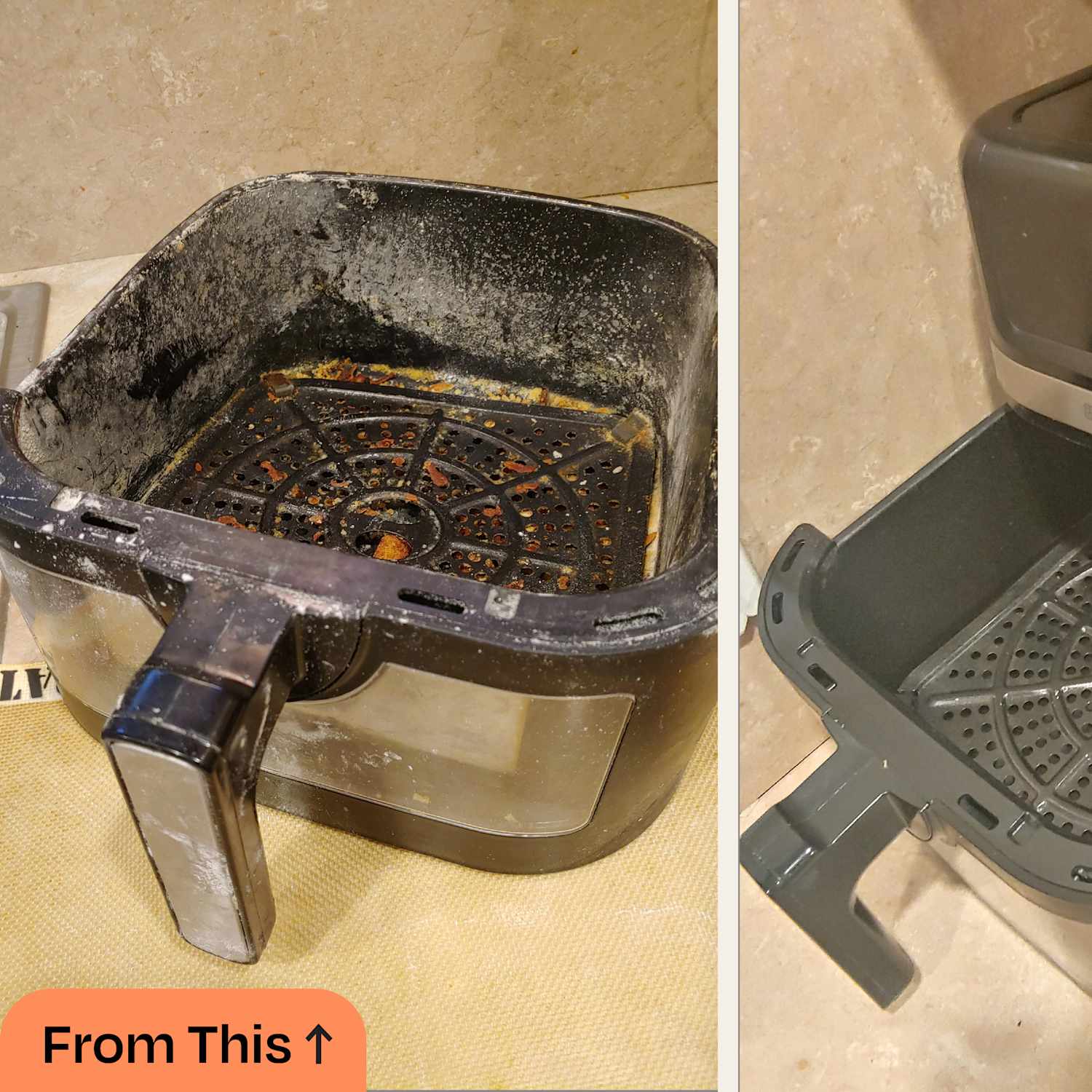
Dish soap and degreaser can collect in seams, vents, handles, and under removable parts. When the air fryer heats up, the residue may produce a sharp chemical or burnt smell.
Never spray cleaner directly into the main unit. The electrical parts, fan, and heating element should stay as dry as possible. Use a damp cloth instead, then wipe the area with a clean cloth to remove any leftover product.
Trapped water
Water may remain under the heating element, inside the drawer track, or behind the inner wall. This can create steam and carry old grease into the hot airflow.
Let the appliance dry with the basket and drawer removed. Place the main unit in a dry, well-ventilated area for several hours. Do not use a hair dryer or place the unit near a stove, heater, or open flame.
Hidden grease and food particles
Cleaning the basket does not always clean the space above it. Grease can collect on the heating coil, fan guard, or upper wall of the cooking chamber.
When the appliance reaches a high temperature, the old grease acts like oil in a hot pan. It smokes, darkens, and creates a burnt odor. A flashlight can help you inspect the upper area without touching the heating element.
A damaged nonstick coating
Scratches, peeling, or bubbling on the basket coating can expose the metal below. Damaged coating may not always cause a burnt smell, but it can make food stick and leave residue that burns.
Replace a basket if the coating is badly damaged. Avoid metal tools, steel wool, and harsh scouring pads because they can shorten the life of the coating.
Plastic or packaging left behind
New or recently replaced parts may have a thin protective film, label, or packaging material. If it touches a hot surface, it can smell like burnt plastic.
Check the drawer, basket, exterior, and heating area for labels or wrapping. Turn the appliance off and let it cool fully before removing anything.
How to Fix an Air Fryer That Smells Burnt After Cleaning
Follow these steps before cooking food again.
-
Unplug the air fryer and let it cool completely.
-
Remove the basket, tray, and drawer.
-
Check the upper heating area with a flashlight.
-
Wipe away visible crumbs and grease with a soft, damp cloth.
-
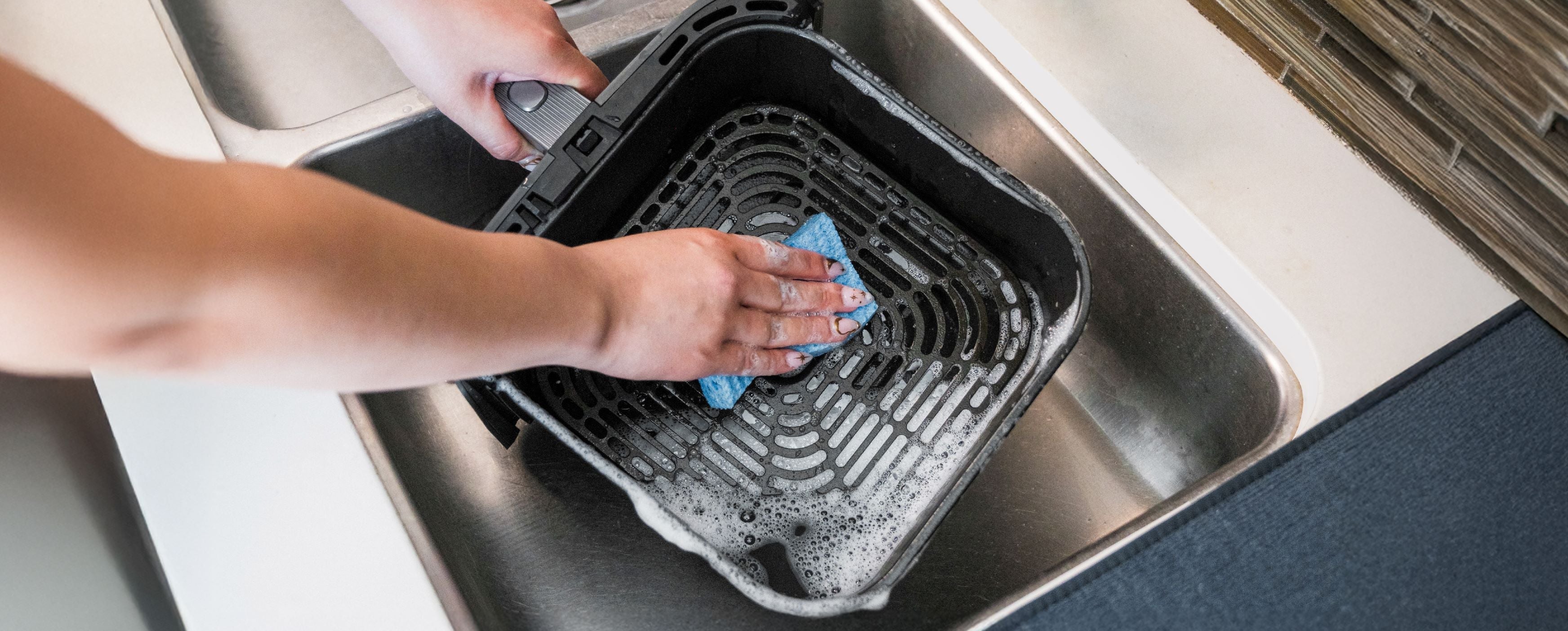
Clean removable parts with warm water and mild dish soap.
-
Rinse the parts well to remove soap residue.
-
Dry every part fully with a clean towel.
-
Leave the parts out to air-dry for several hours.
-
Wipe the inside of the main unit with a barely damp cloth.
-
Run the empty appliance at a moderate temperature for three to five minutes in a well-ventilated room.
-
Turn it off and check for smoke, sparks, or a strong chemical odor.
Do not pour water into the main unit. Do not immerse the appliance body unless the manufacturer specifically says it is safe. Most air fryer bases contain electrical parts that can be damaged by water.
If the air fryer smells burnt after cleaning but the odor becomes weaker during the empty test, let it cool and repeat the test once. If the smell grows stronger, stop using it.
How to Clean the Heating Element Safely
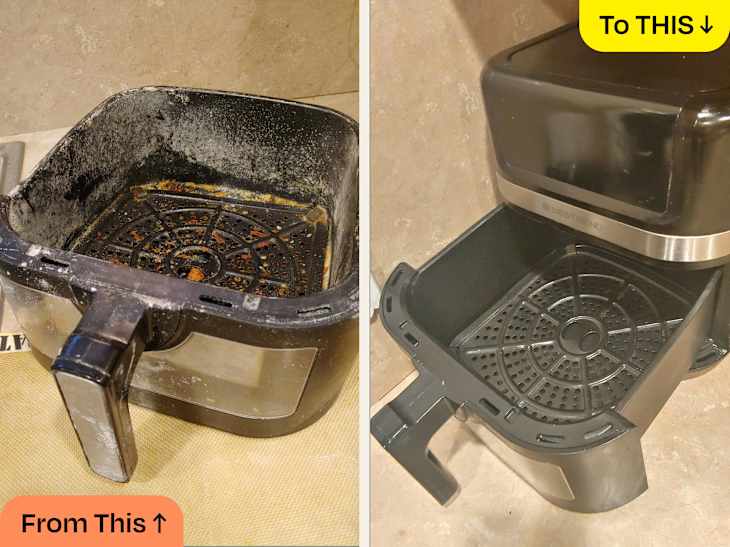
The heating element is often the hidden source of an air fryer smells burnt after cleaning problem. It can hold oil splashes and fine crumbs that are hard to see.
Use this method:
• Unplug the air fryer and wait until it is cold.
• Turn the appliance upside down only if the manual allows it.
• Use a soft, dry brush to remove loose crumbs.
• Wipe the heating area with a slightly damp microfiber cloth.
• Use a cotton swab for narrow gaps, but do not push debris deeper inside.
• Let the unit dry fully before plugging it in.
Do not scrape the heating coil with a knife. Do not use oven cleaner, bleach, abrasive powder, or large amounts of water. These products can damage surfaces, leave fumes, or harm electrical parts.
A light brown mark may be old grease. A blackened wire, melted plastic, loose connection, or damaged coil is more serious. Stop using the appliance if you see any of these signs.
Is It Safe to Use an Air Fryer That Smells Burnt?
An air fryer smells burnt after cleaning and may still be safe if the odor is mild, fades quickly, and comes from leftover grease or moisture. The appliance should not produce sparks, thick smoke, a burning-plastic smell, or unusual sounds.
Use this simple safety check:
• The power cord and plug look normal.
• The outlet does not feel hot.
• The smell is not electrical or chemical.
• There is no visible smoke after cleaning.
• The fan runs normally.
• The basket and coating are in good condition.
• The odor fades after a short empty test.
Stop using the appliance at once if you notice:
• Sparks or flashes
• A melted plug or cord
• Smoke from the control panel
• A loud buzzing or grinding sound
• A strong electrical smell
• Repeated tripping of the circuit breaker
• A heating element that glows unevenly or stays on
Unplug the air fryer when it is safe to do so. Contact the manufacturer or a qualified appliance technician. Do not open the housing yourself unless you are trained to repair electrical appliances.
Why the Smell Appears Only When Cooking Food
Sometimes an air fryer smells burnt after cleaning only when food is added. This often means the food is releasing oil onto an area that still has old residue.
High-fat foods such as bacon, sausages, chicken wings, and burgers can create smoke when grease hits a hot surface. Small crumbs can also move through the fan and land on the heating element.
Try cooking a low-fat food at a lower temperature. If the smell does not return, excess food grease may be the cause. If the odor returns with every food type, inspect the heating area and contact the manufacturer if needed.
Overfilling can also cause trouble. Food packed too tightly blocks airflow and may push oil toward the upper heating section. Follow the fill line and leave space for hot air to circulate.

Cleaning Mistakes That Can Create a Burnt Odor
Many cleaning problems come from good intentions. A person sees grease and reaches for a strong cleaner, a rough sponge, or a sink full of water. These methods may clean one part while damaging another.
Avoid these common mistakes:
• Spraying cleaner into the fan or control panel
• Soaking the main appliance body
• Reassembling parts before they are dry
• Scrubbing nonstick surfaces with steel wool
• Using oven cleaner without checking the manual
• Running the appliance at its highest heat to “burn off” dirt
• Ignoring crumbs above the basket
• Using an air fryer with a wet drawer
In one troubleshooting case, the basket looked spotless, but a thin layer of soap remained under the removable tray. The smell disappeared after a careful rinse and a full overnight dry. That small lesson is worth remembering: clean does not always mean fully rinsed and dry.

How to Prevent the Smell From Returning
Regular care helps prevent an air fryer smells burnt after cleaning issue.
Clean the basket and tray after each use. Wipe away grease before it hardens. Once the appliance cools, inspect the upper chamber for splashes and crumbs.
Use these habits:
• Empty food crumbs after each cooking session.
• Wash removable parts with mild soap.
• Rinse parts until no slippery film remains.
• Dry all parts before reassembly.
• Wipe the inner chamber once it is cool.
• Avoid overfilling the basket.
• Use parchment paper only when food weighs it down.
• Keep parchment away from the heating element.
• Do not block the rear or side vents.
• Follow the temperature and cleaning instructions in the manual.
Parchment paper deserves special care. Loose paper can lift into the heating element and burn. Never use it during preheating unless the manufacturer says it is safe and the paper is held down by food.
When to Replace the Basket or Air Fryer
A basket can usually be replaced without replacing the whole air fryer. Consider a replacement if the basket is warped, badly scratched, peeling, or no longer slides into place correctly.
The main appliance may need replacement when it has electrical damage, repeated overheating, smoke from the controls, or a persistent burnt-plastic odor. Repair may cost more than a new unit, especially with small countertop models.
Check the warranty before buying parts or attempting repairs. Keep the model number nearby because baskets, trays, and heating assemblies are not always interchangeable.
A safe appliance should heat evenly, run quietly, and have a stable cord and plug. If those basic signs change, treat the problem as more than a cleaning issue.
Frequently Asked Questions About an Air Fryer Smells Burnt After Cleaning
Why does my air fryer smell burnt after I washed it?
Water, soap, or hidden grease may remain inside the drawer, vents, or heating area. Unplug the unit, rinse removable parts well, and let everything dry completely before testing it.
How long should I let my air fryer dry after cleaning?
Let removable parts air-dry for several hours. If water may have entered the main unit, leave it unplugged in a dry place for at least 24 hours and follow the manufacturer’s instructions.
Can I run an air fryer empty to remove the smell?
A short empty test may help remove mild moisture or grease odors, but only after the unit is clean and dry. Stop immediately if you see smoke, sparks, or smell burning plastic.
Is a burnt smell from an air fryer dangerous?
A mild odor that quickly fades may come from grease or residue. A strong electrical, chemical, or plastic smell can signal a hazard, so unplug the appliance and stop using it.
Can I use vinegar to clean my air fryer?
A small amount of diluted vinegar may help wipe removable parts if the manufacturer permits it. Do not pour vinegar or any liquid into the main unit, and rinse surfaces well afterward.
Why does my air fryer smell burnt only with greasy food?
Greasy food can drip onto old residue or the heating element. Reduce the food load, lower the temperature, and inspect the upper cooking chamber for grease buildup.
Conclusion
An air fryer smells burnt after cleaning most often because of trapped moisture, soap residue, hidden grease, or crumbs near the heating element. Careful rinsing, full drying, and a short empty test can solve many mild odors.
Do not ignore smoke, sparks, melted plastic, or a strong electrical smell. Clean the removable parts gently, keep the main unit dry, and replace damaged components when needed. If these steps helped, share your experience or explore more air fryer care guides for safer cooking.