How Often Should You Clean Your Air Fryer: Easy Guide
Clean your air fryer after every use, and deep-clean it once each week.
Knowing how often should you clean your air fryer helps prevent stuck-on grease, bad smells, smoke, and food buildup. The right routine depends on what you cook, how often you use the appliance, and whether it has a basket, tray, or removable heating parts. This guide explains a safe, simple cleaning schedule based on appliance care guidance, food safety principles, and practical kitchen experience.

How Often Should You Clean Your Air Fryer?
You should clean your air fryer after every use. This does not mean you need to scrub every part for 30 minutes. A quick clean removes crumbs, oil, and food bits before they harden.
You should also deep-clean your air fryer about once a week if you use it often. If you use it only once or twice a week, a deep clean every two to four weeks may be enough.
How often should you clean your air fryer may change based on the food you cook. Fatty foods, marinades, breaded foods, and sugary sauces create more residue than plain vegetables.
Use this schedule as a simple guide:
• After every use: Clean the basket, tray, and any visible food residue.
• Every few uses: Wipe the inside walls and check the heating area.
• Once a week: Deep-clean the basket, tray, drawer, and interior.
• Every month: Inspect the heating element, vents, cord, and outer body.
• Right away: Clean spills, melted cheese, smoke residue, or heavy grease.
:max_bytes(150000):strip_icc()/sea-toaster-ovens-air-fryers-test-cosori-9-1-5qt-rkilgore-160-bcebdb402012405a8a3f34eabb9775a2.jpg)
Why Cleaning Your Air Fryer Matters
An air fryer cooks with fast-moving hot air. That air moves over food and around the basket. When grease and crumbs build up, the fan can spread smoke and odors throughout the appliance.
Old grease can also burn during the next cooking cycle. This may cause smoke, a sharp smell, or a bitter taste on your food. Cleaning your air fryer helps reduce these problems and keeps cooking more pleasant.
Regular cleaning also supports food safety. The U.S. Department of Agriculture advises washing kitchen tools and surfaces that contact food. An air fryer basket is not the same as a cutting board, but food residue can still hold bacteria before the next cooking cycle.
A clean air fryer may also work more consistently. A blocked basket or dirty tray can limit airflow. That may lead to uneven browning, longer cooking times, or food that feels less crisp.
Here are the main benefits of cleaning your air fryer:
• Less smoke during cooking
• Fewer unpleasant odors
• Better airflow
• More even cooking
• Lower risk of burnt grease
• Longer-lasting parts
• Easier cleanup after each meal
Cleaning does not guarantee that an air fryer will last forever. The nonstick coating can still wear out, and electronic parts can still fail. However, gentle and regular care can help prevent avoidable damage.
What Should You Clean After Every Use?
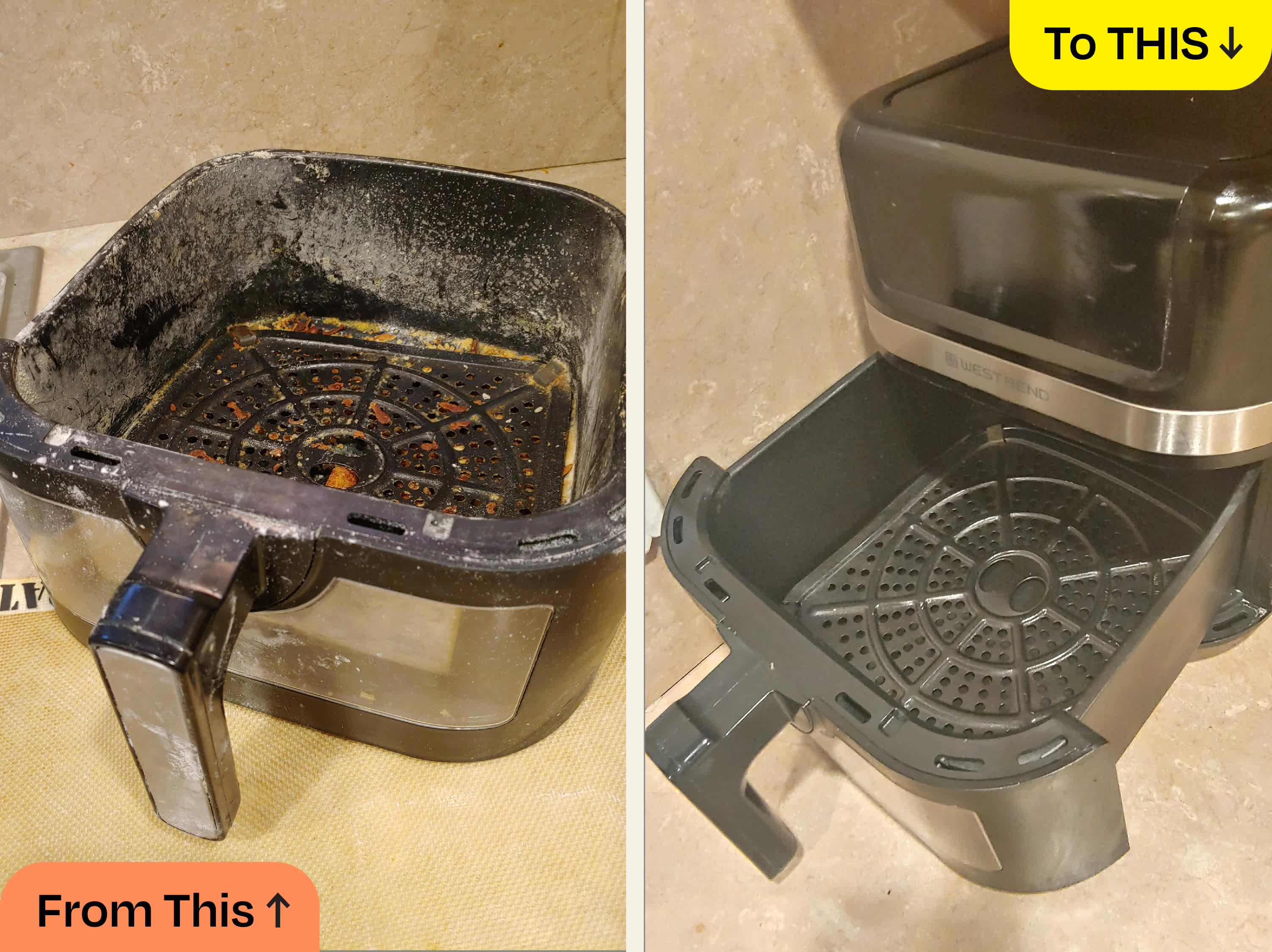
After each use, focus on the parts that touch food. These parts include the basket, crisper plate, rack, and drawer. Let them cool first, but do not leave heavy grease sitting for many hours.
Remove loose crumbs and food pieces. Then wash the removable parts with warm water and mild dish soap. A soft sponge or soft brush is usually enough.
If your air fryer parts are dishwasher safe, you may place them in the dishwasher. Always check the user manual first. High heat and strong detergent can damage some nonstick coatings over time.
Wipe the inside of the cooking chamber with a damp cloth. Do not pour water into the appliance body. The motor, fan, heating element, and control panel should stay dry.
The outside needs only a quick wipe after most uses. Pay close attention to the handle and control buttons. These areas often collect oil from hands.
A basic after-use routine takes about five minutes:
-
Unplug the air fryer and let it cool.
-
Remove the basket and tray.
-
Shake out crumbs over a trash can or sink.
-
Wash removable parts with mild soap and warm water.
-
Wipe the cooking chamber with a damp cloth.
-
Dry every part before putting it back.
-
Check for grease near the heating element.
A small habit makes a big difference. Cleaning while residue is still soft is much easier than removing a hard, sticky layer later.
How to Deep-Clean an Air Fryer
How often should you clean your air fryer deeply? For frequent users, once a week is a good starting point. Deep cleaning takes more time because it includes hidden areas that a quick wipe may miss.
Start by unplugging the appliance. Remove the basket, tray, rack, and drawer. Wash these parts with warm water and mild dish soap.
For stuck-on food, soak the removable parts for 10 to 20 minutes. Use a soft brush to loosen residue. Avoid steel wool, knives, and rough scouring pads because they may scratch the coating.
Next, clean the inside of the air fryer. Use a damp microfiber cloth or soft sponge. You can use a small amount of dish soap on the cloth, but do not spray liquid directly into the appliance.
Turn the appliance upside down only if the manual allows it and you can handle it safely. This can make it easier to reach crumbs near the heating element. Do not force any part or remove screws.
Follow these deep-cleaning steps:
-
Unplug the air fryer.
-
Allow it to cool fully.
-
Remove all removable parts.
-
Soak and wash the basket and tray.
-
Wipe the cooking chamber.
-
Clean around the heating element with a barely damp cloth.
-
Brush away dry crumbs with a soft, dry brush.
-
Wipe the exterior and control panel.
-
Let every part dry completely.
-
Reassemble the appliance.
Never immerse the main air fryer unit in water. Do not use oven cleaner, bleach, ammonia, or strong chemical sprays. These products can damage surfaces and leave unsafe residue near food.
How Your Cooking Habits Change the Cleaning Schedule
The best answer to how often should you clean your air fryer depends on your menu. Some foods release much more grease than others.
Chicken wings, bacon, sausages, burgers, and fatty cuts of meat can leave a thick layer of oil. Clean the basket and tray right after cooking these foods.
Breaded foods can leave crumbs behind. If crumbs reach the heating element, they may burn during the next use. Shake out the basket and check the upper interior after cooking frozen fries, nuggets, onion rings, or fish sticks.
Saucy foods need special care. Barbecue sauce, honey, teriyaki sauce, and cheese can become hard and sticky when heated. Clean these items as soon as the air fryer cools.
Low-residue foods may require less work. Roasted vegetables, reheated bread, and plain potatoes usually leave fewer greasy deposits. Even so, food crumbs and moisture should not remain in the basket.
Use this practical guide:
• Heavy grease: Clean after every use and deep-clean weekly.
• Sticky sauces: Wash soon after cooking to prevent hardened residue.
• Dry frozen foods: Remove crumbs after every use and inspect the heater often.
• Plain vegetables: Wash the basket after use and deep-clean every one to two weeks.
• Occasional use: Clean after each use and deep-clean every two to four weeks.
If your air fryer smokes during cooking, do not ignore it. Turn it off, unplug it when safe, and inspect it for grease or food near the heating element.
Signs Your Air Fryer Needs Cleaning Now
A fixed schedule is useful, but your air fryer may need cleaning sooner. Strong signs often appear during cooking.
Smoke is one of the clearest warnings. A small amount of smoke can come from excess grease or crumbs. It does not always mean the appliance is broken, but it does mean you should inspect and clean it.
A burnt smell is another warning. Old oil can heat up again and create a sharp odor. Food may also taste smoky even when the recipe does not call for smoke.
Watch for these signs:
• Visible grease on the basket or drawer
• Burnt crumbs near the heating element
• Smoke during normal cooking
• A sour or stale smell
• Food sticking more than usual
• Uneven browning
• A fan that sounds different
• A basket that feels tacky after washing
Do not use the appliance if the cord is damaged, the plastic is melting, or the heating element looks broken. Cleaning cannot fix an electrical or mechanical fault. In that case, follow the manufacturer’s safety instructions.
:max_bytes(150000):strip_icc()/faw-toaster-ovens-air-fryers-test-taotronics-rkilgore-127-efe96fac638843b49fba305016d49235.jpg)
Safe Cleaning Methods and Products
Warm water and mild dish soap are the safest choices for most air fryer baskets and trays. A soft sponge, microfiber cloth, or soft nylon brush can remove most residue without harming the surface.
For stubborn grease, soak the removable parts before scrubbing. This softens the residue and reduces the need for force. Patience is safer than aggressive cleaning.
Some people use baking soda to loosen grease. A small amount mixed with water can form a mild paste for removable parts. Test it on a small area first, and avoid rubbing hard on nonstick coatings.
Avoid these cleaning methods:
• Do not use steel wool.
• Do not scrape with a knife.
• Do not spray cleaner inside the air fryer.
• Do not soak the main appliance body.
• Do not use bleach near food-contact parts.
• Do not clean a hot basket with cold water.
• Do not run a damaged basket through the dishwasher.
Thermal shock can damage some materials. Let a hot basket cool before placing it in water. This also protects your hands and reduces the risk of burns.
Always follow the manual for your specific model. Air fryers differ in coating, dishwasher safety, heating design, and removable parts. General advice is useful, but the manufacturer’s instructions take priority.
Common Air Fryer Cleaning Mistakes
One common mistake is cleaning only the basket. Grease can collect below the basket, around the drawer, and near the heating element. If you ignore these areas, smoke and odor may continue.
Another mistake is using too much water. The air fryer body contains electrical parts. A damp cloth is enough for the interior and exterior in most cases.
Many people also use abrasive tools when food sticks. This may remove residue, but it can scratch the nonstick coating. Once the coating is damaged, food may stick more easily and the basket may become harder to clean.
A further mistake is putting wet parts back into the appliance. Moisture trapped inside can create odors and may affect the appliance over time. Dry each part fully before reassembly.
In hands-on kitchen testing, one lesson becomes clear: a short cleanup after cooking is easier than a large cleanup at the end of the week. The biggest cleaning problems often come from skipping one greasy meal, not from normal daily use.
Tips for Keeping an Air Fryer Cleaner
Good cooking habits can reduce cleaning time. Do not overfill the basket because crowded food releases grease and blocks airflow. Leave enough space for hot air to move around the food.
Use a suitable liner only when the manufacturer allows it. A liner should not block all airflow, and it should not be placed in the basket during preheating unless food holds it down. Loose paper can move toward the heating element.
You can also reduce residue with these habits:
• Shake off excess oil before placing food in the basket.
• Avoid adding too much sauce before cooking.
• Place fatty foods in a single layer when possible.
• Empty crumbs after cooking dry frozen foods.
• Use a drip tray if your model includes one.
• Clean spills before they harden.
• Keep the air fryer on a stable, heat-safe surface.
Do not cover the ventilation openings. Airflow is essential for safe operation and proper cooking. A clean vent can also help reduce overheating and unusual odors.
The answer to how often should you clean your air fryer becomes easier when you prevent buildup. Less residue means less scrubbing and a cleaner appliance between deep cleans.
When Should You Replace an Air Fryer Basket?
Cleaning can remove grease and food residue, but it cannot repair serious damage. Consider replacing the basket or tray if the coating is peeling, flaking, or badly scratched.
A few light marks may not mean immediate danger, but damage can make food stick and may worsen with repeated washing. Check the manufacturer’s replacement parts before buying a new appliance.
Replace the air fryer itself if you notice:
• A damaged power cord
• Burning smells from the electrical parts
• Repeated sparks
• Melting plastic
• A broken heating element
• Severe overheating
• Controls that fail to respond
Never keep using an appliance that presents an electrical or fire risk. Cleaning is part of maintenance, but it is not a substitute for repair or replacement.
Frequently Asked Questions About How Often Should You Clean Your Air Fryer
How often should you clean your air fryer basket?
Clean the basket after every use. This removes grease, crumbs, and food particles before they harden or burn during the next cooking cycle.
Can I clean my air fryer after it cools overnight?
It is better to clean it soon after it cools. Overnight residue can become dry and sticky, which makes cleaning harder and may create odors.
How often should you deep-clean an air fryer?
Deep-clean it once a week if you use it often. If you use it less frequently and cook low-grease foods, deep cleaning every two to four weeks may be enough.
Can I put my air fryer basket in the dishwasher?
Some baskets and trays are dishwasher safe, but not all are. Check the user manual because repeated dishwasher cycles may wear down certain nonstick coatings.
How do I clean grease from an air fryer heating element?
Unplug the appliance and let it cool completely. Use a soft, dry brush or barely damp cloth, and never pour water or spray cleaner near the heating element.
Why does my air fryer smoke after cleaning?
Smoke may come from leftover grease, crumbs, or soap residue that was not rinsed away. Let all parts dry, inspect the heating area, and clean away any remaining residue before cooking again.
How often should you clean your air fryer if you cook bacon?
Clean the basket, tray, and visible interior after every bacon cooking session. Bacon releases a large amount of grease, so inspect the heating element and deep-clean the appliance weekly.
Conclusion
How often should you clean your air fryer? Clean food-contact parts after every use, wipe the interior often, and deep-clean the appliance about once a week when you use it regularly. Adjust the schedule for greasy foods, sticky sauces, smoke, odors, and visible buildup.
Use mild soap, warm water, soft tools, and a damp cloth. Keep the electrical body dry, avoid abrasive cleaners, and follow your model’s manual. Start the five-minute cleanup habit today, then share your best air fryer care tips or explore more kitchen maintenance guides.